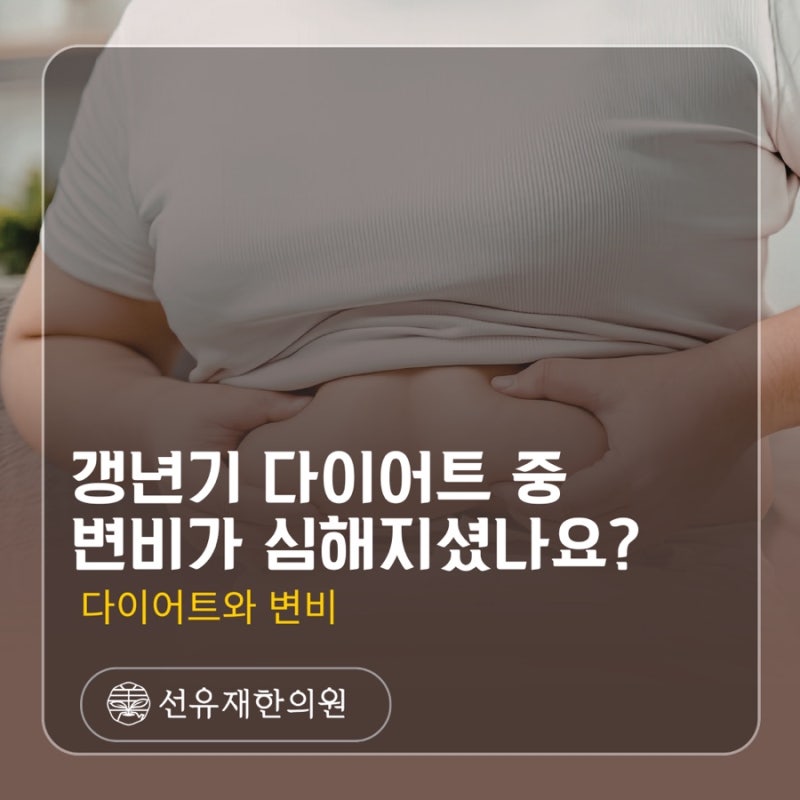
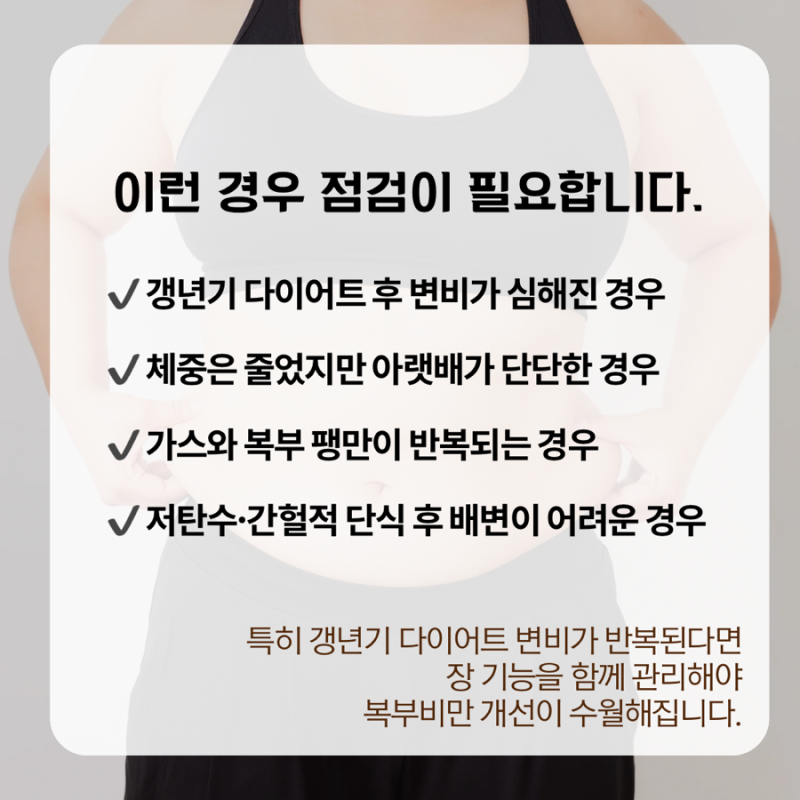
Have you started a menopause diet and found that while your weight has decreased, your abdominal obesity remains the same, or perhaps your constipation has even worsened? “I’ve reduced my food intake, so why is my lower abdomen becoming harder?” This type of menopause-related diet constipation may not be merely a dietary issue but rather a result of hormonal changes combined with altered bowel function. Today, we will provide a more medical explanation of why constipation worsens during a menopause diet and the mechanisms behind persistent abdominal obesity. Hello, this is Sunyujae Korean Medicine Clinic, where good intentions reside.

Menopause and Changes in Bowel Peristalsis During menopause, estrogen levels decrease. Estrogen is not merely a reproductive hormone; it also affects blood vessel elasticity, autonomic nervous system balance, and bowel peristalsis. Decreased estrogen can be associated with: – Reduced parasympathetic nerve activity – Delayed colonic transit time – Increased water reabsorption.
When the bowels move slowly, stool becomes harder, and defecation becomes difficult. This is why menopause-related constipation increases. Reasons why a Menopause Diet Worsens Constipation After menopause, there is a tendency towards sarcopenia (muscle loss).
When muscle mass decreases, basal metabolic rate decreases, and the ability to generate abdominal pressure also weakens. If abdominal and pelvic floor muscles weaken, insufficient force is transmitted during defecation, which can worsen constipation. If food intake is further reduced in this state, bowel stimulation decreases, making diet-related constipation more likely to occur.
Why Does Abdominal Obesity Persist? When constipation persists, it leads to stagnation of intestinal contents, increased gas production, elevated intra-abdominal pressure, and reduced circulation in the lower abdomen. This can cause the abdomen to feel hard and distended, as if fat has increased.
In reality, it is likely a complex interplay of increased visceral fat, intestinal stagnation, and abdominal muscle tension. Therefore, even if weight decreases, abdominal obesity may appear to persist. Characteristics of Menopause-Related Abdominal Obesity and Visceral Fat After menopause, there is a tendency for fat distribution to shift towards the abdomen.
This is related to decreased estrogen, a tendency towards increased insulin resistance, and changes in cortisol sensitivity. Visceral fat is metabolically active and can also be associated with the secretion of inflammatory cytokines. When accompanied by constipation, abdominal distension worsens, leading to a feeling that abdominal obesity is becoming entrenched.
A menopause diet is not simply about calorie restriction. It must also involve – maintaining muscle mass, balancing the autonomic nervous system, preserving bowel peristalsis, and managing the intestinal environment.
In the next post, we will explain ‘Haedokhwan’ (detox pills), one of the highly consulted pill series at Sunyujae Korean Medicine Clinic for managing menopause-related diet constipation and abdominal obesity. https://m.blog.naver.com/sunyujae21/224189065157 We hope you will continue to join Sunyujae Korean Medicine Clinic as we share valuable information for a healthy life. Sunyujae Korean Medicine Clinic in Suji-gu pursues evidence-based medicine and integrative medicine.
This post was written directly by the medical staff of Sunyujae Korean Medicine Clinic to provide medical information, in compliance with Article 56(2) and Article 57(3) of the Medical Service Act. The duration and outcome of treatment may vary from person to person, so please consult a qualified practitioner before beginning treatment.
Consultation & Booking
Have questions? Reach us anytime via KakaoTalk or phone.