Hello, this is Sunyujae Korean Medicine Clinic, where kind hearts reside.
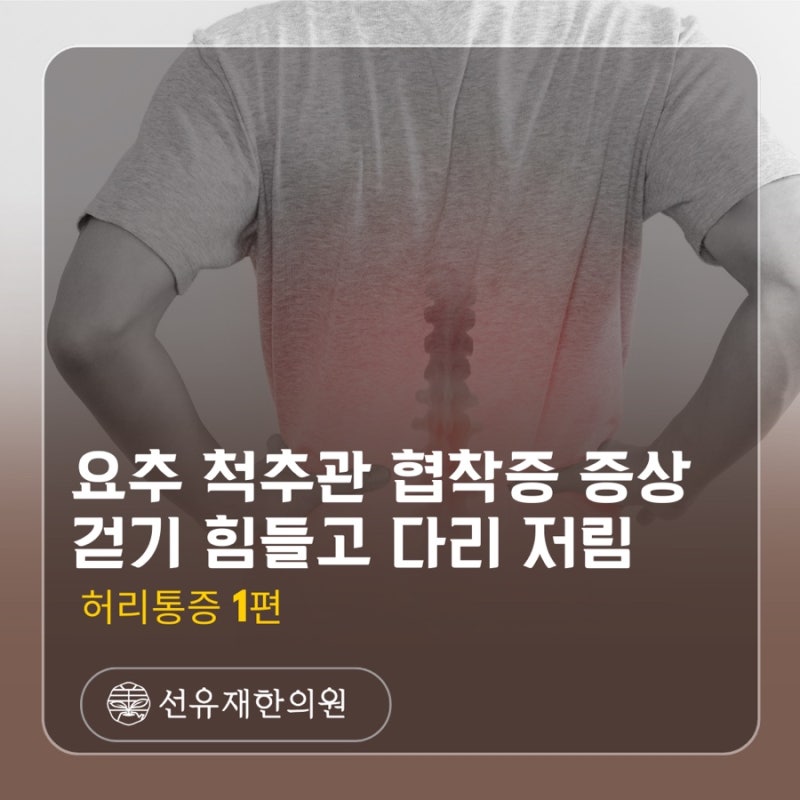
Among those who visit us for back pain, most ask a similar question when they hear “lumbar spinal stenosis” from imaging tests: “Is this just something I have to live with because of my age?” While lumbar spinal stenosis is clearly a disease associated with degenerative changes, it’s not simply explained by age alone. The reason why some people in the same age group with similar imaging findings live without pain, while others find it difficult even to walk, is
due to differences in the structure and location where the nerve is compressed, and the lifestyle that uses that structure. Therefore, when understanding stenosis, it’s necessary to first calmly examine how the spinal structure has changed and what symptoms those changes manifest, rather than simply focusing on the word ‘aging.’ In this article, we will explain what lumbar spinal stenosis is and why symptoms vary from person to person, from a structural perspective.
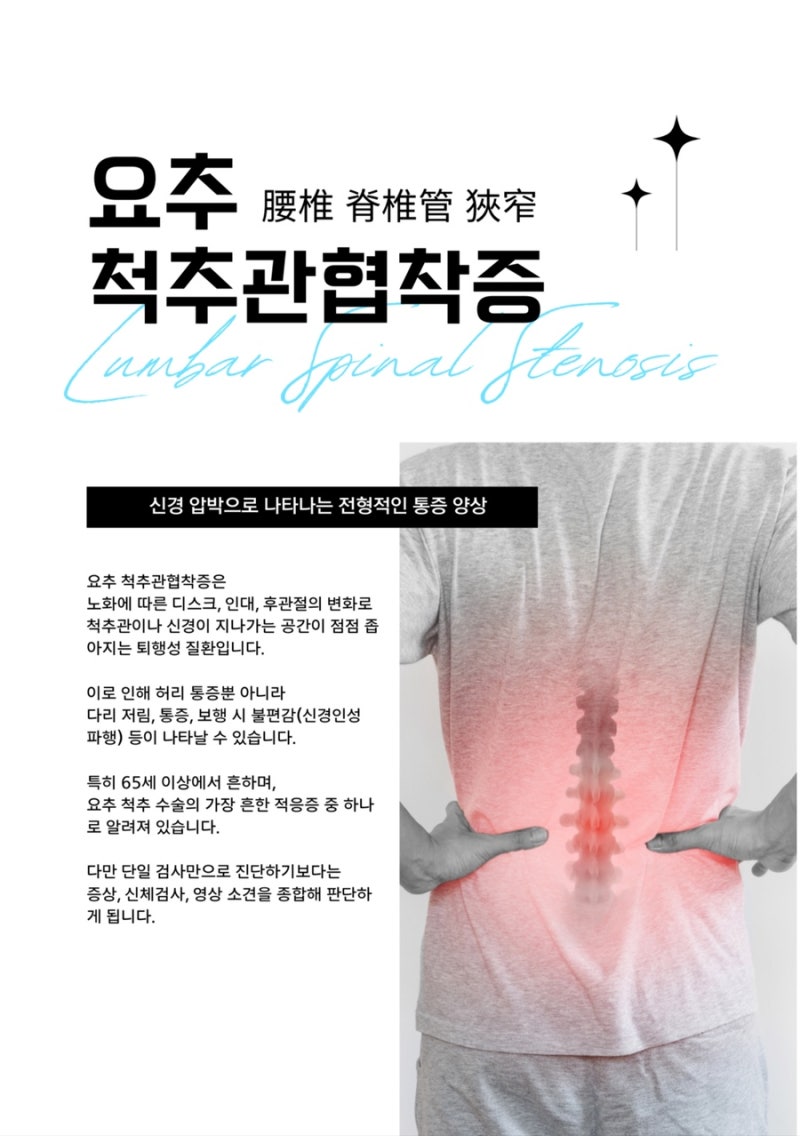
Lumbar Spinal Canal Stenosis Lumbar Spinal Stenosis 腰椎 脊椎管 狹窄 Typical pain patterns resulting from nerve compression. Lumbar spinal stenosis is a degenerative disease where the spinal canal or the space through which nerves pass gradually narrows due to age-related changes in discs, ligaments, and facet joints. This can lead to not only back pain but also leg numbness, pain, and discomfort during walking (neurogenic claudication).
It is particularly common in individuals over 65 and is known as one of the most frequent indications for lumbar spinal surgery. However, diagnosis is made by comprehensively evaluating symptoms, physical examination, and imaging findings, rather than relying on a single test. Lumbar stenosis is not simply a matter of aging, but a condition created by a combination of structural changes and lifestyle habits.
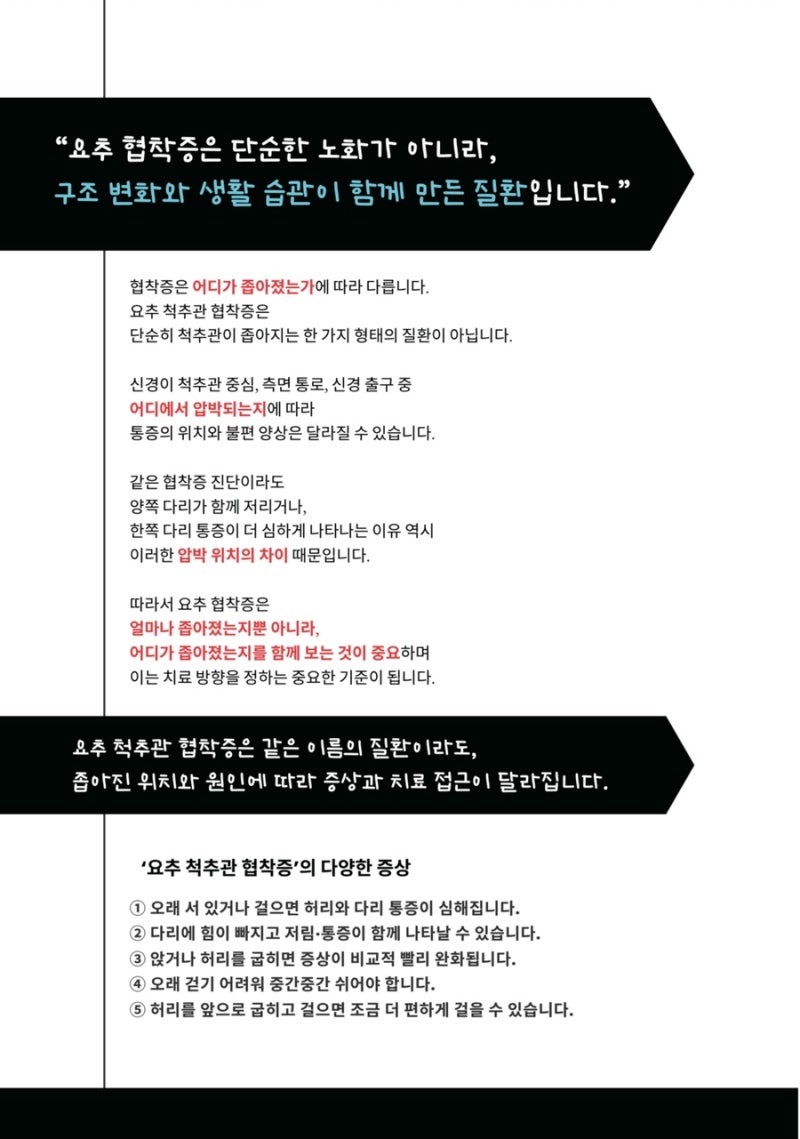
Suji-gu Dongcheon-dong Sunyujae Korean Medicine Clinic: Stenosis varies depending on where the narrowing occurs. Lumbar spinal stenosis is not just a single type of disease where the spinal canal simply narrows. The location of pain and the pattern of discomfort can vary depending on whether the nerve is compressed in the central spinal canal, the lateral recess, or the neural foramen.
Even with the same diagnosis of stenosis, the reason why both legs might feel numb or one leg experiences more severe pain is also due to these differences in compression location. Therefore, for lumbar stenosis, it is important to consider not only how much narrowing has occurred but also where the narrowing is located, as this becomes a crucial criterion for determining the direction of treatment.
Lumbar spinal stenosis, though sharing the same name, is a condition where symptoms and treatment approaches vary depending on the location and cause of the narrowing.
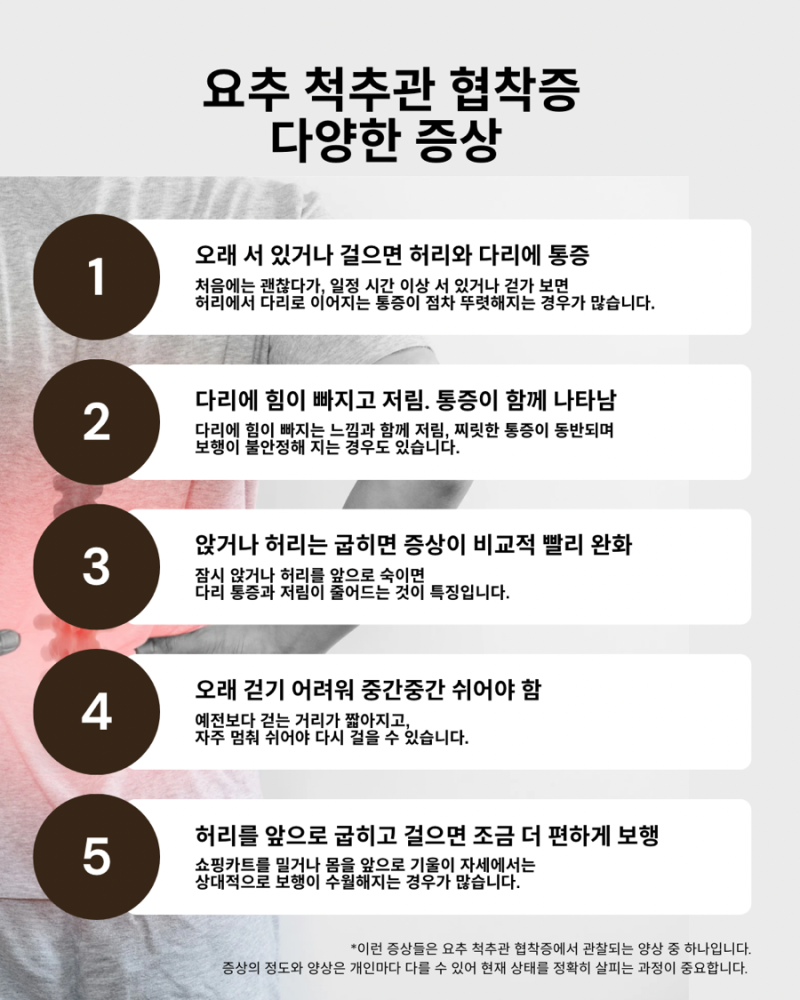
Why does pain worsen when you start walking? In lumbar spinal stenosis accompanied by ligamentum flavum hypertrophy, it’s common to hear complaints like, “It’s fine at first, but my legs hurt after walking just a short distance.” This is because when standing upright or walking with the back straight, the spinal canal space relatively narrows, increasing nerve compression.
Conversely, sitting or slightly bending the back temporarily widens the spinal canal space, which typically alleviates pain and numbness. This change in walking pattern is called neurogenic claudication. It’s not merely a problem of aging.
Ligamentum flavum hypertrophy is an age-related change, but it doesn’t manifest at the same speed or degree in everyone as they get older. Factors such as occupations that involve heavy use of the back, lifestyle habits of standing or walking for long periods, repetitive back strain, weight gain, and decreased muscle strength, when combined, can accelerate the progression of ligamentum flavum hypertrophy and lumbar spinal stenosis.
In other words, lumbar stenosis is not simply a matter of age, but rather a condition where lifestyle habits and how the body is used collectively play a role. It is important to approach lumbar spinal stenosis by considering not only the imaging finding of ‘narrowing’ but also the symptoms currently experienced and changes in daily function.
This understanding also serves as an important criterion for determining the subsequent course of treatment. https://m.blog.naver.com/sunyujae21/224138018339 In the next article, we will continue to explain the clinical significance of ligamentum flavum hypertrophy and neurogenic claudication, which are causes of lumbar spinal stenosis.
We hope you will join Sunyujae Korean Medicine Clinic, which shares valuable information for a healthy life. Sunyujae Korean Medicine Clinic in Suji-gu pursues evidence-based medicine and integrative medicine.
This post was written directly by the medical staff of Sunyujae Korean Medicine Clinic to provide medical information, in compliance with Article 56(2) and Article 57(3) of the Medical Service Act. The duration and outcome of treatment may vary from person to person, so please consult a qualified practitioner before beginning treatment.
Consultation & Booking
Have questions? Reach us anytime via KakaoTalk or phone.