Hello, this is Sunyujae Korean Medicine Clinic, a place where good hearts reside.
![요추 척추관 협착증 치료|수술 vs 비수술, 기준은? 3편[수지구 동천동 선유재한의원]](https://syjkmc.kr/wp-content/uploads/2026/06/224315461126_img_1.png)
When diagnosed with lumbar spinal stenosis, many people first ponder this question: “Should I have surgery, or is non-surgical treatment sufficient?” To this question, I always say this in the consultation room: “What’s important is not whether it’s surgical or non-surgical, but whether an environment can be created for the nerves to function again.” Lumbar spinal stenosis is not a disease where the treatment direction can be determined solely by the ‘narrowed spinal canal’ seen on MRI.
Even with the same findings of stenosis, treatment options can vary depending on the condition of the nerves, the tension and adhesion of surrounding soft tissues, and the current walking ability and degree of daily discomfort. In this article, rather than simply comparing surgical and non-surgical treatments, I will explain why non-surgical treatment can be considered first, and what role ultrasound-guided acupotomy plays, from the perspective of structure and nerve function.
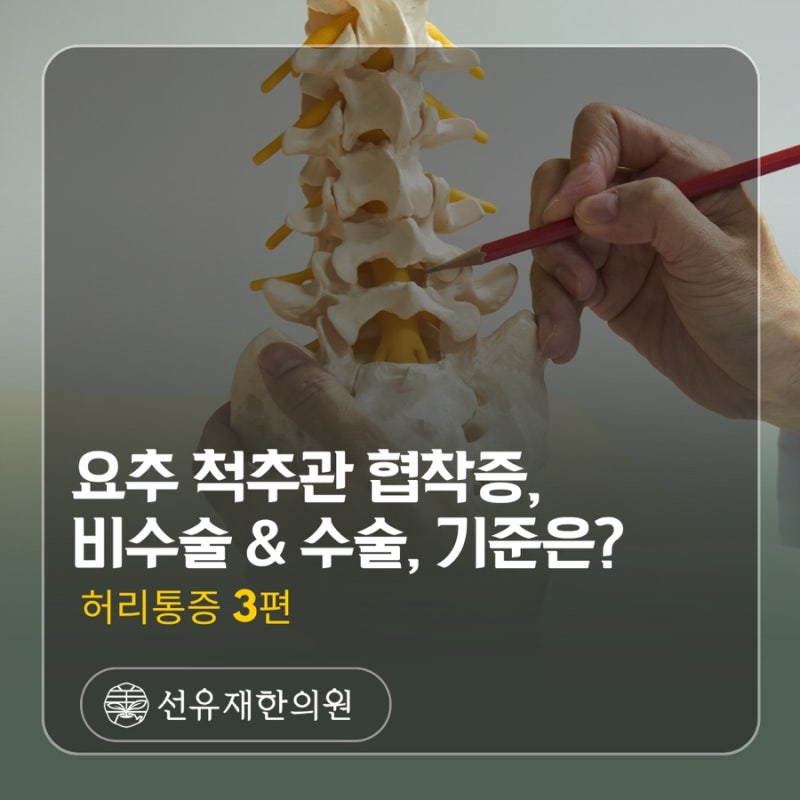
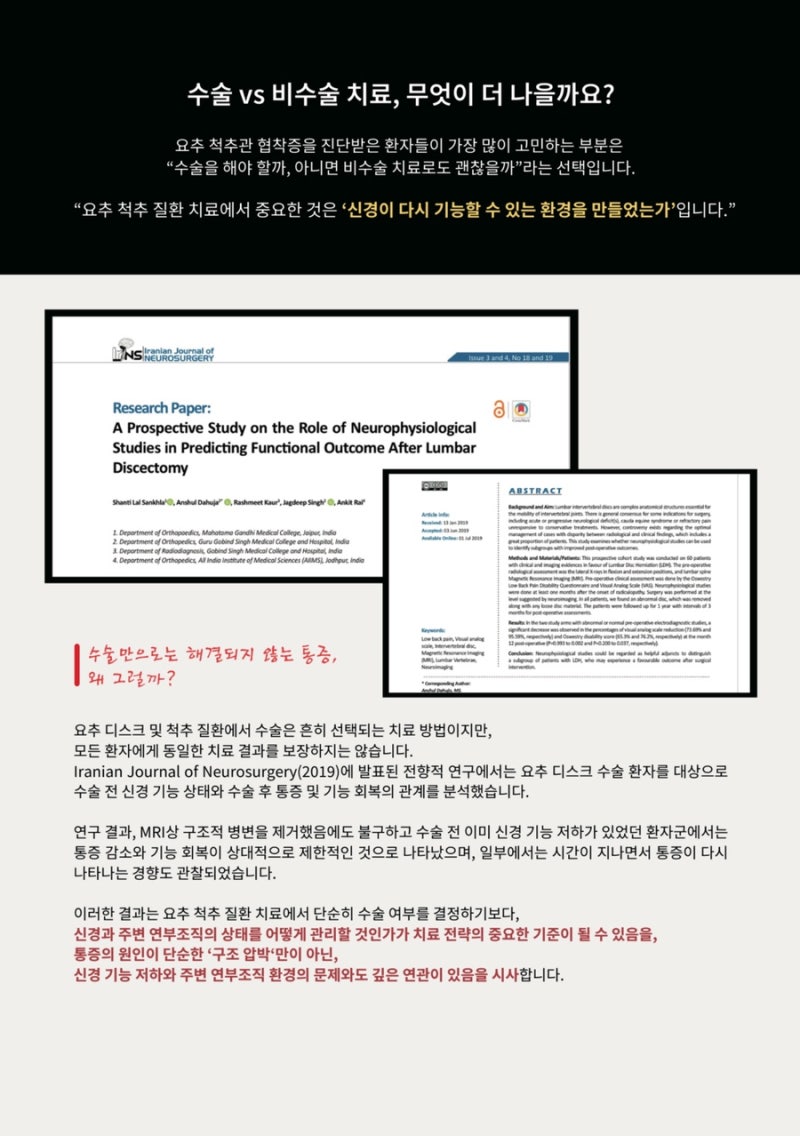
Surgery vs. Non-surgical Treatment, Which is Better? Suji-gu Back Pain Korean Medicine Clinic. The most common dilemma for patients diagnosed with lumbar spinal stenosis is the choice of “Should I have surgery, or is non-surgical treatment sufficient?” “What is important in the treatment of lumbar spinal disorders is ‘whether an environment has been created for the nerves to function again.'”
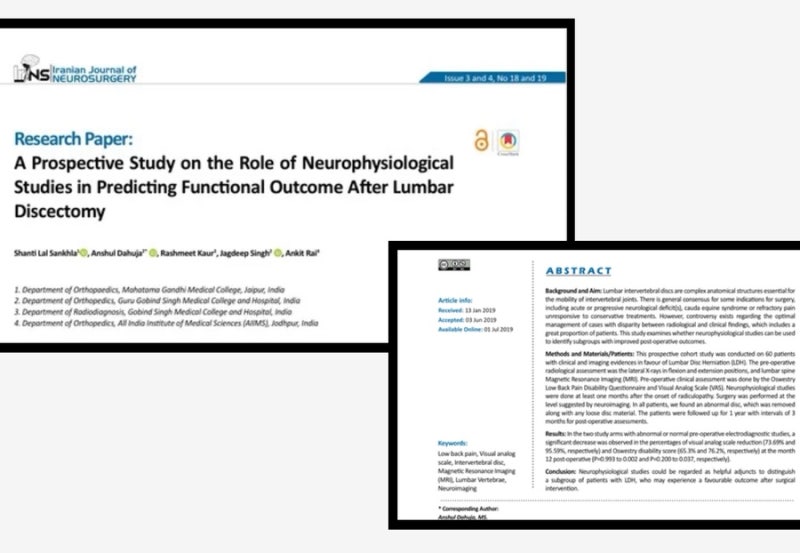
Pain Not Resolved by Surgery Alone, Why? Sunyujae Korean Medicine Clinic in Dongcheon-dong, Suji-gu. In lumbar disc and spinal disorders, surgery is often a chosen treatment method, but it does not guarantee the same treatment outcome for all patients. A prospective study published in the Iranian Journal of Neurosurgery (2019) analyzed the relationship between pre-operative nerve function status and post-operative pain and functional recovery in patients undergoing lumbar disc surgery.
The study results showed that despite the removal of structural lesions on MRI, pain reduction and functional recovery were relatively limited in the patient group that already had nerve dysfunction before surgery, and in some cases, a tendency for pain to recur over time was observed. These results suggest that in the treatment of lumbar spinal disorders, rather than simply deciding whether to perform surgery, how to manage the condition of the nerves and surrounding soft tissues can be an important criterion for treatment strategy.
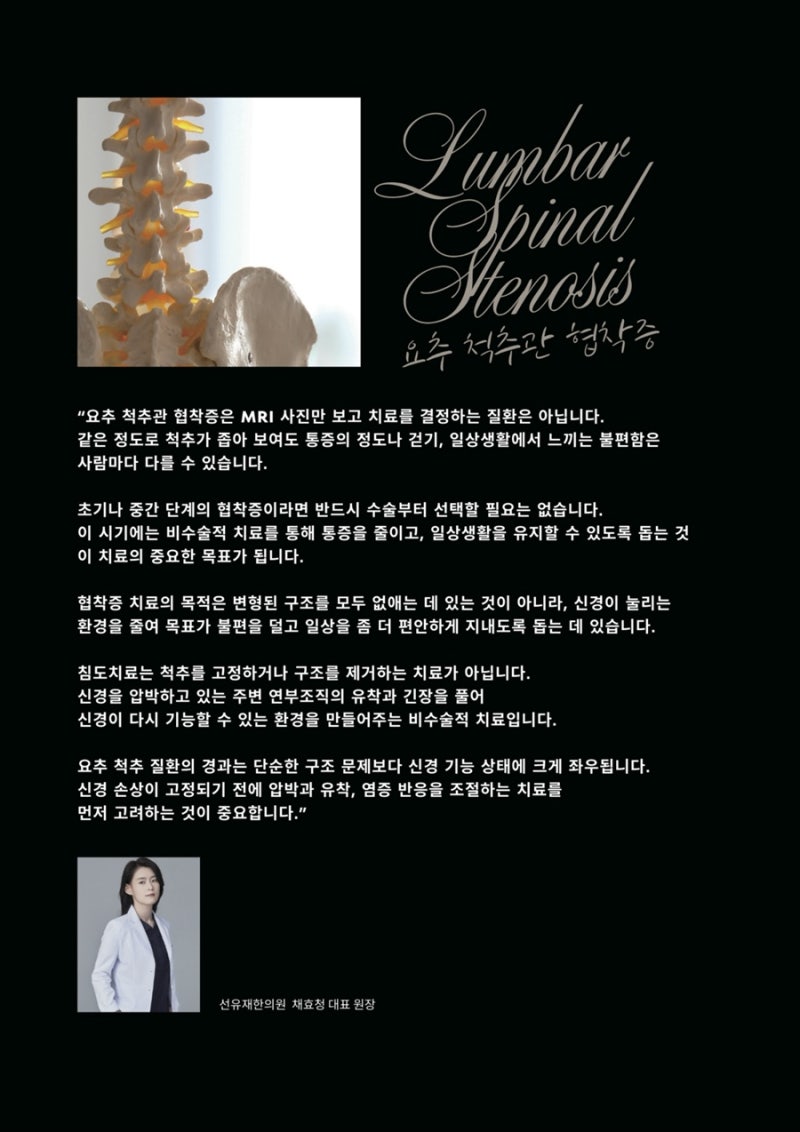
This suggests that the cause of pain is not merely ‘structural compression,’ but is also deeply related to nerve dysfunction and problems with the surrounding soft tissue environment. Dr. Chae’s Story on Lumbar Spinal Stenosis: “Lumbar spinal stenosis is not a disease where treatment is decided solely based on MRI images. Even if the spine appears narrowed to the same degree, the level of pain, difficulty walking, and discomfort in daily life can vary from person to person.”
If it’s early or intermediate-stage stenosis, there’s no need to necessarily choose surgery first. At this stage, a crucial goal of treatment is to reduce pain and help maintain daily life through non-surgical Korean medicine treatment. The purpose of stenosis treatment is not to eliminate all deformed structures, but to reduce the environment where nerves are compressed, with the goal of alleviating discomfort and helping patients live more comfortably in their daily lives.
Acupotomy is not a treatment that fixes the spine or removes structures. It is a non-surgical Korean medicine treatment that releases adhesion and tension in the surrounding soft tissues compressing the nerves, creating an environment where the nerves can function again. The prognosis of lumbar spinal disorders depends more on the state of nerve function than on simple structural problems.
Before nerve damage becomes fixed, it is important to first consider treatments that control compression, adhesion, and inflammatory responses.”
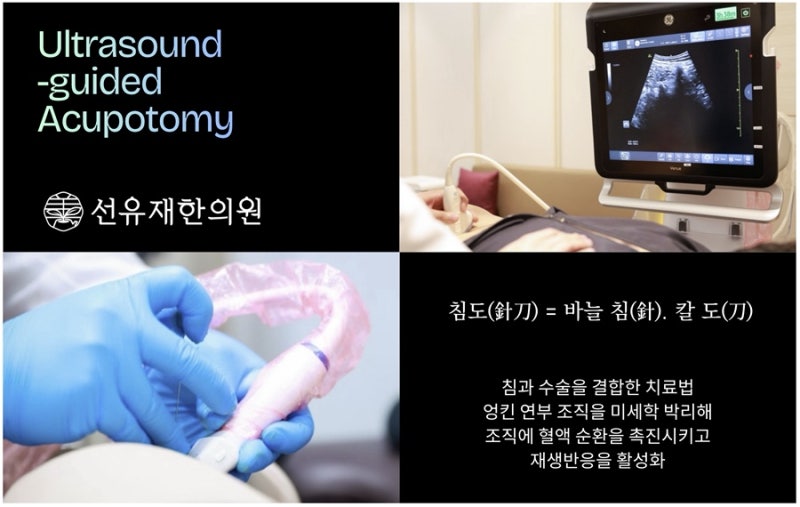
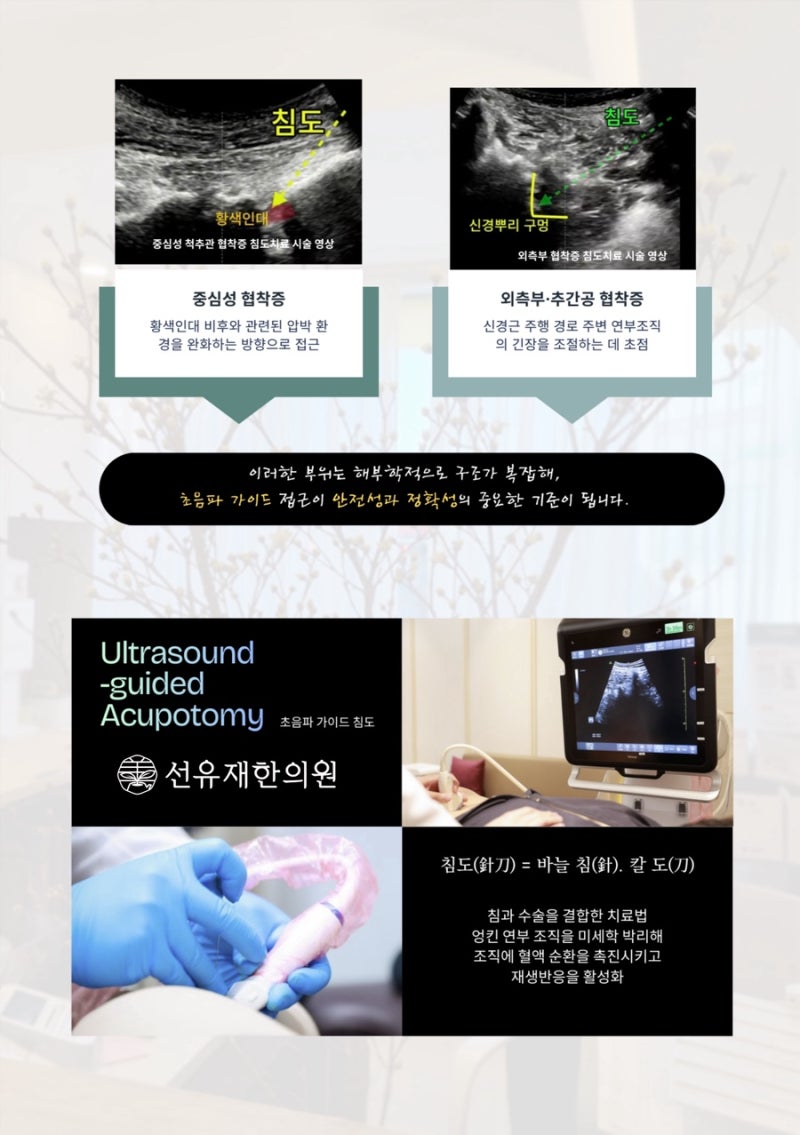
Why Choose Acupotomy as a Non-Surgical Method! Sunyujae Korean Medicine Clinic Acupotomy. Acupotomy is not a treatment that temporarily suppresses pain. It focuses on the tension and adhesion of soft tissues, especially the hypertrophy and stiffness of the ligamentum flavum and surrounding tissues, aiming to alleviate the mechanical compression environment around the nerves.
This approach, in lumbar spinal stenosis including foraminal stenosis, can be understood as a non-surgical Korean medicine treatment strategy that can help reduce nerve compression and improve symptoms. At Sunyujae Korean Medicine Clinic, we evaluate both symptoms and structure for lumbar spinal stenosis and provide non-surgical Korean medicine treatment tailored to the cause of nerve compression, aiming for a precise and safe approach with ultrasound-guided acupotomy.
The purpose of lumbar spinal stenosis treatment is not to eliminate all deformed structures. The core of treatment is to create an environment where nerves are no longer excessively compressed, allowing them to maintain or recover function, thereby protecting daily life and walking ability. In early or intermediate-stage stenosis, it is not always necessary to choose surgery first.
At this stage, through non-surgical Korean medicine treatment that controls the tension, adhesion, and inflammatory responses of soft tissues causing compression, symptom control and functional maintenance can be prioritized. Ultrasound-guided acupotomy is not a treatment that removes or fixes structures, but rather a treatment that organizes the environment around the nerves, creating space for them to function again.
The prognosis of lumbar spinal stenosis depends more on the current state of the nerves than on imaging results or whether surgery is performed. Therefore, treatment should always begin by confirming “Is this nerve currently in a state where it can recover?” I hope this article helps you understand lumbar spinal stenosis not merely as an imaging finding, but as a flow of structure and nerve function.
We hope you will join Sunyujae Korean Medicine Clinic, which shares valuable information for a healthy life. Sunyujae Korean Medicine Clinic in Suji-gu pursues evidence-based medicine and integrative medicine.
This post was written directly by the medical staff of Sunyujae Korean Medicine Clinic to provide medical information, in compliance with Article 56(2) and Article 57(3) of the Medical Service Act. The duration and outcome of treatment may vary from person to person, so please consult a qualified practitioner before beginning treatment.
Consultation & Booking
Have questions? Reach us anytime via KakaoTalk or phone.