
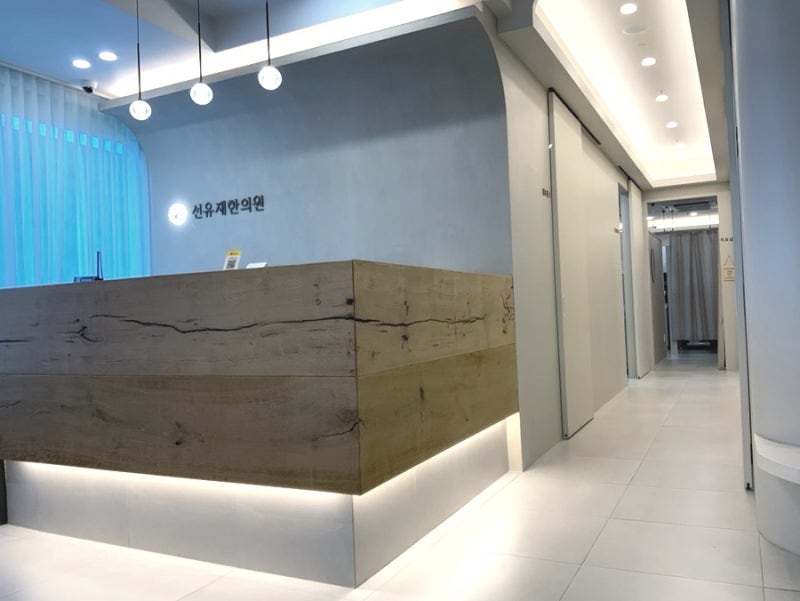
Hello, this is Sunyujae Korean Medicine Clinic, where kind hearts reside.

Hello, this is Dr. Chae, director of Sunyujae Korean Medicine Clinic. Many people express frustration, saying that despite their test results showing no abnormalities, their pain persists. In fact, such cases might be due to a condition called ‘central sensitization.’ Simply put, it’s a phenomenon where the brain and spinal cord, or the central nervous system, become overly sensitive to pain, causing even minor stimuli to be perceived as severe pain.
Today, I will easily explain what ‘central sensitization’ is, why it occurs, and how it can be treated. Central Sensitization refers to a state where the brain and spinal cord (central nervous system) become excessively sensitive to pain signals. Originally, pain is a warning signal when there’s a problem in the body, such as trauma or inflammation. However, when pain stimuli are repeated or persist for a long time, the brain remembers and learns that pain pathway.
As a result, even when there is little or no stimulus, or the stimulus has weakened, pain continues to be felt, and even small stimuli cause excessive pain. This chronicization of pain is precisely central sensitization. The phenomenon where the brain and spinal cord systems that transmit and process pain react hypersensitively is called ‘Central Sensitization.’ In other words, it’s a state where the body overreacts and continues to feel pain even when there is no or only a weak pain stimulus.
“Not all pain is the same.” Pain is not simply a feeling of ‘hurt.’ Medically, central sensitization at Sunyujae Korean Medicine Clinic in Suji-gu is divided into three types based on its cause and the nervous system’s response. Sunyujae Korean Medicine Clinic in Suji-gu 1. Nociceptive Pain
Common pain caused by tissue damage or inflammation – e.g., sprains, bruises, fractures, post-surgical pain 2. Neuropathic Pain Pain caused by nerve damage – e.g., postherpetic neuralgia, diabetic peripheral neuropathy 3. Nociplastic Pain In this type, the key phenomenon is ‘Central Sensitization,’ where the pain control function of the brain and spinal cord becomes hypersensitive.
This phenomenon is key. Cases where pain occurs without tissue damage or nerve damage – e.g., fibromyalgia, chronic low back pain, chronic headaches, irritable bladder pain. Pain is recognized as a ‘disease of the nervous system.’ Recently, the pain medicine community at Sunyujae Korean Medicine Clinic in Suji-gu views chronic pain not merely as a result of tissue damage or inflammation, but as a disease caused by changes in nervous system function.
In particular, the phenomenon of ‘Central Sensitization,’ where the pain circuits of the brain and spinal cord become hypersensitive, is being identified as a major cause. In this state, pain can be felt even without an actual injury, and it often cannot be resolved with conventional painkillers alone. These symptoms, could it be central sensitization?
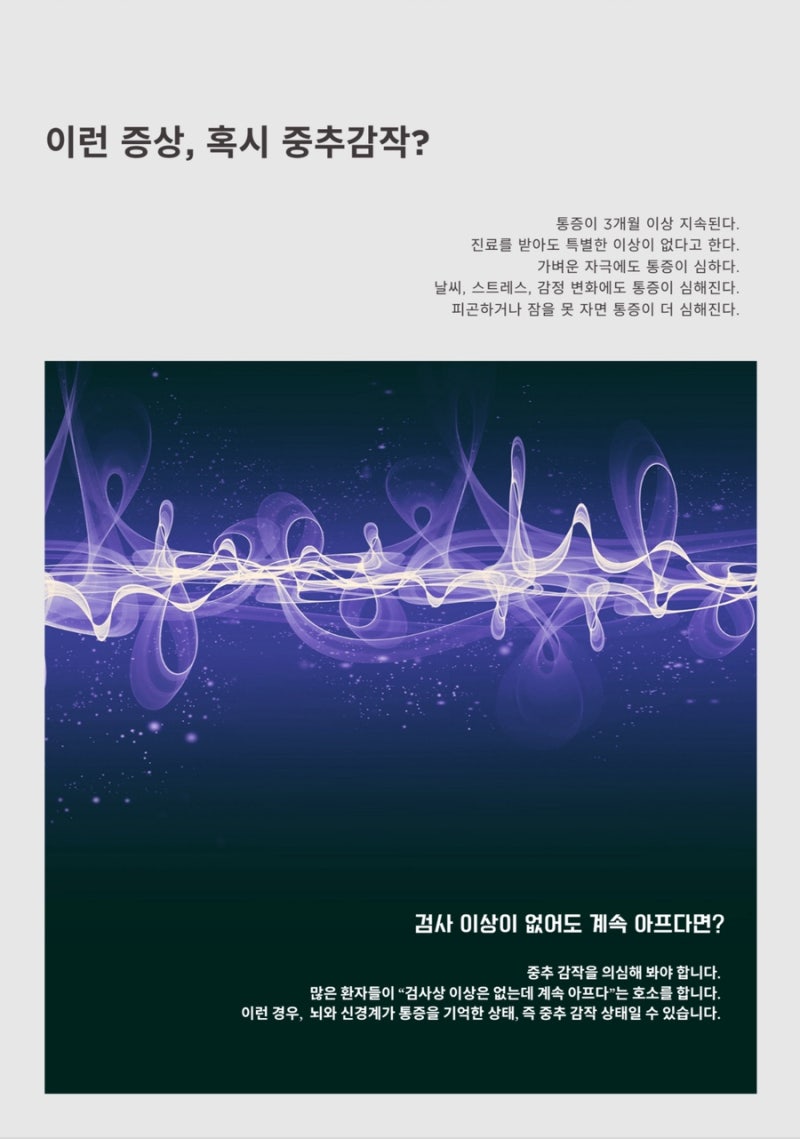
Sunyujae Korean Medicine Clinic in Suji-gu * Pain persists for more than 3 months. * Even after medical examination, no specific abnormalities are found. * Pain is severe even with light stimuli. * Pain worsens with changes in weather, stress, or emotions. * Pain becomes more severe when tired or lacking sleep. If you continue to experience pain despite no abnormalities in tests, you should suspect central sensitization.
Sunyujae Korean Medicine Clinic in Suji-gu Many patients complain, “There are no abnormalities on tests, but I’m still in pain.” In such cases, the brain and nervous system may be in a state where they remember pain, i.e., central sensitization. Learning about central sensitization with Dr. Chae at Sunyujae Korean Medicine Clinic in Suji-gu – Central sensitization! Chronic pain due to hypersensitive brain and nerves
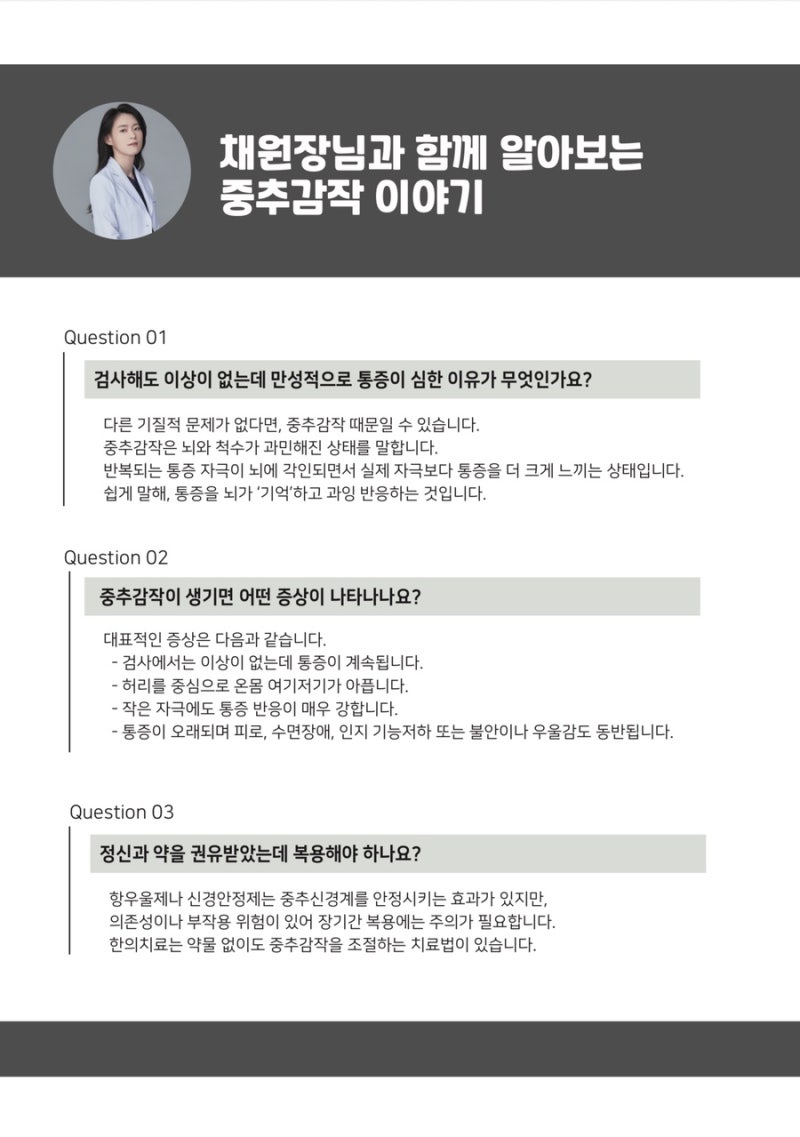
1. Why do I experience severe chronic pain even when tests show no abnormalities? A. If there are no other organic problems,
it could be due to central sensitization. Central sensitization refers to a state where the brain and spinal cord become hypersensitive. Repeated pain stimuli become imprinted in the brain, leading to a state where pain is felt more intensely than the actual stimulus.
Simply put, the brain ‘remembers’ the pain and overreacts. 2. What symptoms appear when central sensitization occurs?
A. Typical symptoms are as follows: Pain persists even though tests show no abnormalities.
Various parts of the body ache, especially around the lower back. The pain response is very strong even to small stimuli. Prolonged pain is accompanied by fatigue, sleep disorders, cognitive decline, or anxiety and depression.
3. I was recommended psychiatric medication; should I take it? A. Antidepressants or tranquilizers
have the effect of stabilizing the central nervous system, but long-term use requires caution due to the risk of dependence or side effects. Korean medicine treatment offers methods to manage central sensitization without medication. 4. How does Korean medicine treat central sensitization?
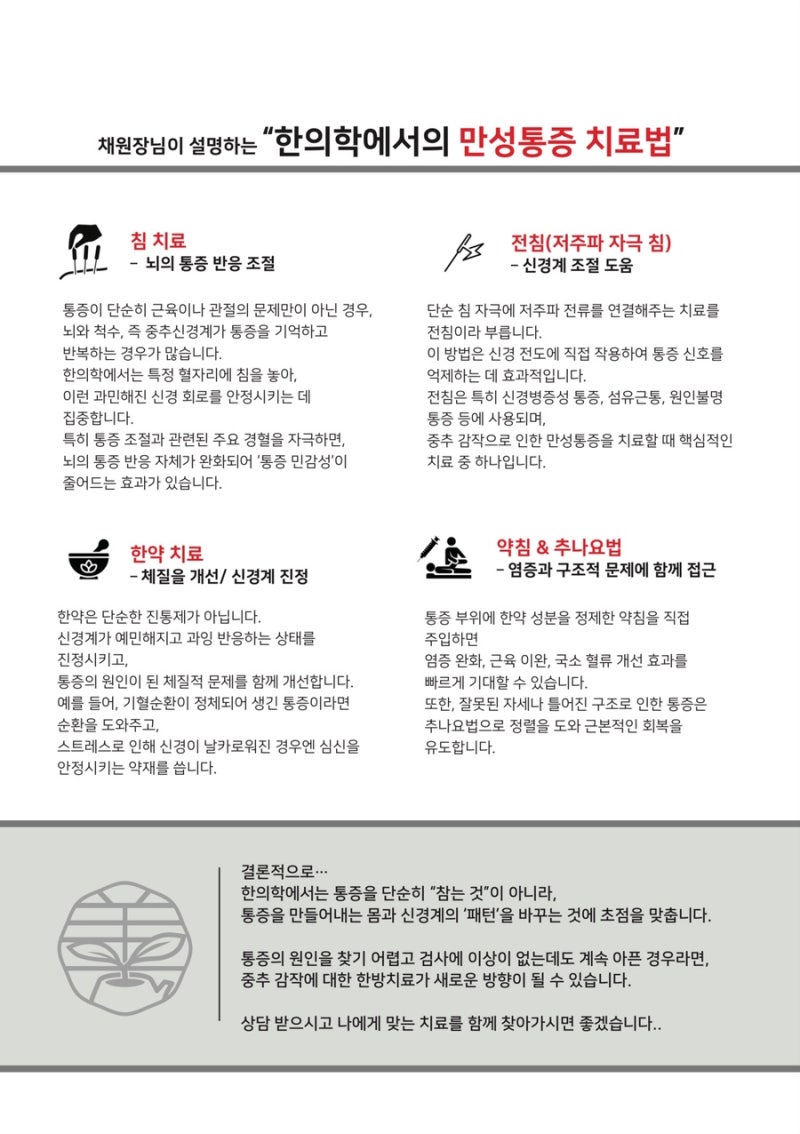
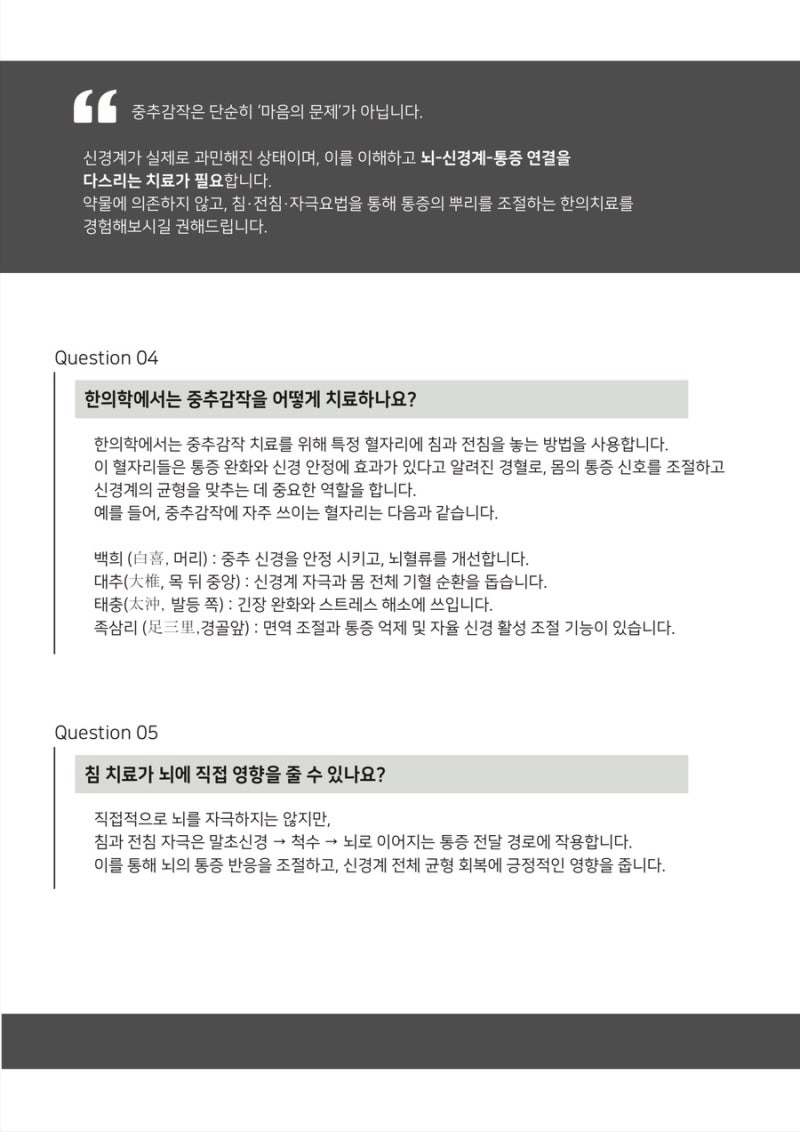
A. In Korean medicine, acupuncture and electroacupuncture are used at specific acupoints to treat central sensitization. These acupoints are known to be effective for pain relief and nerve stabilization, playing an important role in regulating the body’s pain signals and balancing the nervous system.
For example, acupoints frequently used for central sensitization include:
* Baekhui (白喜, head): Stabilizes the central nervous system and improves cerebral blood flow.
* Daechu (大椎, back of the neck * Daechu (大椎, center of the back of the neck): Aids nervous system stimulation and overall qi and blood circulation in the body.
* Taechung (太沖, top of the foot): Used for tension relief and stress reduction.
* Joksamni (足三里, front of the tibia): Has functions for immune regulation, pain suppression, and autonomic nerve activity regulation.
5. Can acupuncture treatment directly affect the brain? A. While it does not directly stimulate the brain,
acupuncture and electroacupuncture stimuli act on the pain transmission pathway that extends from the peripheral nerves → spinal cord → to the brain. Through this, they regulate the brain’s pain response and positively influence the restoration of overall nervous system balance. Central sensitization is not simply a ‘matter of the mind.’
It is a state where the nervous system is actually hypersensitive, and treatment that understands this and manages the brain-nervous system-pain connection is necessary. We recommend experiencing Korean medicine treatment, which controls the root of pain through acupuncture, electroacupuncture, and stimulation therapy, without relying on medication. https://m.blog.naver.com/sunyujae21/223966208323 👉 The image below contains content from Monthly Sunyujae, which you may find helpful.
We hope you will join Sunyujae Korean Medicine Clinic in sharing valuable information for a healthy life. Sunyujae Korean Medicine Clinic in Suji-gu pursues evidence-based medicine and integrative medicine.
This post was written directly by the medical staff of Sunyujae Korean Medicine Clinic to provide medical information, in compliance with Article 56(2) and Article 57(3) of the Medical Service Act. The duration and outcome of treatment may vary from person to person, so please consult a qualified practitioner before beginning treatment.
Consultation & Booking
Have questions? Reach us anytime via KakaoTalk or phone.