![수지구 한의원 [선유재한의원] 불면증, 근본 원인을 찾아야 합니다.](https://syjkmc.kr/wp-content/uploads/2026/06/223865103316_img_0.png)
Hello, this is Sunyujae Korean Medicine Clinic, where good hearts reside.
One of the most common things we hear in the clinic is, “I haven’t been sleeping well lately.” Everyone experiences a sleepless night or two, but the story changes if those nights continue for days, weeks, or even months. Insomnia isn’t just about not being able to sleep; it can be a sign that the balance between your body and mind has been disrupted.
For insomnia, we must find the root cause. Sleep is the foundation of our health and a time for recovery. If this time is disturbed, it can lead to various problems, including fatigue, mood swings, decreased concentration, and weakened immunity.
Today, we’d like to discuss insomnia, a condition frequently encountered in clinical practice, from a Korean medicine perspective, and explore ways to naturally restore sleep.
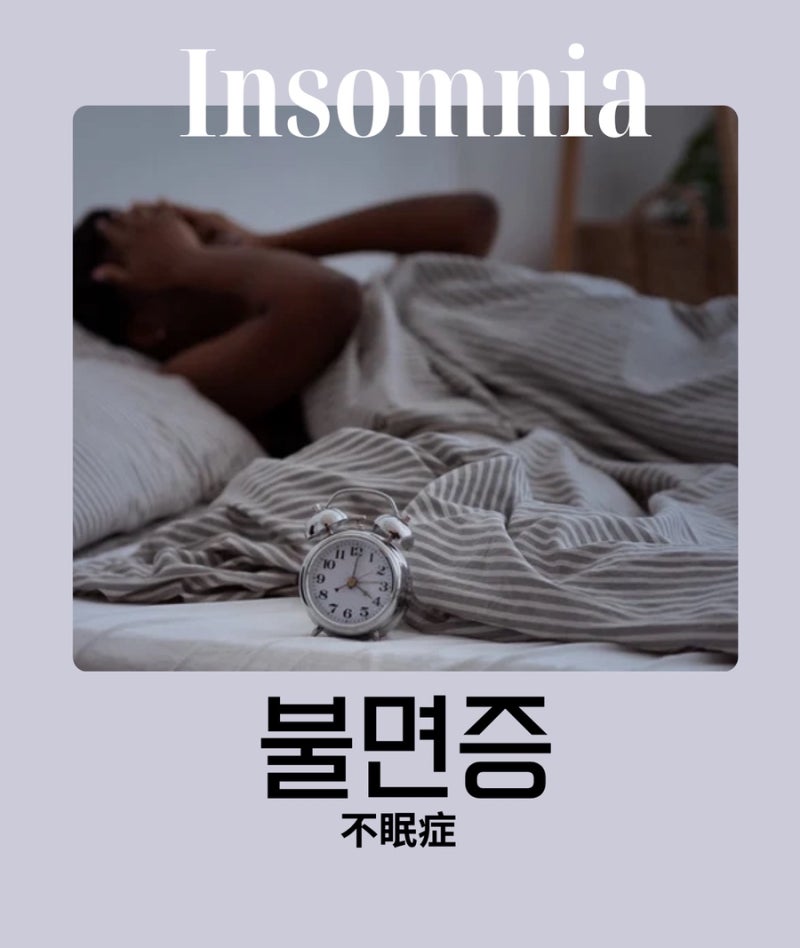
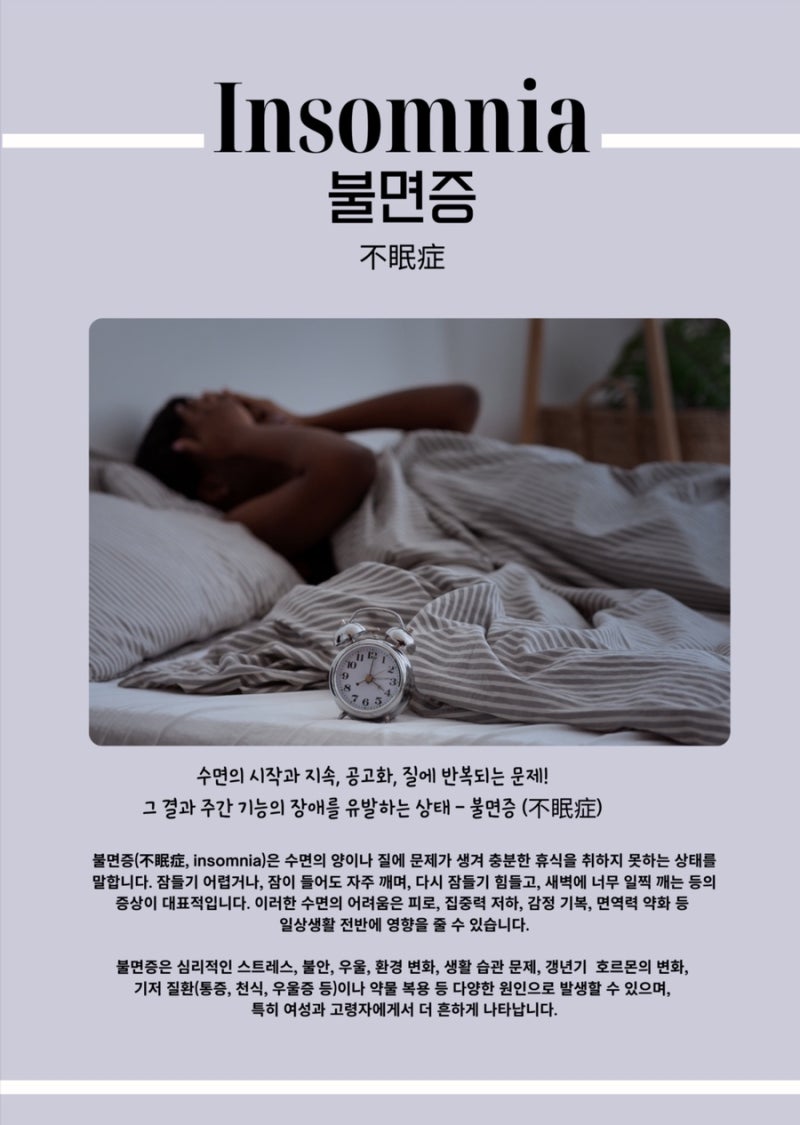
Repeated problems with sleep onset, maintenance, consolidation, and quality! A condition that results in impaired daytime functioning – Insomnia (不眠症). Insomnia (不眠症) refers to a state where one cannot get sufficient rest due to problems with the quantity or quality of sleep. Typical symptoms include difficulty falling asleep, frequent waking after falling asleep, difficulty falling back asleep, and waking too early in the morning.
Such sleep difficulties can affect all aspects of daily life, including fatigue, decreased concentration, mood swings, and weakened immunity. Insomnia can arise from various causes such as psychological stress, anxiety, depression, environmental changes, lifestyle issues, menopausal hormonal changes, underlying diseases (pain, asthma, depression, etc.), or medication use, and is particularly common in women and the elderly.
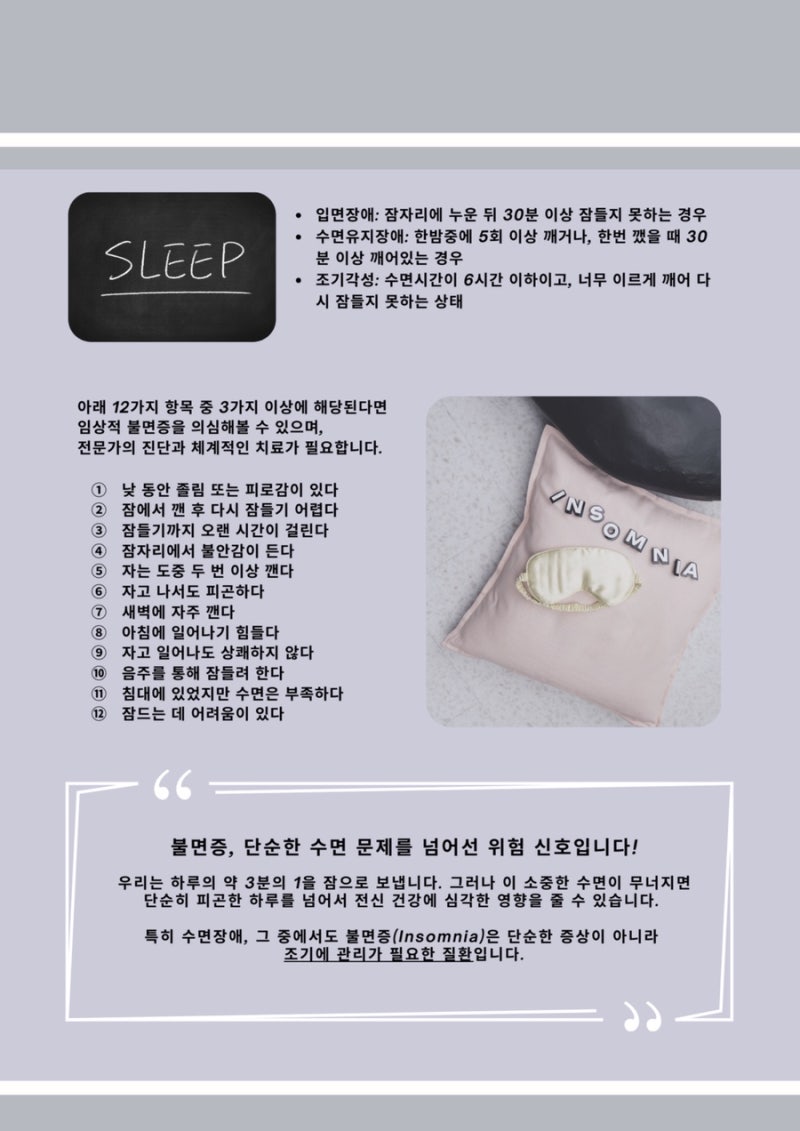
Sleep disorders are broadly classified into sleep onset insomnia (difficulty falling asleep), sleep maintenance insomnia (frequent waking during sleep), and early morning awakening (waking up early in the morning and difficulty falling back asleep).
Sleep Onset Insomnia: — Difficulty falling asleep within 30 minutes after lying down in bed
Sleep Maintenance Insomnia: — Waking up five or more times during the night, or staying awake for 30 minutes or more after waking up once
Early Morning Awakening: — Sleep duration is less than 6 hours, and waking up too early with difficulty falling back asleep
If you meet three or more of the 12 criteria below, clinical insomnia may be suspected, requiring professional diagnosis and systematic treatment. ① Feeling drowsy or fatigued during the day ② Difficulty falling back asleep after waking up ③ Takes a long time to fall asleep ④ Feeling anxious in bed ⑤ Waking up two or more times during sleep ⑥ Feeling tired even after sleeping ⑦ Waking up frequently in the early morning ⑧ Difficulty waking up in the morning
⑨ Not feeling refreshed after waking up ⑩ Trying to fall asleep through alcohol consumption ⑪ Was in bed but had insufficient sleep ⑫ Difficulty falling asleep. Insomnia is a danger signal that goes beyond a simple sleep problem! We spend about one-third of our day sleeping. However, if this precious sleep is disrupted, it can have serious effects on overall health, beyond just a tired day.
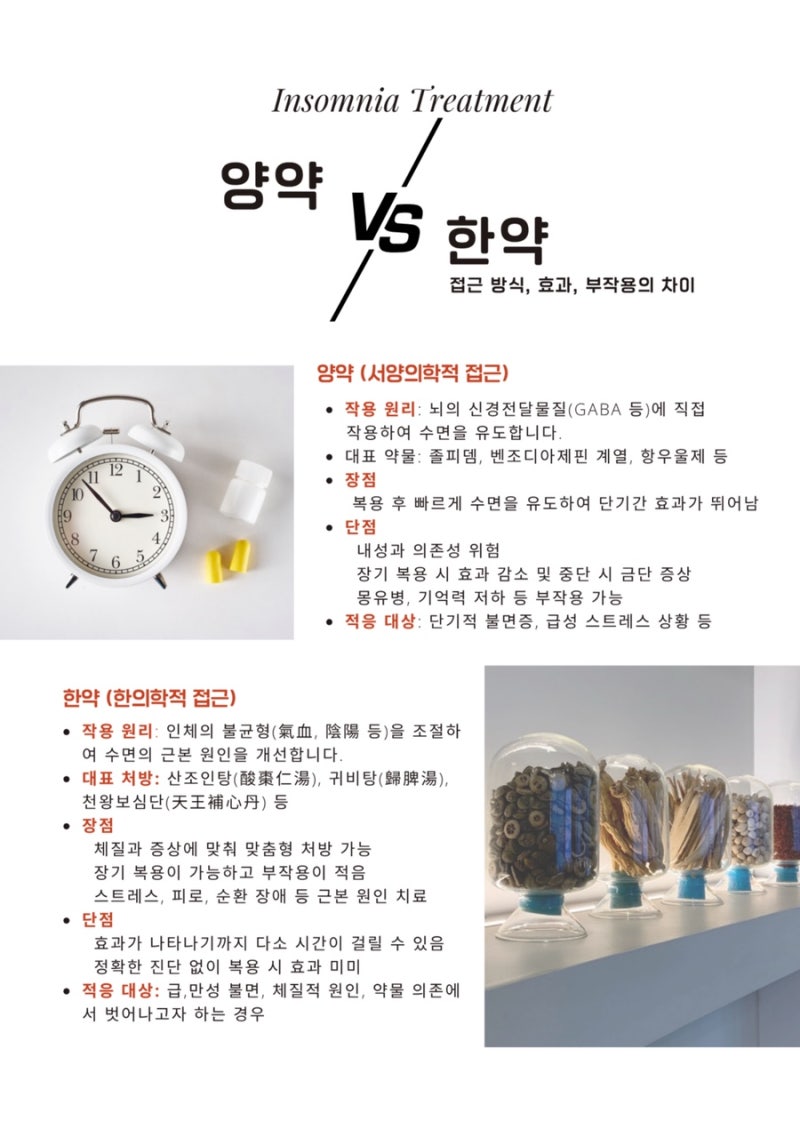
In particular, sleep disorders, especially insomnia, are not merely symptoms but conditions that require early management. In treating insomnia, Korean medicine focuses on addressing the root cause by restoring the balance between body and mind, rather than simply suppressing symptoms. The core of insomnia treatment is to restore mental and physical stability and balance Yin and Yang.
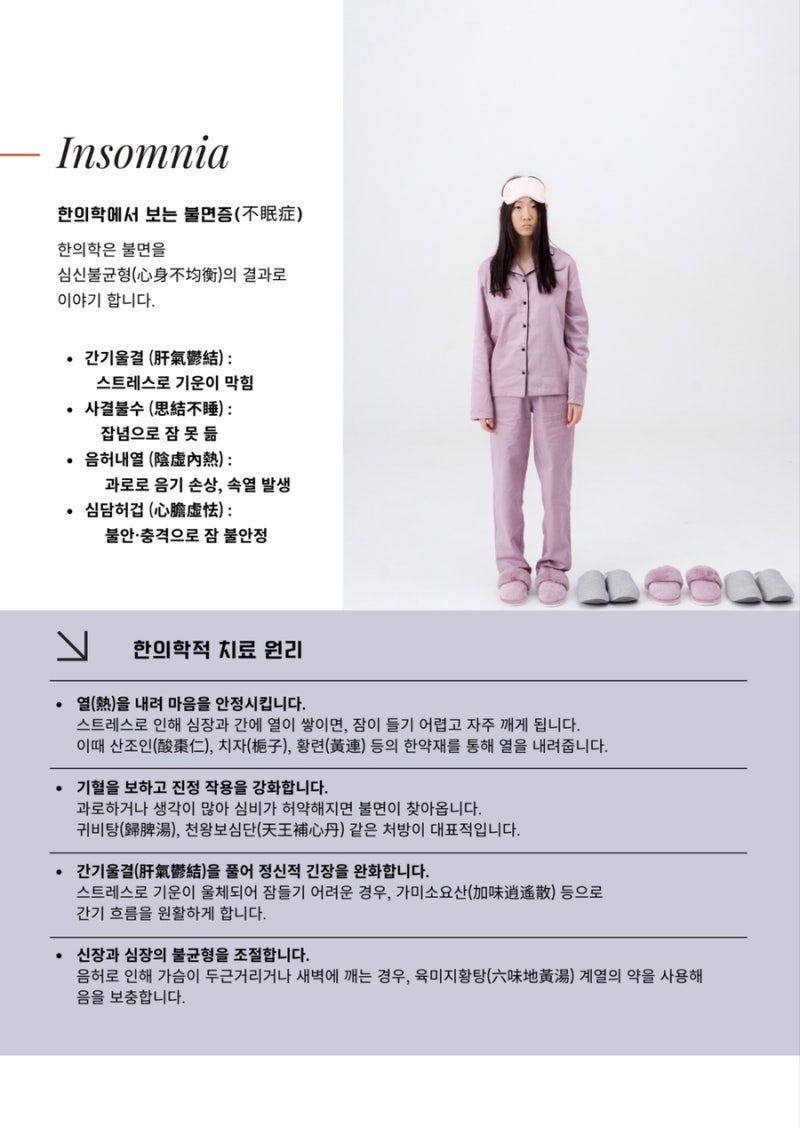
Herbal medicine prescriptions aim to replenish deficient liver blood (간혈) and kidney essence (신정), strengthen Yin energy (음기), and stabilize excessive Yang energy (양기). Furthermore, biofunctional self-regulation therapy helps normalize the brain’s arousal state, enabling the patient to sleep at night and remain awake during the day. Insomnia (不眠症) from a Korean Medicine Perspective. Korean medicine views insomnia as a result of an imbalance between the mind and body (心身不均衡).
– Liver Qi Stagnation (肝氣鬱結) : Blockage of energy due to stress – Overthinking Leading to Sleeplessness (思結不睡) : Inability to sleep due to excessive thoughts – Yin Deficiency with Internal Heat (陰虛內熱) : Damage to Yin energy due to overwork, leading to internal heat – Heart and Gallbladder Deficiency with Fear (心膽虛怯) : Unstable sleep due to anxiety or shock. Principles of Korean Medicine Treatment: Reduces heat and calms the mind. When heat accumulates in the heart and liver due to stress, it becomes difficult to fall asleep and one wakes up frequently.
At this time, herbal medicines such as Sanjoin (酸棗仁), Chija (梔子), and Hwangnyeon (黃連) are used to reduce heat. They replenish Qi and Blood and enhance calming effects. When the Heart and Spleen become weak due to overwork or excessive thinking, insomnia occurs.
Prescriptions like Gwibitang (歸脾湯) and Cheonwangbosimdan (天王補心丹) are typical examples. They relieve Liver Qi Stagnation (肝氣鬱結) to alleviate mental tension. When energy is stagnant due to stress, making it difficult to fall asleep, Gami-Soyosan (加味逍遙散) and similar formulas are used to facilitate the flow of Liver Qi.
They regulate the imbalance between the Kidneys and Heart. In cases of palpitations or early morning awakening due to Yin deficiency, formulas from the Yukmijihwang-tang (六味地黃湯) family are used to replenish Yin. Insomnia is not merely a symptom of not being able to sleep, but a chronic problem that affects overall quality of life.
Lack of sleep can lead to decreased concentration, difficulty with emotional regulation, weakened immunity, and chronic fatigue, and in the long term, it can also be accompanied by cardiovascular diseases or depression. https://m.blog.naver.com/sunyujae21/223865103316 👉 Please refer to the image below, which contains content from Monthly Sunyujae.
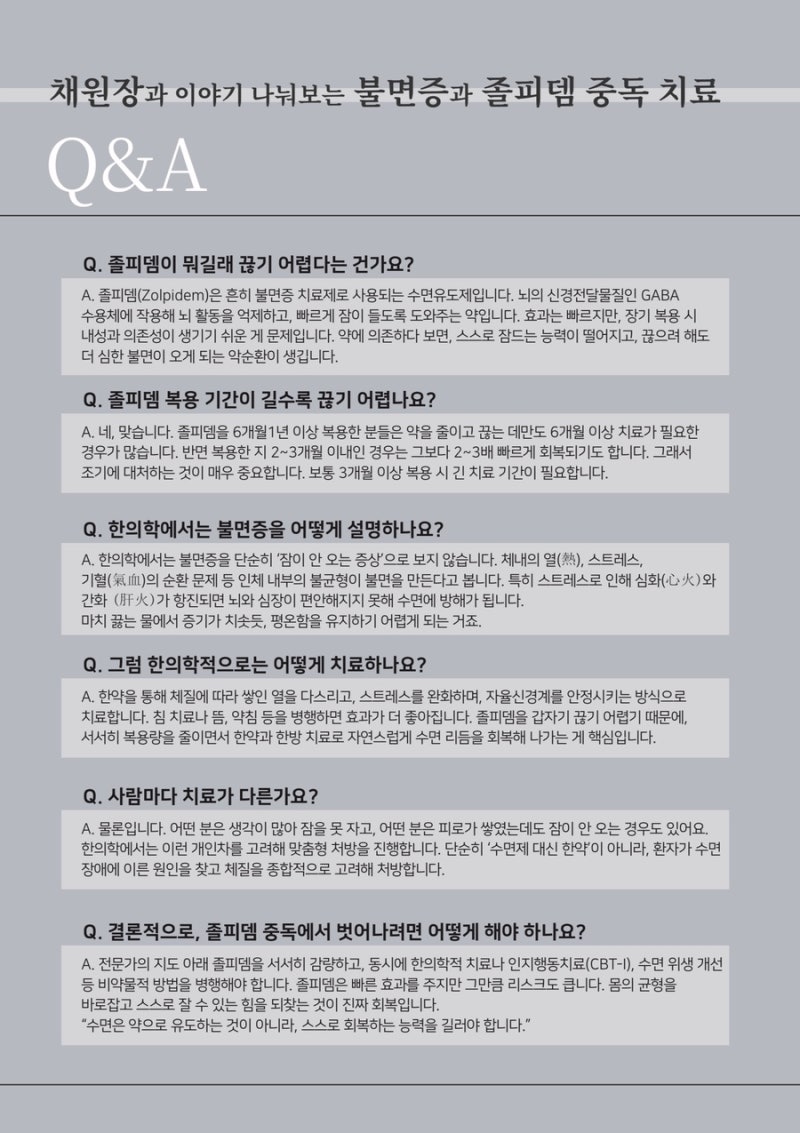
We hope you will join Sunyujae Korean Medicine Clinic, which shares valuable information for a healthy life. Sunyujae Korean Medicine Clinic in Suji-gu pursues evidence-based medicine and integrative medicine.
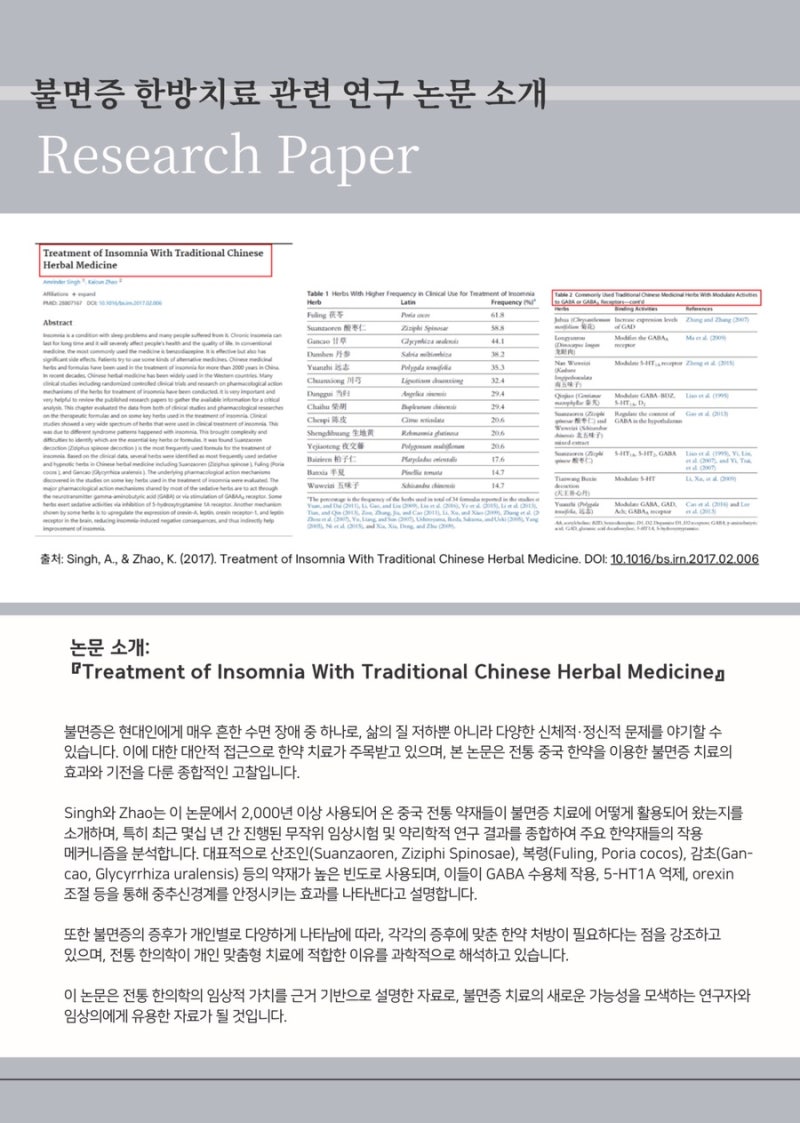
This post was written directly by the medical staff of Sunyujae Korean Medicine Clinic to provide medical information, in compliance with Article 56(2) and Article 57(3) of the Medical Service Act. The duration and outcome of treatment may vary from person to person, so please consult a qualified practitioner before beginning treatment.
Consultation & Booking
Have questions? Reach us anytime via KakaoTalk or phone.