![[선유재 한의원] 추나 치료에 대해 알려드립니다.](https://syjkmc.kr/wp-content/uploads/2026/06/223672707048_img_0.jpeg)
Hello, I am Dr. Hyocheong Chae, director of Sunyujae Korean Medicine Clinic in Dongcheon-dong, a place where kind hearts reside.
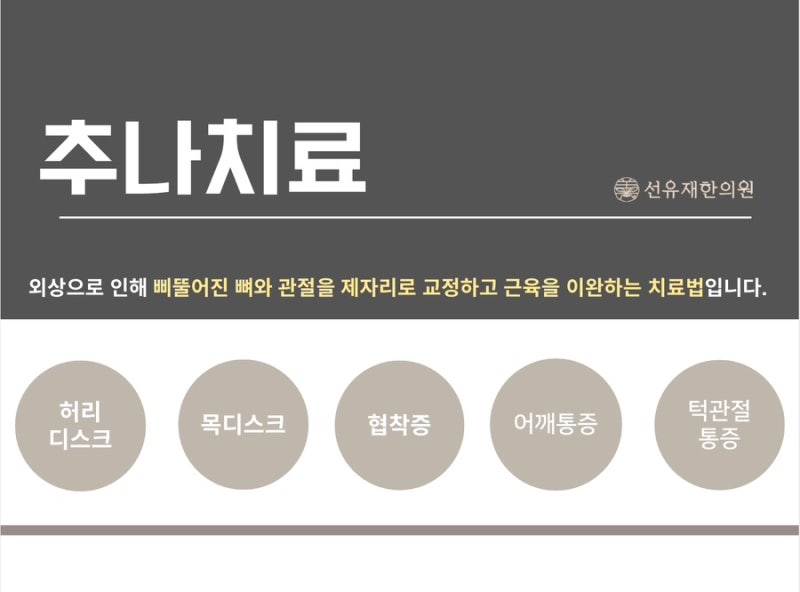
One of the signature treatment techniques at Sunyujae Korean Medicine Clinic is Chuna manual therapy. It is an effective treatment for correcting imbalances in the spine and joints, alleviating pain, and restoring physical function, and many patients are satisfied with it. Chuna manual therapy at Sunyujae Korean Medicine Clinic is meticulously performed, tailored to each patient’s condition and symptoms.
Those who have experienced Director Jeon’s Chuna manual therapy consistently say, “It’s so refreshing,” and “They treat me more meticulously and accurately than anywhere else,” expressing their satisfaction. Let me tell you about the detailed and customized Chuna manual therapy offered at Sunyujae Korean Medicine Clinic.
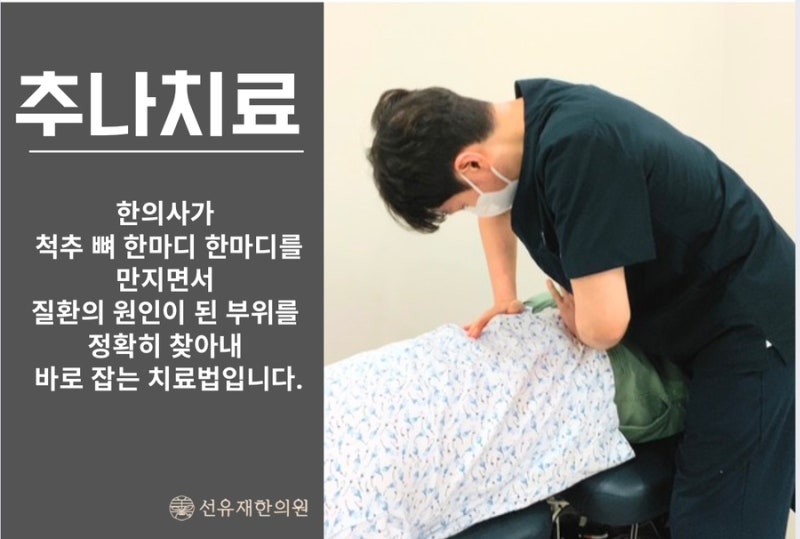
What is Chuna manual therapy? Chuna manual therapy is a treatment method that combines traditional principles of Korean medicine with modern physical correction techniques. A Korean medicine doctor directly corrects misaligned joints and muscles to relieve pain and restore the body’s balance.
‘Chu’ (推) means to push, and ‘Na’ (拿) means to pull, so aligning the body through pushing and pulling movements is the core of the treatment. What are the effects of Chuna manual therapy? 1. Improvement of musculoskeletal disorders
It is effective for various spinal and joint-related conditions such as herniated discs (lumbar and cervical), scoliosis, and text neck. 2. Pain relief It helps reduce chronic pain such as lower back pain, headaches, and shoulder pain by relaxing muscle and joint tension.
3. Posture correction It helps correct misaligned pelvis and spine caused by poor posture or habits, helping maintain proper posture. 4. Improved blood circulation
Correcting the alignment of the spine and joints reduces pressure on nerves and blood vessels, leading to smoother blood circulation. What is Chuna manual therapy? It is a manual therapy that primarily helps correct imbalances in the spine and joints and restore body function.
What kind of Chuna manual therapy does Sunyujae Korean Medicine Clinic offer? Chuna manual therapy is a Korean medicine manual technique that primarily helps correct imbalances in the spine and joints and restore body function. This treatment method gently corrects the patient’s body using hands or instruments and is effective in alleviating various symptoms.
There are several types of Chuna manual therapy, and the appropriate technique is selected based on the patient’s condition and symptoms. Here are three of the most frequently used Chuna manual therapy methods. Three types of Chuna manual therapy 1. Jeonggol Chuna (Bone-setting Chuna)
Jeonggol Chuna is a treatment method that primarily corrects the spine and joints. To correct imbalances in the spine, hands or instruments are used to adjust the spine, joints, and surrounding muscles. This method is effective in treating text neck, disc conditions, and more.
2. Myofascial Release Chuna 2. Myofascial Release Chuna Myofascial Release Chuna is a treatment method that relaxes muscle and ligament tension. This method focuses on gently loosening stiff muscles and promoting blood circulation to restore body function. By pushing and pulling to relax muscles, it effectively alleviates symptoms without causing significant discomfort to the patient.
3. Craniosacral Chuna Craniosacral Chuna is a specialized Chuna technique that adjusts the cranium and sacrum, addressing issues related to the nervous system. This technique helps balance the body’s autonomic nervous system by stimulating the parasympathetic nerves.
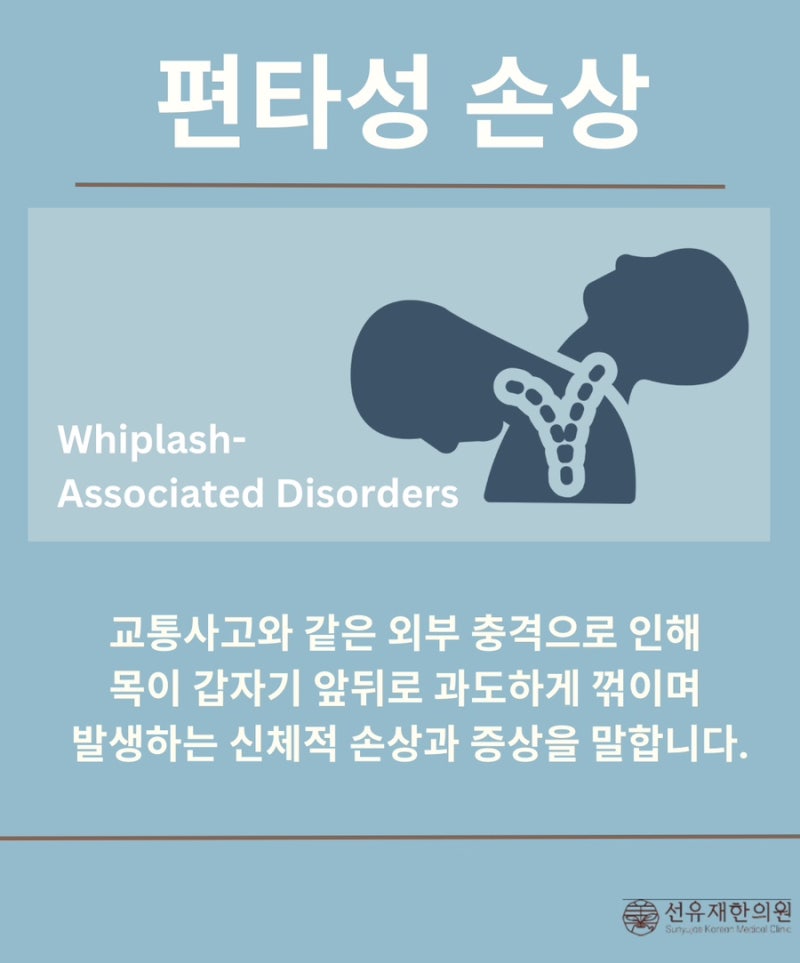
It is effective for chronic headaches, dizziness, and indigestion. Importance of Chuna Manual Therapy After a Car Accident In a car accident, the neck and lower back areas, in particular, receive a significant impact. During an accident, whiplash injury can occur, causing the neck and head to violently snap back and forth, which can be accompanied by headaches, dizziness, and nausea.
For car accident patients, it is important to perform gentle and detailed corrections through Chuna manual therapy. Strong pressure or abrupt corrections can actually increase pain, so caution is advised. Therefore, after a car accident, Myofascial Release Chuna is primarily used.
It is particularly effective in gently relaxing stiff muscles and damaged ligaments, helping to balance the left and right muscles and restore internal balance. It is effective in alleviating subtle inflammation and muscle pain that occur after an accident.
Chuna Manual Therapy Q&A 1. Is Chuna manual therapy painful? While Chuna manual therapy aims to relieve pain, some parts of the treatment process may cause slight discomfort. However, it focuses on gentle relaxation and can be adjusted to avoid causing excessive pain.
It is performed with an appropriate intensity tailored to the patient’s condition, so you can receive treatment without major worries. 2. What is correction pain?
Correction pain is a temporary stiffness that can occur after Chuna manual therapy. It is a natural phenomenon that can arise as the body’s imbalances are corrected during the treatment process. It usually subsides the day after treatment, and many people do not experience correction pain at all. 3. How long does Chuna manual therapy take?
The duration of Chuna manual therapy varies depending on the patient’s condition, but generally, one treatment session takes about 10 to 15 minutes. The time may be adjusted depending on the severity of symptoms or the treated area. 4. How often should I receive it?
The frequency of Chuna manual therapy depends on the patient’s condition. For acute pain, it is advisable to receive it frequently initially, and then gradually increase the treatment interval as the pain subsides. For the purpose of text neck correction, generally 10 sessions (twice a week for 5 weeks) are sufficient to maintain the corrected state.
Chuna manual therapy is a Korean medicine treatment that goes beyond simply reducing pain, aiming to restore body balance and promote overall health. It can be an effective alternative, especially for those suffering from post-car accident sequelae.
Questions about Chuna Manual Therapy After a Car Accident Q. How long does Chuna manual therapy for car accidents take? Chuna manual therapy for car accidents varies depending on the patient’s condition, but one treatment session usually takes about 10 minutes or less.
Consistent treatment is important to enhance its effectiveness. Q. Should I receive it even if the car accident was minor?
Even a minor fender bender can leave an impact on the body. It is especially advisable to receive early treatment because pain may appear or become chronic over time. Q. How can I receive Chuna manual therapy with car insurance?
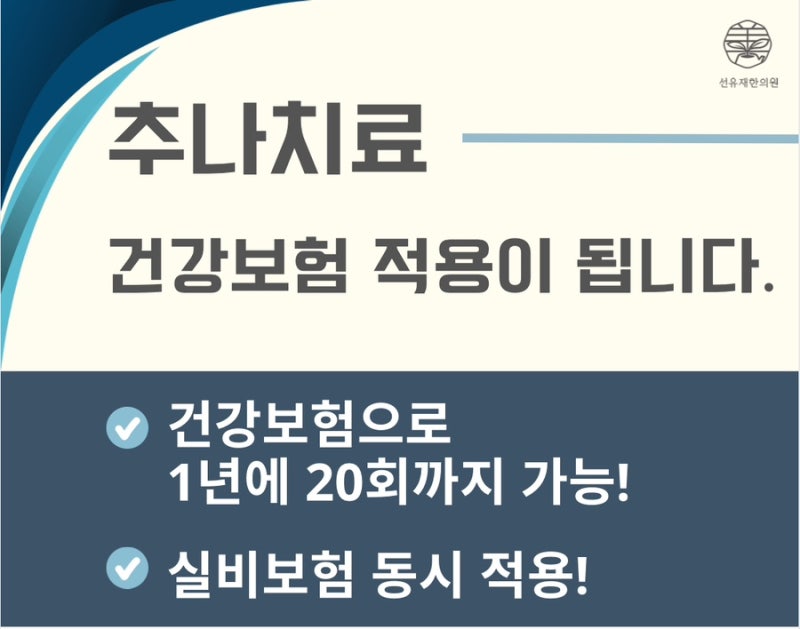
If you provide your accident claim number and insurance company information to a Korean medicine clinic that accepts insurance, you can receive Chuna manual therapy without bearing the treatment costs.
If you have more questions about Chuna manual therapy, please feel free to contact Sunyujae Korean Medicine Clinic anytime. https://m.blog.naver.com/sunyujae21/223672702190 Sunyujae Korean Medicine Clinic in Dongcheon-dong pursues evidence-based integrative medicine.
This post was written directly by the medical staff of Sunyujae Korean Medicine Clinic to provide medical information, in compliance with Article 56(2) and Article 57(3) of the Medical Service Act. The duration and outcome of treatment may vary from person to person, so please consult a qualified practitioner before beginning treatment.
Consultation & Booking
Have questions? Reach us anytime via KakaoTalk or phone.