![[수지 선유재한의원] 한약재 인삼의 효능과 부작용](https://syjkmc.kr/wp-content/uploads/2026/06/223656107189_img_0.png)
Hello, I am Dr. Hyocheong Chae, director of Sunyujae Korean Medicine Clinic in Dongcheon-dong, a place where good hearts reside.
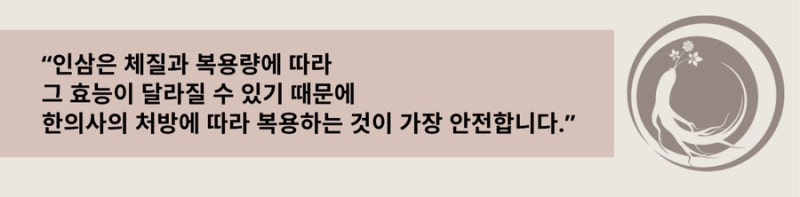
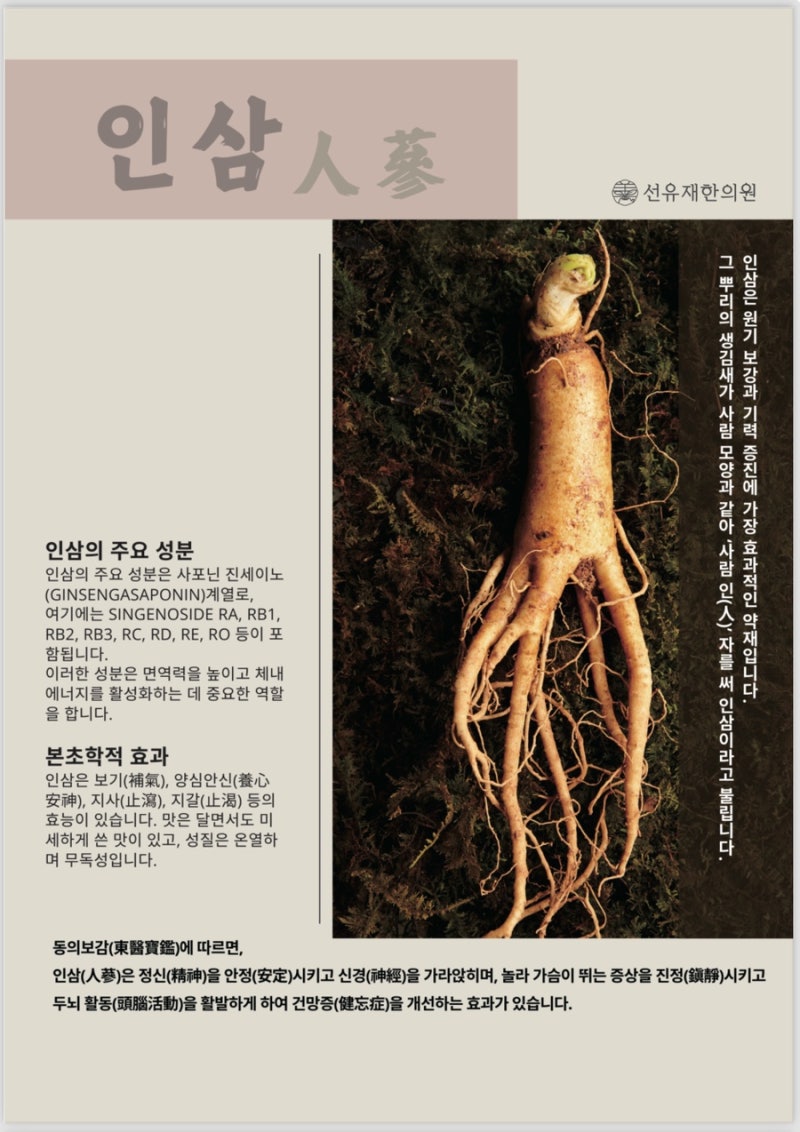
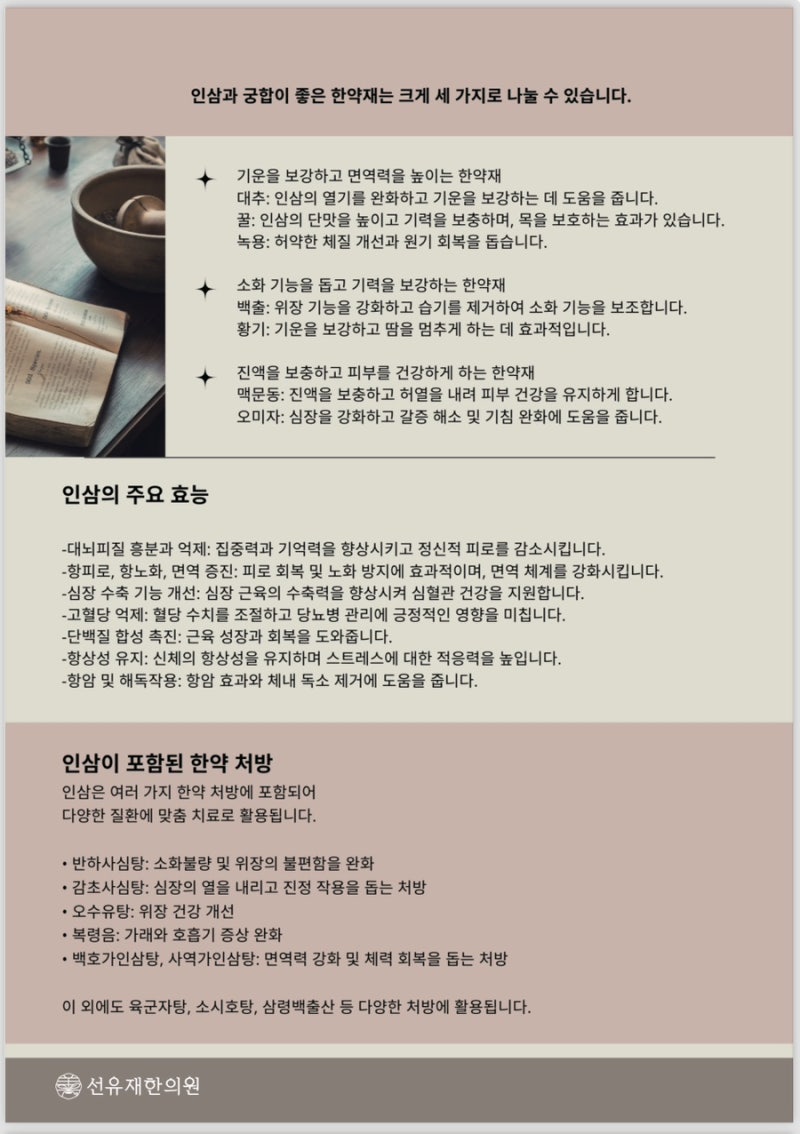
Ginseng (人蔘) is the most effective medicinal herb for replenishing vital energy and boosting stamina. It is called ‘ginseng’ (人蔘) because its root resembles the shape of a person, using the Chinese character ‘人’ (in, meaning person).
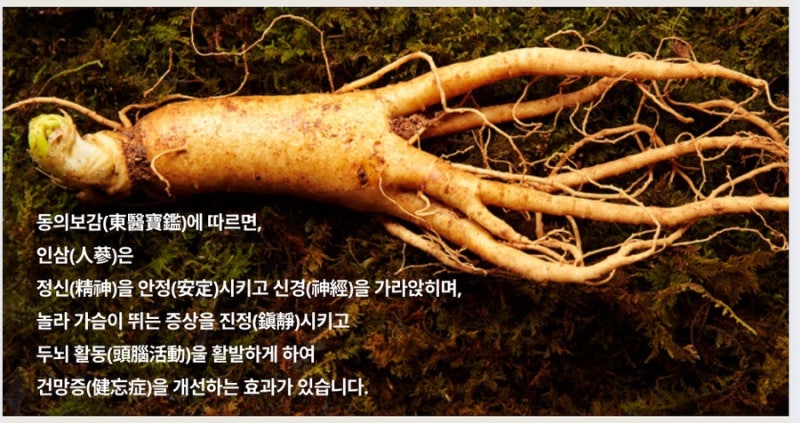
Key Components of Ginseng. The main components of ginseng are saponins of the ginsenoside (Ginsengasaponin) series, which include ginsenosides Ra, Rb1, Rb2, Rb3, Rc, Rd, Re, Ro, and others. These components play a crucial role in boosting immunity and activating energy within the body.
Pharmacological Effects. Ginseng has effects such as tonifying Qi (補氣), nourishing the heart and calming the spirit (養心安神), stopping diarrhea (止瀉), and quenching thirst (止渴). Its taste is sweet with a subtle bitterness, its nature is warm, and it is non-toxic. Is it okay to take ginseng and red ginseng as single herbs for a long period?
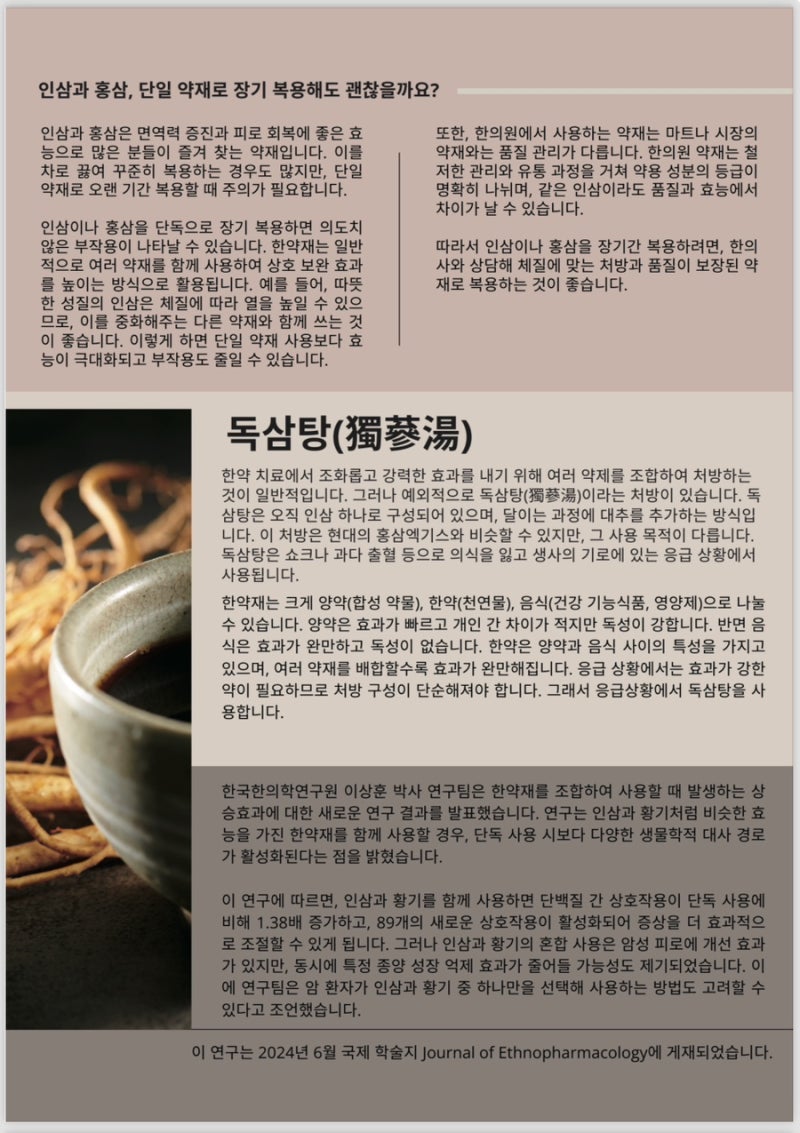
Ginseng and red ginseng are popular medicinal herbs, sought after by many for their excellent effects in boosting immunity and recovering from fatigue. While many brew them as tea and consume them regularly, caution is needed when taking them as single herbs for extended periods. Long-term consumption of ginseng or red ginseng alone can lead to unintended side effects.
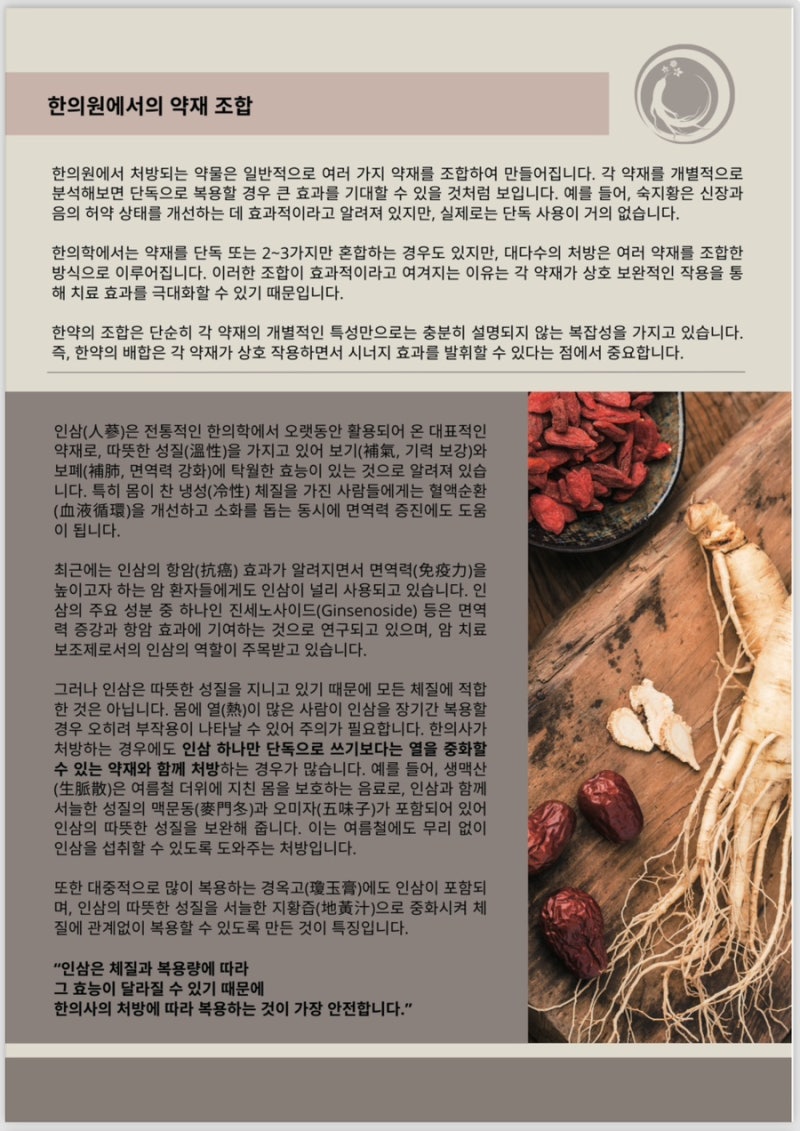
Korean medicinal herbs are generally used in combination with several other herbs to enhance their synergistic and complementary effects. For example, ginseng, which has a warm nature, can increase heat in the body depending on one’s constitution, so it is best used with other herbs that can neutralize this effect. This approach maximizes efficacy and reduces side effects compared to using a single herb.
Furthermore, the medicinal herbs used in Korean medicine clinics differ in quality control from those found in supermarkets or markets. Herbs from Korean medicine clinics undergo rigorous management and distribution processes, with clear distinctions in the grade of their medicinal components, meaning that even the same ginseng can vary in quality and efficacy. Therefore, if you plan to consume ginseng or red ginseng for an extended period, it is advisable to consult with a Korean medicine doctor to receive a prescription tailored to your constitution and to use herbs with guaranteed quality.
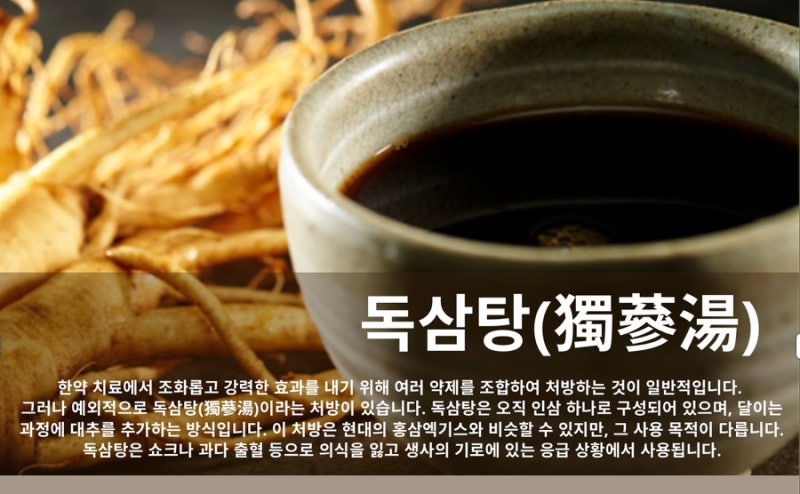
Doksam-tang (獨蔘湯). In Korean medicine treatment, it is common to prescribe a combination of several herbs to achieve harmonious and potent effects. However, there is an exceptional prescription called Doksam-tang (獨蔘湯). Doksam-tang consists solely of ginseng, with jujubes added during the decoction process.
This prescription may seem similar to modern red ginseng extract, but its purpose of use is different. Doksam-tang is used in emergency situations where a person has lost consciousness due to shock or excessive bleeding and is at the brink of life and death. Medicinal substances can be broadly categorized into Western medicine (synthetic drugs), Korean medicine (natural products), and food (health functional foods, nutritional supplements).
Western medicine has fast effects and less individual variation, but it is highly toxic. In contrast, food has mild effects and no toxicity. Korean medicine possesses characteristics between Western medicine and food, and its effects become milder as more herbs are combined.
In emergency situations, strong-acting medicine is required, so the prescription composition must be simple. This is why Doksam-tang is used in emergencies. Dr. Lee Sang-hoon’s research team at the Korea Institute of Oriental Medicine announced new research findings on the synergistic effects that occur when Korean medicinal herbs are used in combination. The study revealed that when Korean medicinal herbs with similar effects, such as ginseng and astragalus (Hwanggi), are used together, various biological metabolic pathways are activated more than when used alone.
According to this study, combining ginseng and astragalus increases protein-protein interactions by 1.38 times compared to using them alone, and activates 89 new interactions, allowing for more effective symptom control. However, while the combined use of ginseng and astragalus showed an improved effect on cancer-related fatigue, it also raised the possibility of reducing certain tumor growth inhibitory effects. Therefore, the research team advised that cancer patients might consider using only one of either ginseng or astragalus.
-This study was published in the international academic journal Journal of Ethnopharmacology in June 2024.-
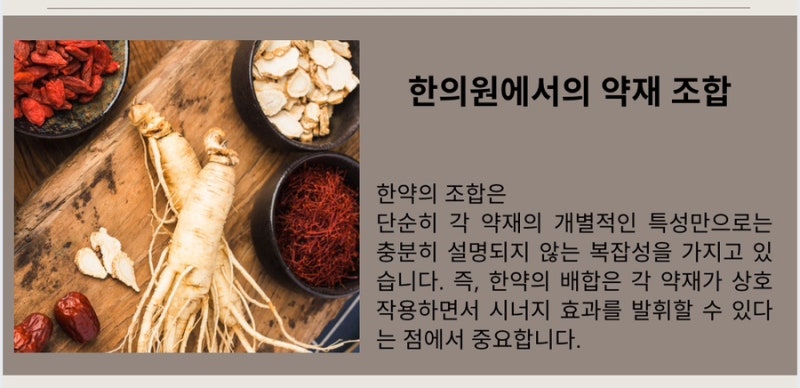
Herbal Combinations in Korean Medicine Clinics. Medications prescribed at Korean medicine clinics are generally formulated by combining various medicinal herbs. If each herb is analyzed individually, it might seem that significant effects could be expected from taking them alone. For example, Rehmannia root (Sookjihwang) is known to be effective in improving kidney and Yin deficiency, but it is rarely used alone in practice.
In Korean medicine, while there are cases where herbs are used alone or in combinations of only two or three, the majority of prescriptions are formulated by combining multiple herbs. These combinations are considered effective because each herb can maximize the therapeutic effect through complementary actions. The combination of Korean medicinal herbs possesses a complexity that cannot be fully explained by the individual characteristics of each herb alone. In other words, the combination of Korean medicinal herbs is crucial because each herb can interact and produce synergistic effects.
Ginseng (人蔘) is a representative medicinal herb that has been utilized for a long time in traditional Korean medicine, known for its warm nature (溫性) and excellent efficacy in tonifying Qi (補氣, strengthening vital energy) and tonifying the lungs (補肺, enhancing immunity). Especially for individuals with a cold constitution (冷性), it helps improve blood circulation (血液循環), aids digestion, and boosts immunity.
Recently, as the anti-cancer (抗癌) effects of ginseng have become known, it is also widely used for cancer patients seeking to boost their immunity (免疫力). Ginsenosides, one of the main components of ginseng, are being studied for their contribution to immune enhancement and anti-cancer effects, and ginseng’s role as an adjuvant in cancer treatment is gaining attention.
However, because ginseng possesses a warm nature, it is not suitable for all body constitutions. Caution is needed as long-term consumption of ginseng by individuals with excessive body heat (熱) may lead to adverse effects. Even when prescribed by a Korean medicine doctor, ginseng is often prescribed with other herbs that can neutralize its warming properties, rather than being used alone.
For example, Saengmaeksan (生脈散) is a beverage that protects the body from summer heat exhaustion. It contains ginseng along with Ophiopogon root (麥門冬) and Schisandra berry (五味子), both of which have a cool nature, complementing ginseng’s warm properties. This prescription allows for the comfortable consumption of ginseng even during summer. Furthermore, Gyeongokgo (瓊玉膏), a widely consumed preparation, also includes ginseng. Its characteristic is that ginseng’s warm nature is neutralized by cool Rehmannia root juice (地黃汁), making it suitable for consumption regardless of body constitution.
Sunyujae Korean Medicine Clinic in Dongcheon-dong pursues evidence-based integrated medicine.
This post was written directly by the medical staff of Sunyujae Korean Medicine Clinic to provide medical information, in compliance with Article 56(2) and Article 57(3) of the Medical Service Act. The duration and outcome of treatment may vary from person to person, so please consult a qualified practitioner before beginning treatment.
Consultation & Booking
Have questions? Reach us anytime via KakaoTalk or phone.