
![[수지 동천동 선유재한의원] 오십견의 원인과 치료 방법](https://syjkmc.kr/wp-content/uploads/2026/06/223656104982_img_0.png)
Hello, I am Dr. Hyocheong Chae, director of Sunyujae Korean Medicine Clinic in Dongcheon-dong, a place where kindness dwells.

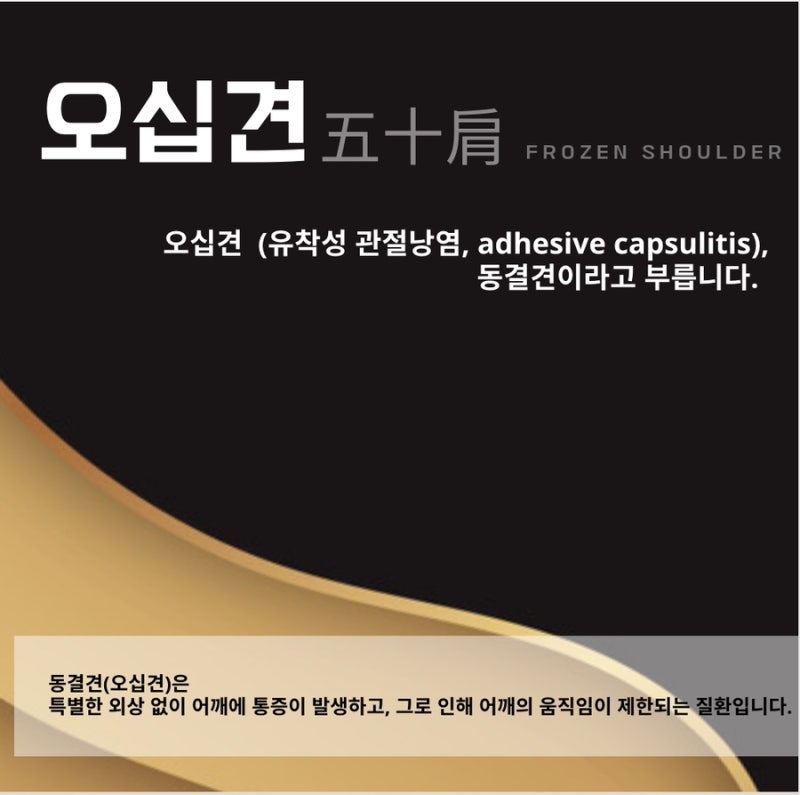
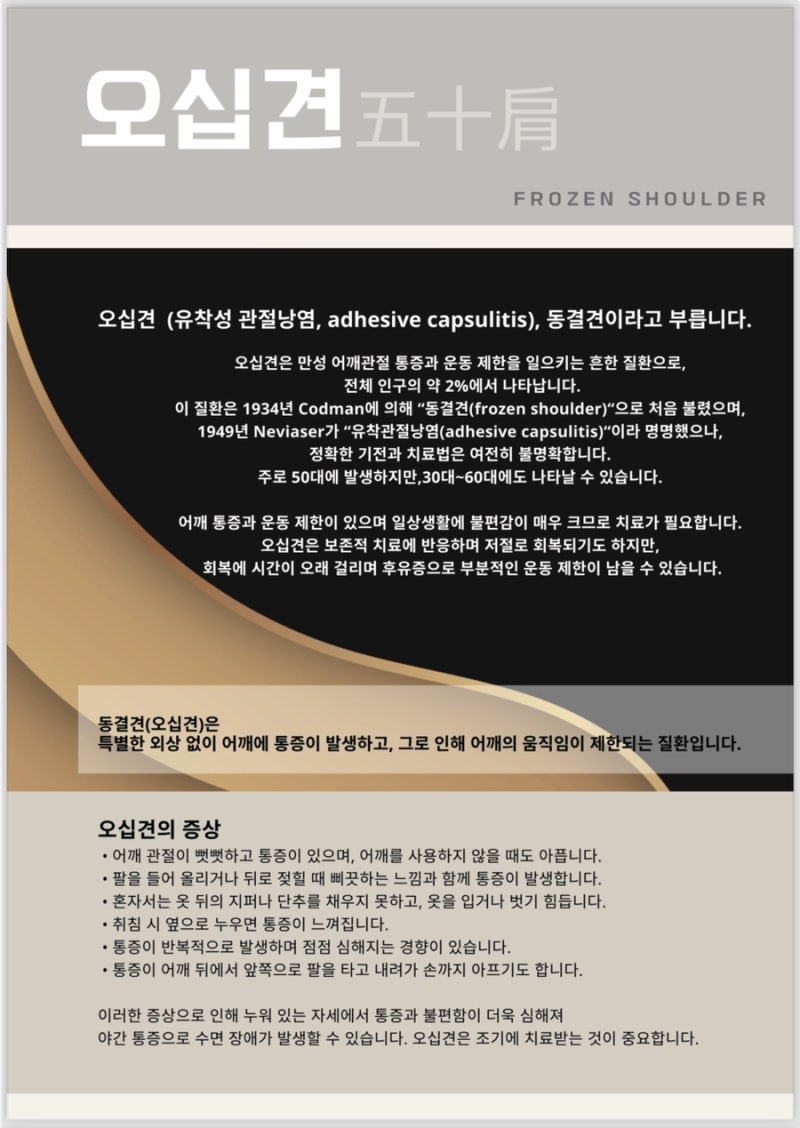
Frozen shoulder is a common condition causing chronic shoulder joint pain and limited range of motion, affecting approximately 2% of the general population. This condition was first called “frozen shoulder” by Codman in 1934 and named “adhesive capsulitis” by Neviaser in 1949, but its exact mechanism and treatment methods remain unclear.
It primarily occurs in people in their 50s, but can also appear in those aged 30 to 60. It involves shoulder pain and limited range of motion, and may require treatment. Frozen shoulder often responds to conservative treatment and can sometimes recover on its own, but recovery can take a long time, and some limitation in range of motion may persist.
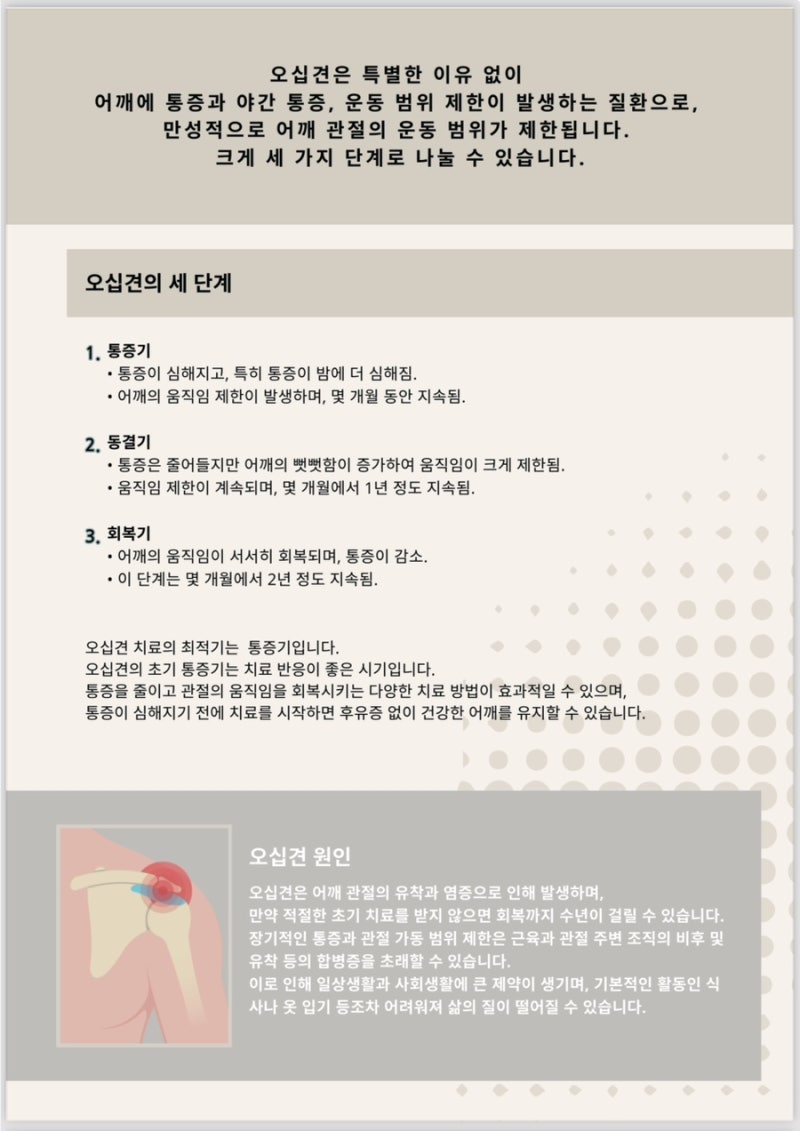
Frozen shoulder is a condition characterized by shoulder pain, nocturnal pain, and limited range of motion without a specific cause, leading to chronic restriction of shoulder joint movement. It can be broadly divided into three stages. The three stages of frozen shoulder: 1. Painful Stage
• Pain intensifies, especially at night. • Limited shoulder movement occurs and lasts for several months. 2. Frozen Stage • Pain decreases, but shoulder stiffness increases, severely limiting movement. • Movement limitation continues, lasting from several months to about a year. 3. Recovery Stage • Shoulder movement gradually recovers, and pain decreases.
• This stage lasts from several months to about two years. -The optimal time for frozen shoulder treatment is during the painful stage. The early painful stage of frozen shoulder is a period when treatment response is good. Various treatment methods that reduce pain and restore joint movement can be effective, and starting treatment before the pain worsens can help maintain a healthy shoulder without sequelae.
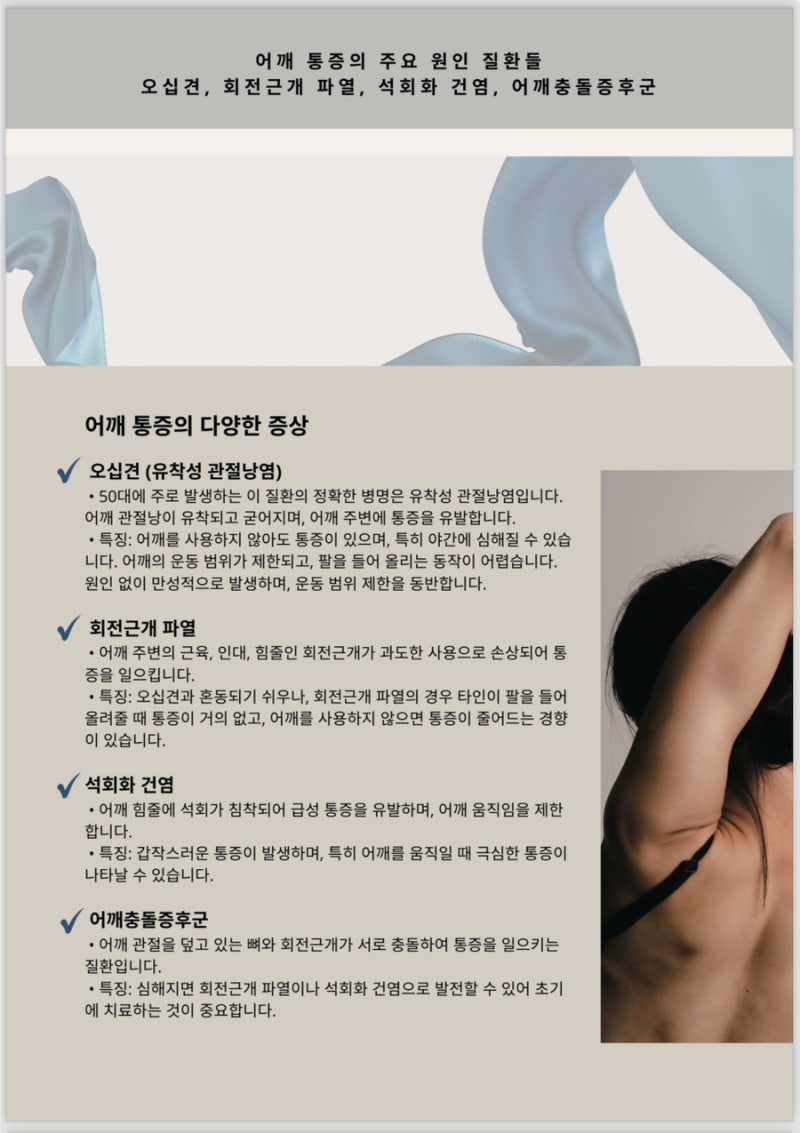
Major Causes of Shoulder Pain: Frozen shoulder, rotator cuff tear, calcific tendinitis, shoulder impingement syndrome -Various Symptoms of Shoulder Pain- Frozen Shoulder (Adhesive Capsulitis) • The accurate medical term for this condition, which primarily occurs in people in their 50s, is adhesive capsulitis. The shoulder joint capsule becomes adhesive and stiff, causing pain around the shoulder.
• Characteristics: Pain is present even when the shoulder is not used, and can worsen particularly at night. The shoulder’s range of motion is limited, and lifting the arm becomes difficult. It occurs chronically without a specific cause and is accompanied by limited range of motion.
Rotator Cuff Tear • The rotator cuff, which consists of muscles, ligaments, and tendons around the shoulder, is damaged by overuse, causing pain. • Characteristics: It can be easily confused with frozen shoulder, but in cases of rotator cuff tear, there is usually little pain when someone else lifts the arm, and pain tends to decrease when the shoulder is not used. Calcific Tendinitis • Calcium deposits accumulate in the shoulder tendons, causing acute pain and limiting shoulder movement.
• Characteristics: Sudden pain occurs, and severe pain may appear especially when moving the shoulder. Shoulder Impingement Syndrome • This is a condition where the bones covering the shoulder joint and the rotator cuff collide with each other, causing pain. • Characteristics: If it worsens, it can develop into a rotator cuff tear or calcific tendinitis, making early treatment important.
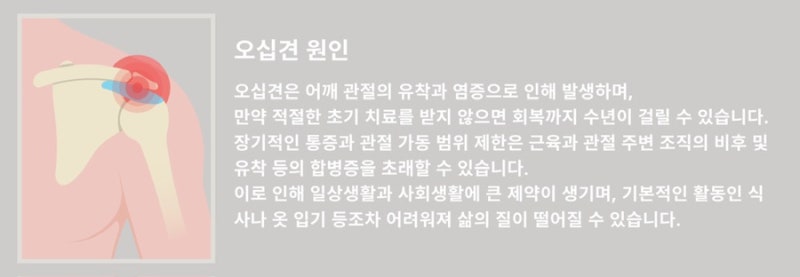
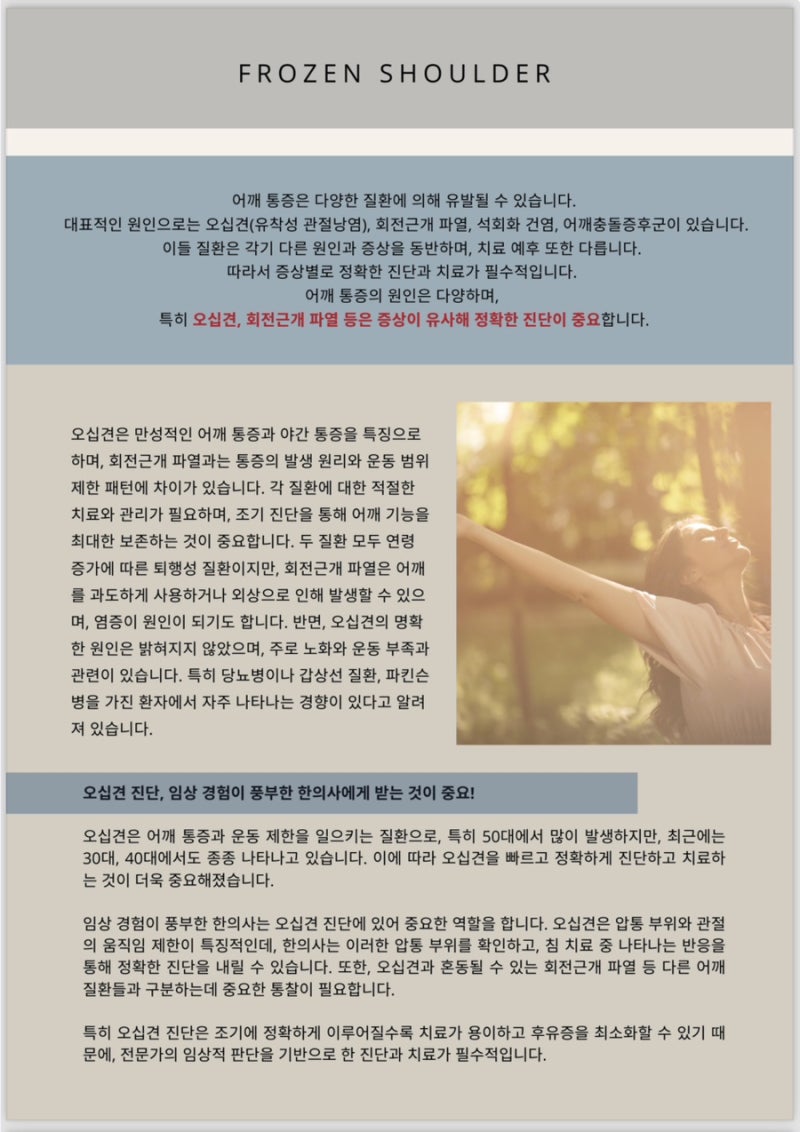
frozen shoulder Shoulder pain can be caused by various conditions. Representative causes include frozen shoulder (adhesive capsulitis), rotator cuff tear, calcific tendinitis, and shoulder impingement syndrome. These conditions are accompanied by different causes and symptoms, and their treatment prognoses also vary.
Therefore, accurate diagnosis and treatment tailored to each symptom are essential. The causes of shoulder pain are diverse, and accurate diagnosis is crucial, especially since conditions like frozen shoulder and rotator cuff tear have similar symptoms. Frozen shoulder is characterized by chronic shoulder pain and nocturnal pain, and differs from rotator cuff tear in the origin of pain and the pattern of limited range of motion. Appropriate treatment and management are required for each condition, and preserving shoulder function as much as possible through early diagnosis is important.
Both conditions are degenerative diseases associated with increasing age, but rotator cuff tears can occur due to overuse of the shoulder or trauma, and inflammation can also be a cause. In contrast, the clear cause of frozen shoulder has not been identified, and it is primarily associated with aging and lack of exercise. It tends to appear frequently in patients with diabetes, thyroid disease, or Parkinson’s disease.
Frozen Shoulder Diagnosis: Important to be examined by an experienced Korean medicine doctor! Frozen shoulder is a condition that causes shoulder pain and limited range of motion, and while it primarily occurs in people in their 50s, it has recently been appearing occasionally in those in their 30s and 40s. Consequently, quickly and accurately diagnosing and treating frozen shoulder has become even more important.
An experienced Korean medicine doctor plays a crucial role in diagnosing frozen shoulder. Frozen shoulder is characterized by tender points and limited joint movement, and a Korean medicine doctor can identify these tender points and make an accurate diagnosis through responses observed during acupuncture treatment. Furthermore, significant insight is required to differentiate it from other shoulder conditions, such as rotator cuff tears, which can be confused with frozen shoulder.
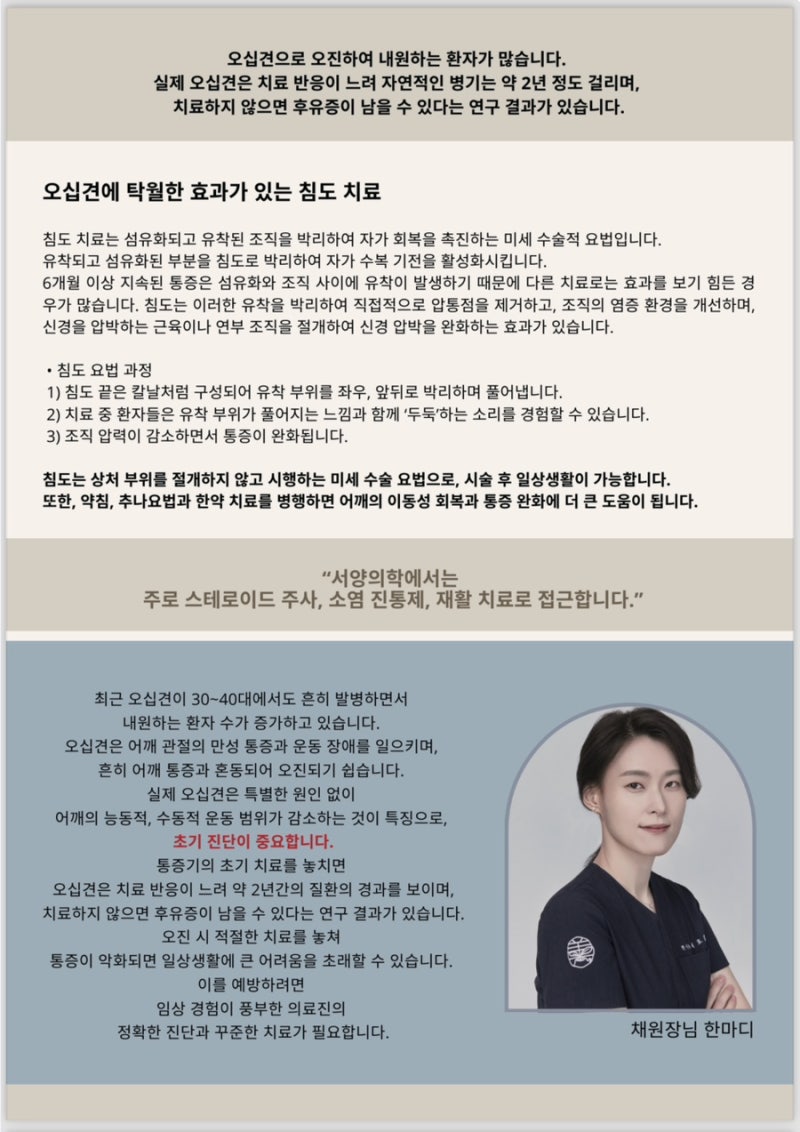
Early and accurate diagnosis of frozen shoulder is particularly crucial because it facilitates treatment and minimizes sequelae, making diagnosis and treatment based on a specialist’s clinical judgment essential. Many patients visit the clinic having been misdiagnosed with frozen shoulder. In reality, frozen shoulder has a slow treatment response, taking about two years, and studies show that if left untreated, sequelae may remain.
Acupotomy treatment, highly effective for frozen shoulder Acupotomy treatment is a microsurgical technique that promotes self-recovery by dissecting fibrotic and adhesive tissues. It activates the self-repair mechanism by dissecting the adhesive and fibrotic areas with an acupotomy needle. Pain lasting more than 6 months often involves fibrosis and adhesion between tissues, making it difficult for other treatments to be effective. Acupotomy dissects these adhesions to directly remove tender points, improve the inflammatory environment of tissues, and incise muscles or soft tissues that compress nerves, thereby alleviating nerve compression.
• Acupotomy Procedure 1. The tip of the acupotomy needle is designed like a blade, which dissects and releases adhesive areas from side to side and front to back. 2. During treatment, patients may experience a sensation of the adhesive area releasing, accompanied by a ‘thud’ sound.
3. As tissue pressure decreases, pain is alleviated. Acupotomy is a microsurgical technique performed without incising the wound site, allowing for daily activities immediately after the procedure.
Furthermore, combining pharmacopuncture, Chuna manual therapy, and herbal medicine treatment provides greater help in restoring shoulder mobility and alleviating pain. Western medicine primarily approaches this with steroid injections, anti-inflammatory painkillers, and rehabilitation therapy.

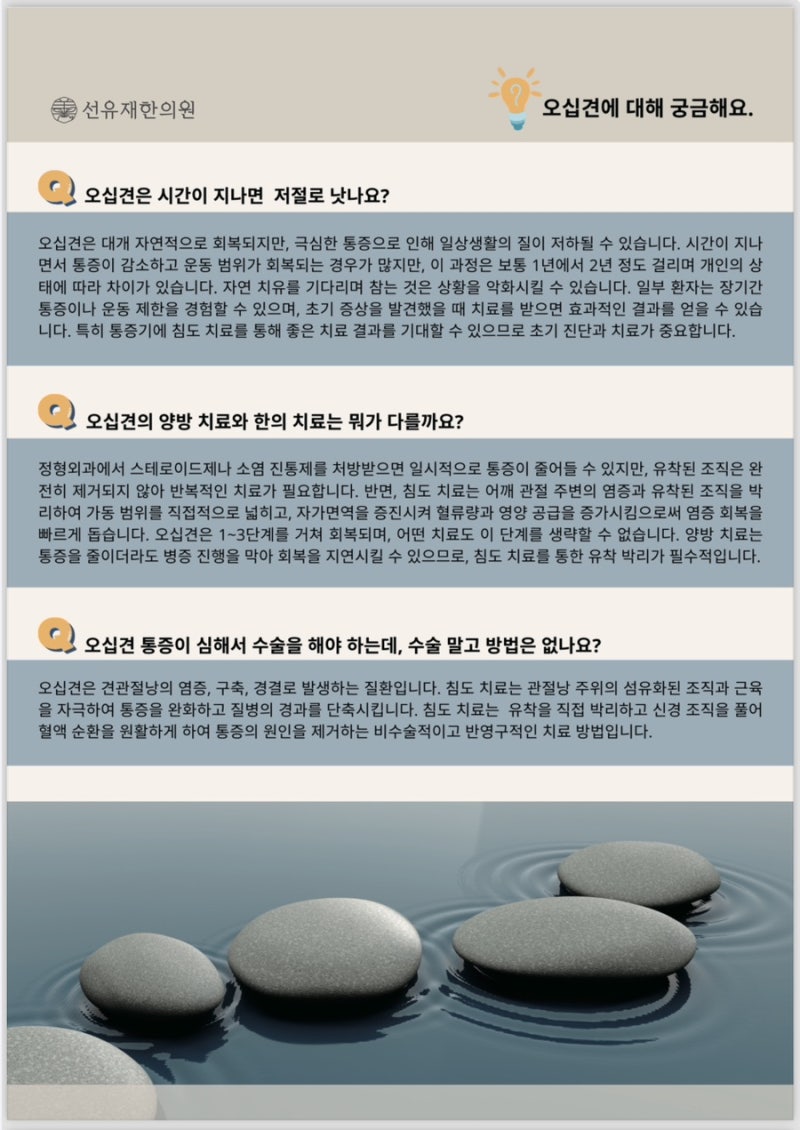
Q. Does frozen shoulder heal on its own over time? Frozen shoulder usually recovers naturally, but severe pain can degrade the quality of daily life. While pain often decreases and range of motion recovers over time, this process typically takes one to two years and varies depending on the individual’s condition.
Waiting for natural healing and enduring the pain can worsen the situation. Some patients may experience prolonged pain or limited range of motion, and effective results can be achieved if treatment is received when initial symptoms are detected. Particularly during the painful stage, good treatment outcomes can be expected through acupotomy, making early diagnosis and treatment crucial.
Q. What are the differences between Western medicine treatment and Korean medicine treatment for frozen shoulder? While prescribing steroids or anti-inflammatory painkillers in orthopedics may temporarily reduce pain, the adhesive tissue is not completely removed, requiring repeated treatments.
In contrast, acupotomy dissects inflammation and adhesive tissue around the shoulder joint, directly expanding the range of motion, and promotes self-immunity to increase blood flow and nutrient supply, thereby rapidly aiding in inflammation recovery. Frozen shoulder recovers through stages 1 to 3, and no treatment can skip these stages. Even if Western medicine treatment reduces pain, it can hinder the progression of the condition and delay recovery, making adhesion dissection through acupotomy essential.
Q. My frozen shoulder pain is severe and requires surgery, but is there an alternative to surgery? Frozen shoulder is a condition caused by inflammation, contracture, and induration of the shoulder joint capsule. Acupotomy stimulates the fibrotic tissues and muscles around the joint capsule, alleviating pain and shortening the course of the disease.
Acupotomy is a non-surgical and semi-permanent treatment method that directly dissects adhesions and releases nerve tissues to promote smooth blood circulation, thereby removing the cause of pain.
Sunyujae Korean Medicine Clinic in Dongcheon-dong pursues evidence-based integrated medicine.
This post was written directly by the medical staff of Sunyujae Korean Medicine Clinic to provide medical information, in compliance with Article 56(2) and Article 57(3) of the Medical Service Act. The duration and outcome of treatment may vary from person to person, so please consult a qualified practitioner before beginning treatment.
Consultation & Booking
Have questions? Reach us anytime via KakaoTalk or phone.