Hello? I am Dr. Hyocheong Chae, director of Sunyujae Korean Medicine Clinic in Dongcheon-dong, a place where kind hearts reside.
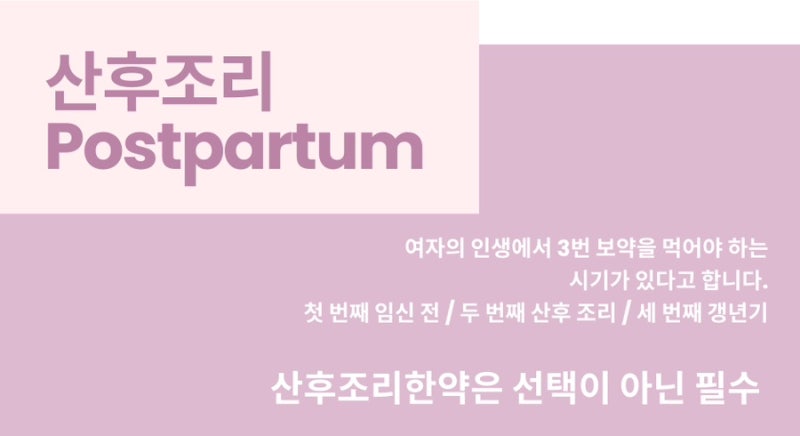
Many new mothers visit Sunyujae Korean Medicine Clinic with wrist pain and back pain. They often dismiss it as a symptom that occurs after childbirth, but as the intensity of childcare gradually increases, the pain usually worsens. Postpartum care after childbirth is a crucial period for a mother’s lifelong health.
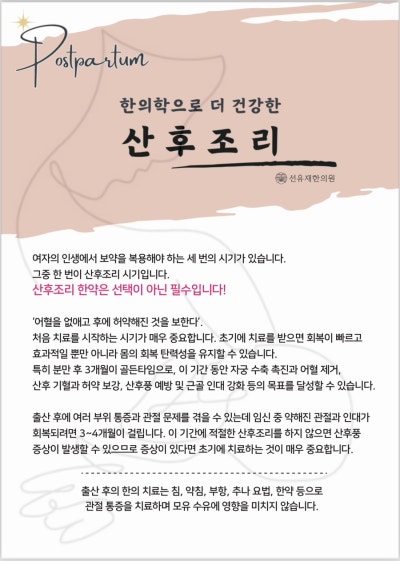
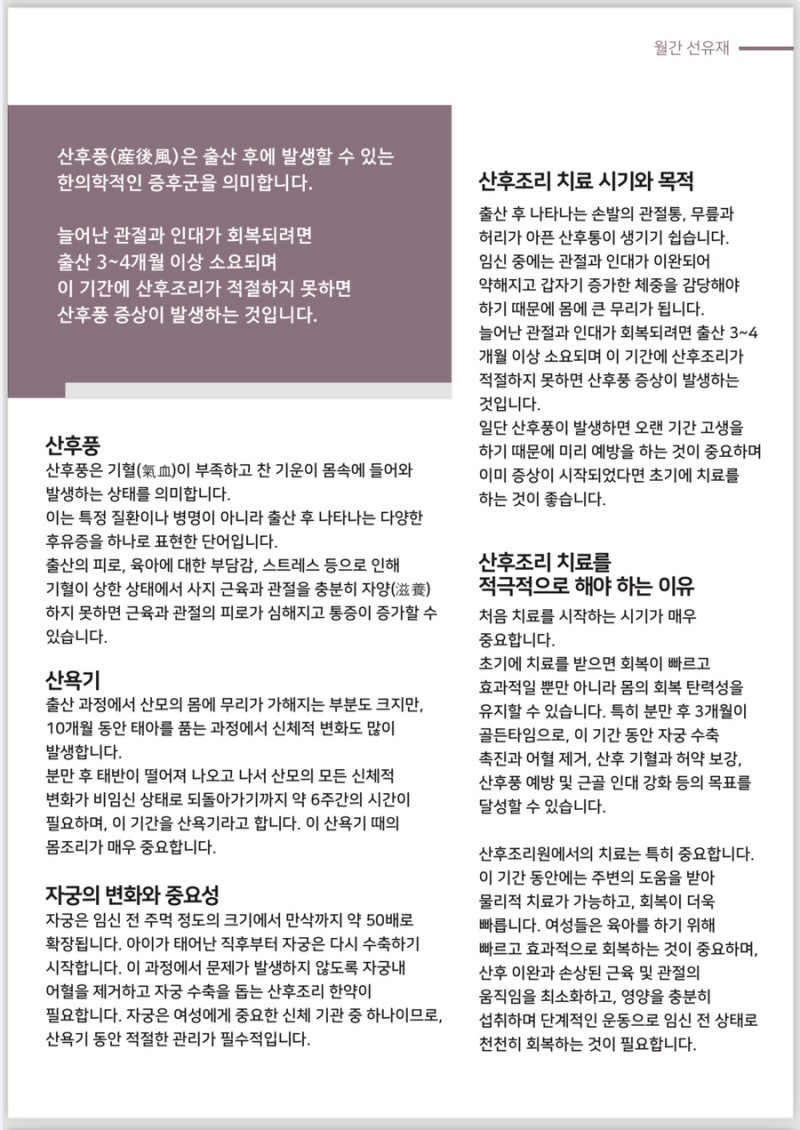
I will tell you what postpartum care at a Korean medicine clinic entails and how it should be done. Sanhupung (postpartum wind syndrome) refers to a Korean medicine syndrome that can occur after childbirth. Sanhupung signifies a state where qi and blood are deficient, and cold energy enters the body.
This is not a specific disease or medical term but a single term used to describe various after-effects that appear after childbirth. If qi and blood are damaged due to the fatigue of childbirth, the burden of childcare, and stress, and the muscles and joints of the limbs are not sufficiently nourished, muscle and joint fatigue can worsen, and pain can increase.
The main symptoms of Sanhupung vary. -Joint pain: Pain occurs in joints throughout the body, including wrists, ankles, lower back, and shoulders. -Coldness: A part or the entire body feels chilly or as if cold wind is entering. -Chills (惡寒): Experiencing shivers and cold symptoms. -Excessive sweating (多汗): Symptoms of sweating a lot appear.
-Mental symptoms: Fatigue, lack of motivation, and depression may accompany. -Headache: Persistent headaches may be experienced. -Anemia and dizziness: Dizziness due to anemia may occur. -Loss of appetite: Symptoms of decreased appetite may appear. -Edema: Symptoms of body swelling, heaviness, and fatigue may appear.
Sanhupung is a postpartum illness that occurs when postpartum care is not properly managed after childbirth, and symptoms can persist even after menopause. It causes pain not only in reproductive health but also in various joints and muscles. The puerperium involves significant strain on the mother’s body during childbirth, but many physical changes also occur during the 10 months of carrying the fetus.
After delivery and the placenta detaches, it takes approximately 6 weeks for all of the mother’s physical changes to return to a non-pregnant state, and this period is called the puerperium. Body care during this puerperium is very important. Changes and importance of the uterus The uterus expands approximately 50 times from the size of a fist before pregnancy to full term.
Immediately after the baby is born, the uterus begins to contract again. To prevent problems during this process, postpartum herbal medicine is needed to remove uterine blood stasis and aid uterine contraction. The uterus is one of the important organs for women, so proper management during the puerperium is essential.
Postpartum treatment timing and purpose After childbirth, joint pain in the hands and feet, and postpartum pain in the knees and lower back are common. During pregnancy, joints and ligaments become relaxed and weakened, and the sudden increase in weight puts a great strain on the body. It takes more than 3-4 months after childbirth for stretched joints and ligaments to recover, and if postpartum care is not appropriate during this period, Sanhupung symptoms occur.
Once Sanhupung occurs, it causes suffering for a long time, so it is important to prevent it in advance, and if symptoms have already started, it is best to treat them early. Reasons for actively pursuing postpartum care The timing of starting treatment is very important. Receiving treatment early not only leads to faster and more effective recovery but also helps maintain the body’s recovery resilience. Especially, the first 3 months after delivery are the golden time, during which goals such as promoting uterine contraction, removing blood stasis, supplementing postpartum qi and blood and weakness, preventing Sanhupung, and strengthening musculoskeletal ligaments can be achieved.
Postpartum care treatment is especially postpartum care treatment is especially important. During this period, with the help of others, physical therapy is possible, and recovery is even faster. It is important for women to recover quickly and effectively for childcare, and it is necessary to minimize postpartum relaxation and movement of damaged muscles and joints, consume sufficient nutrition, and gradually recover to the pre-pregnancy state through step-by-step exercise.
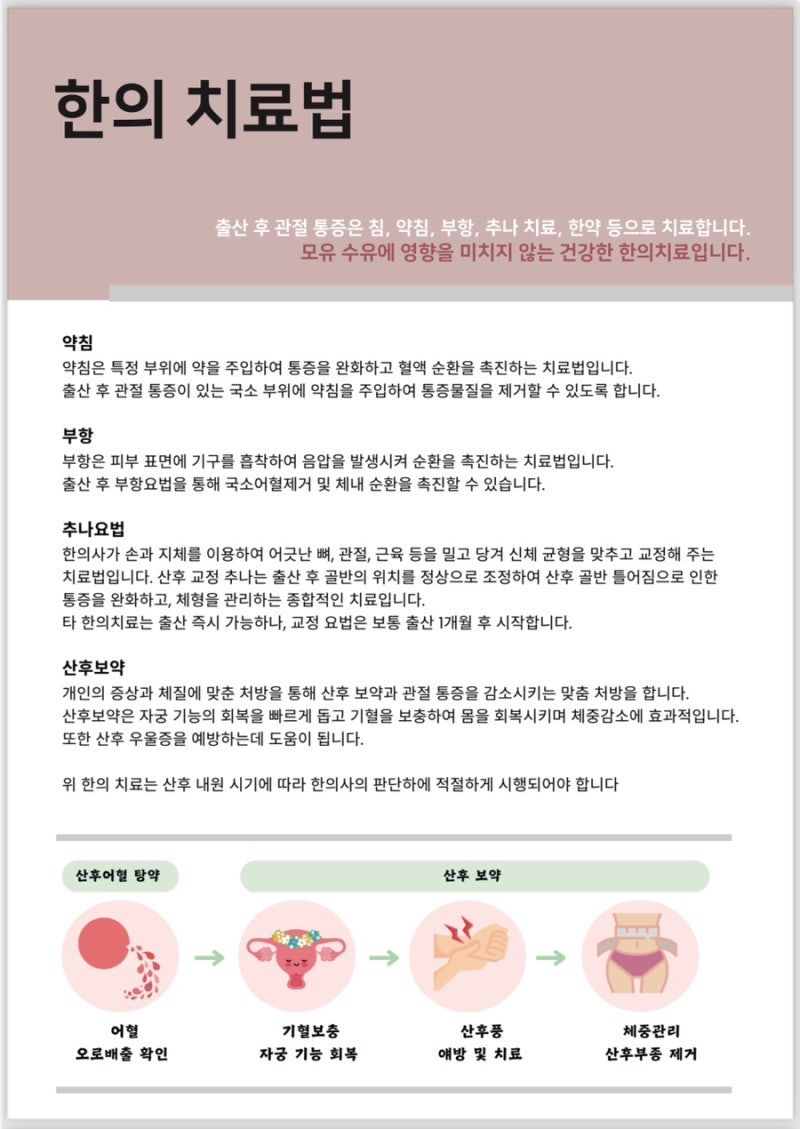
Pharmacopuncture Pharmacopuncture is a treatment method that injects medicine into specific areas to relieve pain and promote blood circulation. Pharmacopuncture can be injected into local areas with postpartum joint pain to help remove pain-causing substances. Cupping Cupping is a treatment method that attaches a device to the skin surface to create negative pressure, promoting circulation.
After childbirth, cupping therapy can promote local blood stasis removal and internal circulation. Chuna manual therapy This is a treatment method where a Korean medicine doctor uses their hands and limbs to push and pull misaligned bones, joints, and muscles to balance and correct the body. Postpartum corrective Chuna is a comprehensive treatment that adjusts the pelvic position to normal after childbirth, alleviating pain caused by postpartum pelvic misalignment, and managing body shape.
Other Korean medicine treatments can be started immediately after childbirth, but corrective therapy usually begins around 1 month after childbirth. Postpartum herbal medicine Through prescriptions tailored to an individual’s symptoms and constitution, customized prescriptions are made for postpartum tonics and to reduce joint pain. Postpartum herbal medicine helps rapidly restore uterine function, replenishes qi and blood to help the body recover, and is effective for weight loss.
It also helps prevent postpartum depression. The above Korean medicine treatments should be appropriately administered under the judgment of a Korean medicine doctor based on the timing of postpartum visits.
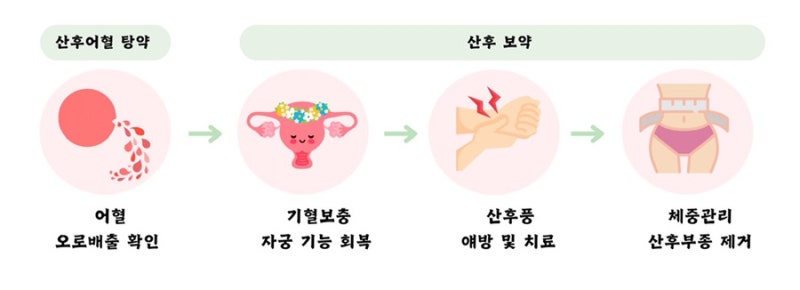
Postpartum herbal medicine: ‘Eliminate blood stasis and then supplement weakness.’ Immediately after childbirth, it is recommended to start with herbal medicine that removes blood stasis. It is important to take the medicine quickly before blood stasis becomes fixed. If the medicine is taken late, it may be difficult to remove blood stasis.
Immediately after childbirth, herbal medicine to remove blood stasis is preferred, and once lochia or lower abdominal pain disappears, it is recommended to consider taking postpartum herbal medicine to protect the mother’s body. Excessive dieting after childbirth can lead to a decrease in breast milk supply or Sanhupung symptoms. Therefore, a light diet using postpartum care herbal medicine along with tonics is recommended.
Edema during the first 2-5 days immediately after delivery is a normal phenomenon, and a natural weight loss of 2-3kg can occur within a week after childbirth. At this time, it is advisable to wait for natural edema resolution instead of strong diuretics. Postpartum depression is a symptom that anyone can experience.
Herbal medicines for treating postpartum depression are adjusted and prescribed. The goal of Korean medicine postpartum care is to achieve healthy postpartum recovery for both body and mind. Postpartum Diet Postpartum edema is a common phenomenon experienced by mothers, which may disappear quickly for some individuals but can persist for several weeks in severe cases. If edema is not resolved quickly, postpartum recovery may be delayed, and the failure of weight gained during pregnancy to decrease after childbirth is also a significant issue.
Severe edema can make weight loss difficult and can lead to postpartum obesity, causing maternal depression due to changes in body shape. In Korean medicine, postpartum edema is interpreted as a state where ‘dampness (濕)’ remains in the body. This can lead to feelings of heaviness and fatigue, as well as joint pain, indigestion, and discomfort with urination.
These are various symptoms related to ‘dampness,’ such as a heavy and numb feeling in the limbs or swelling of the hands. After childbirth, there may be cases where weight loss is less than or increases compared to the weight at full term, which may be due to edema, requiring prompt treatment. Removing ‘dampness’ and adjusting the constitution through herbal medicine treatment can be effective.
Additionally, managing postpartum edema through sufficient rest, proper diet, and appropriate exercise is important.
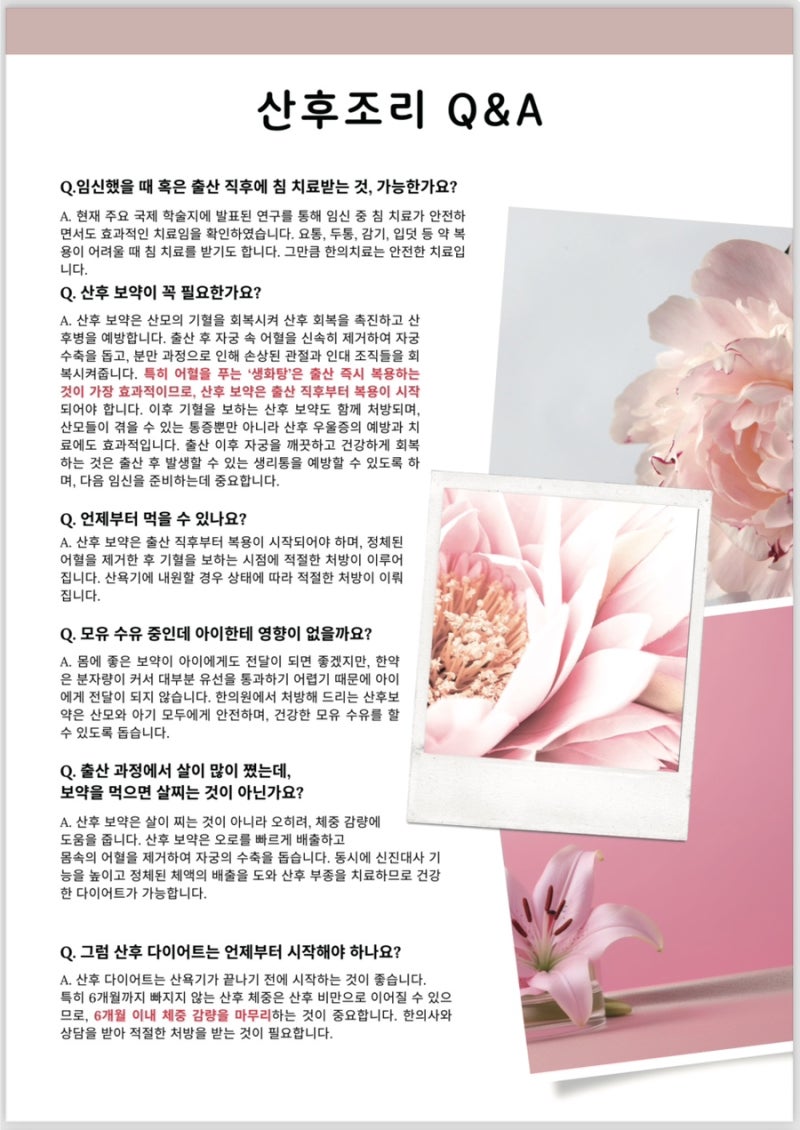
Let’s talk about questions regarding postpartum care. Q. Is acupuncture treatment possible during pregnancy or immediately after childbirth?
Current research published in major international academic journals has confirmed that acupuncture treatment during pregnancy is safe and effective. Acupuncture treatment is also received for back pain, headaches, colds, and morning sickness when medication is difficult to take. As such, Korean medicine treatment is a safe treatment.
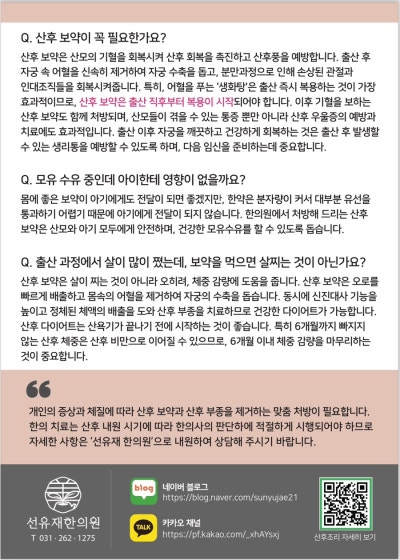
Q. Is postpartum herbal medicine absolutely necessary? Postpartum herbal medicine restores the mother’s qi and blood, promoting postpartum recovery and preventing postpartum illnesses.
It quickly removes blood stasis in the uterus after childbirth, aids uterine contraction, and helps recover joint and ligament tissues damaged during the delivery process. In particular, ‘Saenghwa-tang,’ which resolves blood stasis, is most effective when taken immediately after childbirth, so postpartum herbal medicine should begin immediately after delivery. Afterwards, postpartum herbal medicine that supplements qi and blood is also prescribed, which is effective not only for the pain mothers may experience but also for the prevention and treatment of postpartum depression. Recovering the uterus cleanly and healthily after childbirth can prevent menstrual pain that may occur after childbirth and is important for preparing for the next pregnancy.
Q. When can I start taking it? Postpartum herbal medicine should begin immediately after childbirth, and appropriate prescriptions are made at the time of supplementing qi and blood after removing stagnant blood stasis.
If you visit during the puerperium, appropriate prescriptions will be made according to your condition. Q. I am breastfeeding, will it affect my baby?
While it would be good if beneficial tonics were also passed to the baby, most herbal medicines have large molecular weights, making it difficult for them to pass through the mammary glands, so they are not transferred to the baby. The postpartum herbal medicine prescribed at our Korean medicine clinic is safe for both mother and baby and helps support healthy breastfeeding. Q. I gained a lot of weight during childbirth, will taking herbal medicine make me gain more weight?
Postpartum herbal medicine does not cause weight gain; rather, it helps with weight loss. Postpartum herbal medicine quickly expels lochia and removes blood stasis from the body, aiding uterine contraction. At the same time, it boosts metabolic function and helps excrete stagnant bodily fluids, treating postpartum edema, thus enabling healthy dieting.
Q. So when should I start my postpartum diet? It is best to start your postpartum diet before the puerperium ends.
Especially, postpartum weight that does not decrease within 6 months can lead to postpartum obesity, so it is important to complete weight loss within 6 months. It is necessary to consult with a Korean medicine doctor and receive an appropriate prescription.
If you have any questions about postpartum care at Sunyujae Korean Medicine Clinic, please add us as a friend on Kakao Channel and feel free to inquire via KakaoTalk or phone. Sunyujae Korean Medicine Clinic in Dongcheon-dong pursues evidence-based medicine and integrative medicine.
This post was written directly by the medical staff of Sunyujae Korean Medicine Clinic to provide medical information, in compliance with Article 56(2) and Article 57(3) of the Medical Service Act. The duration and outcome of treatment may vary from person to person, so please consult a qualified practitioner before beginning treatment.
Consultation & Booking
Have questions? Reach us anytime via KakaoTalk or phone.