Sunyujae Korean Medicine Clinic Research Activities
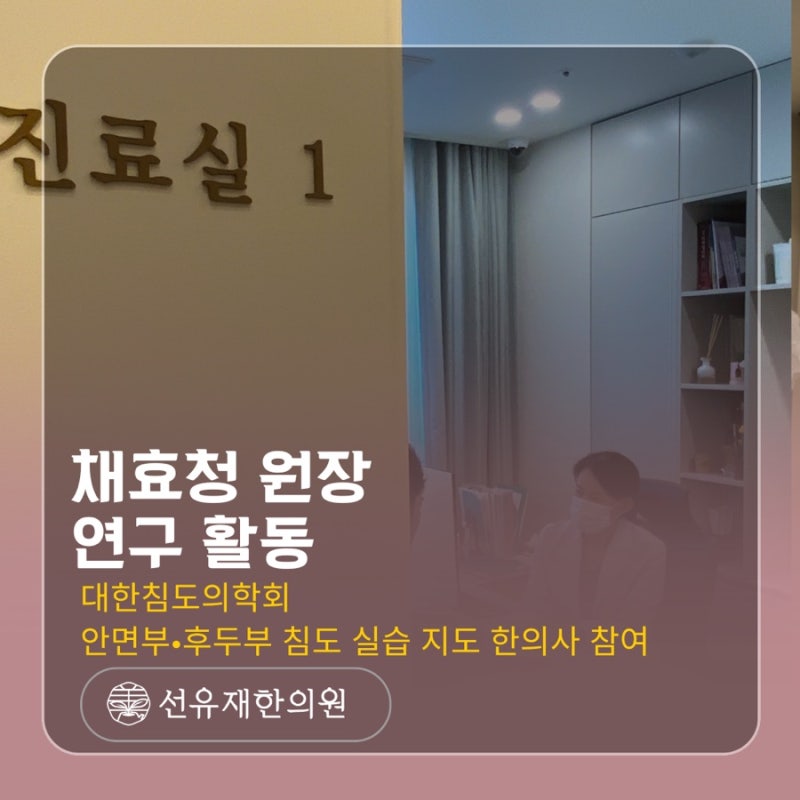
In acupotomy treatment, the approach is more important than the tools used. Especially in the facial and occipital regions, where major nerves, blood vessels, and fascia are complexly distributed, even small errors can affect the outcome. Therefore, anatomical understanding and safe techniques are paramount. Recently, Dr. Hyocheong Chae participated as a practical training instructor for the Korean Acupotomy Medical Association, leading practical acupotomy lectures for the facial and occipital regions. In this article, we introduce the key content covered during the practical training.
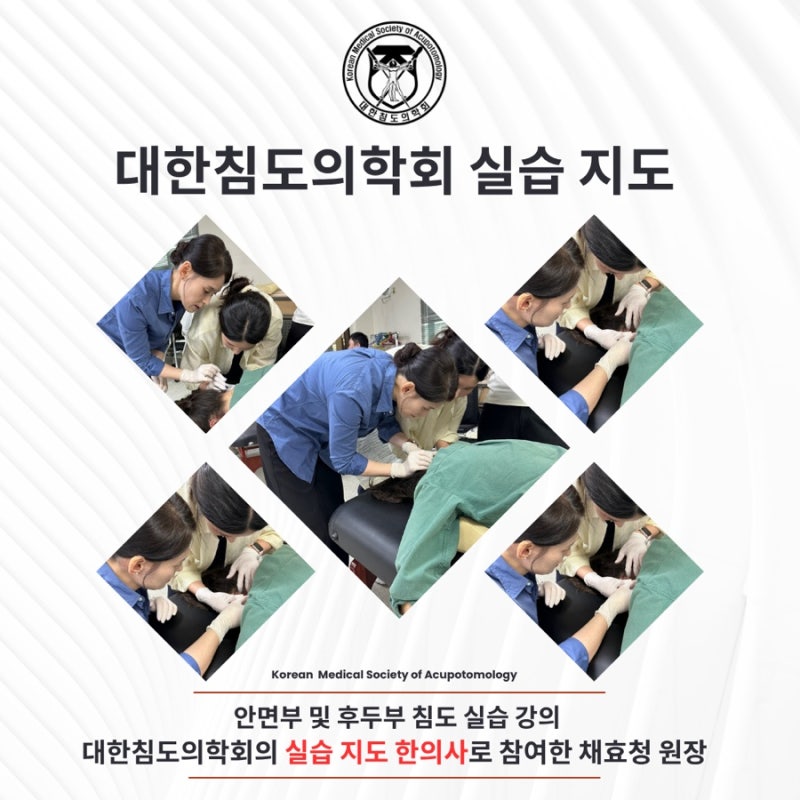
Participated as a Practical Training Instructor for the Korean Acupotomy Medical Association: Dr. Hyocheong Chae’s Research Activities
The Korean Acupotomy Medical Association regularly conducts education and practical training to ensure safer and more standardized acupotomy treatment. In this practical training, Dr. Hyocheong Chae participated as an instructor, focusing the education on the anatomical structures and actual techniques required for acupotomy procedures in the facial and occipital regions. The facial and occipital regions are anatomically complex areas for procedures, where major neural structures, vascular structures, and fascial structures are intricately distributed. Acupotomy procedures in these areas are not simply about approaching the painful site.
A systematic approach is required, involving a precise understanding of anatomical structures, setting the target point, and comprehensively considering the insertion trajectory, depth, and layer specificity.
Practical Training Based on Actual Clinical Practice
This practical training was conducted on the premise of actual clinical application. The education focused on identifying the anatomical landmarks of the target point, safe zones, risk structures, and insertion pathways to reach the lesion.
Participating Korean medicine doctors were directly guided in the following techniques essential for clinical practice:
- Lesion confirmation through palpation
- Adjusting the acupotomy insertion angle
- Layer-by-layer approach
- Mechanical adhesiolysis
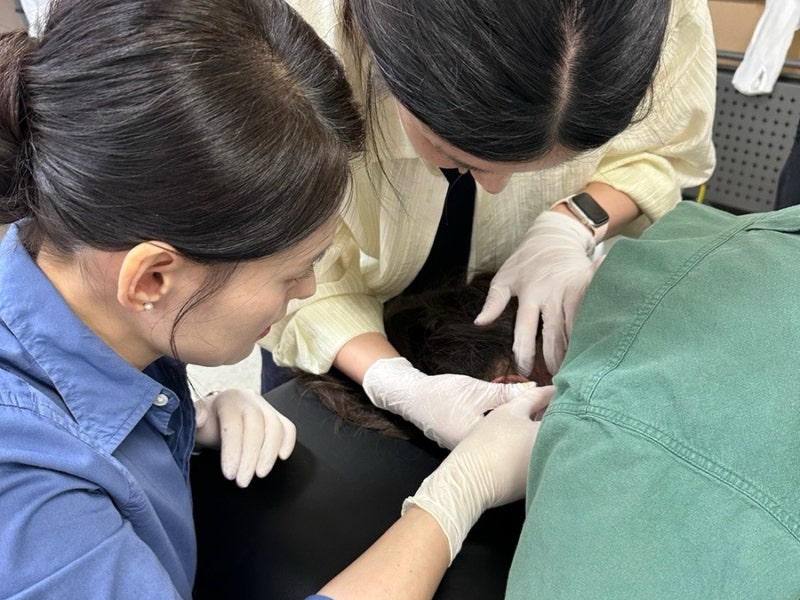
The practical scenes shown in the photos are not just simple demonstrations; they capture the process where participants directly palpate, confirm anatomical structures, and repeatedly practice the techniques. The process of understanding both the tactile sensation and the structure is considered the most important aspect of acupotomy education.
Acupotomy is a Treatment Based on Anatomical Understanding
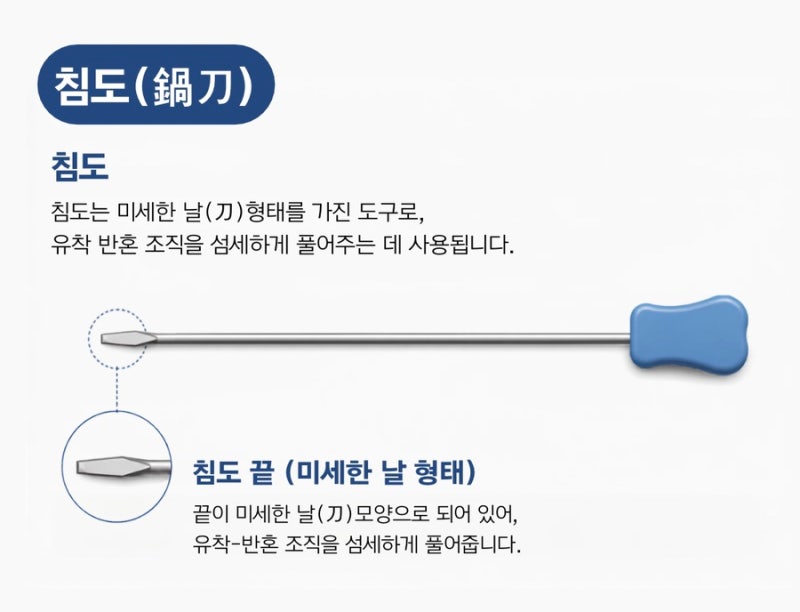
Acupotomy is a therapeutic tool used to resolve soft tissue adhesions, achieve neural decompression, improve local circulation, and promote tissue remodeling. Because its depth and scope of tissue intervention are greater than general acupuncture, its application without sufficient anatomical understanding and technical proficiency can entail potential risks. Therefore, acupotomy is not merely a technique of using an instrument; it must be accompanied by a precise understanding of human anatomy and consideration of each patient’s unique anatomical characteristics.
Safety, Standardization, and the Process for Patients
The core of acupotomy education lies in safety, reproducibility, and standardization. The purpose of education is to enable anyone to perform treatment according to correct principles. Especially in high-risk anatomical areas like the facial and occipital regions, accurate structural recognition and understanding of technical principles are closely linked to clinical outcomes. The Korean Acupotomy Medical Association also continues education and practical training based on these standards, establishing the standard for safe acupotomy treatment. As the scope of acupotomy utilization continues to expand in clinical settings, the importance of accurate anatomical education and skilled practical guidance is also growing.
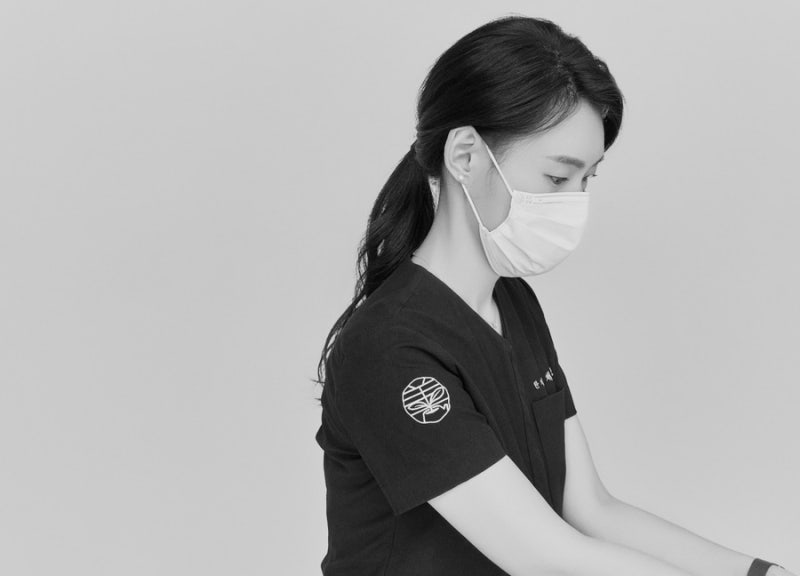
Dr. Hyocheong Chae actively participates as a practical training instructor for the Korean Acupotomy Medical Association, sharing clinical experience in educational settings and continuously engaging in anatomy-based practical education and technique standardization to enable more Korean medicine doctors to utilize acupotomy safely and effectively. Sunyujae Korean Medicine Clinic believes that not only experience in the clinic but also these research and educational activities lead to safer treatment for patients. We believe that learning based on evidence and re-verifying it in clinical practice ultimately leads to safer and more reliable treatment. Ultimately, what is more important than the tool is the understanding and attitude of the person using it.
We will continue to pursue anatomy-based research and education, and strive for safer and more standardized treatment in clinical practice.
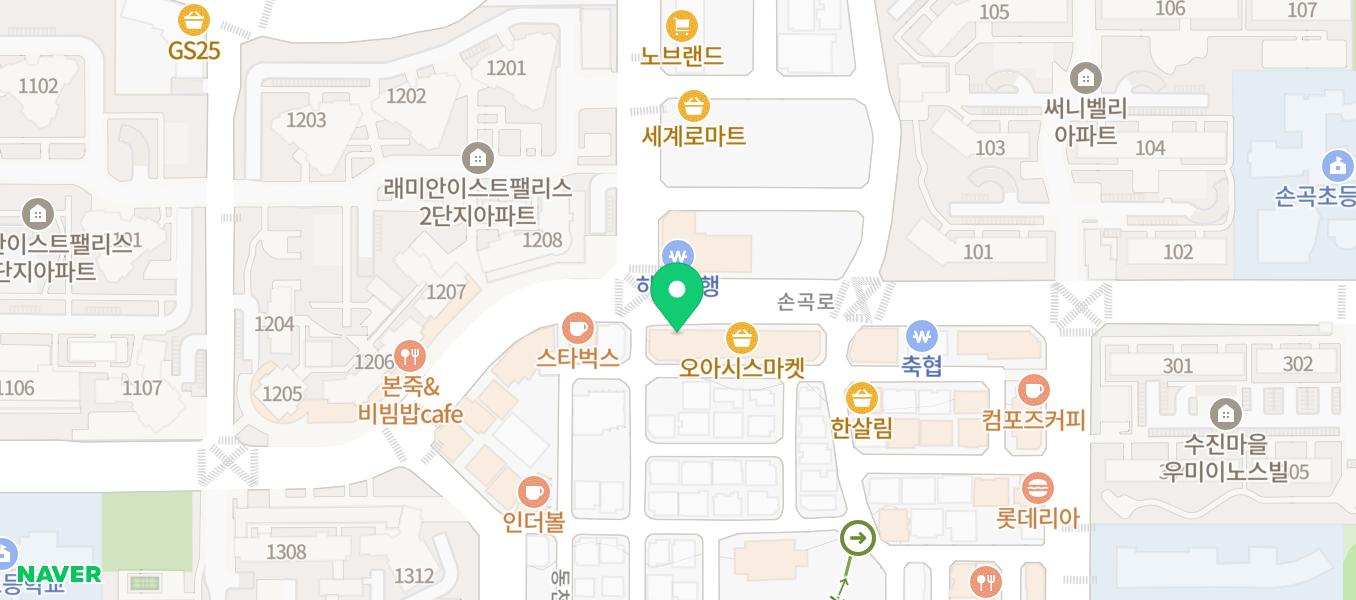
We hope you will join Sunyujae Korean Medicine Clinic, which shares valuable information for a healthy life. Sunyujae Korean Medicine Clinic in Suji-gu pursues evidence-based medicine and integrative medicine.
This post was written directly by the medical staff of Sunyujae Korean Medicine Clinic to provide medical information, in compliance with Article 56(2) and Article 57(3) of the Medical Service Act. The duration and outcome of treatment may vary from person to person, so please consult a qualified practitioner before beginning treatment.
Consultation & Booking
Have questions? Reach us anytime via KakaoTalk or phone.