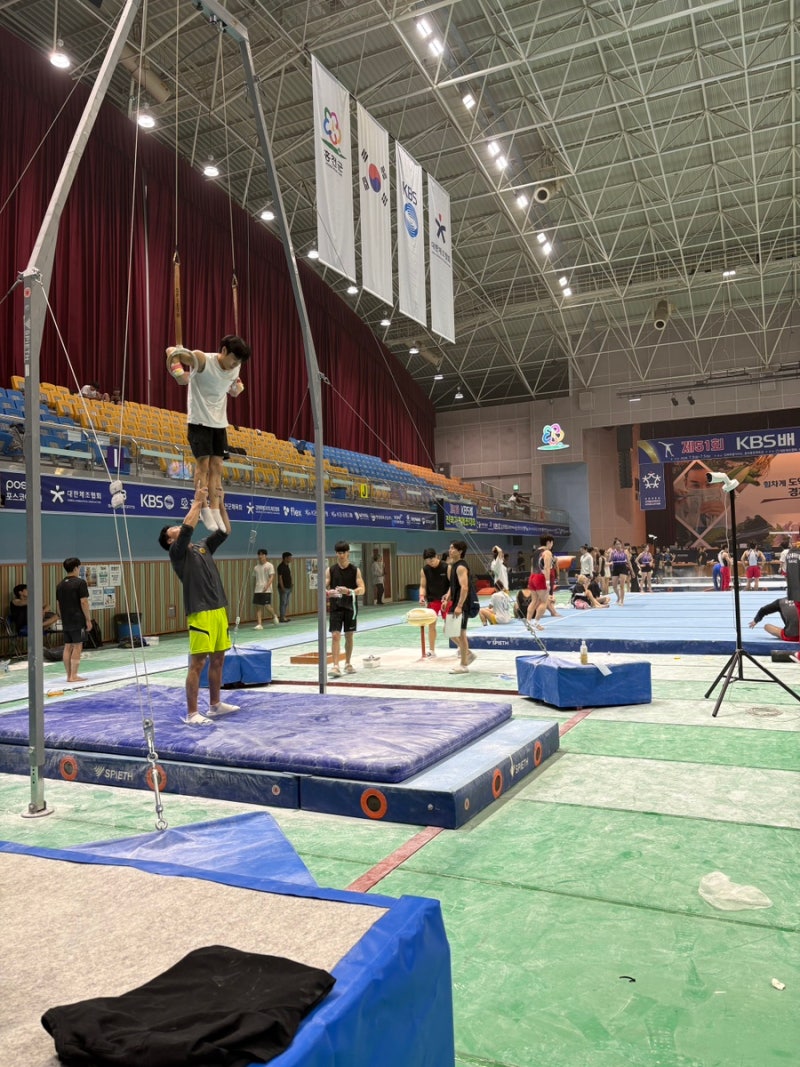
When jumping and landing, repeated impact is placed on the knees and ankles, and in movements where the hands support body weight, significant strain is transferred to the wrists and shoulders. For gymnasts, these movements are repeated multiple times a day. Some athletes continue training even with minor or major pain leading up to a competition. Therefore, it’s important to look not just at the location of the pain, but also at which movements cause discomfort and what movements have been repeated.
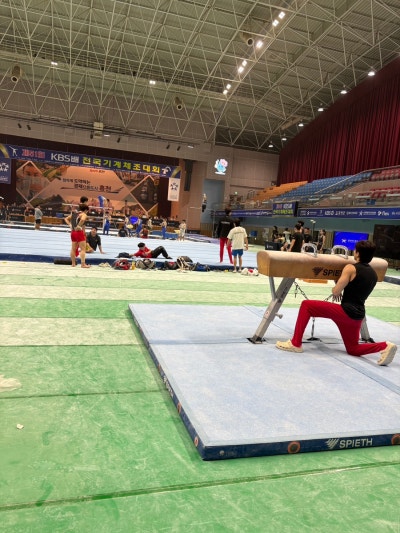
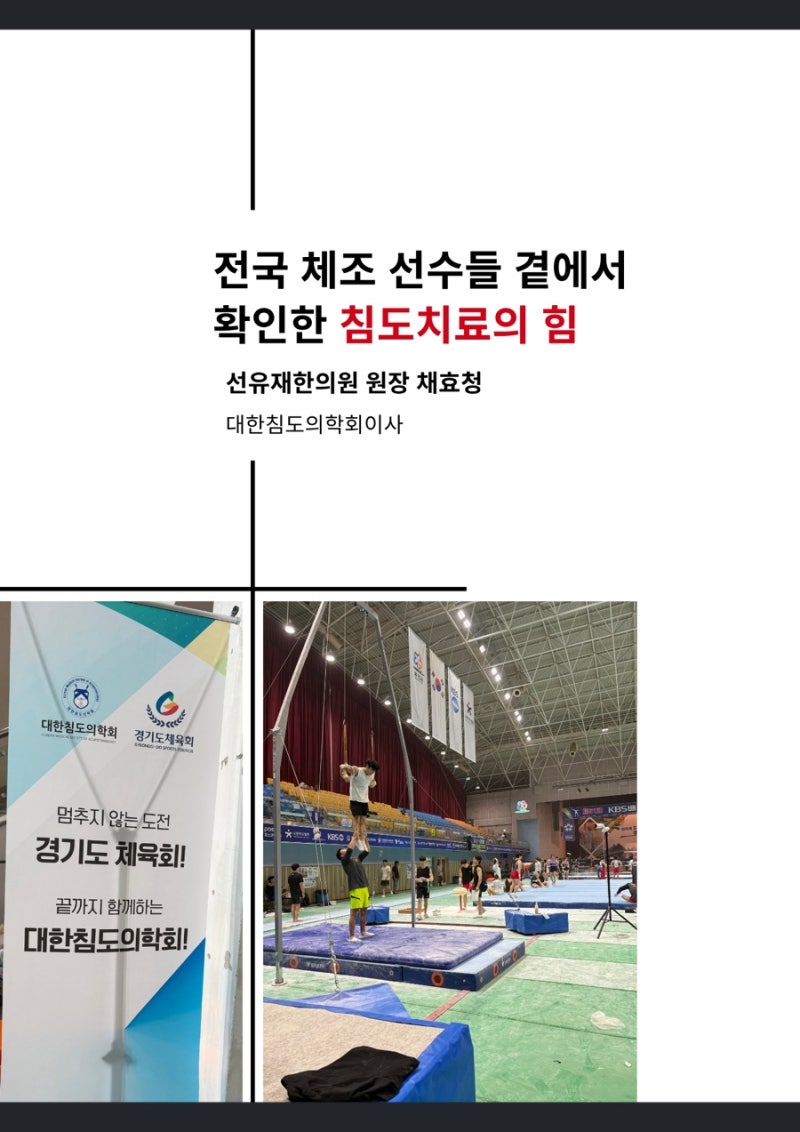
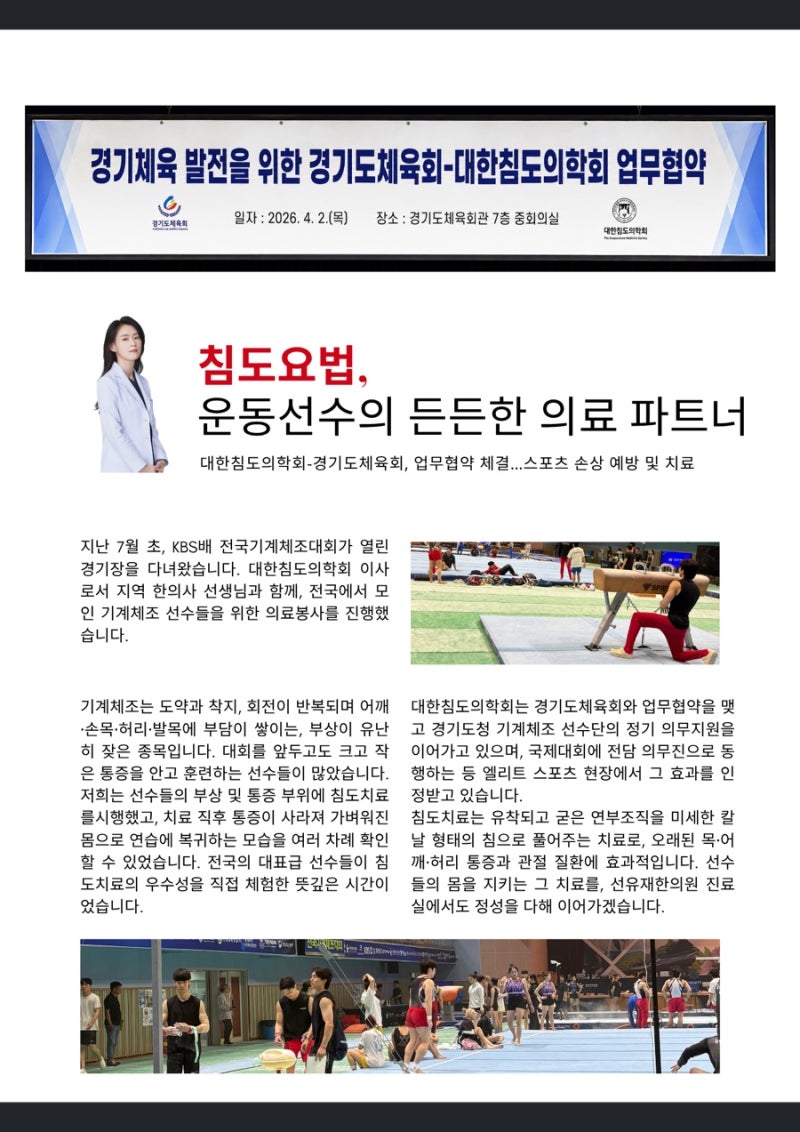
Director Hyocheong Chae of Sunyujae Korean Medicine Clinic was present at the KBS Cup National Gymnastics Competition held in early July. As a director of the Korean Acupotomy Medical Society, he participated in medical support for gymnasts gathered from across the country, alongside local Korean medicine doctors. We heard about the experience from Director Hyocheong Chae.
We met gymnasts gathered from across the country. A conversation with Director Chae.
Q. What was your role in the KBS Cup National Gymnastics Competition?
“In early July, I visited the venue where the KBS Cup National Gymnastics Competition was held. As a director of the Korean Acupotomy Medical Society, I provided medical volunteer services for gymnasts gathered from across the country, alongside local Korean medicine doctors. At the site, I met athletes who were training with various aches and pains, even right before the competition.”
Q. Why does gymnastics place such a heavy burden on the shoulders, wrists, lower back, and ankles?
Gymnastics involves repeated jumping, landing, and rotation, as well as many movements where the hands support body weight. Depending on the event and specific movements, repetitive strain can occur in various areas such as the shoulders, wrists, lower back, and ankles. For athletes who repeatedly engage in high-intensity training, even minor discomforts that might not be noticeable in daily life can become more pronounced during competition movements.
Q. What was most striking when observing the athletes at the site?
“Gymnasts truly use their bodies extensively. Jumping, landing, and supporting their body weight with their hands are constantly repeated movements. This can lead to strain in various areas such as the shoulders, wrists, lower back, and ankles. Observing the athletes’ movements firsthand at the site reinforced my belief that it’s crucial to look not just at where the pain is, but also at which movements cause discomfort.”
Q. What kind of medical support does the Korean Acupotomy Medical Society provide at sports events?
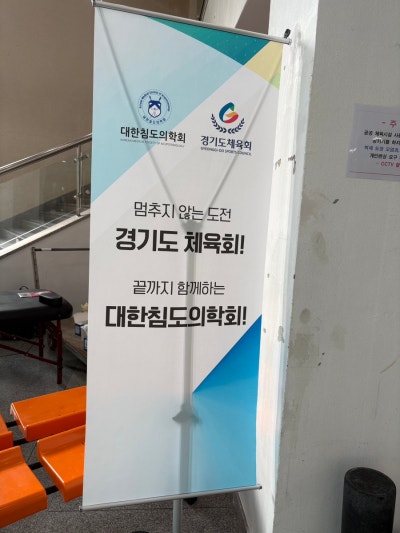
The Korean Acupotomy Medical Society has an agreement with the Gyeonggi Provincial Sports Council and provides regular medical support to the Gyeonggi Provincial Office gymnastics team. We provide medical support at domestic competitions where athletes train and compete, and sometimes accompany them as dedicated medical staff for international competitions. At this KBS Cup National Gymnastics Competition, we examined the athletes’ injuries and painful areas and performed acupotomy treatment as needed. I believe that being able to closely observe the athletes’ physical condition and actual movements at sports events is also an important aspect of these activities.
Q. What kind of medical support was provided to the athletes?
“After examining the athletes’ injuries and painful areas, we performed acupotomy treatment when necessary. We also saw athletes express that their bodies felt much lighter after treatment and return to practice. It was a memorable experience to apply acupotomy treatment while directly observing the physical condition and actual competition movements of athletes gathered from across the country.” The changes experienced immediately after treatment can vary depending on the cause of pain, the extent of injury, and individual condition. Therefore, the responses observed in a sports medical setting are not necessarily the same for everyone.
What is acupotomy treatment?
Acupotomy treatment, unlike general acupuncture, uses a needle with a flat, knife-like tip to directly release adhered tissues. If pain persists or repeatedly occurs during the same movement, we look not just at the painful spot, but also at tension in surrounding tissues, restricted movement, and which areas are experiencing repetitive strain. At Sunyujae Korean Medicine Clinic, when performing acupotomy treatment, we first identify which tissues are related to the current pain based on anatomical structures. We confirm the location of muscles, tendons, ligaments, nerves, and blood vessels, and determine the treatment area by considering the actual movements that cause discomfort.
When necessary, we use high-resolution musculoskeletal ultrasound to confirm the location of soft tissues and surrounding structures. Since ultrasound alone cannot identify the cause of all pain, we also consider palpation, movement assessment, and the process by which symptoms began. Depending on the current condition, acupuncture, pharmacopuncture, or acupotomy treatment may be considered, and acupotomy is not necessary for all types of pain.
Why does the same spot keep hurting when exercising?
In the clinic, we often hear statements like these: “It’s fine when I rest, but it hurts again when I exercise.” “My shoulder only hurts when I lift my arm.” “My lower back feels stiff again after exercising.” There are cases where the same area becomes uncomfortable again when repeating specific movements, such as elbow pain after golf, shoulder or lower back pain after exercise, or knee or ankle pain after hiking. In such cases, we don’t just check where it hurts. We also look at which posture initiates the pain, which movements were repeated, and which areas bear significant force during those movements.
For example, even with the same shoulder pain, the structures that might be involved differ depending on whether the pain occurs when lifting the arm upwards or rotating it backwards. Knee pain also requires checking different areas depending on whether it hurts when going down stairs or feels uncomfortable after walking for a long time. If pain decreases with rest but repeatedly returns to the same spot when resuming exercise, it’s important to look not just at the painful area, but also at the anatomical structures and actual movements to identify which tissues are experiencing repetitive strain.
“Athletes are sensitive even to small differences in movement.” Director Hyocheong Chae
The experience of closely observing how athletes use their bodies and which movements cause them strain was important to me. Meeting athletes at the site reinforces the importance of observing their actual movements as much as the painful area. I want to continue applying this experience in the examination room at Sunyujae Korean Medicine Clinic.
”Rather than just looking at the painful area, we will examine the actual uncomfortable movements and the condition of surrounding tissues during treatment.”
Director Hyocheong Chae continues his activities as a director of the Korean Acupotomy Medical Society, as well as lecturing at Korean medicine universities and engaging in research and academic activities. Even if it appears to be the same pain, the process by which discomfort began and the repetitive movements involved can differ. It is crucial to accurately assess the current condition and examine together which movements cause strain in daily life or during exercise. “Moving forward, Sunyujae Korean Medicine Clinic will continue to identify patients’ pain and, based on evidence, consider treatment directions appropriate for their current condition.”
Sunyujae Korean Medicine Clinic in Suji-gu pursues evidence-based medicine and integrative medicine.
This post was written directly by the medical staff of Sunyujae Korean Medicine Clinic to provide medical information, in compliance with Article 56(2) and Article 57(3) of the Medical Service Act. The duration and outcome of treatment may vary from person to person, so please consult a qualified practitioner before beginning treatment.
Consultation & Booking
Have questions? Reach us anytime via KakaoTalk or phone.