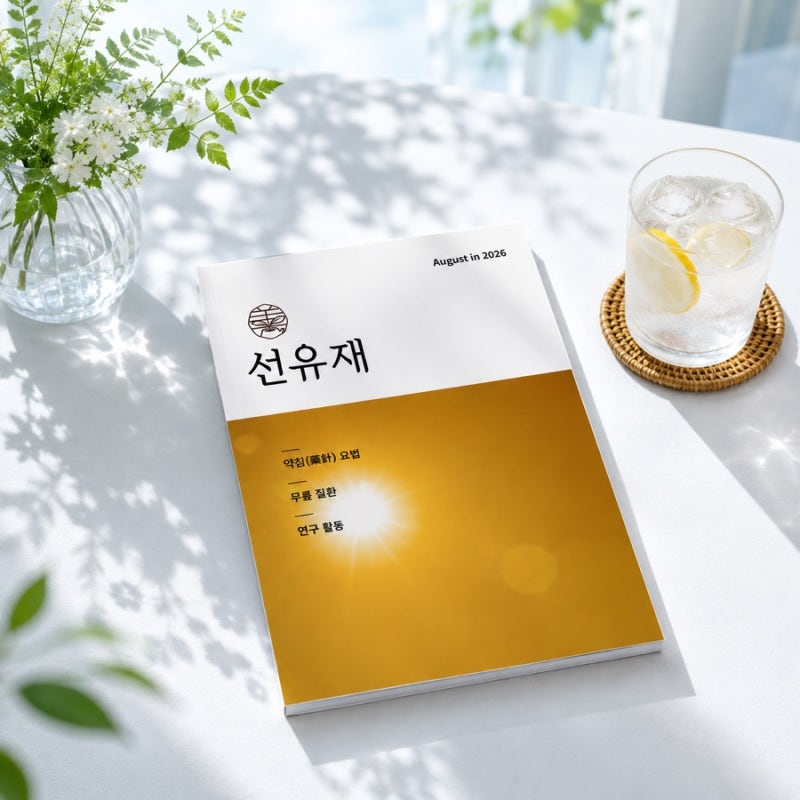
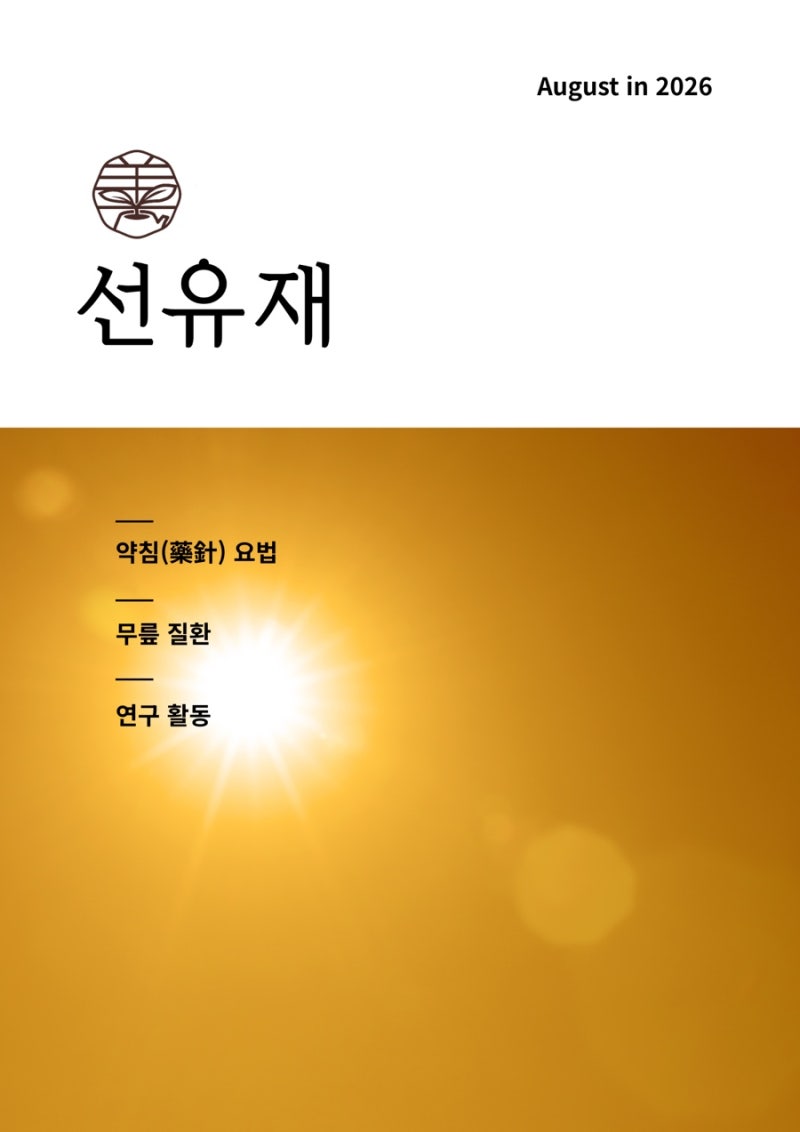
After receiving treatment at a Korean medicine clinic, you might suddenly have questions like these: “How is pharmacopuncture different from regular acupuncture?” “If my knee hurts, is it always due to arthritis?” “How is acupotomy treatment actually utilized?” Even if you heard explanations in the consultation room, there might be things you want to reconfirm after returning home. The August 2026 Monthly Sunyujae contains discussions frequently shared with patients in the consultation room, covering pharmacopuncture (藥針), knee conditions, and Dr. Hyocheong Chae’s medical support activities. Rather than including a lot of difficult medical information, we’ve structured it so you can comfortably read what you need to understand your body.
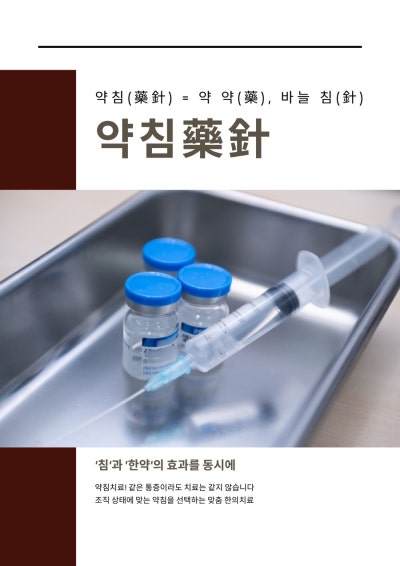
Pharmacopuncture (藥針): What Kind of Treatment Is It?
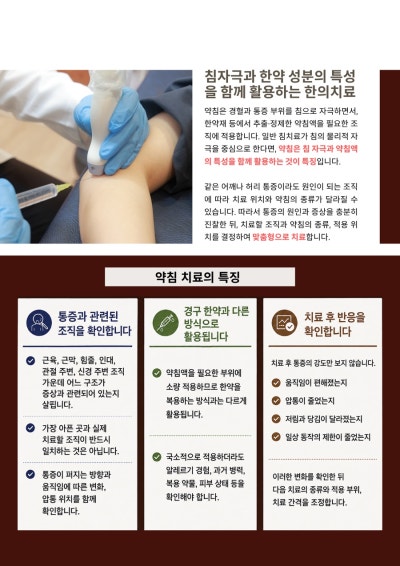
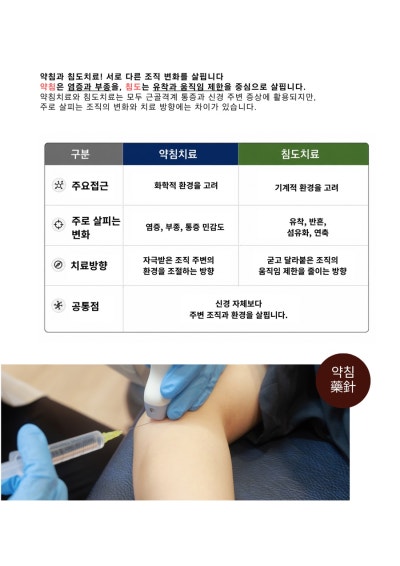
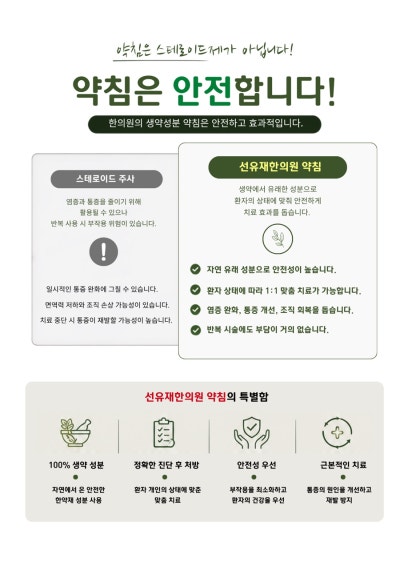
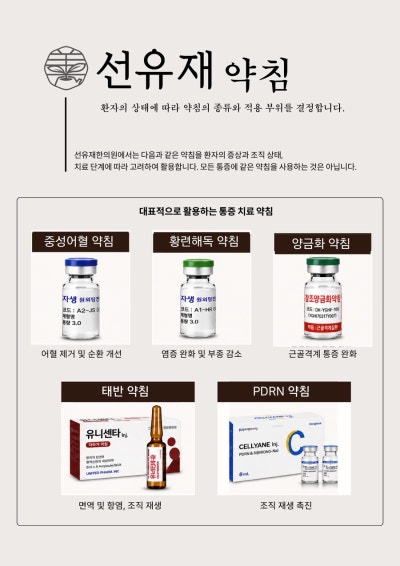
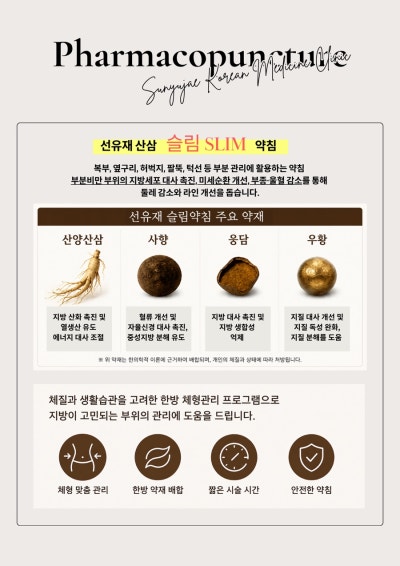
The first topic of the August Monthly Sunyujae is pharmacopuncture (藥針). Pharmacopuncture, literally meaning “medicine” (藥) and “needle” (針), is a Korean medicine treatment method that involves applying pharmacopuncture solutions derived from herbal medicines to acupoints or areas requiring treatment. In the consultation room, patients often ask how regular acupuncture treatment differs from pharmacopuncture treatment, and why different pharmacopuncture types are used for the same pain. At Sunyujae Korean Medicine Clinic, we determine the type of pharmacopuncture and its application site by examining the patient’s symptoms, tissue condition, and treatment stage. The same pharmacopuncture is not used for all types of pain. In this Monthly Sunyujae, we introduce various pharmacopuncture types that can be considered in treatment, such as Neutralized Blood Stasis Pharmacopuncture, Coptis Detoxification Pharmacopuncture, Yanggeumhwa Pharmacopuncture, Jahaego Pharmacopuncture, and PDRN Pharmacopuncture.
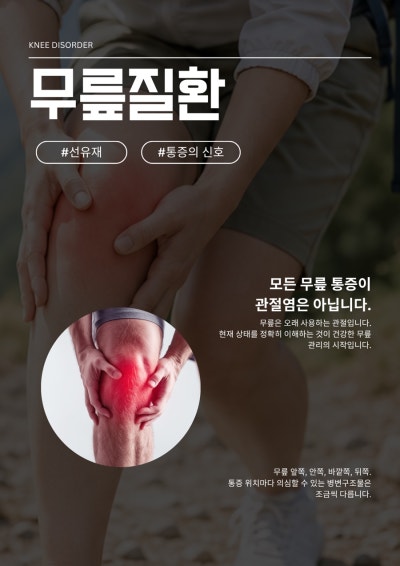
If My Knee Hurts, Is It Always Arthritis?
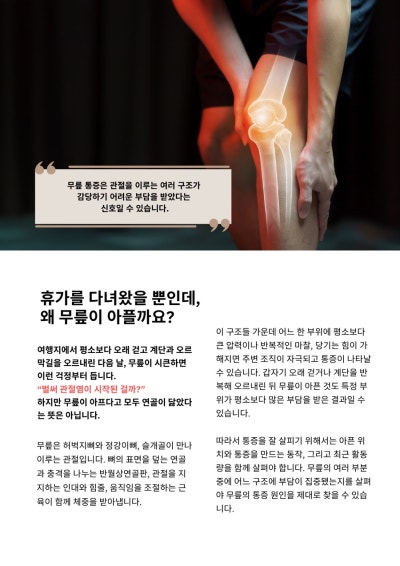
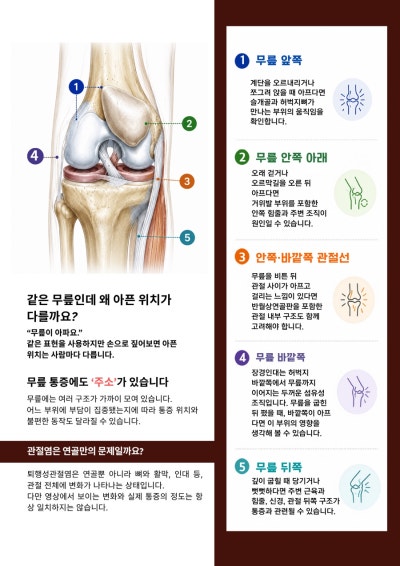
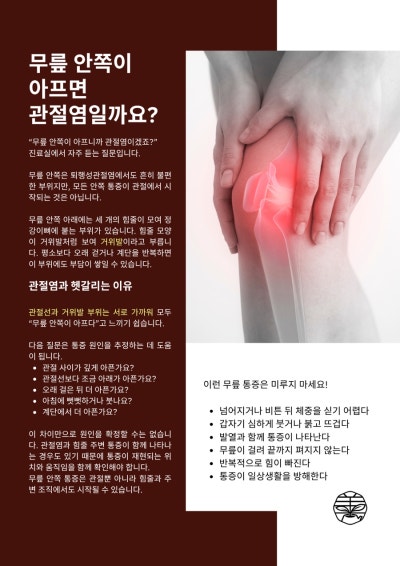
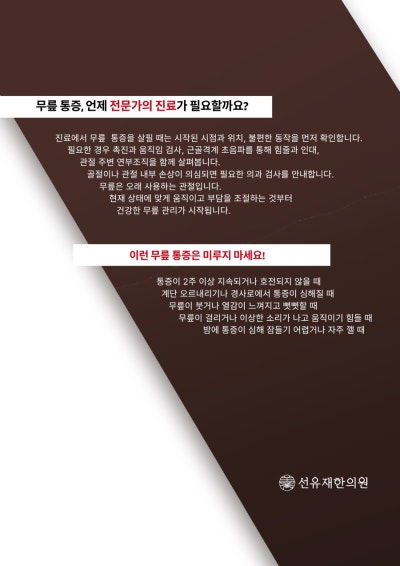
After a trip, or after walking longer than usual or climbing many stairs, you might experience a dull ache in your knee. In such cases, many people worry, “Could arthritis be starting already?” We frequently hear similar questions in the consultation room. However, not all knee pain signifies arthritis. The knee is a joint where various structures, including the thigh bone (femur), shin bone (tibia), patella, as well as cartilage, menisci, ligaments, tendons, and muscles, all move together. The areas we need to examine also differ depending on whether the pain is in the front of the knee, discomfort is on the inside or outside, or if the pain is around the joint line.
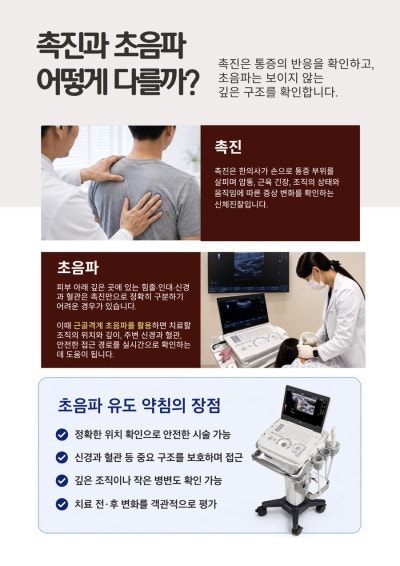
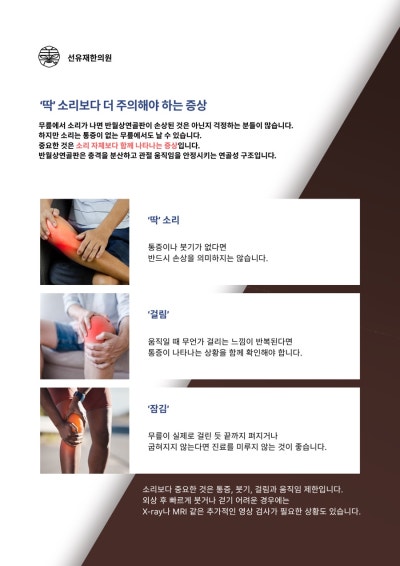
Even with the same knee pain, the areas we focus on can differ depending on whether it hurts when going down stairs, aches after long walks, or causes discomfort when sitting down and standing up. Therefore, during examination, we don’t just look at the location of the pain, but also check what activities you’ve been doing recently and which movements trigger the pain. At Sunyujae Korean Medicine Clinic, we observe the actual uncomfortable movements, and if necessary, use high-resolution musculoskeletal ultrasound to check the condition of surrounding soft tissues such as muscles, tendons, and ligaments.
Acupotomy Research and Medical Support Continuing Beyond the Consultation Room
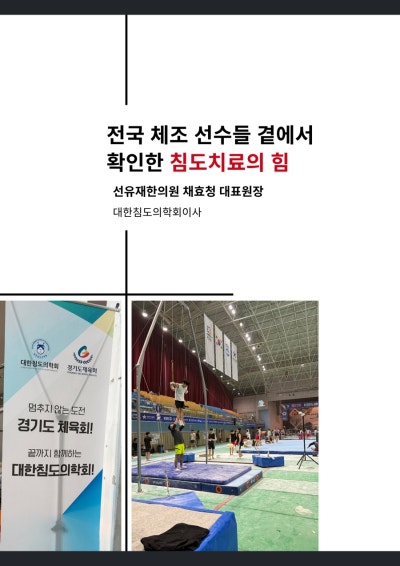
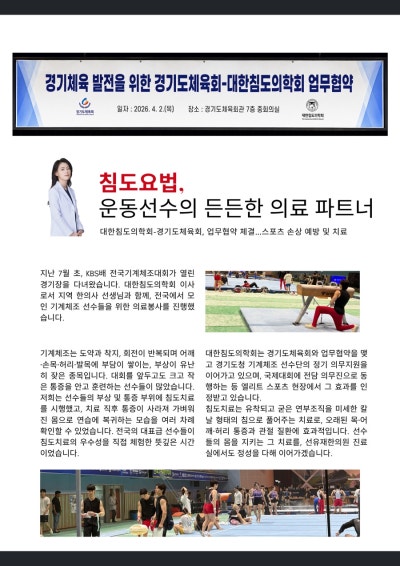
This August issue also includes news about Sunyujae Korean Medicine Clinic’s research activities and medical support from the Korean Acupotomy Medical Society. In early July, at the KBS Cup National Gymnastics Competition, medical staff from the Korean Acupotomy Medical Society provided medical support for the athletes, and Dr. Hyocheong Chae was also present at the scene. Gymnastics is a sport involving repetitive jumping, landing, and rotational movements. As such, repetitive strain can accumulate in the shoulders, wrists, lower back, knees, and ankles. The experience of directly observing the athletes’ movements and painful areas at the actual competition venue serves as a valuable reference when treating recurring post-exercise pain. The Korean Acupotomy Medical Society and Gyeonggi-do Sports Council signed a business agreement in April 2026 and continue to provide medical support for athletes.
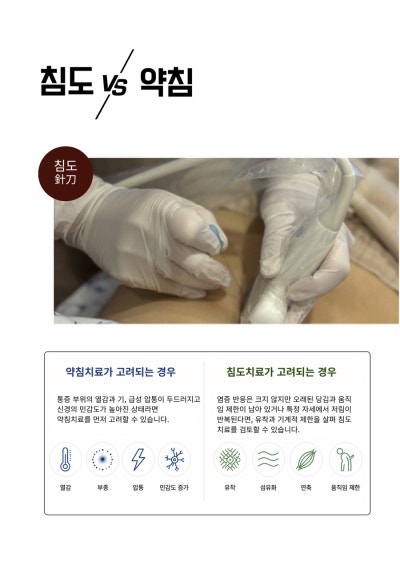
At Sunyujae Korean Medicine Clinic, when performing acupotomy (針刀) treatment, we don’t just focus on a single point of pain. Instead, based on anatomical structures, we also examine adhered or stiff soft tissues, limitations in movement, and surrounding structures.
Monthly Sunyujae: August Issue
You can revisit the explanations from the consultation room. After receiving treatment and returning home, there are times when the explanation might not immediately come to mind. You might want to explain the treatment process to your family or reconfirm health information. Monthly Sunyujae is created with the hope that it can be a health newsletter you can refer back to at such moments. Monthly Sunyujae is a Korean medicine health information magazine for in-clinic use, not for sale. When you visit Sunyujae Korean Medicine Clinic, you can freely read it during your waiting time or before/after your consultation. The content included in Monthly Sunyujae is also being introduced sequentially on the Sunyujae Korean Medicine Clinic blog.
You are welcome to read it comfortably if you are curious about the explanations you heard in the consultation room again, or if you wish to review the content with your family. Sunyujae Korean Medicine Clinic will continue to provide necessary explanations in the consultation room in a more understandable way, based on evidence-based medicine and integrative medicine. To understand your current body condition, the process of examining where and how you feel discomfort is sometimes more important than first deciding on a treatment method. We hope that Monthly Sunyujae serves as a comfortable reference for reconfirming discussions from the consultation room and understanding your own body. Sunyujae Korean Medicine Clinic, pursuing evidence-based medicine and integrative medicine. A place where good intentions reside, Sunyujae Korean Medicine Clinic 👉 The images below contain content from the August issue of Monthly Sunyujae.

If you need more detailed information about treatment, please feel free to contact Sunyujae Korean Medicine Clinic in Suji-gu at any time. Sunyujae Korean Medicine Clinic in Dongcheon-dong pursues evidence-based and integrative medicine.
This post was written directly by the medical staff of Sunyujae Korean Medicine Clinic to provide medical information, in compliance with Article 56(2) and Article 57(3) of the Medical Service Act. The duration and outcome of treatment may vary from person to person, so please consult a qualified practitioner before beginning treatment.
Consultation & Booking
Have questions? Reach us anytime via KakaoTalk or phone.