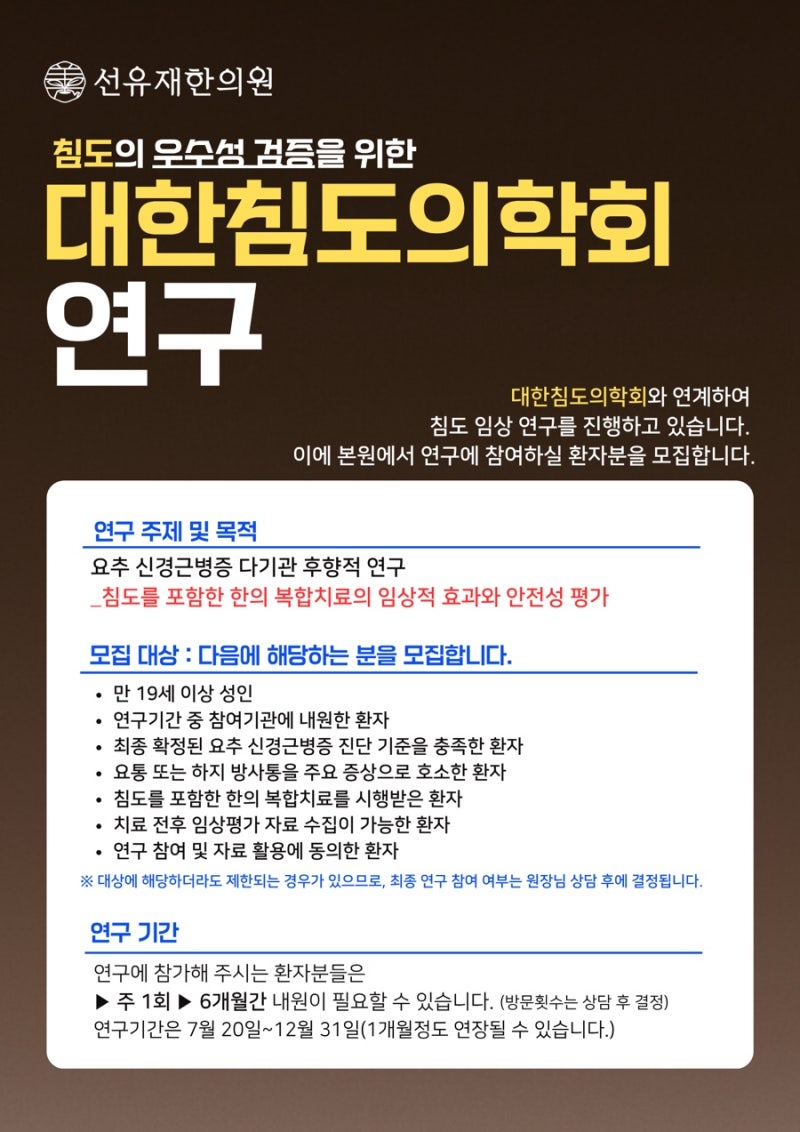
Some people experience discomfort due to back pain radiating from the buttocks down to the legs, or a tingling, electric-shock-like sensation in one leg. At first, they might dismiss it, thinking it’s just due to a tired back. However, if back pain is accompanied by recurring pain or numbness radiating to the legs, it’s necessary to check if not only the back but also the nerve roots are affected. In the clinic, we often hear patients say, “My leg hurts more than my back,” or “I have numbness from my buttocks down to my calves.” Sunyujae Korean Medicine Clinic, in conjunction with the Korean Acupotomy Medical Society, is participating in an acupotomy clinical study targeting lumbar radiculopathy.
This study is a multicenter retrospective study designed to evaluate the clinical efficacy and safety of acupotomy treatment in patients with lumbar radiculopathy based on lumbar disc disease. The study examines pre- and post-treatment clinical data of patients who received complex Korean medicine treatment, including acupotomy. Currently, Sunyujae Korean Medicine Clinic is also providing information about study participation to patients who meet the research criteria.

What is Lumbar Radiculopathy?
It’s not always lumbar radiculopathy just because you have back pain and leg numbness.
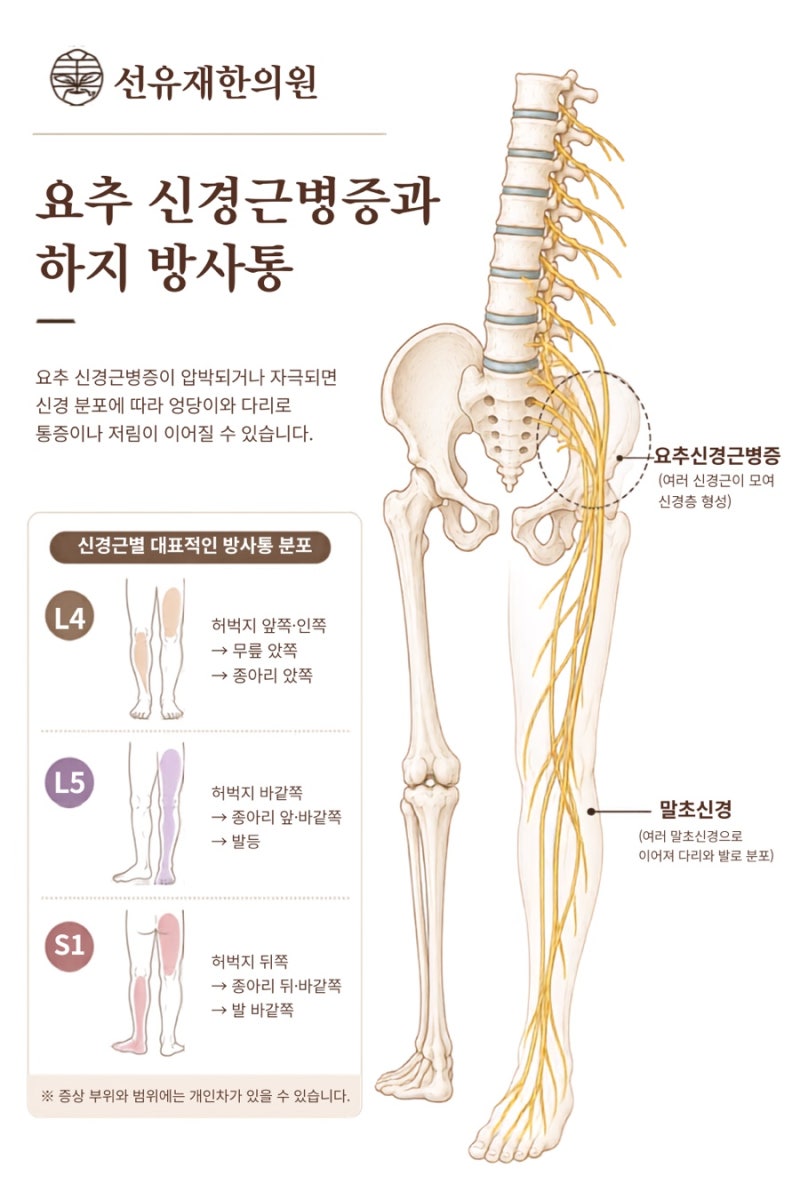
In the research educational material, lumbar radiculopathy is defined as a clinical syndrome characterized by radiating lower extremity pain and neurological abnormalities resulting from compression or irritation of a lumbar nerve root. Pain may radiate from the lower back to the buttocks and legs, or there may be numbness, paresthesia, burning sensations, or electric-shock-like feelings along the distribution of the nerve. In some cases, changes in sensation, muscle strength, or reflexes may also occur. Therefore, rather than judging solely by the symptom of leg numbness, we also check how far the pain extends and if there are any changes in sensation or muscle strength.
What will this multicenter study investigate?
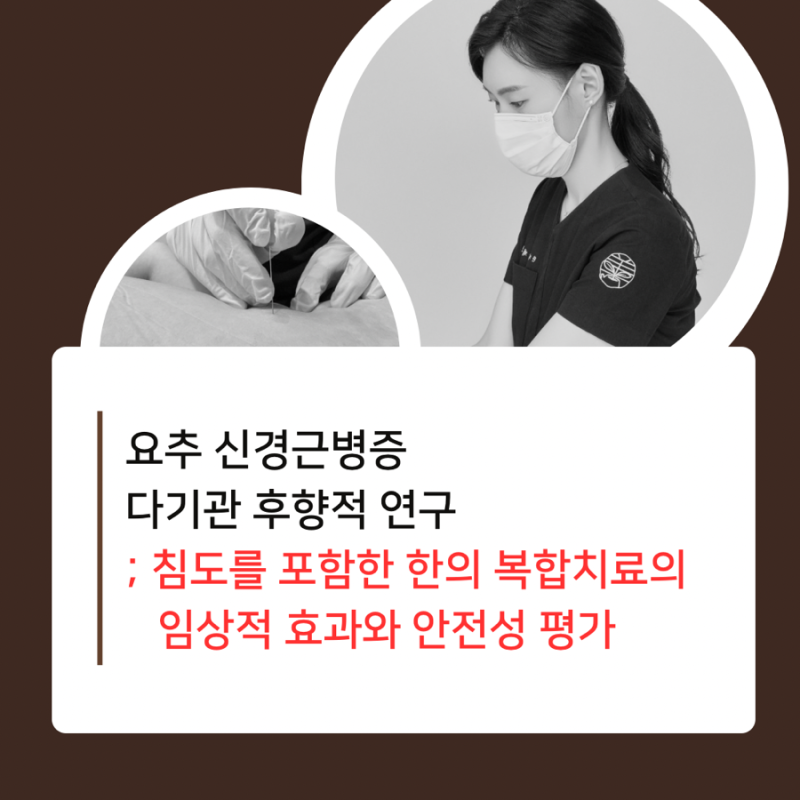
This study is a multicenter retrospective observational study involving multiple institutions. The research topic is a multicenter retrospective study on lumbar radiculopathy, evaluating the clinical efficacy and safety of complex Korean medicine treatment, including acupotomy. To assess changes before and after treatment, pain intensity is evaluated using the NRS 0-10 scale, and functional disability due to back problems is assessed using the ODI (Oswestry Disability Index). In simple terms, it involves recording not only how much the pain has changed but also how the daily discomfort experienced due to back and leg symptoms has changed, using consistent criteria.
Who is eligible to participate in the study?
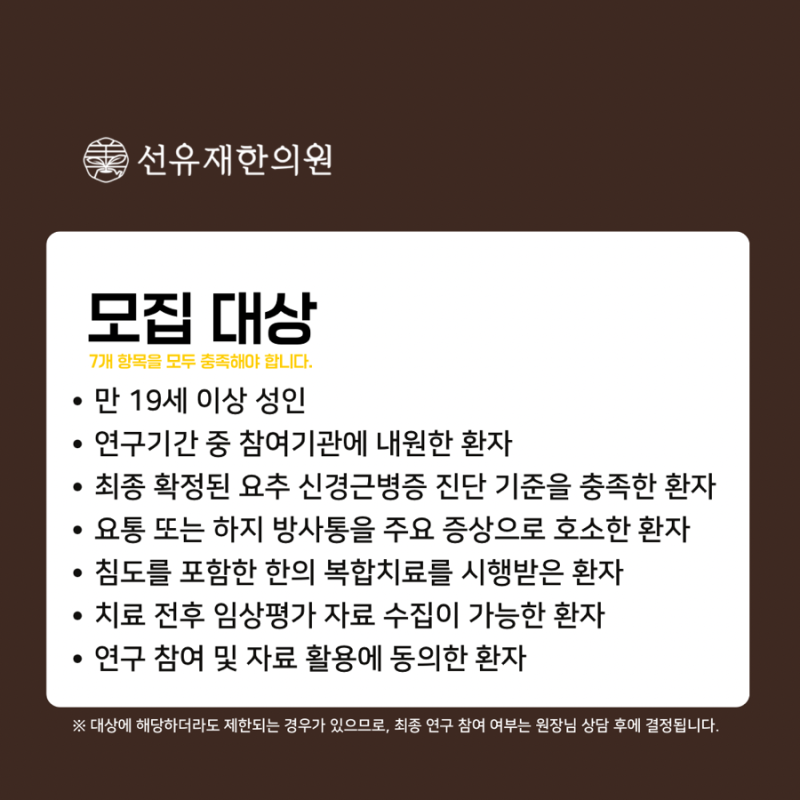
This study is not for patients who simply have back pain or leg numbness. We are guiding patients who meet all of the following seven criteria as study participants.
- Adults aged 19 years or older
- Patients who visited a participating institution during the study period
- Patients who meet the finally confirmed diagnostic criteria for lumbar radiculopathy
- Patients who complained of low back pain or radiating lower extremity pain as their main symptom
- Patients who received complex Korean medicine treatment, including acupotomy
- Patients for whom pre- and post-treatment clinical evaluation data can be collected
- Patients who consented to participate in the study and to the use of their data
Even if the above conditions are met, there may be cases where participation is restricted, and the final decision on study participation will be made after consultation with the director.
Is all leg numbness lumbar radiculopathy?
The study checks for pain or numbness radiating to the legs along with low back pain, and for neurological changes such as sensory loss or muscle weakness. Nerve root irritation tests, such as the straight leg raise test, are also considered, and auxiliary findings from MRI, CT, or X-ray are referenced as needed. However, not all patients with back pain are eligible for the study. Cases where other causes need to be identified first, such as spinal tumors, infections, fractures, or acute cauda equina syndrome, or conditions requiring immediate surgery, or leg symptoms caused by other reasons such as peripheral neuropathy or hip joint diseases, are excluded from the study.
In other words, rather than determining eligibility based on a single test result, we assess symptoms, neurological findings, and the possibility of other diseases together before deciding on study participation.
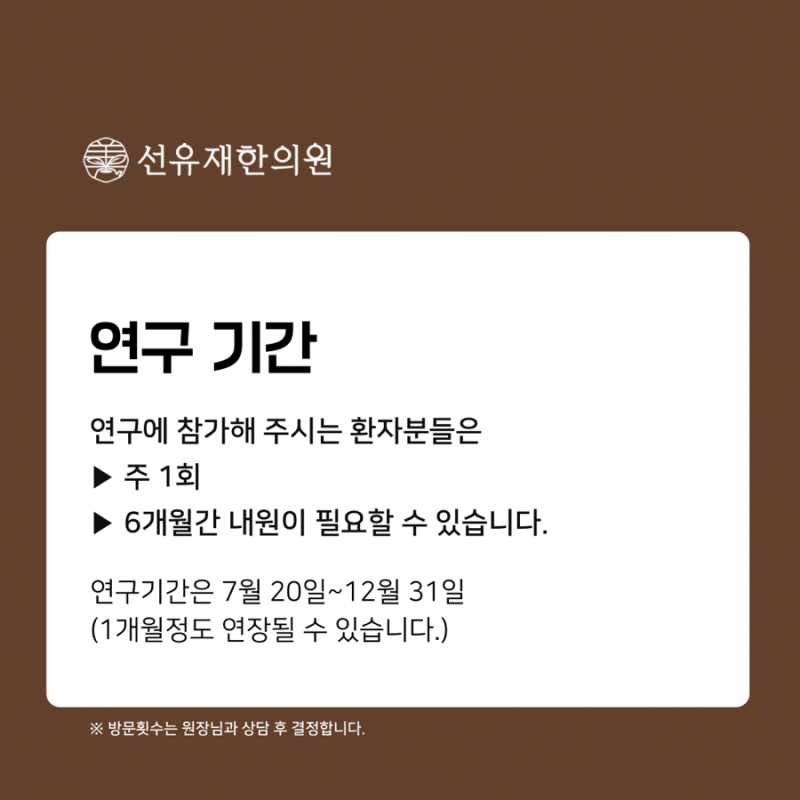
What are the study period and visit schedule?
Study Participation Information Patients participating in the study may need to visit once a week for 6 months. However, the actual number of visits will be determined after consultation. The study period is from July 20th to December 31st, and may be extended by approximately one month depending on the progress of the study.
Pain or numbness radiating from the back to the legs may appear similar, but their causes and neurological states can differ. In this study, too, participants are not selected based solely on symptoms; instead, eligibility is determined by applying the diagnostic criteria and inclusion/exclusion criteria for lumbar radiculopathy. Sunyujae Korean Medicine Clinic is participating as an institution in this multicenter study, in conjunction with the Korean Acupotomy Medical Society, following the established research procedures. This study aims to record pre- and post-treatment changes observed in actual clinical practice using consistent evaluation criteria, and to investigate the clinical efficacy and safety of acupotomy treatment. If you are interested in participating in the study, you will first confirm through consultation whether your current condition meets the study criteria.
We will inform patients of any further updates regarding the study’s progress within the confirmed scope. We translate questions from clinical practice into research. We will consider treatment directions appropriate for your current condition based on evidence. Sunyujae Korean Medicine Clinic
Sunyujae Korean Medicine Clinic in Suji-gu pursues evidence-based medicine and integrative medicine.
This post was written directly by the medical staff of Sunyujae Korean Medicine Clinic to provide medical information, in compliance with Article 56(2) and Article 57(3) of the Medical Service Act. The duration and outcome of treatment may vary from person to person, so please consult a qualified practitioner before beginning treatment.
Consultation & Booking
Have questions? Reach us anytime via KakaoTalk or phone.