

“My fever has gone down and my runny nose has stopped, but I still have a cough.”
“It feels like phlegm is stuck in my throat, so I keep clearing my throat.”
A persistent cough after a cold is usually not a serious condition. Even after a cold has passed, the mucous membranes of the throat and bronchi remain sensitive for some time, so it’s common for a cough to last for another 2-3 weeks. However, if phlegm doesn’t decrease after 2 weeks or if other symptoms are present, it’s time to consider whether to simply monitor it or seek a check-up. In the clinic, we often hear patients say, “My cold is gone, but I still have a cough.”
My cold is gone, so why do I still have a cough?
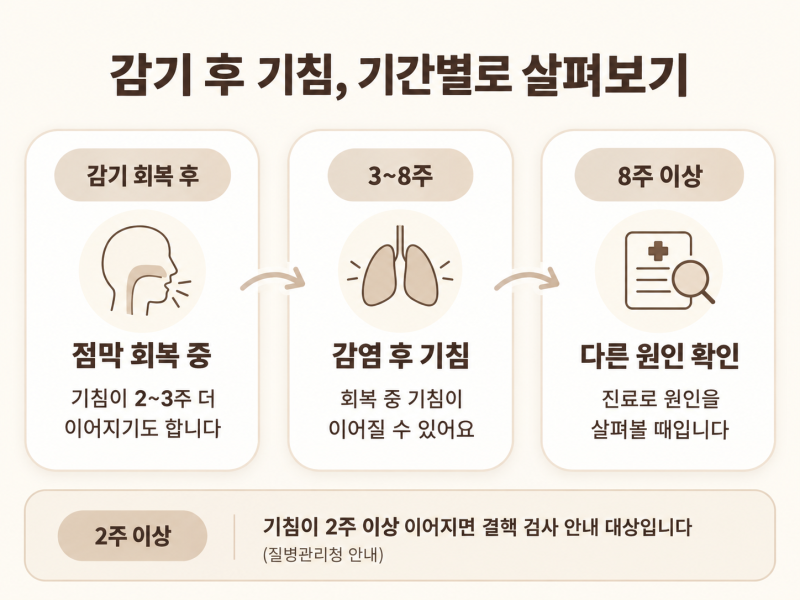
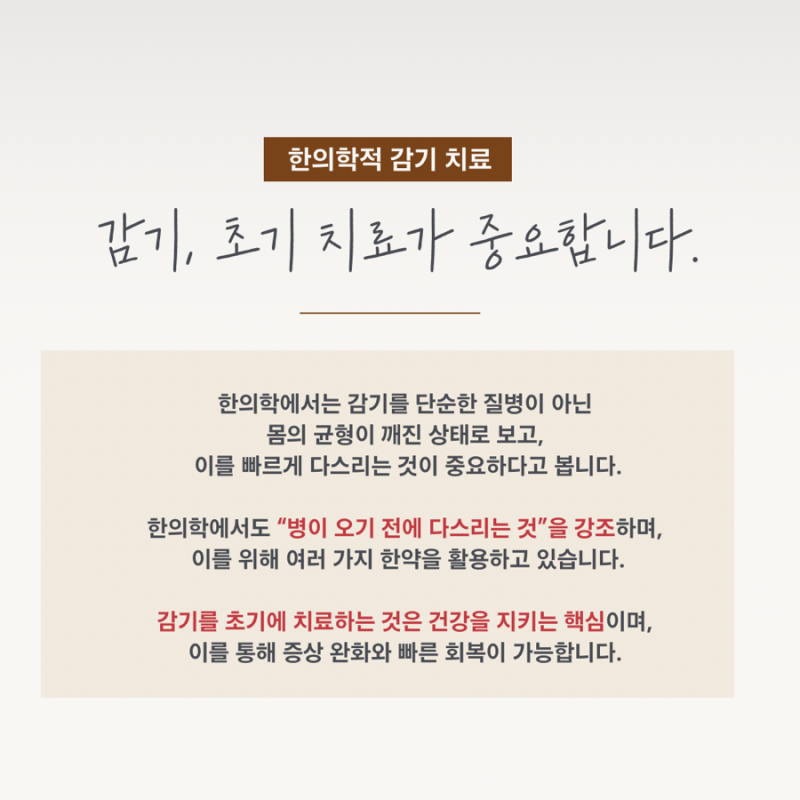
Even after the cold virus recedes, the mucous membranes inside the throat and bronchi do not immediately return to their original state. Just as a scraped knee remains sore for a while even after the surface has healed, the cough reflex is easily triggered by minor irritations while the injured mucous membranes are recovering.
This is called post-infectious cough, and it can typically last from 3 weeks to as long as 8 weeks.
That’s why a cough can suddenly erupt when exposed to cold air, when speaking for a long time, or when moving from a warm room to a cold place. Many people find that their cough is fine during the day but worsens when they lie down at night.
This is because postnasal drip, where mucus flows down the back of the throat when lying down, irritates the throat.
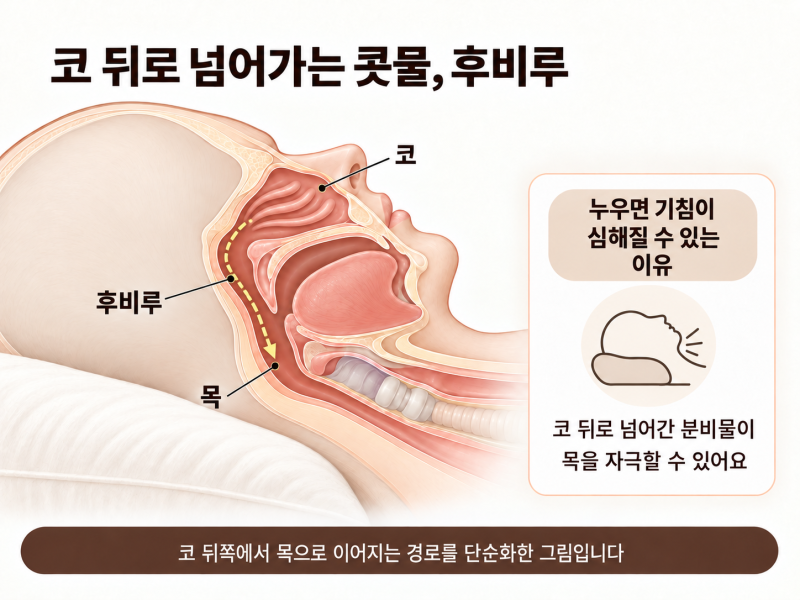
There’s another reason why a cough might worsen only at night. During the day, secretions caught in the throat naturally pass down as you speak, move, and swallow saliva, but these movements decrease when you fall asleep. The accumulated secretions at the back of the throat trigger the cough reflex, causing you to wake up coughing.
Dry coughs and wet coughs are viewed differently
Check which type your condition is closer to.
| If your cough is like this | Main areas to check | What you experience in daily life |
|---|---|---|
| Ticklish dry cough without phlegm | Sensitive throat/bronchial mucous membranes | Erupts with cold air, when speaking, or when laughing |
| Phlegm stuck in the throat, frequent throat clearing | Postnasal drip (mucus flowing down the back of the nose) | Worsens upon waking in the morning, or when lying down |
| Phlegm comes up with every cough | Inflammation inside the bronchi | Phlegm color and amount remain the same for several days |

It’s difficult to determine bacterial infection solely by phlegm color. Yellow phlegm is also common during the recovery phase of a viral cold. More important than color are duration and amount. If the amount of phlegm gradually increases, or if it doesn’t decrease for more than 2 weeks, it’s advisable to have your bronchial condition checked.
If you continue to have a cough and phlegm after a cold, do not force yourself to swallow the phlegm; instead, spit it out. If you collect the phlegm on a tissue and observe its color and amount for a few days, it will be much easier to discuss whether you are improving during your consultation.
If it’s been 2 weeks, check these first
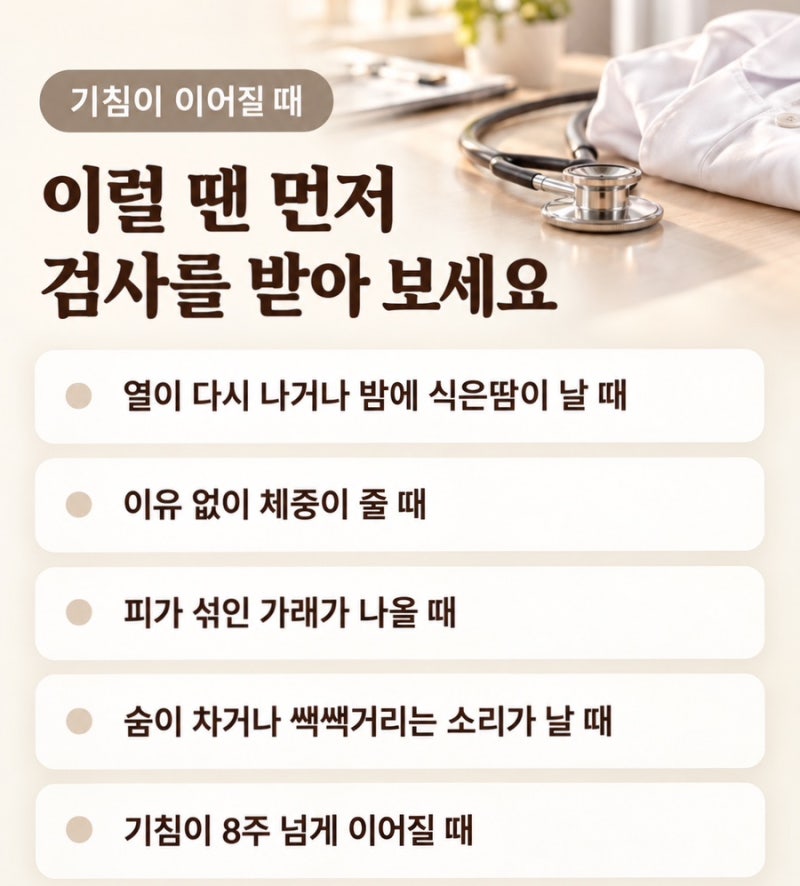
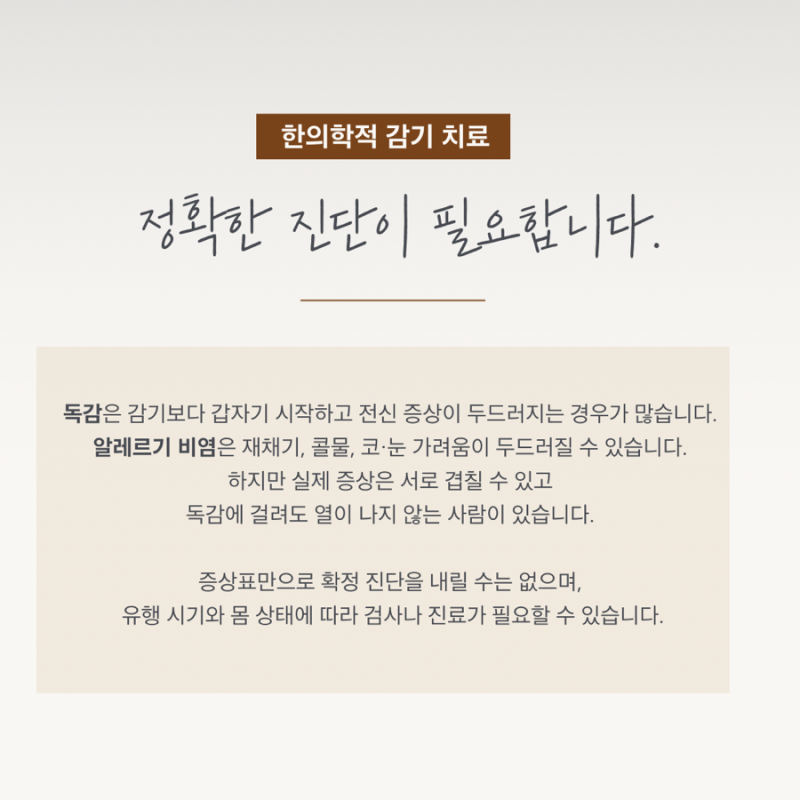
The Korea Disease Control and Prevention Agency (KDCA) advises getting tested for tuberculosis if a cough persists for more than 2 weeks. While most cases are post-infectious cough, if the following symptoms are present, it’s advisable to visit an internal medicine clinic, public health center, or respiratory internal medicine clinic before a Korean medicine clinic.
In these cases, get tested first
- When fever returns or you experience night sweats
- When you lose weight without reason
- When you cough up blood-tinged phlegm
- When you experience shortness of breath or wheezing
- When a cough persists for more than 8 weeks
- When you have a long history of smoking or a family member has tuberculosis
If only a cough remains without these symptoms, it’s often fine to monitor it a bit longer. If the cough persists for more than 3 weeks and disrupts sleep, it’s necessary to check if other causes are present, such as overly sensitive bronchi (airway hyperresponsiveness), cough-variant asthma (where only a cough appears without wheezing), or reflux where stomach acid rises to the throat.
How we assess it at Sunyujae Korean Medicine Clinic
A cough after a cold is not just a problem of the throat; it is intertwined with the body’s recovery process after overcoming the cold. Therefore, we don’t just look at the cough sound and phlegm characteristics; we also ask about sleep quality, appetite and digestion, and how much energy has decreased after the cold. In Korean medicine, lingering coughs after a cold are broadly categorized into two types. A dry, ticklish cough without phlegm is viewed as a state where the lungs are dry, while a cough with sticky, lingering phlegm is seen as a state where unresolved phlegm-dampness (dam) remains in the body. Depending on which type it is, the approach to treatment differs, either by moistening the affected area or by reducing phlegm. Herbal medicine may be considered based on the examination results.
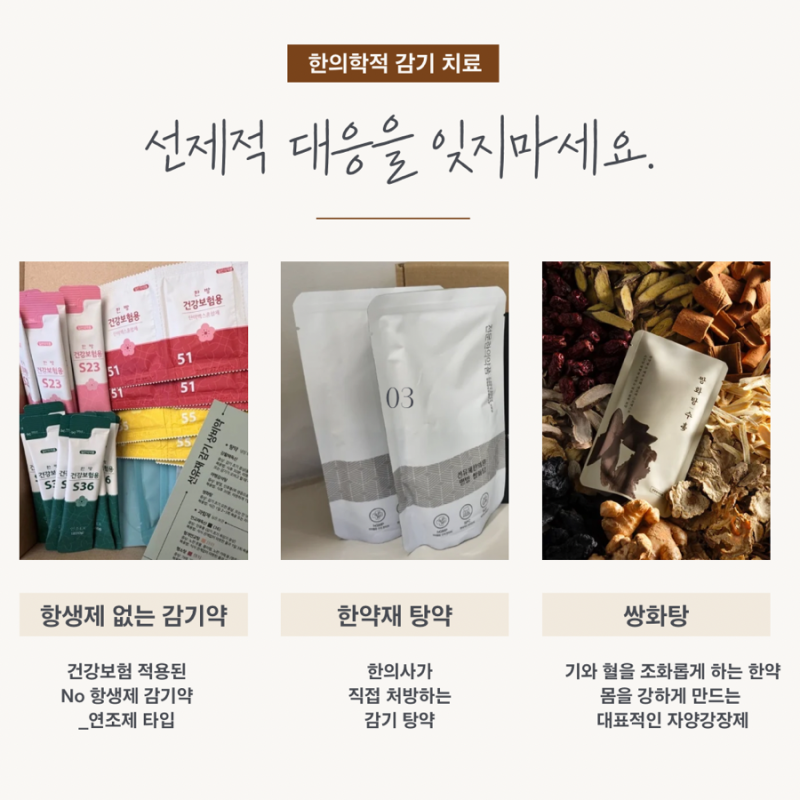
Among the cold herbal medicines introduced in October’s Monthly Sunyujae, Haengso-tang is prescribed for cases with lingering cough and phlegm, while Samso-eum is used when phlegm, cough, and nasal congestion are present together. Even with the same prescription, the suitability varies depending on one’s constitution and current condition, so it is determined after checking with any medications you are currently taking. If you have test results from another hospital, please bring them with you. At Sunyujae Korean Medicine Clinic, which pursues evidence-based and integrative medicine, we consider those results when determining the treatment direction.
What you can do at home until your cough subsides
Sensitive mucous membranes are less irritated when kept moist. Drink small sips of lukewarm water frequently, and maintain humidity in your room to prevent dryness. When going outside on chilly mornings and evenings, wearing a mask can prevent cold air from directly reaching your throat. If night coughs are severe due to postnasal drip, try rinsing your nose with lukewarm saline solution before bed or elevating your pillow slightly. Avoid tobacco smoke and strong fragrances, as they can easily trigger the cough reflex. Repeated throat clearing can re-irritate your throat. When you feel a tickle, try swallowing a sip of water instead of clearing your throat.

Frequently Asked Questions
Q. How long does a cough typically last after a cold? A. Most subside within 3 weeks, but it can last up to 8 weeks. If it persists beyond 8 weeks, other causes should be investigated.
Q. I’m taking cough medicine; can I take herbal medicine at the same time? A. If you inform us of the medications you are taking, we will check their ingredients and dosage intervals to determine if they can be taken together.
Q. If I have yellow phlegm, do I need to take antibiotics? A. It’s difficult to determine a bacterial infection solely by phlegm color, so it’s best to confirm through a consultation, considering fever and other symptoms.
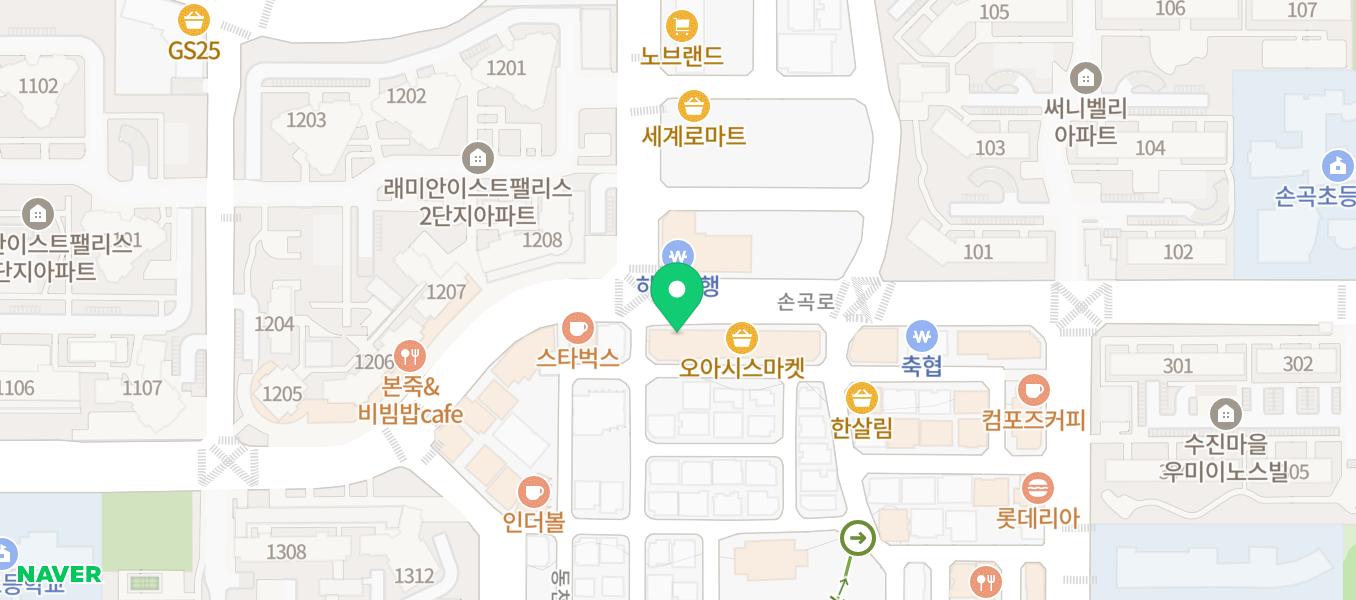
If you are concerned about a persistent cough after a cold, first consider its duration and any accompanying symptoms. If phlegm doesn’t decrease for more than 2 weeks or if the cough persists enough to disrupt your sleep, we recommend having your current condition checked at Sunyujae Korean Medicine Clinic in Dongcheon-dong, Suji-gu.
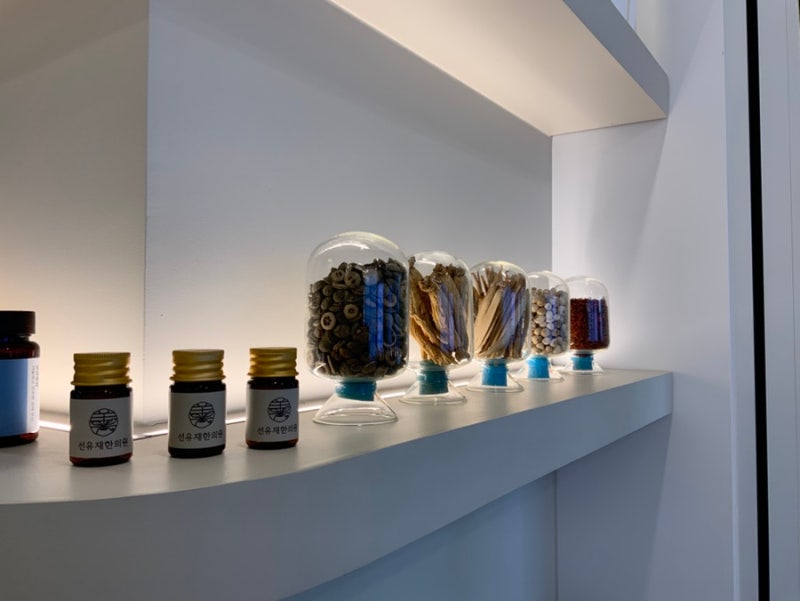
Sunyujae Korean Medicine Clinic in Suji-gu pursues evidence-based and integrative medicine.
This post was written directly by the medical staff of Sunyujae Korean Medicine Clinic to provide medical information, in compliance with Article 56(2) and Article 57(3) of the Medical Service Act. The duration and outcome of treatment may vary from person to person, so please consult a qualified practitioner before beginning treatment.
Consultation & Booking
Have questions? Reach us anytime via KakaoTalk or phone.