
Sometimes, after looking at a monitor all day, you might feel your head spin when you look up. While you might dismiss it as just being tired, it’s a different story if dizziness accompanies a stiff neck every time. If your dizziness fluctuates with your neck condition, it’s worth considering cervicogenic dizziness, which originates from the neck. In our clinic, we hear “My ears are fine, but I’m still dizzy” more often than you might think.

What kind of dizziness is cervicogenic dizziness?
Cervicogenic dizziness refers to dizziness caused by problems with the cervical vertebrae and surrounding muscles and joints. Rather than a spinning sensation, it often presents as a floating sensation in the head or a slight swaying of the body.
It typically worsens when the back of the neck is stiff or painful, and it’s characteristic for the dizziness to decrease as the neck condition improves. Many people report feeling more dizzy when they hold their head in one direction for a long time or turn it suddenly. It’s also common for it to be accompanied by a headache that feels like a tightening at the back of the head, or shoulder stiffness.
Why does a stiff neck cause dizziness?
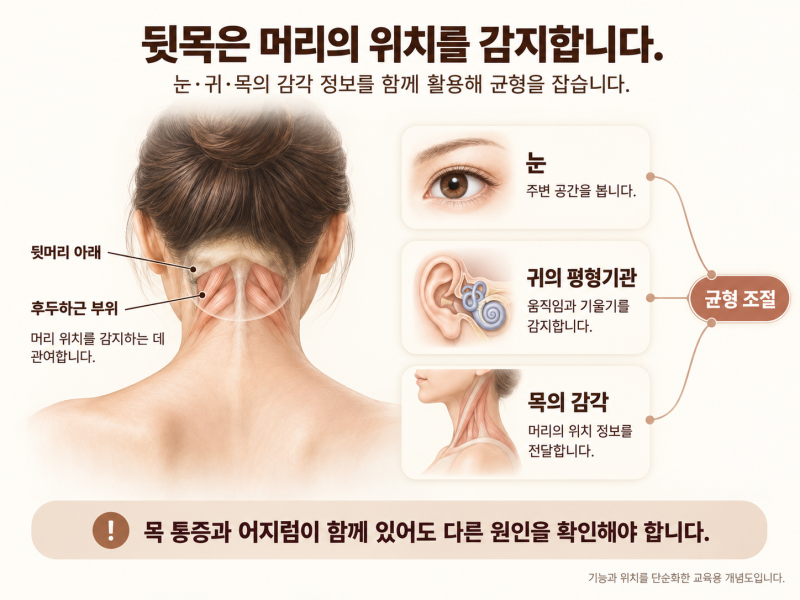
Our body uses signals from the eyes, the vestibular organs in the ears, and the neck to maintain balance. Surprisingly, the small muscles in the neck, especially where the back of the head meets the neck, constantly send information to the brain about “which direction the head is currently facing.” These small muscles have a denser concentration of sensors that detect muscle length and tension compared to other muscles. Therefore, if these muscles become stiff for a long time or surrounding tissues adhere, the signals from the neck become inconsistent with the signals from the eyes and ears. Just as a driver gets confused if three navigation systems give different directions, the brain finds it difficult to maintain balance and thus experiences dizziness. The longer one maintains a forward head posture, the more easily strain accumulates in this area.
How is it different from BPPV or autonomic dizziness?
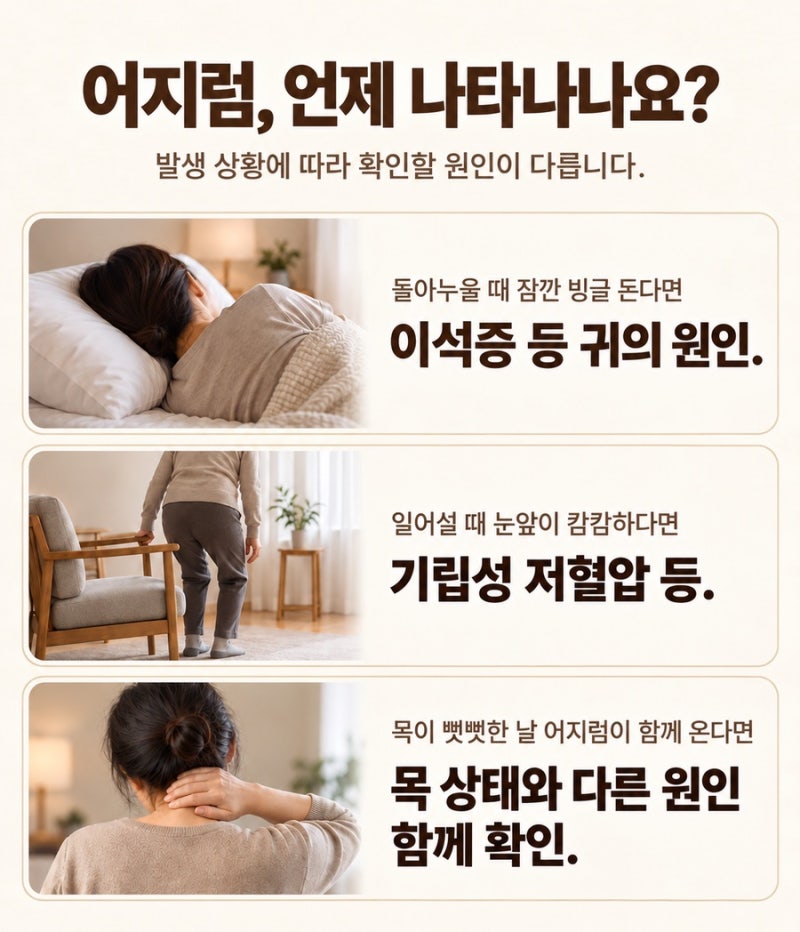
Dizziness has various causes, so cervicogenic dizziness is often considered after ruling out other causes. Use the table below to see which type of dizziness yours most closely resembles.
Check which category your condition falls into.
| If you experience this kind of dizziness | Consider first |
|---|---|
| Spins for tens of seconds when lying down and getting up, or turning over in bed | BPPV |
| When standing up from a sitting position, your vision darkens and your head spins | Autonomic (orthostatic) dizziness |
| A floating sensation on days when your neck is stiff, and it worsens when you turn your head or bend it forward for a long time | Cervicogenic dizziness |
If you’ve already had ENT or neurology examinations for dizziness and been told there’s nothing wrong, there’s a stronger reason to examine your neck.
This is how Sunyujae Korean Medicine Clinic assesses it
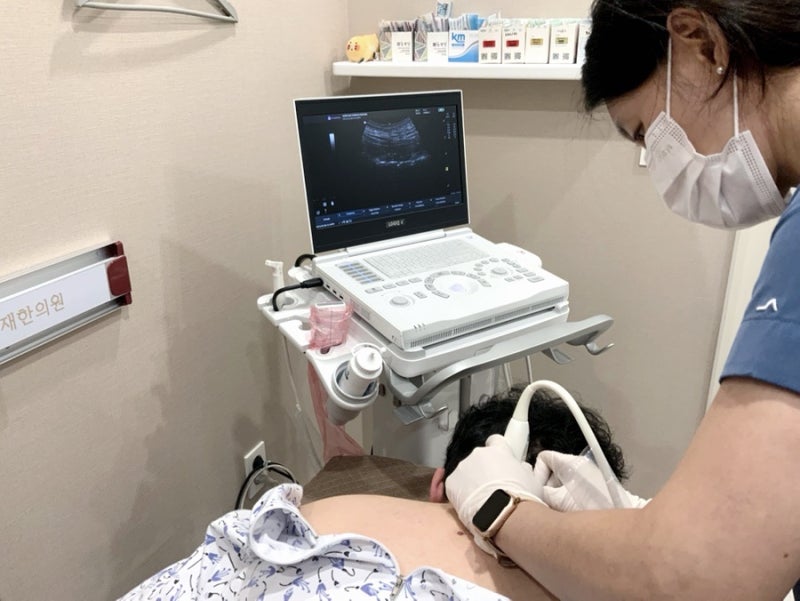
At Sunyujae Korean Medicine Clinic, we start by asking about the relationship between the moment dizziness is felt and neck movements, and observe the movements together. If the pattern of dizziness seems more consistent with ear or brain-related causes, we may recommend ENT or neurology examinations first. If a neck issue is suspected, we check in which direction the dizziness or stiffness worsens when you turn, bend forward, or tilt your head back. Then, we use musculoskeletal ultrasound to check if the deep muscles of the back of the neck and surrounding tissues are thickened or adhered. I approach this with both anatomical structure and acupuncture-point theory in mind, and I have taught acupotomy for headaches and dizziness in continuing education courses for Korean medicine doctors. If stiff muscles and adhered tissues are identified, we use acupotomy to release those areas, aiming to help the signals from the neck flow naturally again. Depending on the condition, pharmacopuncture or herbal medicine may also be considered.
Things to try at home
Start by adjusting your monitor height to eye level. The lower the screen, the more your head tends to jut forward, forcing your neck muscles to work harder for longer. Once an hour, gently tuck your chin in, lengthen the back of your neck, and take five deep breaths. If your pillow is too high when you sleep, your head will be bent forward all night. Check if the pillow height allows your face to point straight up at the ceiling when you lie down. When exercising, it’s best to avoid sudden, rapid head turns or extreme head tilts, as these can worsen dizziness. Even just a few days of noting when and in what posture your dizziness occurs can be a great help in finding the cause.
Frequently Asked Questions
Q. Can cervicogenic dizziness be diagnosed immediately with a test? It’s difficult to confirm immediately with a single test. We assess it by ruling out other causes and examining the relationship between neck movements and dizziness.
Q. Will a strong neck massage help? Gentle massage can be helpful. However, strong pressure or twisting motions on the back of the neck can actually worsen dizziness, so it’s best to be cautious.
Q. I received treatment for BPPV, but I’m still dizzy. Could it be a neck problem? BPPV often recurs, so we first check if it’s the same type of dizziness. If it’s a floating sensation on days when your neck is stiff, rather than a spinning sensation when lying down, it’s necessary to examine the neck as well.
In these cases, please consult a doctor first
- When your speech becomes slurred or you lose strength in one arm or leg
- When experiencing a severe headache for the first time or seeing double
- When dizziness doesn’t stop for several days and makes walking difficult
These symptoms could indicate other causes, such as cerebrovascular issues, and require immediate emergency room or neurology consultation.
The cause of cervicogenic dizziness often becomes apparent when the neck condition is examined alongside the dizziness, rather than focusing solely on the dizziness itself. We recommend you visit Sunyujae Korean Medicine Clinic in Dongcheon-dong, Suji-gu, to have the relationship between your neck and dizziness checked.

Sunyujae Korean Medicine Clinic in Suji-gu pursues evidence-based medicine and integrative medicine.
This post was written directly by the medical staff of Sunyujae Korean Medicine Clinic to provide medical information, in compliance with Article 56(2) and Article 57(3) of the Medical Service Act. The duration and outcome of treatment may vary from person to person, so please consult a qualified practitioner before beginning treatment.
Consultation & Booking
Have questions? Reach us anytime via KakaoTalk or phone.