
“My stomach starts to ache gently every morning on days when I have a presentation.”
“I’m told there’s nothing wrong, but my stomach continues to be uncomfortable.”
If you experience abdominal pain every time there’s an important day, and feel better after a bowel movement, and this has been repeating for several months, it could be Irritable Bowel Syndrome (IBS). IBS is a condition where, even without any clear abnormalities in the intestines, the bowel’s movement and sensation become oversensitive, leading to recurrent abdominal pain and changes in bowel habits.
The key to self-diagnosis is to look at ‘how often it has recurred’ rather than ‘how much pain you’ve experienced’. If you’ve developed a habit of locating restrooms before going out, it’s time to check your current condition.

At a Glance
| Category | Description |
|---|---|
| What is it? | IBS refers to a condition where abdominal pain and changes in bowel habits recur for more than three months without structural abnormalities in the intestines. |
| Why does it occur? | The signals exchanged between the gut and brain become oversensitive, causing the intestines to react strongly to food and stress, leading to recurrence. |
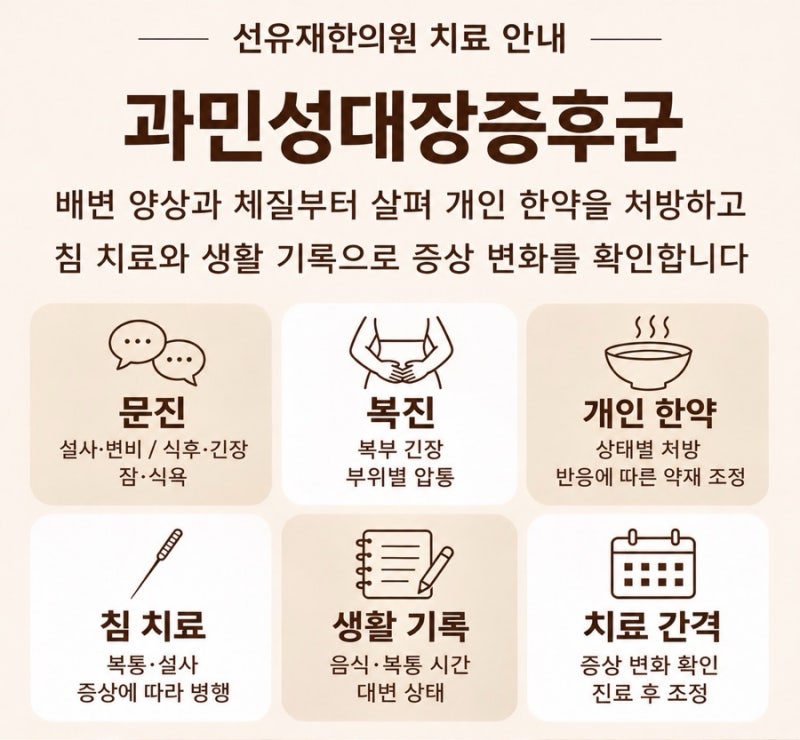
| Sunyujae Korean Medicine Clinic Treatment | By considering bowel habits and constitution, we prescribe personalized herbal medicine, and monitor symptom changes through acupuncture and lifestyle journaling. |
What is Irritable Bowel Syndrome (IBS)?
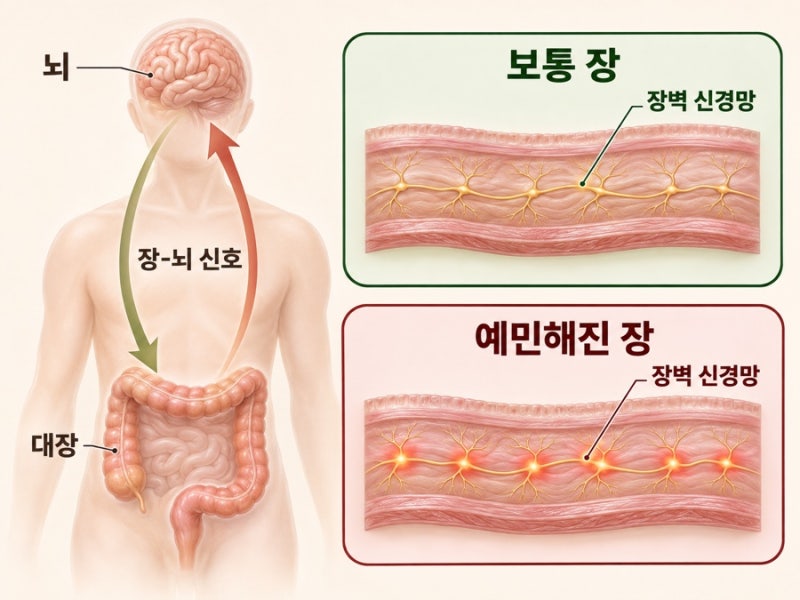
Irritable Bowel Syndrome (IBS) refers to a condition characterized by recurrent abdominal pain along with changes in bowel frequency or stool consistency. We categorize it into diarrhea-predominant type (IBS-D) with frequent diarrhea, constipation-predominant type (IBS-C) with hard stools, and mixed type (IBS-M) where both alternate. The type can also change over time for the same individual. The intestines are composed of muscles that propel food and sensory nerves that communicate internal conditions to the brain. The gut and brain continuously exchange signals via nerves and hormones, and nowadays, IBS is also referred to as a ‘disorder of gut-brain interaction’.
To put it simply, it’s like a speaker with the volume turned up too high, where even small sounds resonate loudly.
Therefore, even if there are no abnormalities in the shape of the intestines, an oversensitive gut can perceive the same stimuli as more painful.
IBS Self-Diagnosis: What items should I look for?
The international diagnostic criteria (Rome IV criteria) first look for recurrent abdominal pain at least one day a week over the past three months. They also check if the pain changes after a bowel movement, and if there are changes in bowel frequency or stool consistency.
Check which category your condition is closer to
| If these recur | Points to consider |
|---|---|
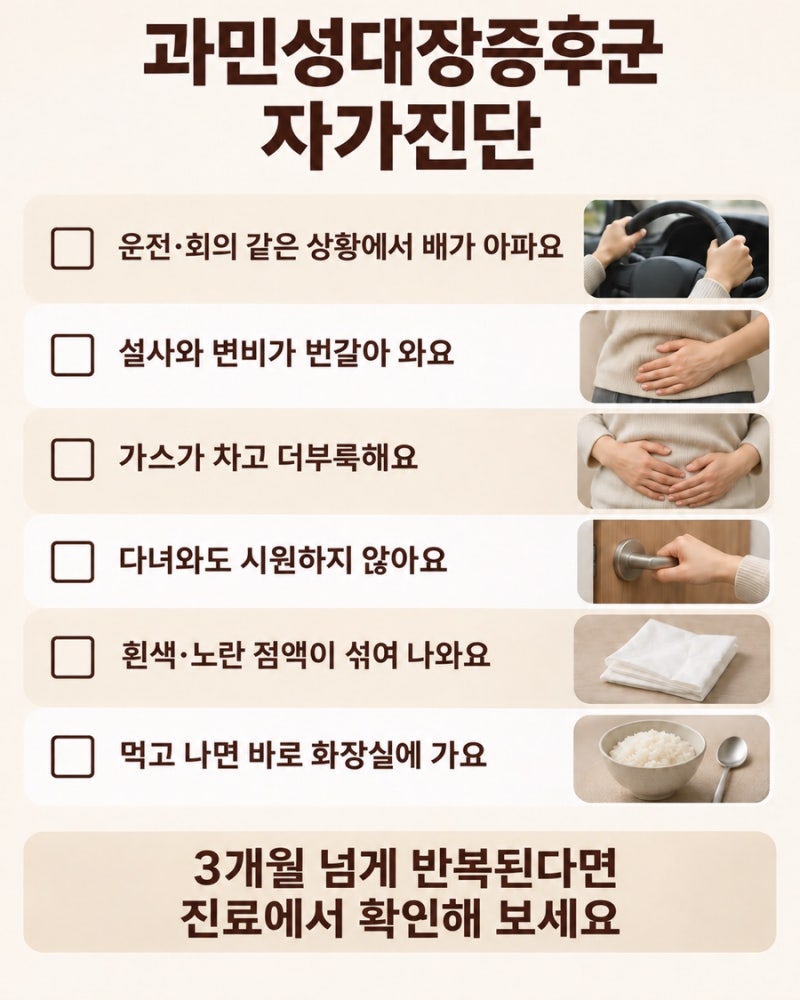
| Abdominal pain in specific situations like driving, classes, or meetings | Does your gut react first when you’re stressed? |
| Diarrhea and constipation alternate | Is it mixed type, and which side does it lean towards recently? |
| Bloating, abdominal distension, and frequent burping | When does discomfort increase after meals? |
| Don’t feel relieved even after a bowel movement | Does a feeling of incomplete evacuation accompany abdominal pain? |
| White or yellow mucus mixed in stool | Do you feel heavy, and are your stools generally loose? |
| Go to the restroom immediately after eating | Does your gut move excessively fast after meals? |
If several of these items apply and have been recurring for more than three months, we recommend discussing your current condition during a consultation.
Why does my stomach hurt every time there’s an important day?
When you’re stressed, the signals from the brain to the gut change, causing the bowel’s movement to speed up or hesitate. Stimuli from the gut are also perceived as more painful. These signals don’t flow in only one direction; if the gut is uncomfortable for a long time, those signals, in turn, amplify anxiety and stress. The habit of visiting the restroom before going out due to worry about abdominal pain is also part of this cycle.
In Korean medicine, the accumulated qi of the liver (肝) due to stress is seen as suppressing the spleen and stomach (脾胃), which are responsible for digestion, and this condition was called Ganbi-bulhwa (肝脾不和, liver-spleen disharmony). The phenomenon of needing to go to the restroom immediately when experiencing abdominal pain and feeling much better afterward was recorded as tongsa (痛瀉, painful diarrhea) in ancient medical texts.
How does Sunyujae Korean Medicine Clinic treat Irritable Bowel Syndrome?
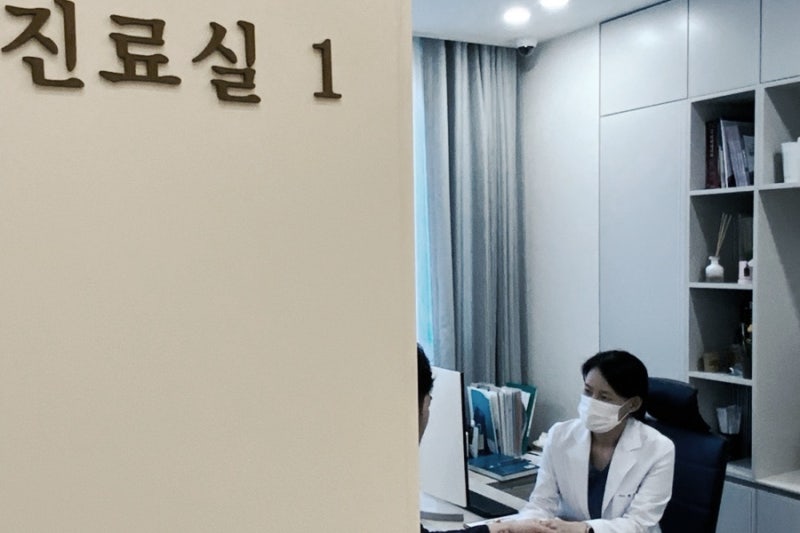
Sunyujae Korean Medicine Clinic treats IBS by first examining bowel habits and constitution to prescribe personalized herbal medicine, and monitors symptom changes through a combination of acupuncture and lifestyle journaling. As a Board-certified Specialist in Korean Internal Medicine, I spend time asking about the patient’s entire lifestyle, not just their abdominal symptoms. I first observe whether diarrhea or constipation is more frequent, if discomfort occurs after meals, or if it worsens with stress. I also check whether the patient is more sensitive to cold or heat, if they sleep well, and what their appetite is like. In a supine position, I gently palpate the abdomen in different areas to identify any spots that are tense or rigid.
Even with the same IBS diagnosis, the body’s presentation varies, so herbal medicine is tailored to these different patterns. For those who experience diarrhea and abdominal rumbling when stressed, the prescription focuses on relieving stagnant qi and supporting the spleen and stomach. For those with loose stools and a heavy feeling in the body, the prescription aims to reduce dampness within the body. For those with frequent morning diarrhea and cold hands and feet, the focus is on warming the interior. And for those with hard stools and a feeling of incomplete evacuation, the approach is to clear blockages and help the intestines move.
There is also clinical research on herbal medicine prescriptions. A 2017 study published in the international journal 「Clinical Gastroenterology and Hepatology」 enrolled 1,044 IBS patients and reported that the group that took a Tongxie-based herbal formula for 4 weeks showed greater improvement in abdominal pain and bowel-related symptoms compared to the placebo group. This prescription originated from Tongsa-yobang (痛瀉要方, known in Chinese as Tongxie Yaofang), recorded during the Yuan dynasty, and in the study, herbs were added based on the patient’s characteristics. Sunyujae Korean Medicine Clinic’s herbal medicine is also not fixed to a single formula; we adjust the herbs and dosage based on the patient’s response after taking it. Herbal prescriptions may vary depending on individual constitution and body condition, and will be guided after consultation. If abdominal pain and diarrhea are frequent, acupuncture treatment is combined, and the treatment interval is determined by observing how symptoms change. During the next consultation, we refine the plan by reviewing records of changes in the frequency of abdominal pain and stool condition. Treatment direction and duration may vary depending on the condition.
When your stomach acts up, write it down like this
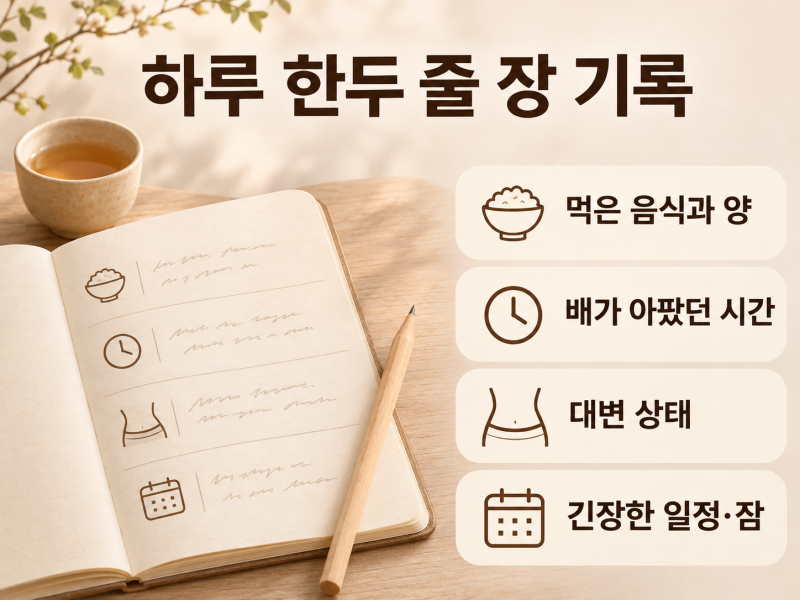
Write down the food you ate and its quantity, the time you experienced abdominal pain, and your stool condition in one or two lines each day. If you also mark days when you had trouble sleeping or had a stressful schedule, you’ll see recurring patterns for yourself. Instead of cutting out many foods at once, try adjusting the quantity of those that repeatedly appear in your records.
Frequently Asked Questions
Q. I’m told there’s nothing wrong, so why does my stomach continue to hurt? IBS is a condition where the bowel’s movement and sensation become oversensitive rather than its shape. Therefore, discomfort often persists even without any visible abnormalities. The absence of visible abnormalities does not mean the discomfort is minor, so we examine the recurring patterns together.
Q. How long should I take herbal medicine for IBS? The duration of intake varies depending on your initial condition and your response after taking it. We adjust the herbs and duration together by monitoring changes in abdominal pain and bowel habits through records. If you notice bloody or black stools, unexplained weight loss, or have a family history of bowel disease, please have your condition checked during a consultation first.
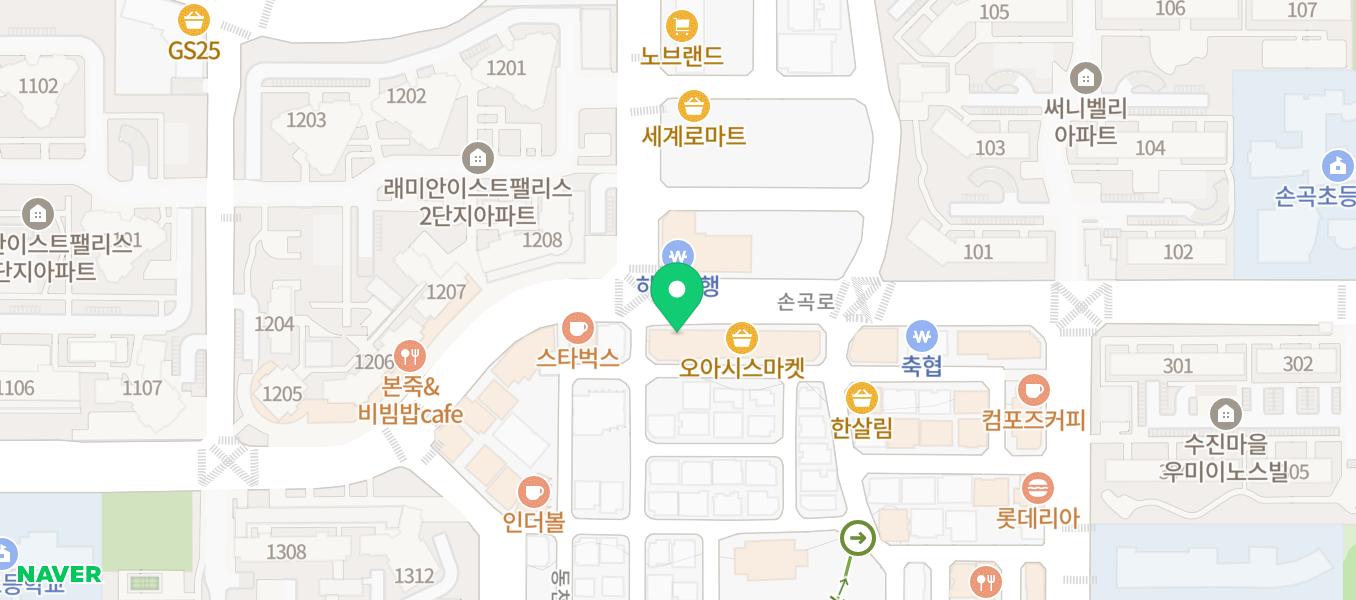
IBS self-diagnosis begins by observing if abdominal pain and changes in bowel habits have been recurring for several months. If you’ve always been concerned about your stomach before important days, I can imagine how exhausting that stress must have been. I help to stabilize the gut by examining bowel habits and constitution, then prescribing personalized herbal medicine and acupuncture. If you are in the Dongcheon-dong, Suji-gu area and recurring abdominal pain and bowel trouble are disrupting your days, start by having your gut checked.
Where a kind heart resides, Sunyujae Korean Medicine Clinic
Sunyujae Korean Medicine Clinic in Suji-gu pursues evidence-based medicine and integrative medicine.
This post was written directly by the medical staff of Sunyujae Korean Medicine Clinic to provide medical information, in compliance with Article 56(2) and Article 57(3) of the Medical Service Act. The duration and outcome of treatment may vary from person to person, so please consult a qualified practitioner before beginning treatment.
Consultation & Booking
Have questions? Reach us anytime via KakaoTalk or phone.