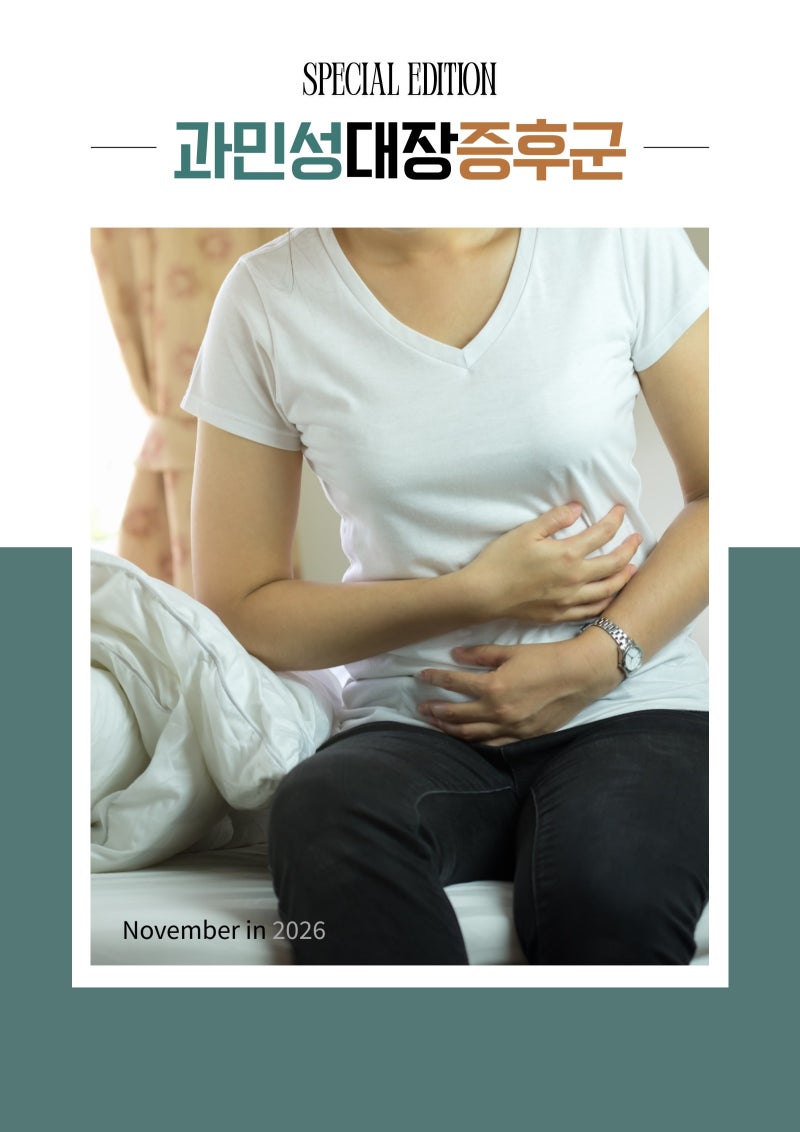
As the morning air has grown noticeably colder, the days of starting the day with warm soup have increased. However, in the clinic, we’ve been hearing more frequently these days about people whose stomachs ache gently whenever they eat.
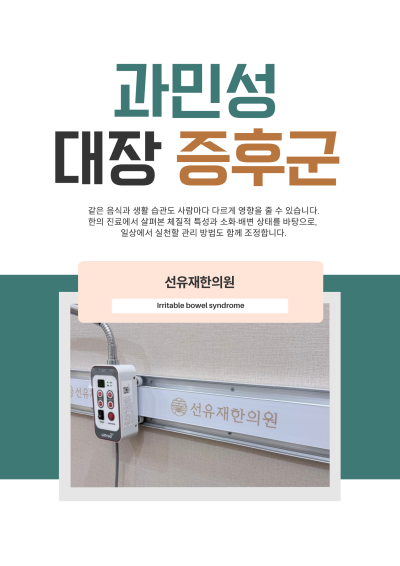
There are also those who think of the restroom’s location even before leaving home on days with important appointments. Korean medicine treatment for Irritable Bowel Syndrome (IBS) is a process that begins by examining when and in what situations these discomforts recur, then collaboratively determining acupuncture, herbal medicine, and lifestyle management. We have prepared the November Monthly Sunyujae so you can slowly reread the explanations given in the clinic at home. This issue includes clues to recognize IBS, research on acupuncture and herbal medicine treatment, personalized lifestyle management, and research activities.
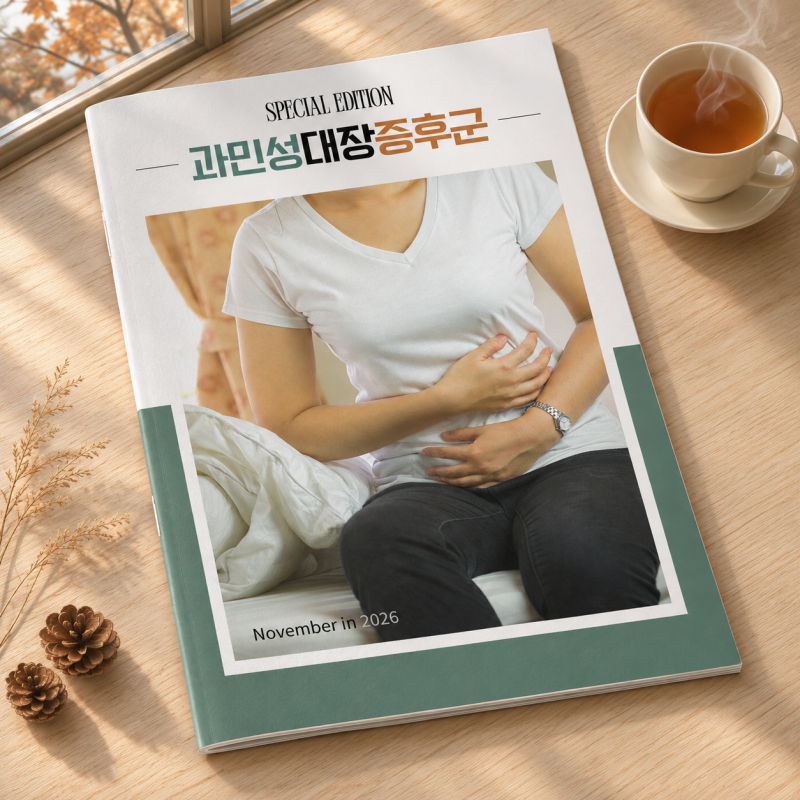
November Monthly Sunyujae CONTENTS
01. Clues for Irritable Bowel Syndrome We examine how abdominal pain and changes in bowel movements are connected.
02. Treatment (Acupuncture·Herbal Medicine) Research We’ve simplified research on acupuncture and herbal medicine prescriptions published in international academic journals.
03. Lifestyle Management Methods This includes how to record situations that cause discomfort.
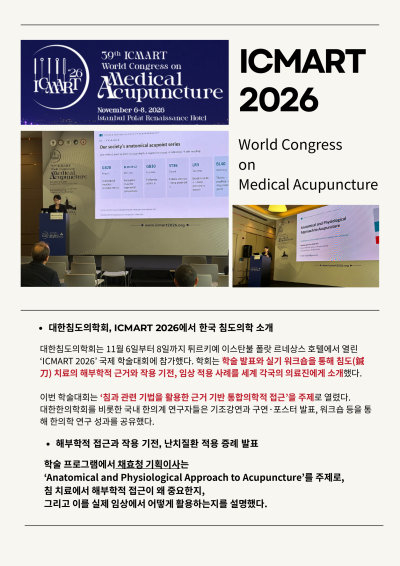
04. Research Activities News from ICMART 2026, where Dr. Hyocheong Chae participated.
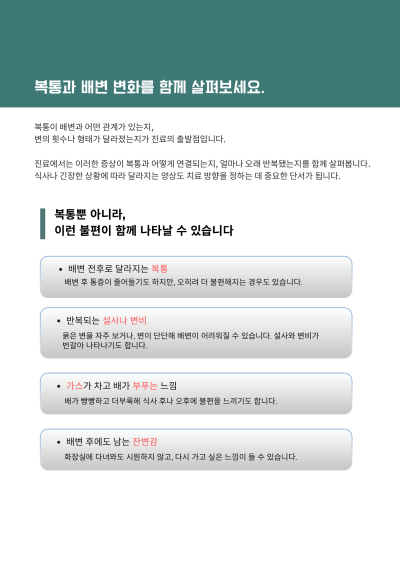
01. On days with abdominal pain, what clues should we look for first?
“My stomach always rumbles after lunch.”
“I don’t feel relieved even after going to the restroom.”
“It’s diarrhea for a few days, then constipation again.” These statements are usually followed by the frustration of, “They say there’s nothing wrong, so why am I like this?”
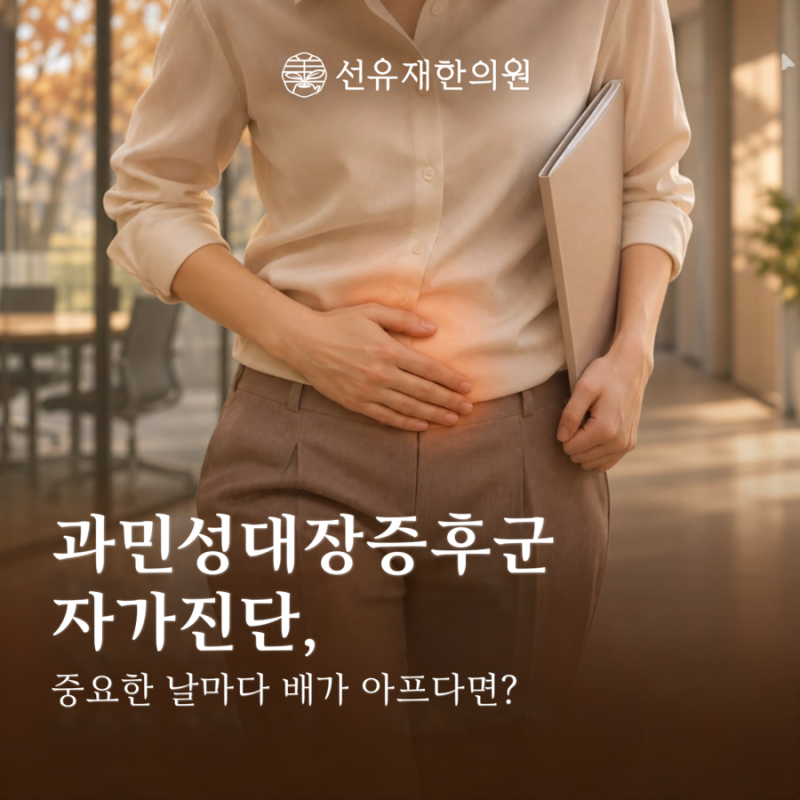
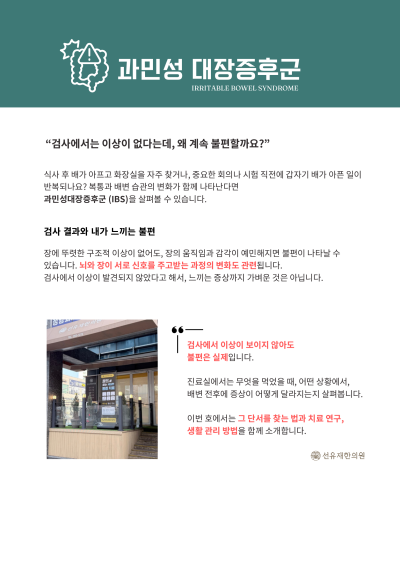
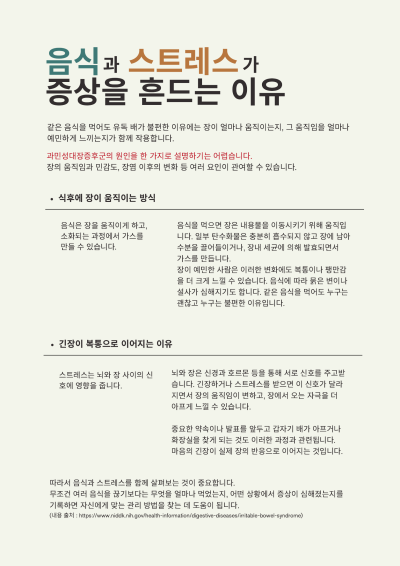
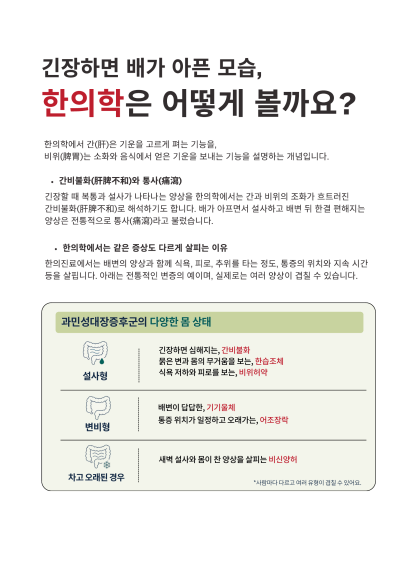
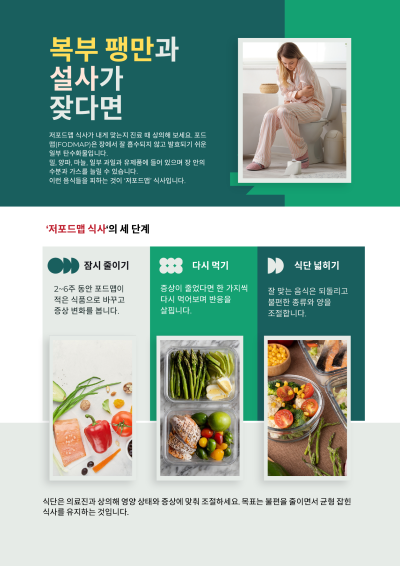
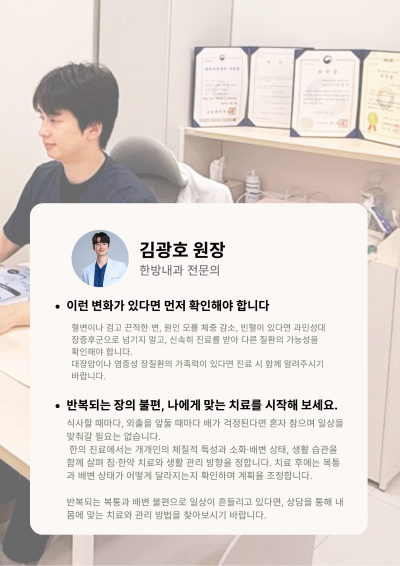
Irritable Bowel Syndrome (IBS) refers to a condition where, even without clear structural abnormalities in the intestines, the bowel’s movement and sensation become sensitive, leading to recurring abdominal pain and changes in bowel movements. Therefore, in consultations, we don’t just look at abdominal pain; we also ask if the pain changes before and after bowel movements, and if the frequency and shape of stool have changed. Feelings of gas and bloating, and the sensation of incomplete evacuation even after going to the restroom, are also clues we don’t miss. In the November Monthly Sunyujae, we’ve summarized four common discomforts that appear with abdominal pain, and why Korean medicine categorizes the same symptoms differently based on body types.
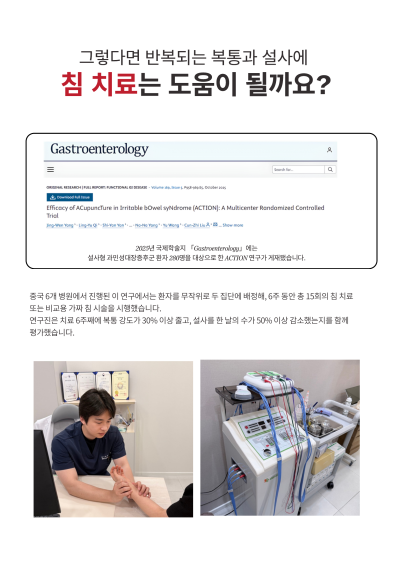
02. Irritable Bowel Syndrome Acupuncture Treatment and Herbal Medicine: What did the research examine?
“Do Korean medicine clinics also treat intestinal issues?”
“Is acupuncture also used for abdominal pain?”
“I heard herbal medicine is prescribed differently for each person.” More people than expected ask these questions because Korean medicine treatment for IBS is unfamiliar to them. This issue introduces two studies published in international academic journals.
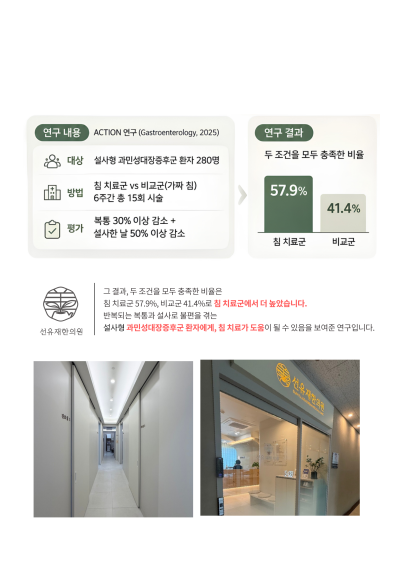
One is a study that divided patients with diarrhea-predominant IBS into two groups and compared acupuncture treatment with a control procedure over 6 weeks.
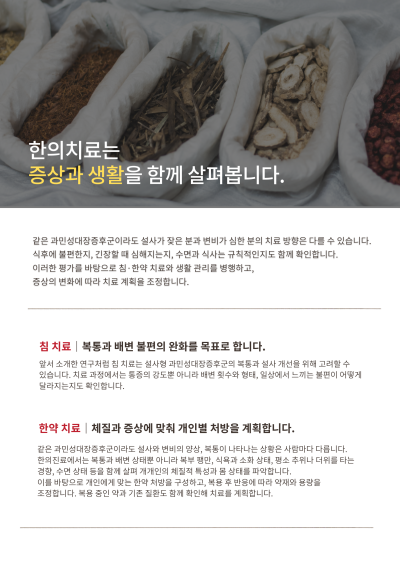
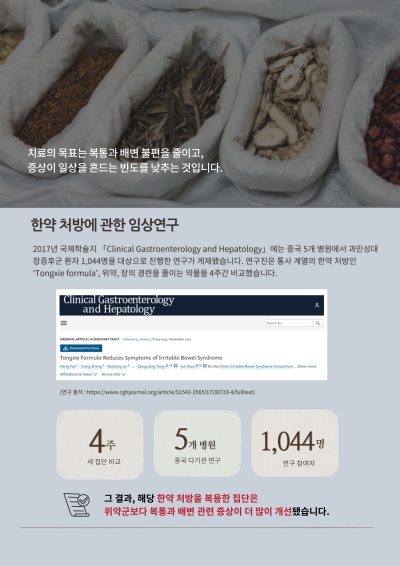
The other is a collaborative study by multiple hospitals that compared a Tongsa-series herbal medicine prescription with a placebo over 4 weeks. Both studies were conducted in China, so rather than interpreting them to mean that everyone will experience the same results, it’s best to view them as evidence to consider when choosing treatment. In actual practice, the direction of acupuncture and herbal medicine is determined differently for each person, depending on whether diarrhea is frequent, constipation is severe, discomfort occurs after meals, or symptoms worsen with stress. The November Monthly Sunyujae includes what acupuncture treatment aims for and how herbal medicine prescriptions are determined and adjusted.
03. IBS Management: What should you start writing down?
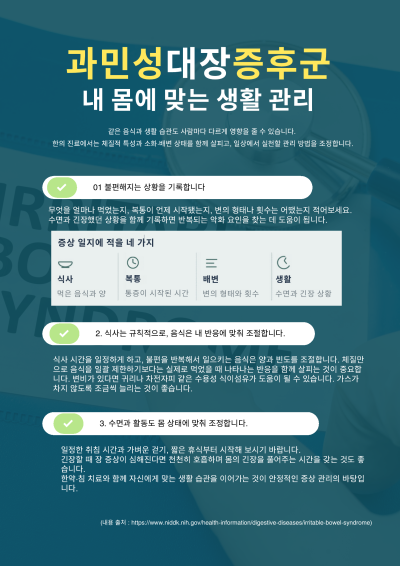
Even after eating the same food, some people feel fine while others experience abdominal discomfort all afternoon. That’s why this issue includes a symptom diary to record what and how much you ate, when abdominal pain started, what your stool looked like, and how your sleep and stress levels were. As records accumulate, they help us identify situations that exacerbate discomfort during consultations.
04. ICMART 2026: Explaining Acupotomy with Anatomy
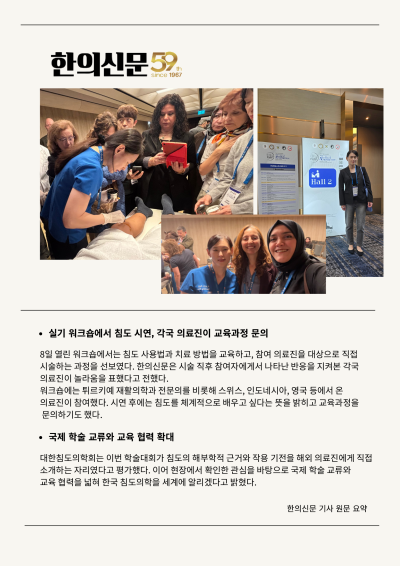
From November 6th to 8th, the Korean Acupotomy Medical Association participated in the International Academic Conference ICMART 2026, held in Istanbul, Turkey. Dr. Hyocheong Chae, as the planning director of the association, presented on the topic ‘Anatomical and Physiological Approach to Acupuncture.’
It was an opportunity to explain why understanding anatomical structures first is crucial in acupuncture treatment and how to apply that knowledge in actual clinical practice. Simply put, it’s similar to accurately unfolding a map before finding your way. It means that by knowing what passes where, you can precisely reach the necessary points. On the last day, during the practical workshop, the usage and treatment methods of acupotomy were directly introduced to medical professionals from various countries. A detailed account from the event will be separately compiled and posted on the blog. Monthly Sunyujae is not for sale but is a Korean medicine information magazine placed within the clinic. You can comfortably browse it while waiting for your consultation or before/after your treatment.
The content included in this issue will also be introduced in detail, one by one, on the blog. The November issue is filled with stories about calmly reading the signals your body sends and finding personalized Korean medicine treatments and management methods for Irritable Bowel Syndrome. In this season when the cold wind makes our bodies huddle, we hope you have a day where even your stomach feels comfortable.
Where good intentions reside, Sunyujae Korean Medicine Clinic
Sunyujae Korean Medicine Clinic in Suji-gu pursues evidence-based medicine and integrative medicine.
Consultation & Booking
Have questions? Reach us anytime via KakaoTalk or phone.