
![[수지 동천동 선유재한의원] 담적병 맞춤 치료!](https://syjkmc.kr/wp-content/uploads/2026/06/223656114372_img_0.png)
Hello, this is Dr. Hyocheong Chae, director of Sunyujae Korean Medicine Clinic in Dongcheon-dong, a place where good hearts reside.


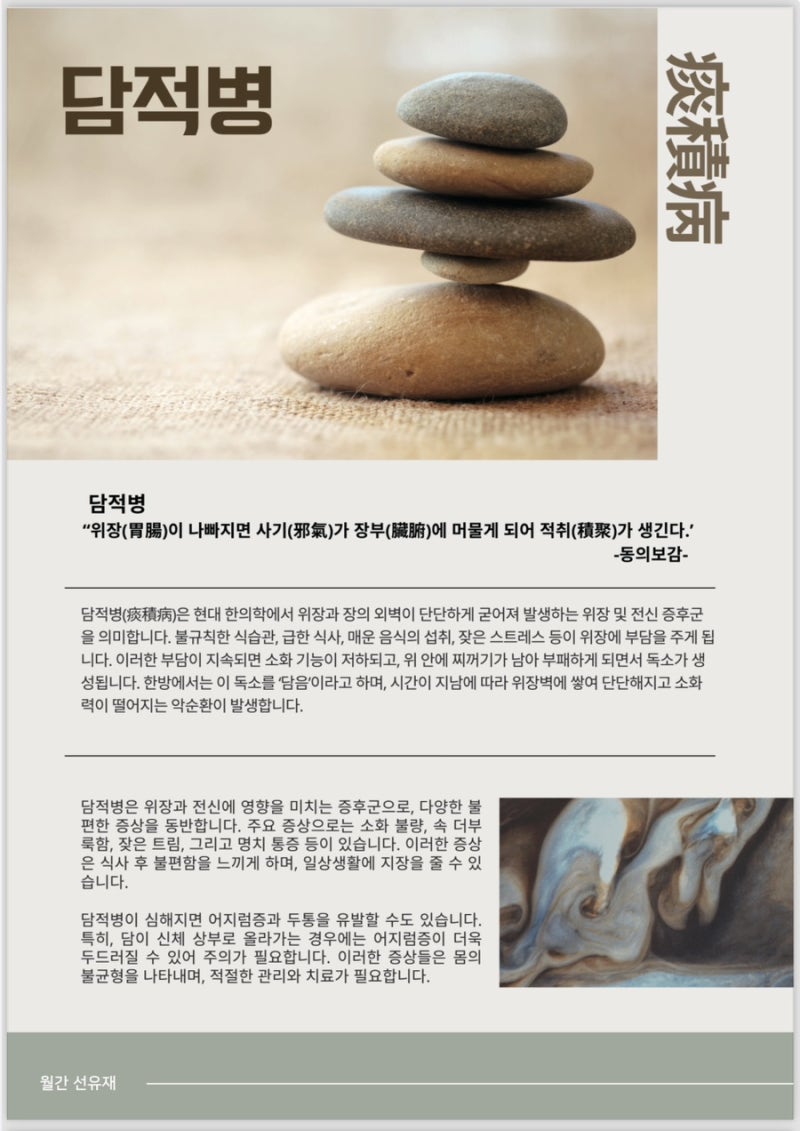
In modern Korean medicine, Damjeokbyeong (accumulated phlegm disease) refers to a gastrointestinal and systemic syndrome caused by the hardening of the outer walls of the stomach and intestines. Irregular eating habits, hurried meals, consumption of spicy foods, and frequent stress can put a burden on the stomach. If this burden persists, digestive function declines, and waste products remain in the stomach, putrefy, and generate toxins.
In Korean medicine, these toxins are called ‘dam-eum’ (phlegm fluid), and over time, they accumulate in the stomach wall, hardening it and leading to a vicious cycle of decreased digestive power. Damjeokbyeong is a syndrome that affects the gastrointestinal system and the entire body, accompanied by various uncomfortable symptoms. Key symptoms include indigestion, bloating, frequent burping, and epigastric pain.
These symptoms can cause discomfort after meals and interfere with daily life. If Damjeokbyeong worsens, it can also cause dizziness and headaches. In particular, when phlegm rises to the upper body, dizziness can become more pronounced, requiring caution.
These symptoms indicate an imbalance in the body and require appropriate management and treatment.
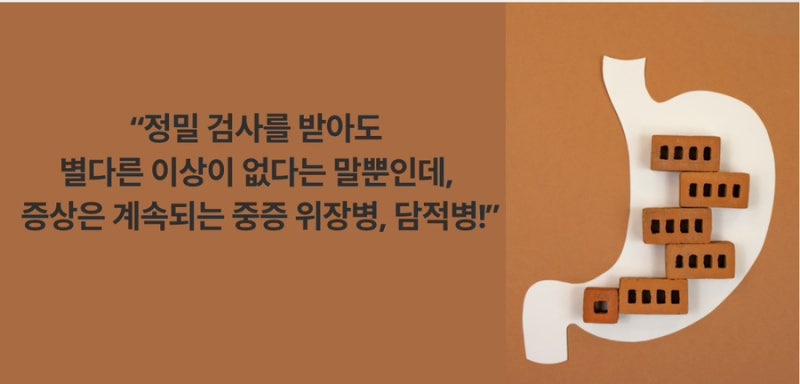
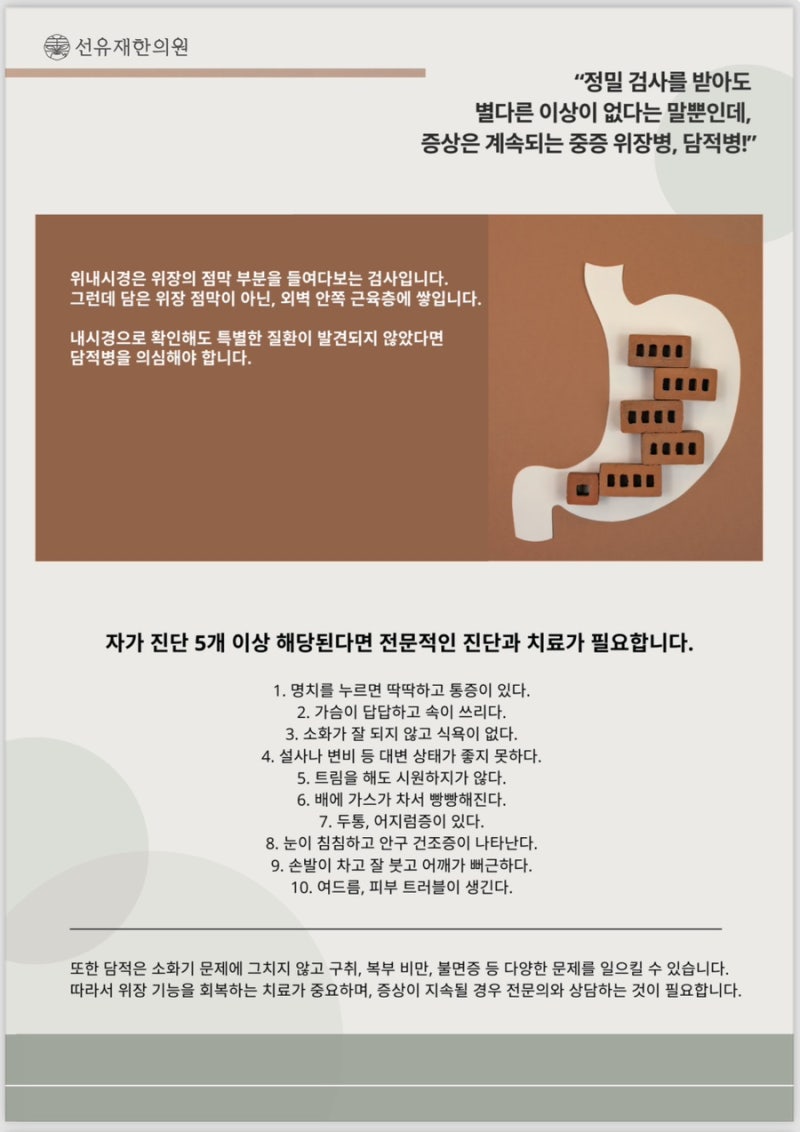
Gastroscopy is an examination that looks at the mucosal lining of the stomach. However, phlegm accumulates not in the stomach lining, but in the muscle layer inside the outer wall. If no specific disease is found even after an endoscopy, Damjeokbyeong should be suspected.
If you meet 5 or more of the self-diagnosis criteria, professional diagnosis and treatment are necessary. 1. There is hardness and pain when pressing the epigastrium. 2. You feel chest tightness and heartburn.
3. Digestion is poor and you have no appetite. 4. Stool condition is poor, such as diarrhea or constipation.
5. Burping does not bring relief. 6. Your abdomen is distended with gas.
7. You have headaches and dizziness. 8. Your eyes are blurry and you experience dry eyes.
9. Your hands and feet are cold and swollen, and your shoulders are stiff. 10. You develop acne and skin troubles.
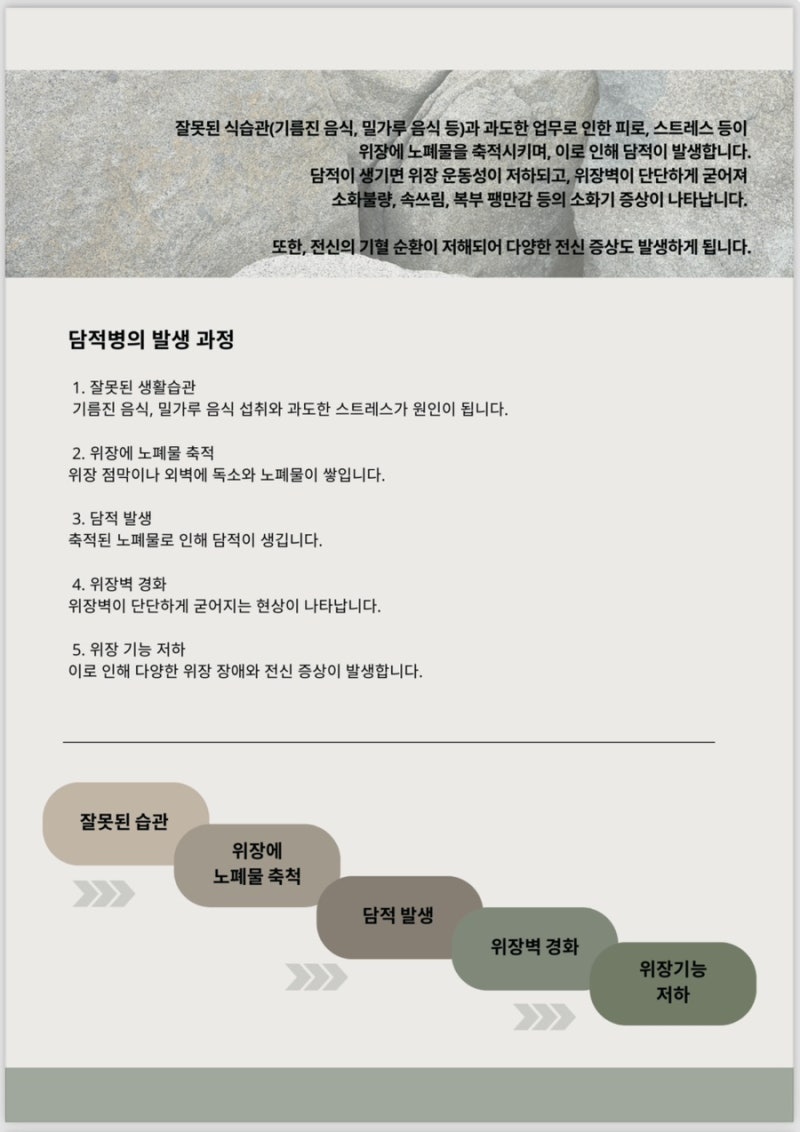
Furthermore, damjeok can cause various problems beyond digestive issues, such as bad breath, abdominal obesity, and insomnia. Therefore, treatment to restore gastrointestinal function is important, and if symptoms persist, it is necessary to consult a specialist. Poor eating habits, fatigue from excessive work, and stress accumulate waste products in the stomach, leading to the development of damjeok.
When damjeok occurs, gastrointestinal motility decreases, and the stomach wall hardens, leading to digestive symptoms such as indigestion, heartburn, and abdominal distension. Additionally, the circulation of qi and blood throughout the body is hindered, causing various systemic symptoms. The process of Damjeokbyeong development: 1. Unhealthy lifestyle habits
Consumption of greasy and flour-based foods, along with excessive stress, are causes. 2. Accumulation of waste products in the stomach Toxins and waste products accumulate in the stomach lining or outer wall. 3. Occurrence of damjeok Damjeok develops due to accumulated waste products.
4. Hardening of the stomach wall The stomach wall becomes hard. 5. Decreased gastrointestinal function This leads to various gastrointestinal disorders and systemic symptoms.
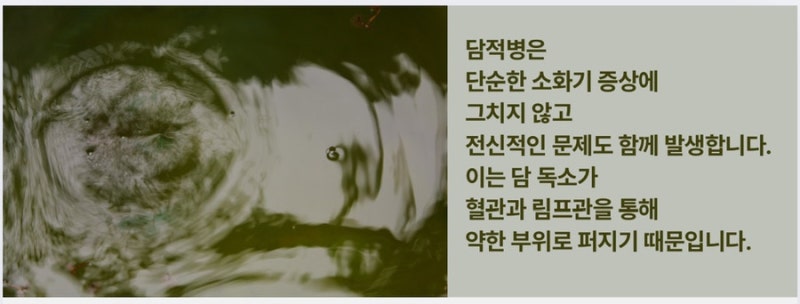
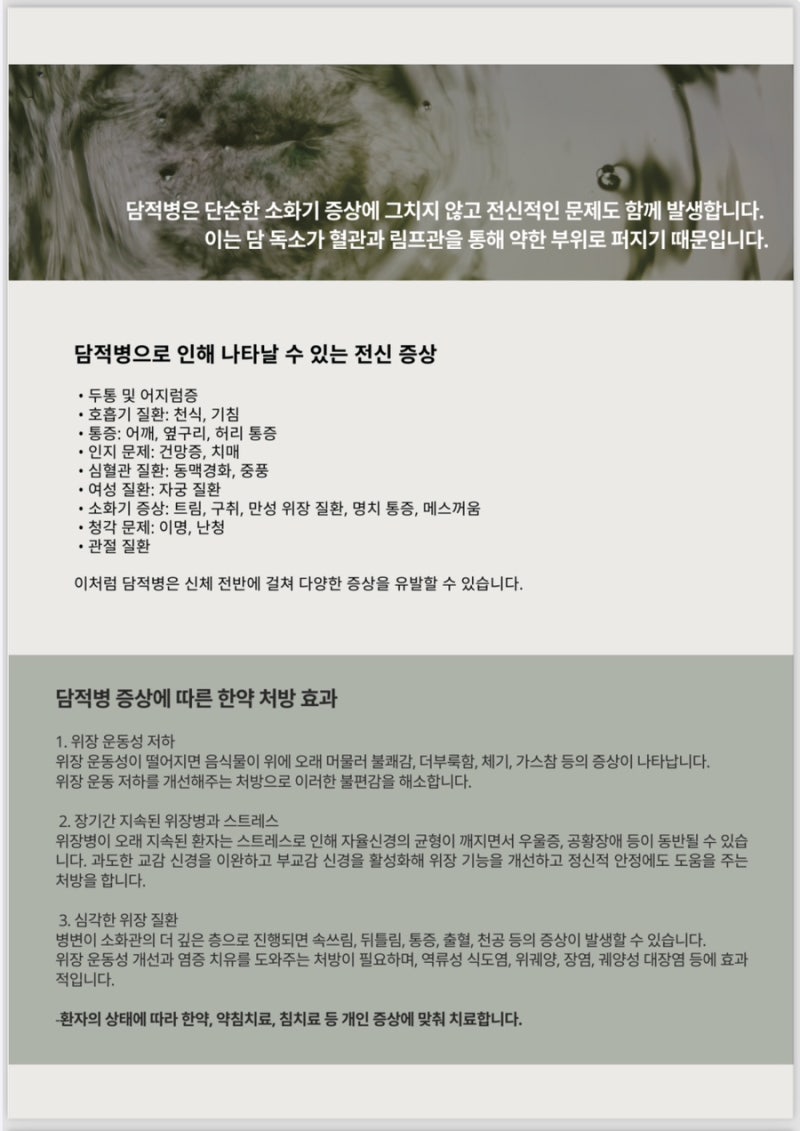
Systemic symptoms that may appear due to Damjeokbyeong • Headaches and dizziness • Respiratory diseases: asthma, cough • Pain: shoulder, flank, lower back pain • Cognitive problems: forgetfulness, dementia • Cardiovascular diseases: arteriosclerosis, stroke • Women’s diseases: uterine diseases • Digestive symptoms: burping, bad breath, chronic gastrointestinal diseases, epigastric pain, nausea • Auditory problems: tinnitus, hearing loss • Joint diseases – As such, Damjeokbyeong can cause various symptoms throughout the body.
Effects of herbal medicine prescriptions according to Damjeokbyeong symptoms 1. Decreased gastrointestinal motility When gastrointestinal motility is low, food remains in the stomach for a long time, causing discomfort, bloating, indigestion, and gas. Prescriptions that improve gastrointestinal motility relieve these discomforts.
2. Long-term gastrointestinal illness and stress Patients with long-standing gastrointestinal illness may experience depression, panic disorder, etc., due to an imbalance in the autonomic nervous system caused by stress. We prescribe herbal medicine that relaxes excessive sympathetic nerves and activates parasympathetic nerves, thereby improving gastrointestinal function and aiding mental stability.
3. Severe gastrointestinal diseases If lesions progress to deeper layers of the digestive tract, symptoms such as heartburn, twisting pain, bleeding, and perforation may occur. Prescriptions that help improve gastrointestinal motility and heal inflammation are necessary and effective for reflux esophagitis, gastric ulcers, enteritis, and ulcerative colitis.
-Treatment is provided through various methods such as herbal medicine, pharmacopuncture, and acupotomy, depending on the patient’s condition.
Sunyujae Korean Medicine Clinic in Dongcheon-dong pursues evidence-based integrative medicine.
This post was written directly by the medical staff of Sunyujae Korean Medicine Clinic to provide medical information, in compliance with Article 56(2) and Article 57(3) of the Medical Service Act. The duration and outcome of treatment may vary from person to person, so please consult a qualified practitioner before beginning treatment.
Consultation & Booking
Have questions? Reach us anytime via KakaoTalk or phone.