
Hello, this is Sunyujae Korean Medicine Clinic, where good hearts reside.

You’ve probably heard the saying, “The foot is the second heart.” In every moment we stand, walk, and run throughout the day, our feet bear the weight of our entire body while playing a crucial role in maintaining balance. In particular, the plantar fascia, a thick fibrous tissue on the sole of the foot, supports the arch and absorbs shock, helping the foot move like a spring.
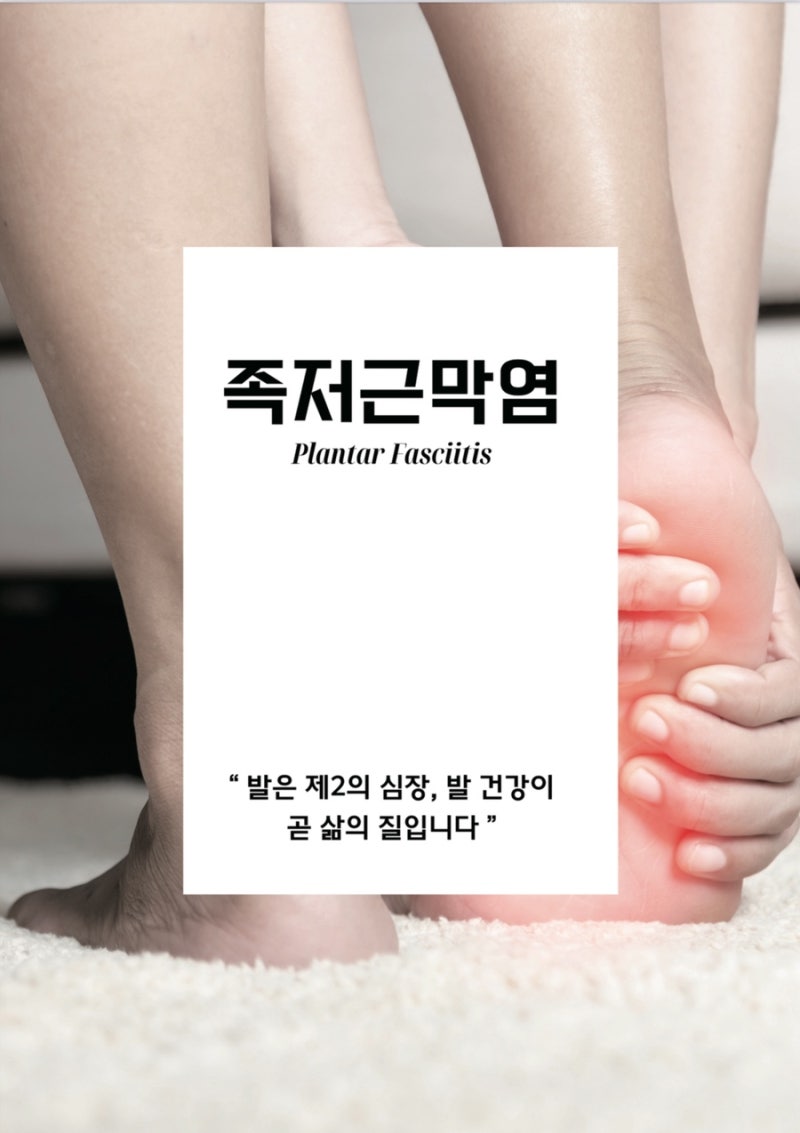
However, if the plantar fascia is repeatedly strained or undergoes degenerative changes, it can lead to what we commonly call plantar fasciitis. Today, we will calmly explain the characteristics and causes of plantar fasciitis, and how to manage it in daily life. Plantar Fasciitis “The foot is the second heart; foot health is quality of life.” Sunyujae Korean Medicine Clinic Plantar Fascia & Plantar Fasciitis Dongcheon-dong Korean Medicine Clinic Sunyujae
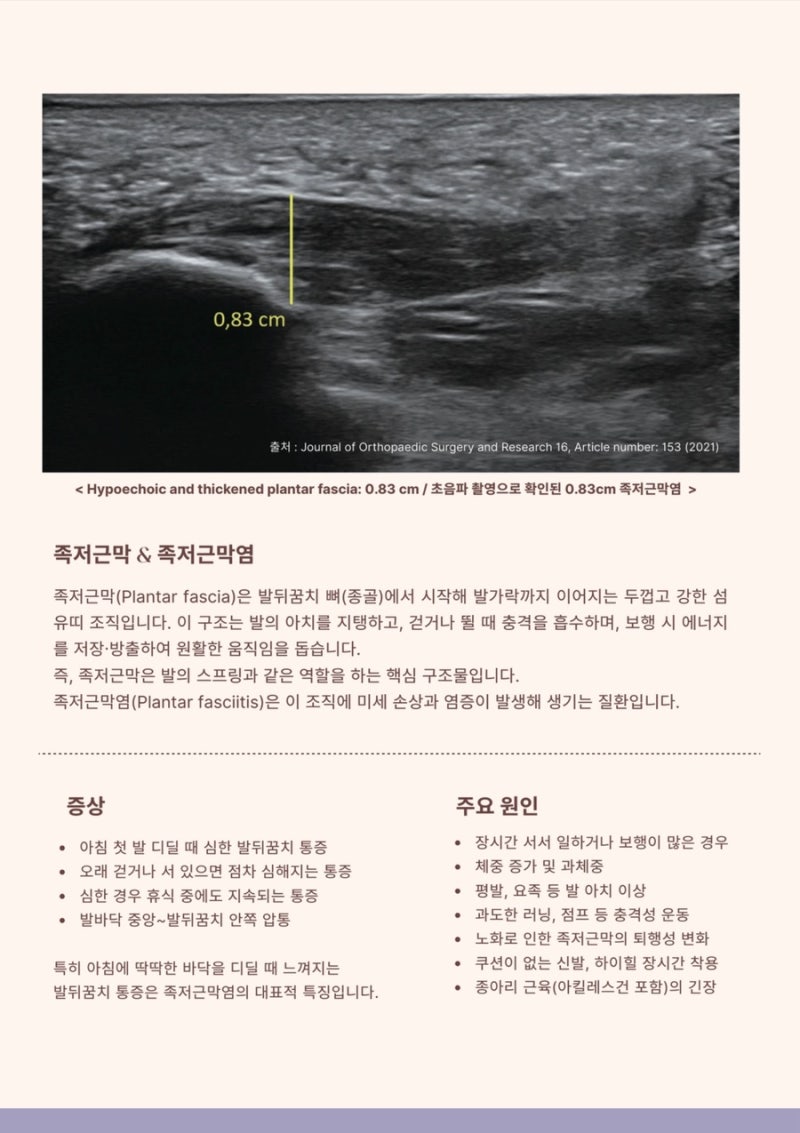
The plantar fascia is a thick, strong fibrous tissue that extends from the heel bone (calcaneus) to the toes. This structure supports the arch of the foot, absorbs shock when walking or running, and stores and releases energy during gait to facilitate smooth movement. In other words, the plantar fascia is a key structure that acts like a spring for the foot.
Plantar fasciitis is a condition caused by micro-injuries and inflammation in this tissue. Plantar Fasciitis Symptoms * Severe heel pain when taking the first step in the morning * Pain that gradually worsens after prolonged walking or standing * In severe cases, pain that persists even during rest
Center of the Sole ~ Heel Tenderness in the center of the sole ~ inner heel — – Especially felt when stepping on a hard floor in the morning
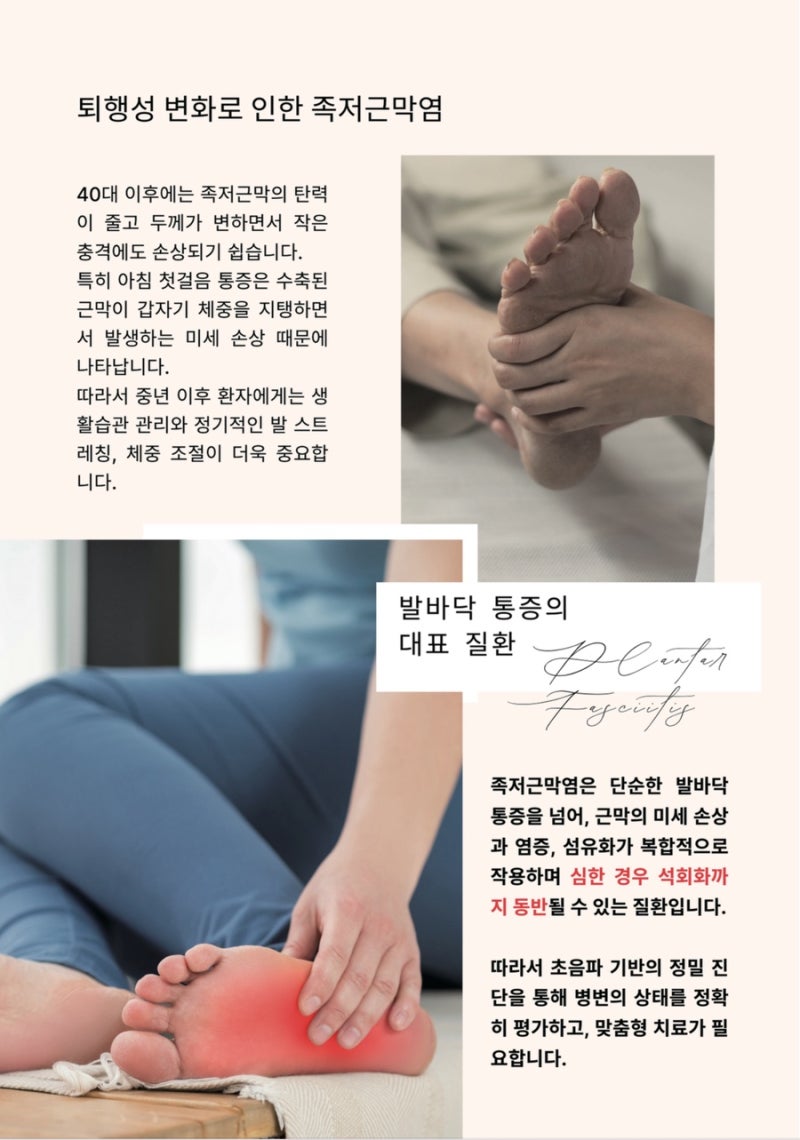
Heel pain is a characteristic symptom of plantar fasciitis. – Main Causes * Prolonged standing or extensive walking * Weight gain and obesity * Foot arch abnormalities such as flat feet or high arches * High-impact exercises like excessive running or jumping * Degenerative changes in the plantar fascia due to aging * Wearing shoes without cushioning or high heels for long periods * Tightness in calf muscles (including the Achilles tendon) Degenerative Plantar Fasciitis Suji-gu Sunyujae Korean Medicine Clinic After the age of 40, the elasticity of the plantar fascia decreases,
and its thickness changes, making it susceptible to damage even from minor impacts. Morning first-step pain, in particular, occurs due to micro-injuries when the contracted fascia suddenly bears body weight. Therefore, for patients over middle age, lifestyle management, regular foot stretching, and weight control are even more crucial.
Plantar Fasciitis: The Representative Disease of Sole Pain Sunyujae Korean Medicine Clinic Plantar fasciitis is more than just simple sole pain; it’s a condition where micro-injuries, inflammation, and fibrosis of the fascia interact, and in severe cases, calcification can also occur. Therefore, precise diagnosis based on ultrasound is necessary to accurately assess the condition of the lesion and provide customized treatment.
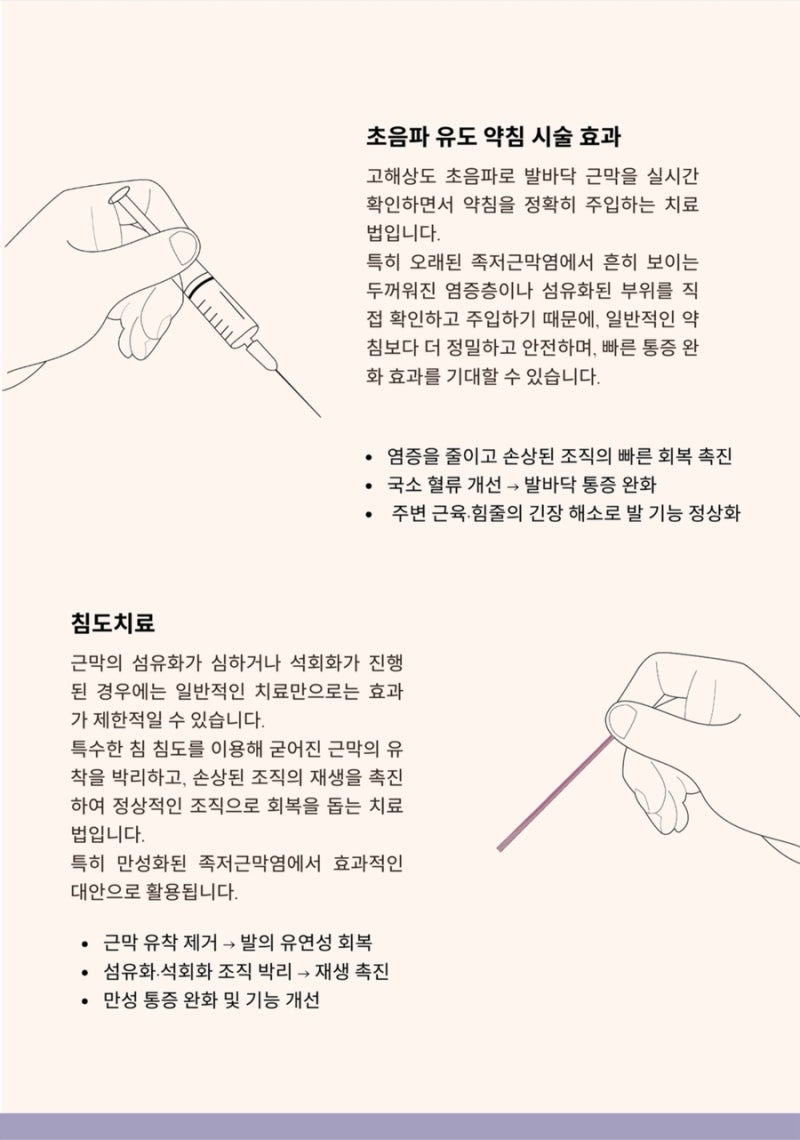
Effects of Ultrasound-Guided Pharmacopuncture Treatment Dongcheon-dong Sunyujae Korean Medicine Clinic This treatment involves precisely injecting pharmacopuncture while observing the plantar fascia in real-time with high-resolution ultrasound. Especially in chronic plantar fasciitis, where thickened inflammatory layers or fibrotic areas are common, direct visualization and injection allow for more precise and safer treatment than conventional pharmacopuncture, leading to faster pain relief.
* Reduces inflammation and promotes rapid recovery of damaged tissue * Improves local blood circulation → alleviates sole pain * Relieves tension in surrounding muscles and tendons to normalize foot function Acupotomy Treatment Sunyujae Korean Medicine Clinic When fascial fibrosis is severe or calcification has progressed, conventional treatments may have limited effectiveness. Acupotomy, a specialized needle technique, is used to release adhesions in the hardened fascia and promote the regeneration of damaged tissue, helping it recover to normal tissue.
It is particularly used as an effective alternative for chronic plantar fasciitis. * Removes fascial adhesions → restores foot flexibility * Dissects fibrotic/calcified tissue → promotes regeneration
Chronic Pain Relief and Functional Improvement — Plantar fasciitis goes beyond simply “my foot hurts,”
affecting basic daily activities like walking and standing. It often causes significant discomfort. Therefore, managing lifestyle habits well in the early stages is paramount. If heel pain recurs, consistently performing foot stretches, controlling weight, and wearing well-fitting shoes can be helpful.
Furthermore, if symptoms persist or discomfort is severe, it’s advisable to consult a specialist to accurately assess your current condition rather than enduring it alone. Since small steps in foot health ultimately form the foundation for a high quality of life, we hope you’ll pay a little more attention to your feet starting today.
We hope you will join Sunyujae Korean Medicine Clinic in sharing valuable information for a healthy life. Dongcheon-dong Korean Medicine Clinic, Suji-gu Korean Medicine Clinic Sunyujae, pursues evidence-based medicine and integrative medicine.
This post was written directly by the medical staff of Sunyujae Korean Medicine Clinic to provide medical information, in compliance with Article 56(2) and Article 57(3) of the Medical Service Act. The duration and outcome of treatment may vary from person to person, so please consult a qualified practitioner before beginning treatment.
Consultation & Booking
Have questions? Reach us anytime via KakaoTalk or phone.