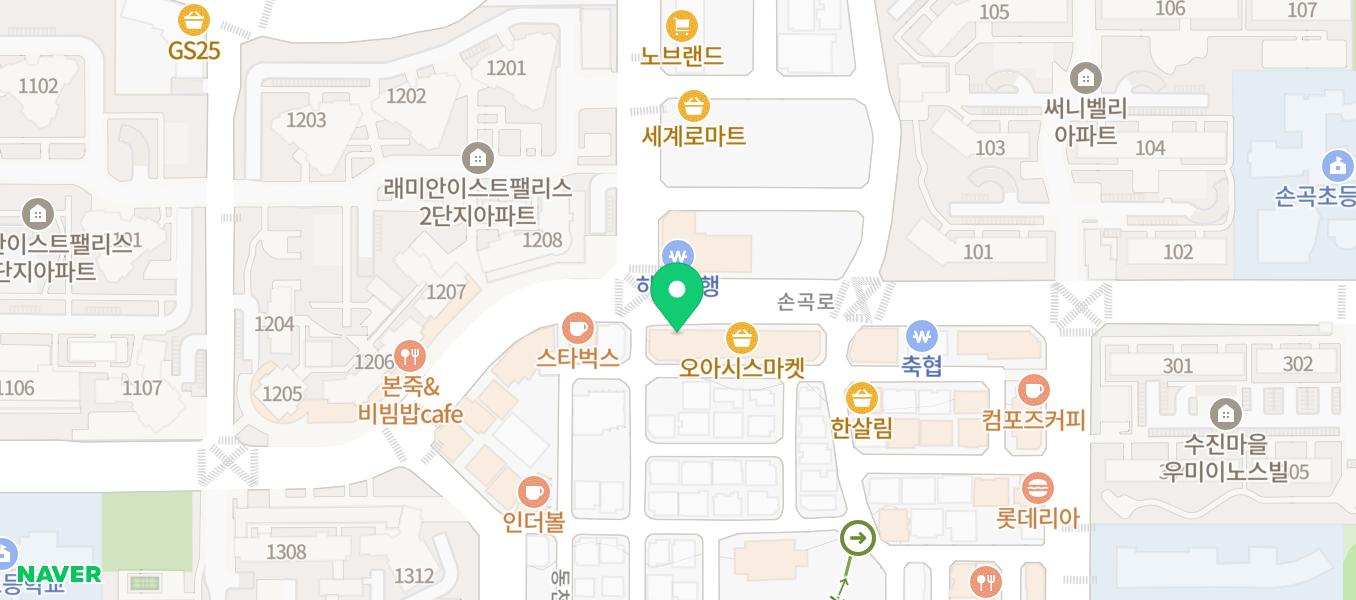
Hello? This is Dr. Hyocheong Chae, director of Sunyujae Korean Medicine Clinic in Dongcheon-dong, a place where kind hearts reside.

A disc is a jelly-like cartilage that acts as a cushion between the vertebrae. In Korean, it’s called ‘chuganpan’. The soft chuganpan plays an important role in absorbing shock when the spine moves, enduring the weight of our body.
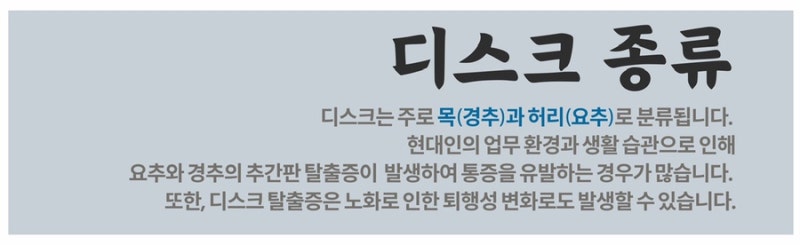
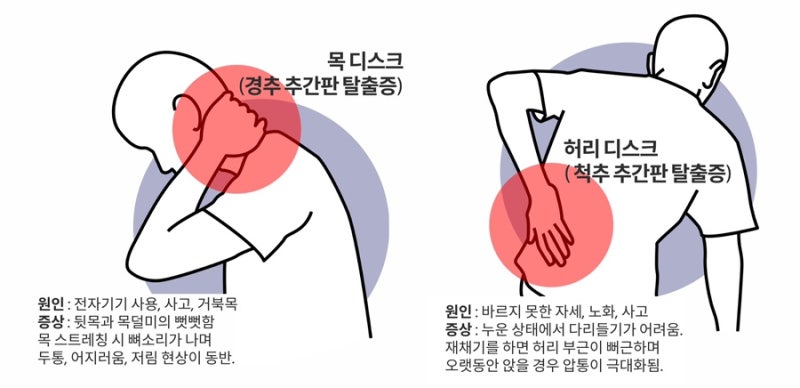
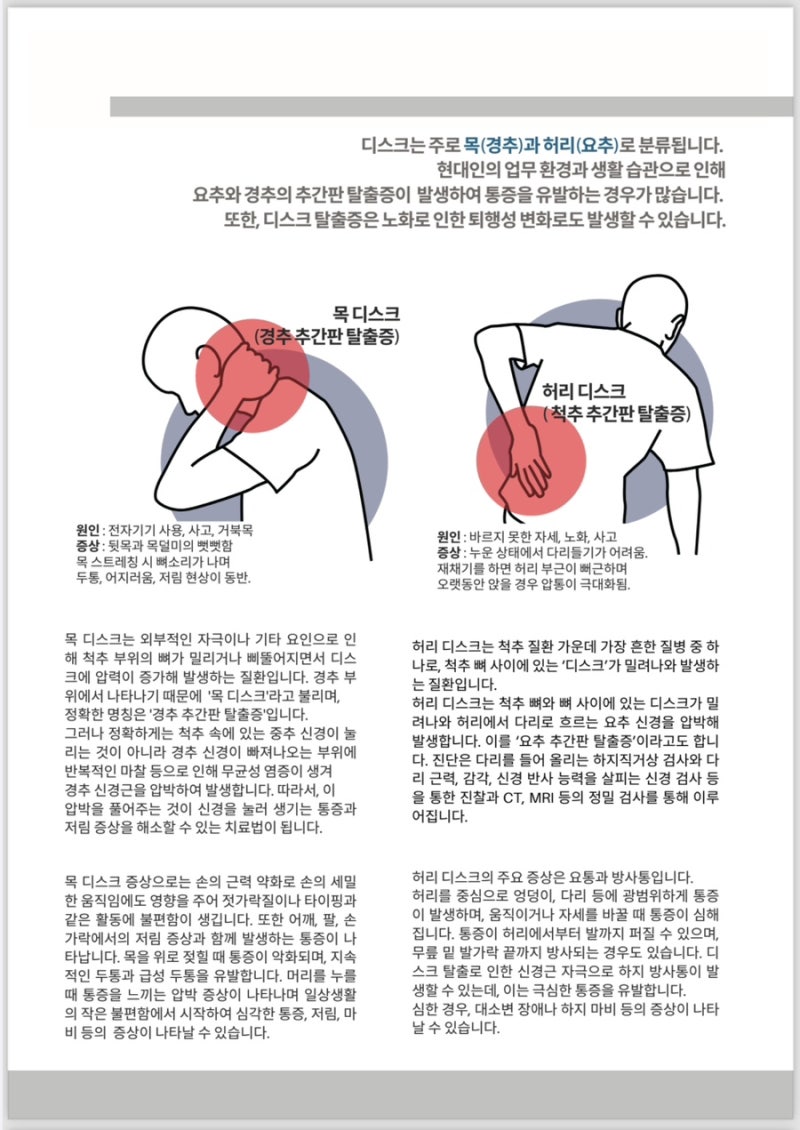
If excessive force is suddenly applied beyond what the chuganpan can withstand, the chuganpan gets damaged and protrudes outwards. This is commonly called ‘disc’, but its official name is ‘herniated disc’. What is a cervical disc? A cervical disc is a condition that occurs when the bones in the spinal region are displaced or misaligned due to external stimuli or other factors, leading to increased pressure on the disc.
Because it appears in the cervical region, it is called ‘cervical disc’, and its accurate name is ‘cervical disc herniation’. However, more accurately, it is not the central nerve within the spinal cord that is compressed, but rather the cervical nerve being compressed as it exits, and most patients in clinical practice fall under ‘cervical radiculopathy’.
It occurs when aseptic inflammation develops due to repetitive friction in the area where the cervical nerve exits, compressing the cervical nerve root. Releasing this compression becomes a treatment method that can alleviate the pain and numbness caused by nerve compression. Symptoms of cervical disc?
Cervical disc causes weakness in hand muscles, affecting fine motor skills of the hands, leading to discomfort in activities such as using chopsticks or typing. It also presents with pain accompanied by numbness in the shoulders, arms, and fingers. The pain worsens when tilting the neck backward, and it causes persistent headaches and acute headaches. Compression symptoms, where pain is felt when pressing on the head, appear, and symptoms can range from minor daily discomfort to severe pain, numbness, and paralysis.
What is a lumbar disc? A lumbar disc is one of the most common spinal disorders, occurring when the ‘disc’ located between the vertebrae protrudes. A lumbar disc occurs when the disc between the vertebrae protrudes, compressing the lumbar nerves that flow from the lower back to the legs. This is also called ‘lumbar disc herniation’.
Diagnosis is made through examination, including the straight leg raise test to lift the leg, and neurological tests to check leg muscle strength, sensation, and nerve reflex ability, as well as precise examinations such as CT and MRI. Symptoms of lumbar disc? The main symptoms of a lumbar disc are low back pain and radiating pain.
Pain occurs extensively in the buttocks and legs, centered around the lower back, and worsens when moving or changing posture. The pain can spread from the lower back to the feet, and in some cases, it radiates down to the toes below the knee. Radicular pain in the lower extremities can occur due to nerve root irritation caused by disc herniation, which causes severe pain. In severe cases, symptoms such as bowel and bladder dysfunction or lower extremity paralysis may appear.
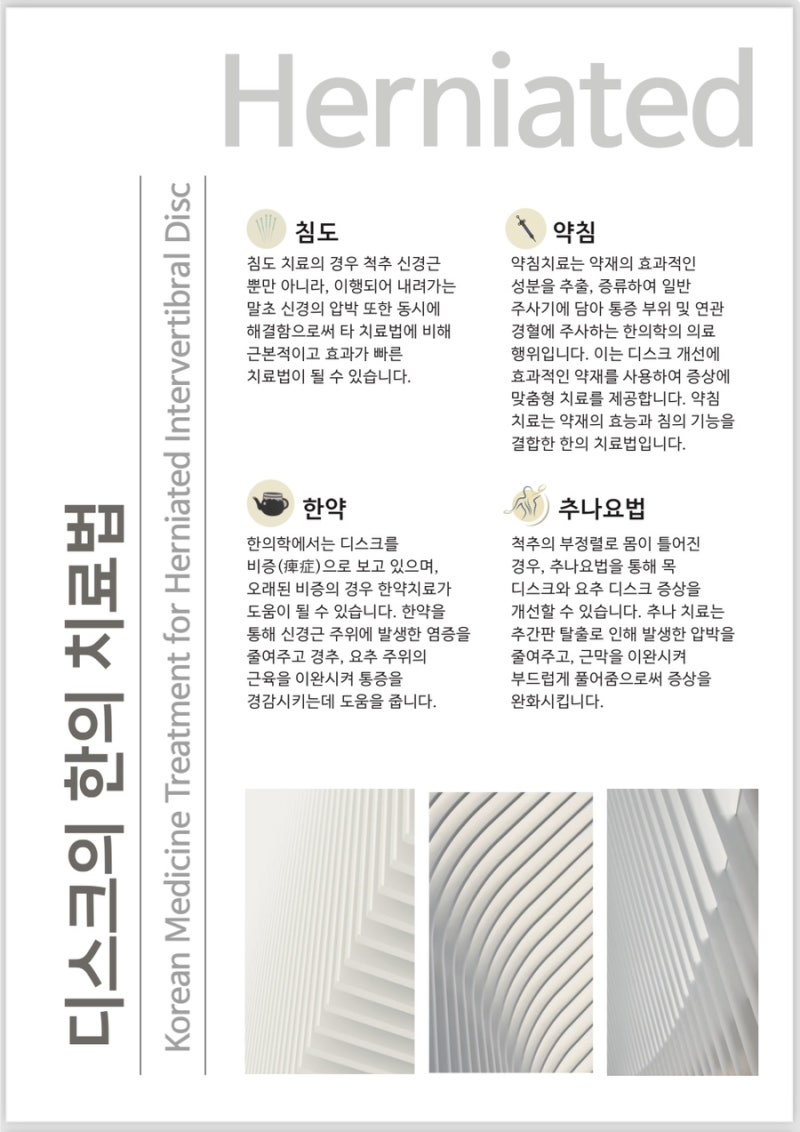
Korean medicine treatment for disc Acupotomy In the case of acupotomy treatment, it can be a more fundamental and faster treatment method compared to other treatments by simultaneously resolving not only the spinal nerve root but also the compression of peripheral nerves that extend downwards. Pharmacopuncture Pharmacopuncture is a Korean medicine treatment that involves extracting and distilling effective components of medicinal herbs, placing them in a regular syringe, and injecting them into the painful area and related acupoints. This provides customized treatment for symptoms using medicinal herbs effective for disc improvement.
Pharmacopuncture treatment is a Korean medicine treatment that combines the efficacy of medicinal herbs and the function of acupuncture. Herbal Medicine In Korean medicine, cervical disc is viewed as Bi-syndrome, and in cases of chronic Bi-syndrome, herbal medicine treatment can be helpful. Herbal medicine helps reduce inflammation around the nerve roots and relax the muscles around the cervical and lumbar spine, thereby helping to alleviate pain.
Chuna manual therapy If the body is misaligned due to spinal misalignment, Chuna manual therapy can improve symptoms of cervical and lumbar disc. Chuna treatment reduces the compression caused by disc herniation and gently loosens the fascia, thereby alleviating symptoms.
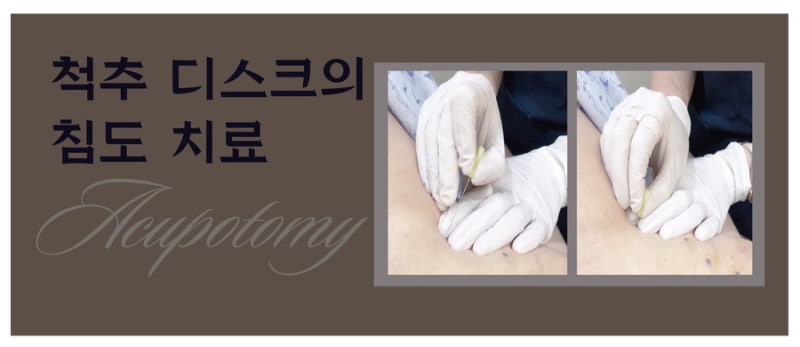
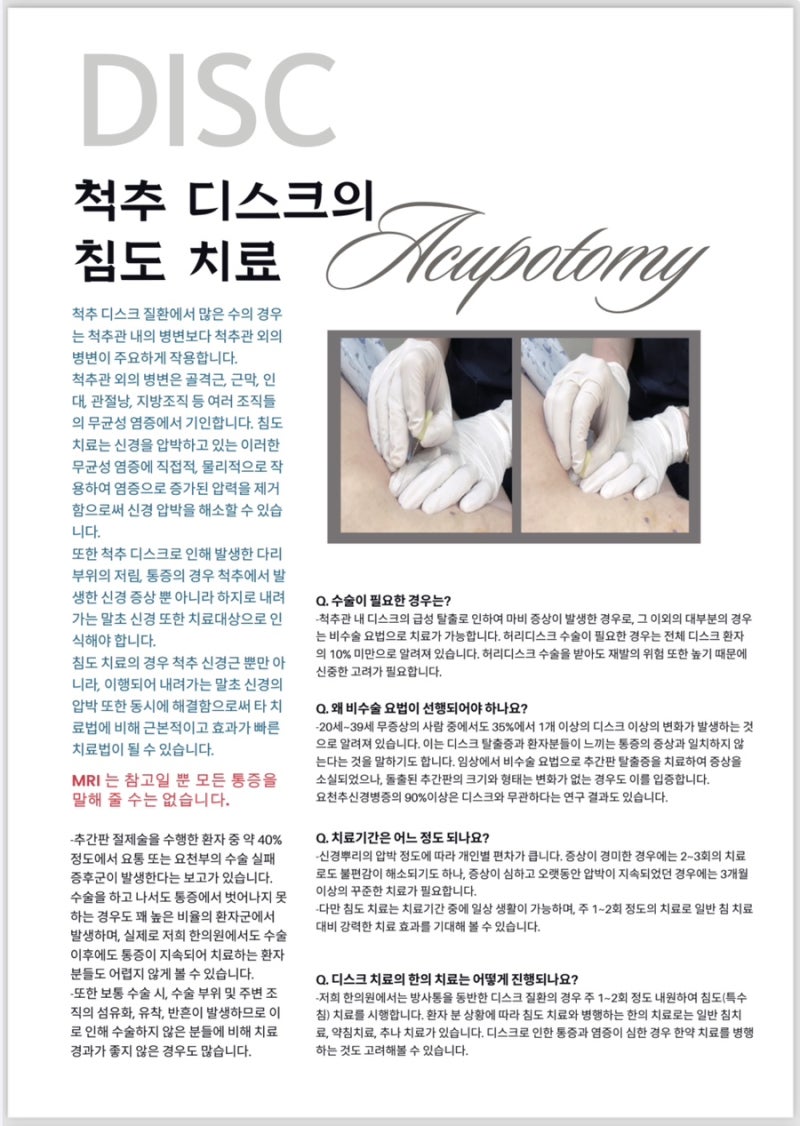
In many cases of spinal disc disorders, extra-spinal lesions play a more significant role than intra-spinal lesions. Extra-spinal lesions originate from aseptic inflammation of various tissues such as skeletal muscles, fascia, ligaments, joint capsules, and adipose tissue. Acupotomy treatment directly and physically acts on this aseptic inflammation that is compressing the nerve, removing the increased pressure caused by inflammation, thereby relieving nerve compression.
Furthermore, in cases of numbness and pain in the leg area caused by a spinal disc, not only nerve symptoms originating from the spine but also peripheral nerves extending to the lower extremities should be recognized as treatment targets. In the case of acupotomy treatment, it can be a more fundamental and faster treatment method compared to other treatments by simultaneously resolving not only the spinal nerve root but also the compression of peripheral nerves that extend downwards.
MRI is only a reference and cannot explain all pain. There are reports that approximately 40% of patients who underwent discectomy develop low back pain or lumbosacral post-surgical failure syndrome. A considerably high percentage of patients do not find relief from pain even after surgery, and in fact, at our Korean medicine clinic, we frequently see patients who continue to experience pain and seek treatment even after surgery.
Also, during surgery, fibrosis, adhesion, and scarring often occur in the surgical site and surrounding tissues,
which often leads to a less favorable treatment outcome compared to those who have not undergone surgery. Q. When is surgery necessary?
-Surgery is necessary in cases where paralysis symptoms occur due to acute disc herniation within the spinal canal; otherwise, most cases can be treated with non-surgical methods. It is known that surgery for a lumbar disc is required for less than 10% of all disc patients. Since the risk of recurrence is also high even after lumbar disc surgery, careful consideration is necessary.
Q. Why should non-surgical treatment be prioritized? -It is known that 35% of asymptomatic individuals aged 20-39 show changes in one or more discs. This also indicates that disc herniation and the pain symptoms felt by patients do not always correlate.
In clinical practice, there are cases where disc herniation was treated with non-surgical methods, leading to the disappearance of symptoms, but the size and shape of the protruded disc remained unchanged, which also proves this. There are also research findings that state over 90% of lumbosacral neuropathy is unrelated to disc issues. Q. How long is the treatment period?
-There is a wide individual variation depending on the degree of nerve root compression. In cases of mild symptoms, discomfort may be resolved with 2-3 treatments, but in cases where symptoms are severe and compression has persisted for a long time, consistent treatment for more than 3 months is required. However, acupotomy treatment allows for daily life during the treatment period, and a strong therapeutic effect can be expected with 1-2 treatments per week compared to general acupuncture treatment.
Q. How is Korean medicine treatment for disc performed? -At our Korean medicine clinic, for disc conditions accompanied by radiating pain, we perform acupotomy (special acupuncture) treatment 1-2 times a week. Depending on the patient’s situation, Korean medicine treatments combined with acupotomy include general acupuncture, pharmacopuncture, and Chuna manual therapy.
If disc-related pain and inflammation are severe, combining herbal medicine treatment can also be considered.
If you have any questions about acupotomy treatment for disc, please add us as a friend on Kakao Channel and feel free to inquire via KakaoTalk or phone. Sunyujae Korean Medicine Clinic in Dongcheon-dong pursues evidence-based medicine and integrative medicine.
This post was written directly by the medical staff of Sunyujae Korean Medicine Clinic to provide medical information, in compliance with Article 56(2) and Article 57(3) of the Medical Service Act. The duration and outcome of treatment may vary from person to person, so please consult a qualified practitioner before beginning treatment.
Consultation & Booking
Have questions? Reach us anytime via KakaoTalk or phone.