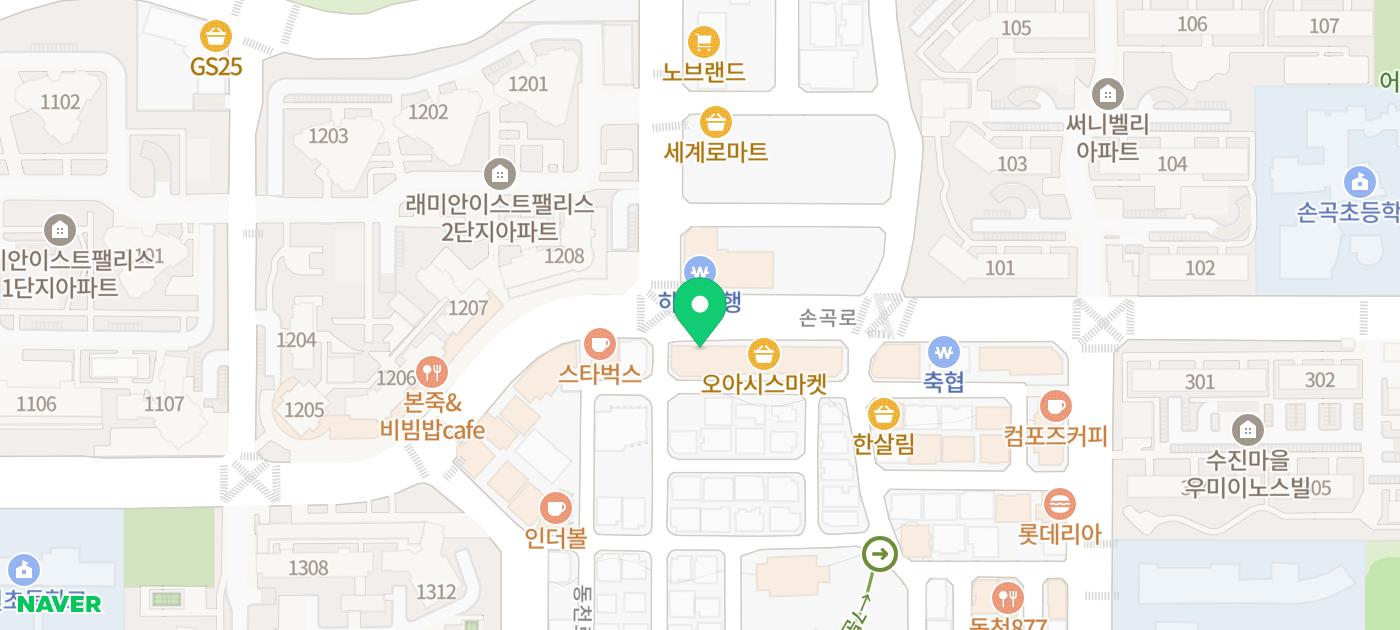
Hello, this is Dr. Hyocheong Chae, director of Sunyujae Korean Medicine Clinic in Dongcheon-dong, a place where kind hearts reside.
Currently, there is a surge in flu and COVID-19 patients. Schools reopen in mid-August, and in September, families and relatives gather frequently for the Chuseok holiday. During these times, the risk of virus transmission increases, requiring special caution. Colds are not only caused by viral infections but also by a disruption in the body’s homeostasis, leading to various cold symptoms.
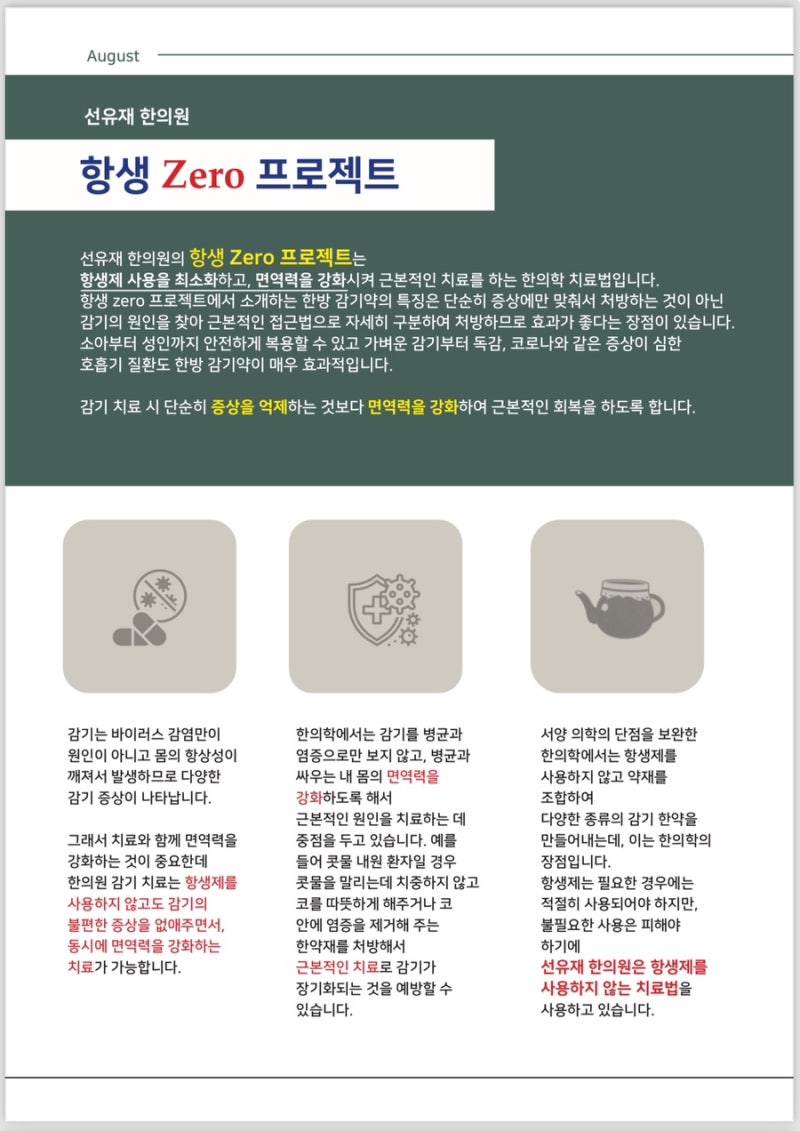
Therefore, it is important to strengthen immunity along with treatment. Korean medicine treatment for colds can alleviate uncomfortable cold symptoms while simultaneously boosting immunity. In Korean medicine, colds are not viewed solely as an infection and inflammation; instead, the focus is on fundamental treatment by strengthening the body’s immunity to fight off pathogens. For example, for a patient with a runny nose, instead of just drying the nose, we prescribe herbal medicine that warms the nose or removes inflammation inside the nose, preventing the cold from becoming prolonged through fundamental treatment.
Korean medicine, which complements the shortcomings of Western medicine, combines various medicinal herbs to create diverse types of cold herbal medicine, which is a strength of Korean medicine. While antibiotics should be used appropriately when necessary, unnecessary use should be avoided. Therefore, Sunyujae Korean Medicine Clinic uses treatment methods that minimize antibiotics.
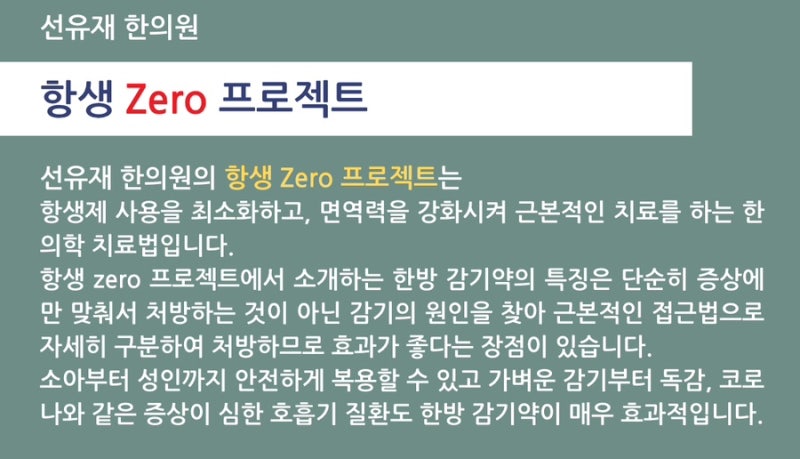
When treating a cold, we focus on fundamental recovery by strengthening immunity rather than simply suppressing symptoms.
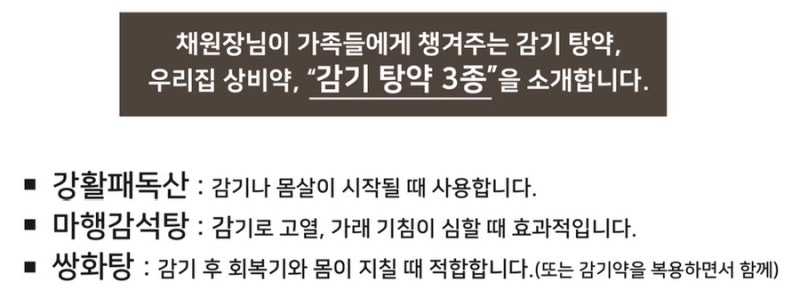
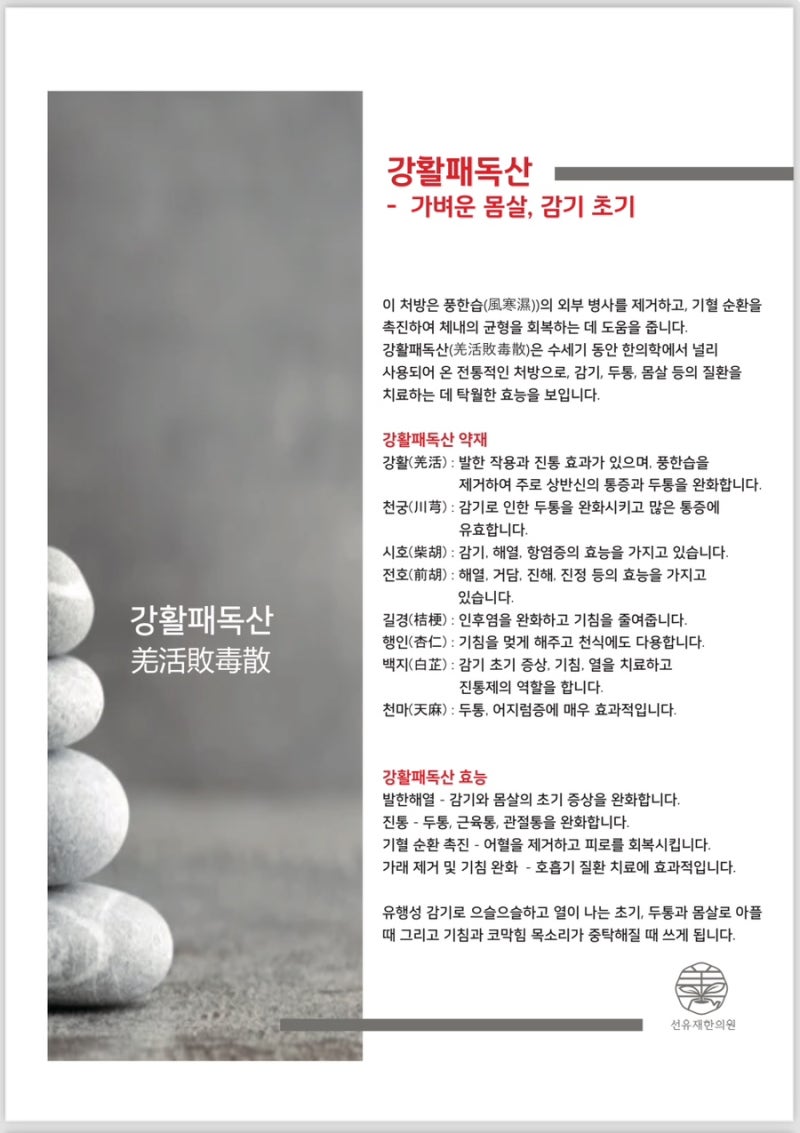
Ganghwalpaedoksan – For mild body aches and early-stage colds. This prescription helps remove external pathogens (wind, cold, dampness) and promotes the circulation of qi and blood to restore balance in the body. Ganghwalpaedoksan has been widely used in Korean medicine for centuries and shows excellent efficacy in treating conditions such as colds, headaches, and body aches.
Ganghwalpaedoksan Herbs Ganghwal (Notopterygium root): Has diaphoretic and analgesic effects, removes wind, cold, and dampness, and primarily relieves pain and headaches in the upper body. Cheongung (Cnidium rhizome): Relieves headaches caused by colds and is effective for many types of pain. Siho (Bupleurum root): Has efficacy in treating colds, reducing fever, and anti-inflammatory effects.
Jeonho (Peucedanum root): Has antipyretic, expectorant, antitussive, and sedative effects. Gilgyeong (Platycodon root): Relieves pharyngitis and reduces coughing. Haengin (Apricot kernel): Stops coughing and is frequently used for asthma.
Baekji (Angelica dahurica root): Treats early cold symptoms, coughs, and fever, and acts as an analgesic. Cheonma (Gastrodia elata): Very effective for headaches and dizziness. Efficacy of Ganghwalpaedoksan Diaphoretic and antipyretic – Relieves early symptoms of colds and body aches.
Analgesic – Relieves headaches, muscle aches, and joint pain. Promotes circulation of qi and blood – Removes blood stasis and relieves fatigue. Removes phlegm and relieves cough – Effective in treating respiratory diseases.
It is used for epidemic colds with chills and fever in the early stages, when suffering from headaches and body aches, and when experiencing coughing, nasal congestion, and a heavy voice.
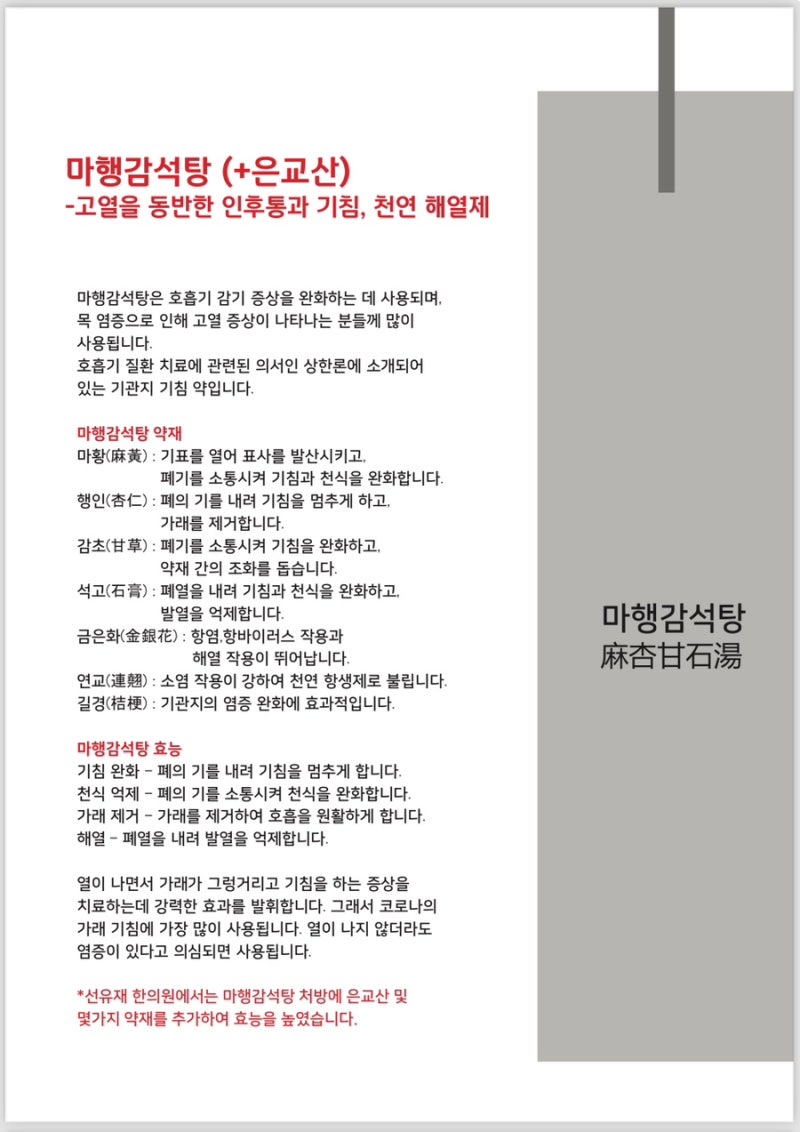
Mahenggamseoktang (+Eungyosan) – For sore throat and cough with high fever, a natural antipyretic. Mahenggamseoktang is used to alleviate respiratory cold symptoms and is frequently prescribed for those experiencing high fever due to throat inflammation. It is a bronchial cough medicine introduced in Shanghanlun, a medical text related to respiratory disease treatment. In particular, phlegmy coughs caused by COVID-19 have a higher chance of progressing to pneumonia than common colds, and in such cases, Mahenggamseoktang is the most commonly used herbal medicine prescription.
Mahenggamseoktang Herbs Mahwang (Ephedra herb): Opens the exterior to expel pathogens, unblocks lung qi, and relieves cough and asthma. Haengin (Apricot kernel): Directs lung qi downward to stop coughing and removes phlegm. Gamcho (Licorice root): Unblocks lung qi to relieve cough and helps harmonize the effects of other herbs.
Seokgo (Gypsum): Clears lung heat to relieve cough and asthma, and suppresses fever. Geumeunhwa (Honeysuckle flower): Has excellent anti-inflammatory, antiviral, and antipyretic effects. Yeongyo (Forsythia fruit): Known as a natural antibiotic due to its strong anti-inflammatory action.
Gilgyeong (Platycodon root): Effective in relieving bronchial inflammation. Efficacy of Mahenggamseoktang Cough relief – Directs lung qi downward to stop coughing. Asthma suppression – Unblocks lung qi to relieve asthma.
Phlegm removal – Removes phlegm to facilitate breathing. Antipyretic – Clears lung heat to reduce fever. It exhibits powerful effects in treating symptoms such as fever with rattling phlegm and coughing. Therefore, it is most commonly used for COVID-19 phlegmy coughs. It is also used even if there is no fever, but inflammation is suspected.
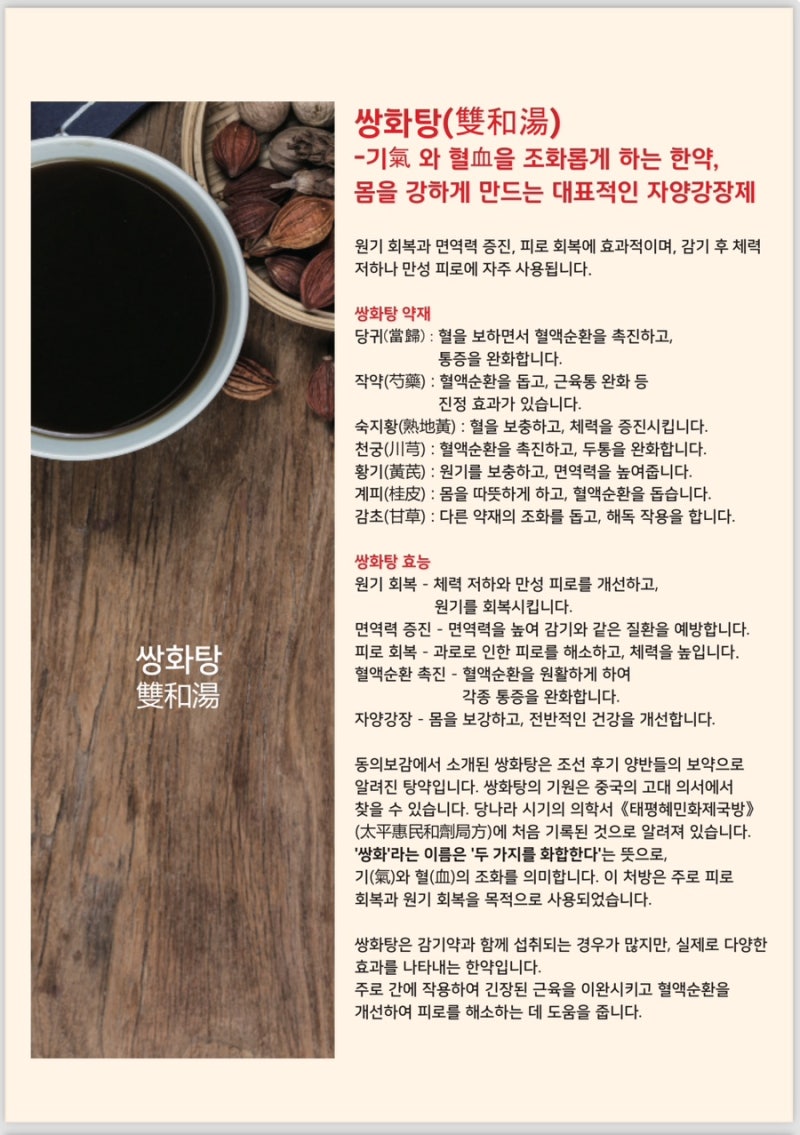
Ssanghwa-tang – An herbal medicine that harmonizes Qi and Blood, a representative tonic that strengthens the body. It is effective for restoring vitality, boosting immunity, and relieving fatigue, and is frequently used for post-cold exhaustion or chronic fatigue. Ssanghwa-tang Herbs Dangwi (Angelica gigas root): Nourishes blood, promotes blood circulation, and relieves pain.
Jakyak (Peony root): Helps blood circulation and has calming effects, such as relieving muscle pain. Sukjihwang (Rehmannia root, prepared): Replenishes blood and boosts physical strength. Cheongung (Cnidium rhizome): Promotes blood circulation and relieves headaches.
Hwanggi (Astragalus root): Replenishes vital energy and boosts immunity. Gyepi (Cinnamon bark): Warms the body and aids blood circulation. Gamcho (Licorice root): Helps harmonize other herbs and has detoxifying effects.
Efficacy of Ssanghwa-tang Restoration of vitality – Improves physical exhaustion and chronic fatigue, and restores vital energy. Immunity boost – Enhances immunity to prevent diseases like colds. Fatigue relief – Alleviates fatigue caused by overwork and boosts physical strength.
Promotes blood circulation – Facilitates blood circulation to relieve various pains. Tonic and fortifying – Strengthens the body and improves overall health. Ssanghwa-tang, introduced in Donguibogam, is known as a tonic for the Joseon Dynasty’s upper class.
The origin of Ssanghwa-tang can be traced back to ancient Chinese medical texts. It is believed to have been first recorded in the Tang Dynasty medical book “Taiping Huimin Heji Ju Fang.” The name “Ssanghwa” means “harmonizing two things,” referring to the harmony of Qi and Blood. This prescription was primarily used for fatigue relief and restoring vitality.
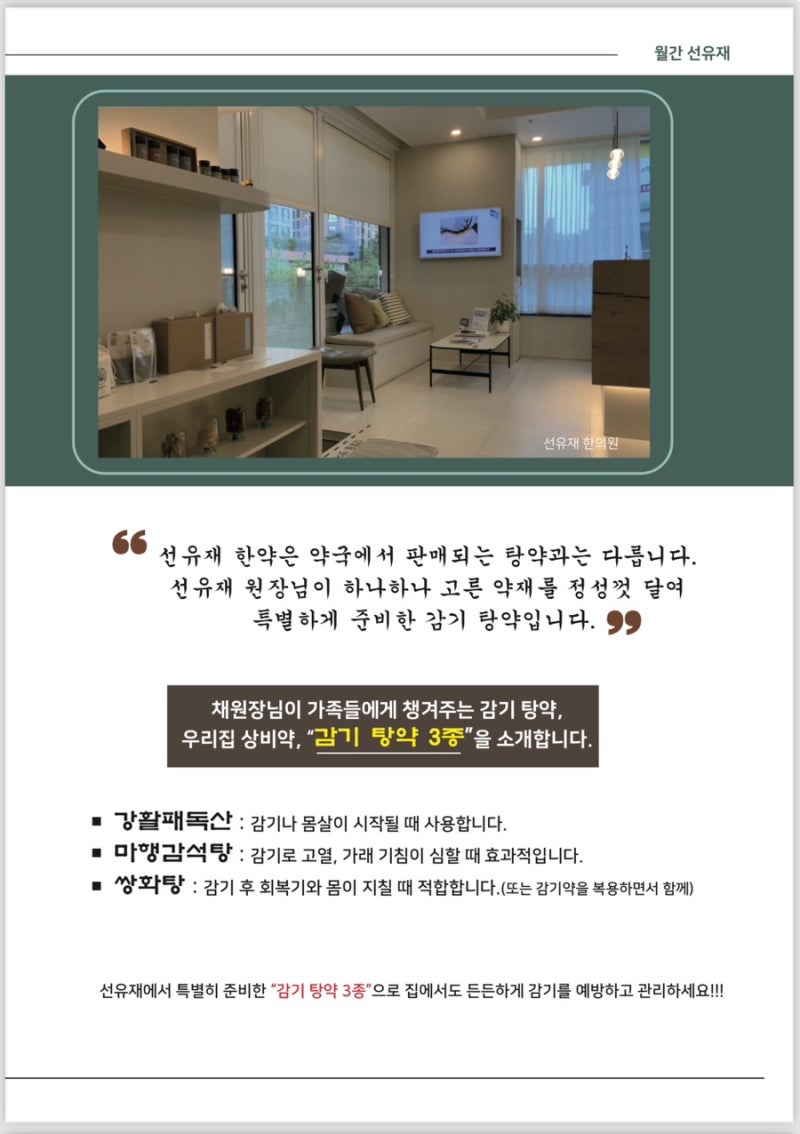
Ssanghwa-tang is often consumed with cold medicine, but it is actually an herbal medicine with various effects. It primarily acts on the liver to relax tense muscles and improve blood circulation, helping to relieve fatigue. Prevent and manage colds robustly at home with the three special cold herbal decoctions prepared by Sunyujae!
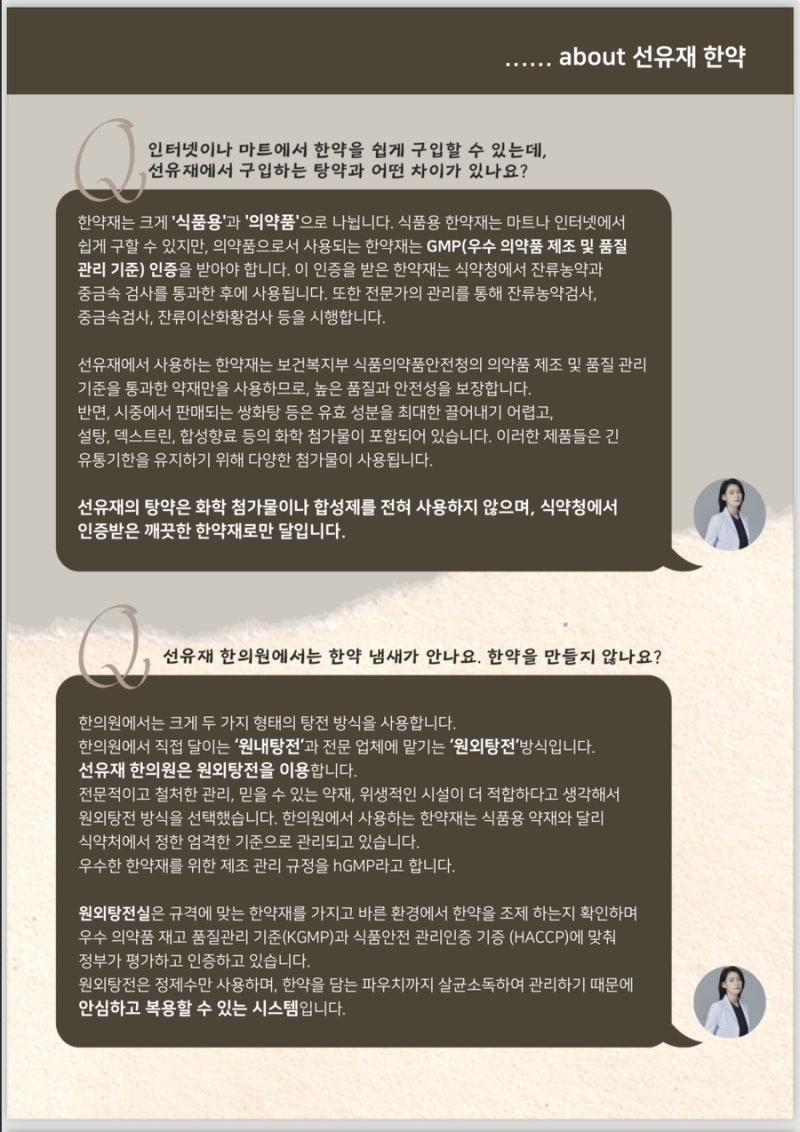
Let’s discuss common questions about Sunyujae herbal medicine. Herbal medicine can be easily purchased online or at supermarkets, so what is the difference between those and the decoctions purchased at Sunyujae? Herbal medicines are broadly divided into ‘food-grade’ and ‘pharmaceutical-grade’. Food-grade herbal medicines are readily available at supermarkets or online, but herbal medicines used as pharmaceuticals must receive GMP (Good Manufacturing Practice) certification.
Herbal medicines with this certification are used only after passing residual pesticide and heavy metal tests by the Ministry of Food and Drug Safety. Additionally, experts conduct residual pesticide tests, heavy metal tests, and residual sulfur dioxide tests. Sunyujae uses only herbal medicines that have passed the Ministry of Health and Welfare’s Ministry of Food and Drug Safety’s pharmaceutical manufacturing and quality control standards, ensuring high quality and safety.
On the other hand, commercially available Ssanghwa-tang and similar products often struggle to extract active ingredients to their fullest and contain chemical additives such as sugar, dextrin, and artificial flavors. Various additives are used in these products to maintain a long shelf life. Sunyujae’s decoctions do not use chemical additives or synthetic agents and are brewed only with clean herbal medicines certified by the Ministry of Food and Drug Safety.
Sunyujae Korean Medicine Clinic doesn’t smell like herbal medicine. Do you not prepare herbal medicine here? Korean medicine clinics primarily use two types of decoction methods.
In-house decoction, where the clinic directly brews the medicine, and external decoction, where it is entrusted to a specialized company. Sunyujae Korean Medicine Clinic uses external decoction. We chose the external decoction method because we believe professional management, reliable herbs, and hygienic facilities are more suitable.
Unlike food-grade herbs, herbal medicines used in Korean medicine clinics are managed according to standards set by the Ministry of Food and Drug Safety. The manufacturing management regulations for excellent herbal medicines are called hGMP. External decoction facilities are evaluated and certified by the government to ensure that herbal medicines are prepared in the correct environment using standardized herbal ingredients, in accordance with KGMP (Korean Good Manufacturing Practice) and HACCP (Hazard Analysis and Critical Control Points) certifications.
External decoction uses only purified water, and even the pouches containing the herbal medicine are sterilized and disinfected, making it a safe system for consumption. Children’s Cold Medicine Delicious grape-flavored children’s cold medicine that kids enjoy. Samsoum (phlegm, cough, fatigue) – Effective for coughs with phlegm.
– Excellent effect in removing coughs and phlegm with a foreign body sensation in the bronchi. Hyeonggaeyeongyotang (yellow nasal discharge, otitis media, sinusitis, chronic inflammation) – Effective for purulent symptoms such as yellow nasal discharge and yellow phlegm from the early stages of a cold. – Acute sinusitis, idiopathic urticaria. Galgeun-tang (early cold, antipyretic, analgesic) – Relieves general muscle pain, body aches from colds, and pain.
– Relieves cough. Sunyujae Korean Medicine Clinic provides effective cold treatment through personalized treatment and prescription of medicine.
If you have any questions about cold treatment, please add us as a ‘friend’ on Kakao Channel and feel free to inquire via KakaoTalk or phone. Sunyujae Korean Medicine Clinic in Dongcheon-dong pursues evidence-based medicine and integrative medicine.
This post was written directly by the medical staff of Sunyujae Korean Medicine Clinic to provide medical information, in compliance with Article 56(2) and Article 57(3) of the Medical Service Act. The duration and outcome of treatment may vary from person to person, so please consult a qualified practitioner before beginning treatment.
Consultation & Booking
Have questions? Reach us anytime via KakaoTalk or phone.