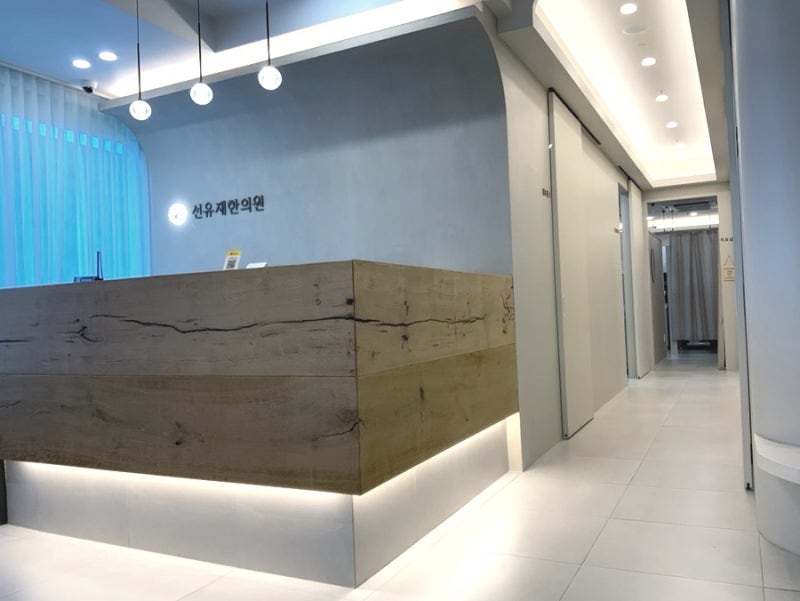
Hello, this is Sunyujae Korean Medicine Clinic, a place where kindness resides.

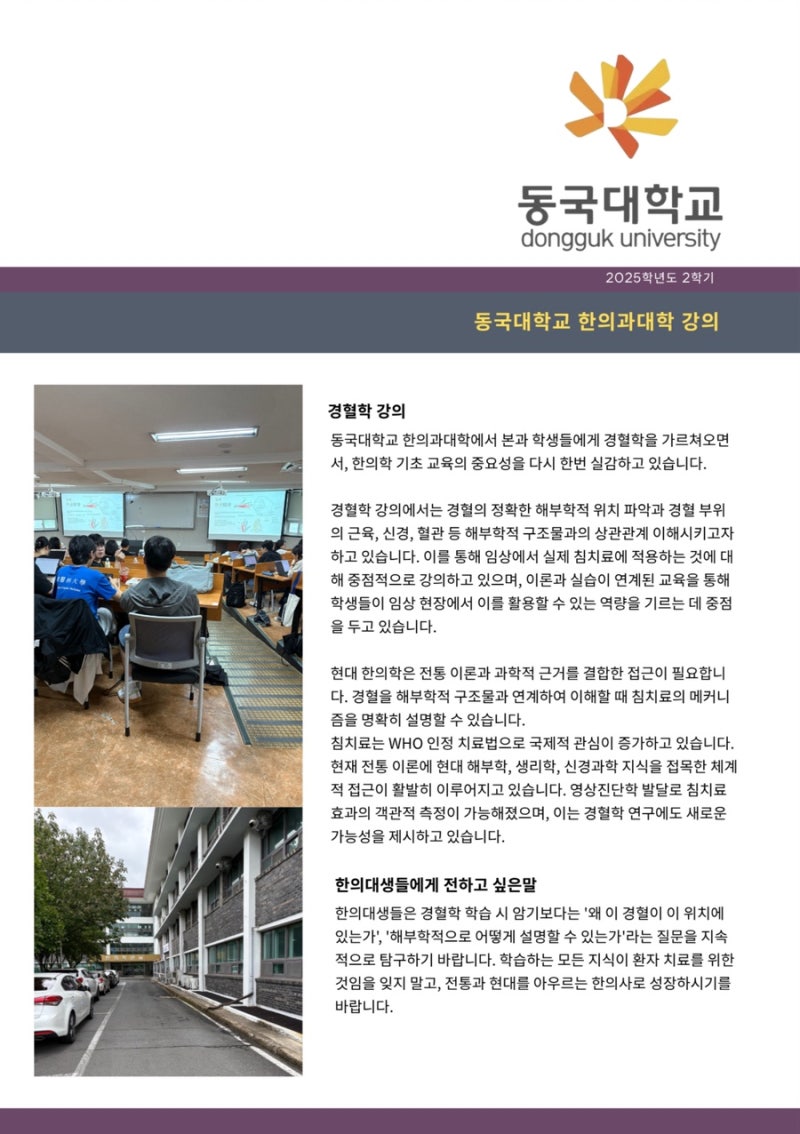
Introduction to October Research and Educational Activities: Dongguk University College of Korean Medicine ‘Acupointology’ Lecture. Dr. Hyocheong Chae of Sunyujae Korean Medicine Clinic is currently lecturing on ‘Acupointology’ in the second semester of the 2025 academic year for the main course at Dongguk University College of Korean Medicine. Acupointology is a core discipline that forms the foundation of Korean medicine and is an essential field for scientifically understanding the principles and evidence of acupuncture treatment.
In this lecture, Dr. Hyocheong Chae goes beyond simply delivering theories, guiding students with a focus on connecting the anatomical structure of acupoints with their clinical application. In addition to traditional Korean medicine theories, he also covers perspectives from modern medicine such as anatomy, neuroscience, and physiology, helping students confidently utilize treatments in real clinical settings through education that organically combines theory and practice.
Educational Philosophy and content will be heard from Dr. Hyocheong Chae’s story in the main text below.
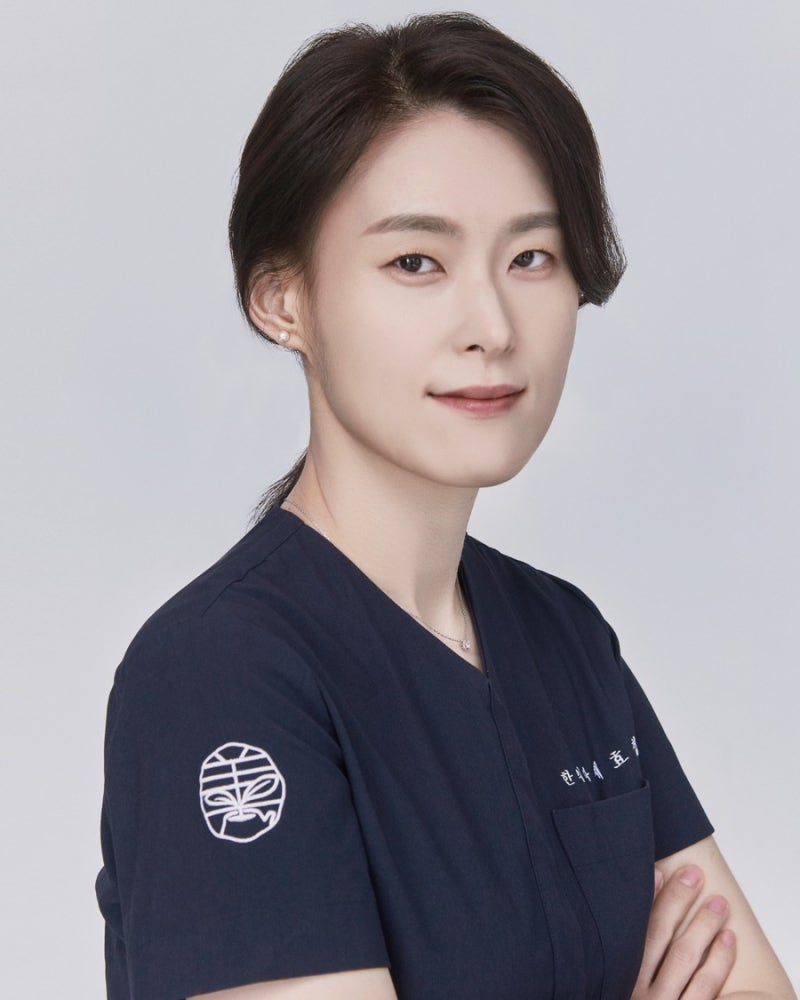
Dongguk University. 2025 Academic Year, 2nd Semester, Dongguk University College of Korean Medicine Lecture – Acupointology Lecture. While teaching Acupointology to main course students at Dongguk University College of Korean Medicine, I am once again realizing the importance of foundational education in Korean medicine. In the Acupointology lecture, I aim to help students accurately identify the anatomical locations of acupoints and understand their correlation with anatomical structures such as muscles, nerves, and blood vessels in the acupoint area.
Through this, I am focusing my lectures on applying this knowledge to actual acupuncture treatments in clinical practice, and I am emphasizing the development of students’ abilities to utilize this in clinical settings through education that links theory and practice. Modern Korean medicine requires an approach that combines traditional theories with scientific evidence. When acupoints are understood in connection with anatomical structures, the mechanism of acupuncture treatment can be clearly explained.
Acupuncture treatment is a WHO-recognized therapy, and international interest in it is growing. Currently, systematic approaches that integrate modern anatomical, physiological, and neuroscientific knowledge with traditional theories are actively being pursued. The development of diagnostic imaging has made it possible to objectively measure the effects of acupuncture treatment, and this presents new possibilities for acupointology research as well.
A Message to Korean Medicine Students Dr. Hyocheong Chae of Sunyujae Korean Medicine Clinic: Korean medicine students, when studying Acupointology, I hope you will continuously explore questions like ‘Why is this acupoint in this location?’ and ‘How can it be explained anatomically?’ rather than just memorizing. Do not forget that all knowledge you acquire is for treating patients, and I hope you will grow into Korean medicine doctors who encompass both tradition and modernity.
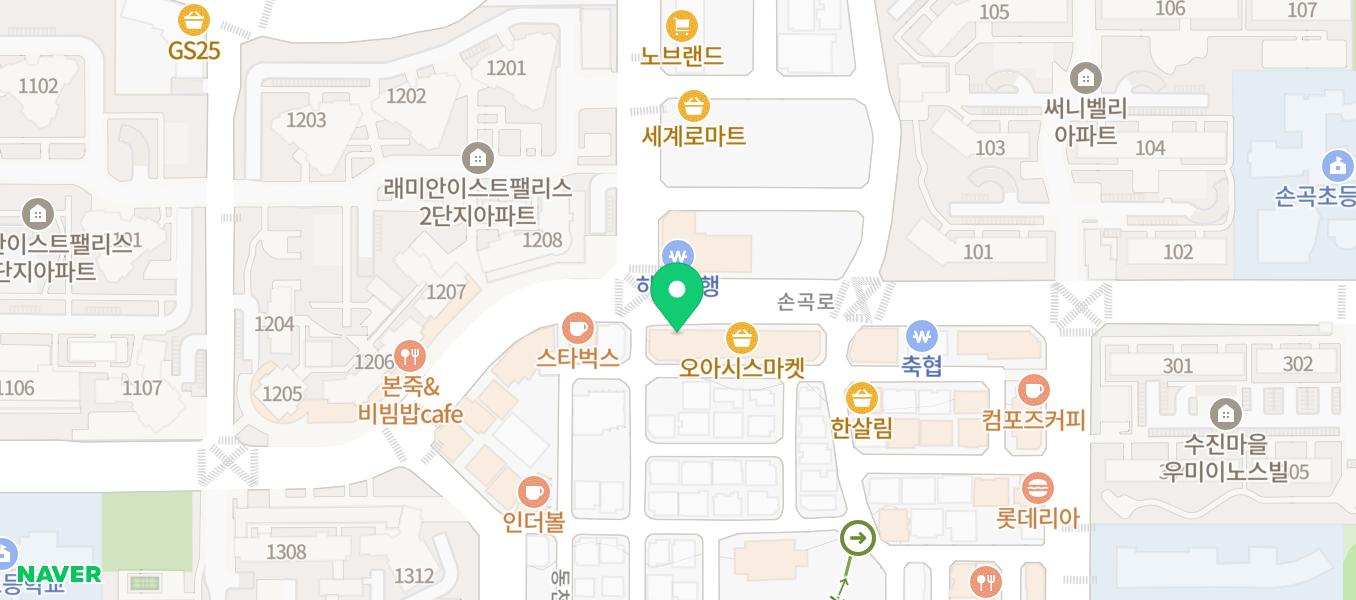
We hope you will join Sunyujae Korean Medicine Clinic, which shares valuable information for a healthy life. Sunyujae Korean Medicine Clinic in Suji-gu pursues evidence-based medicine and integrative medicine.
This post was written directly by the medical staff of Sunyujae Korean Medicine Clinic to provide medical information, in compliance with Article 56(2) and Article 57(3) of the Medical Service Act. The duration and outcome of treatment may vary from person to person, so please consult a qualified practitioner before beginning treatment.
Consultation & Booking
Have questions? Reach us anytime via KakaoTalk or phone.