

Hello, this is Sunyujae Korean Medicine Clinic, where kind hearts reside.


The health of our bodies cannot be determined by weight alone. Even if you appear thin on the outside, visceral fat can accumulate internally, and if this condition persists, it can lead to various metabolic abnormalities. The collection of these warning signs is called metabolic syndrome.
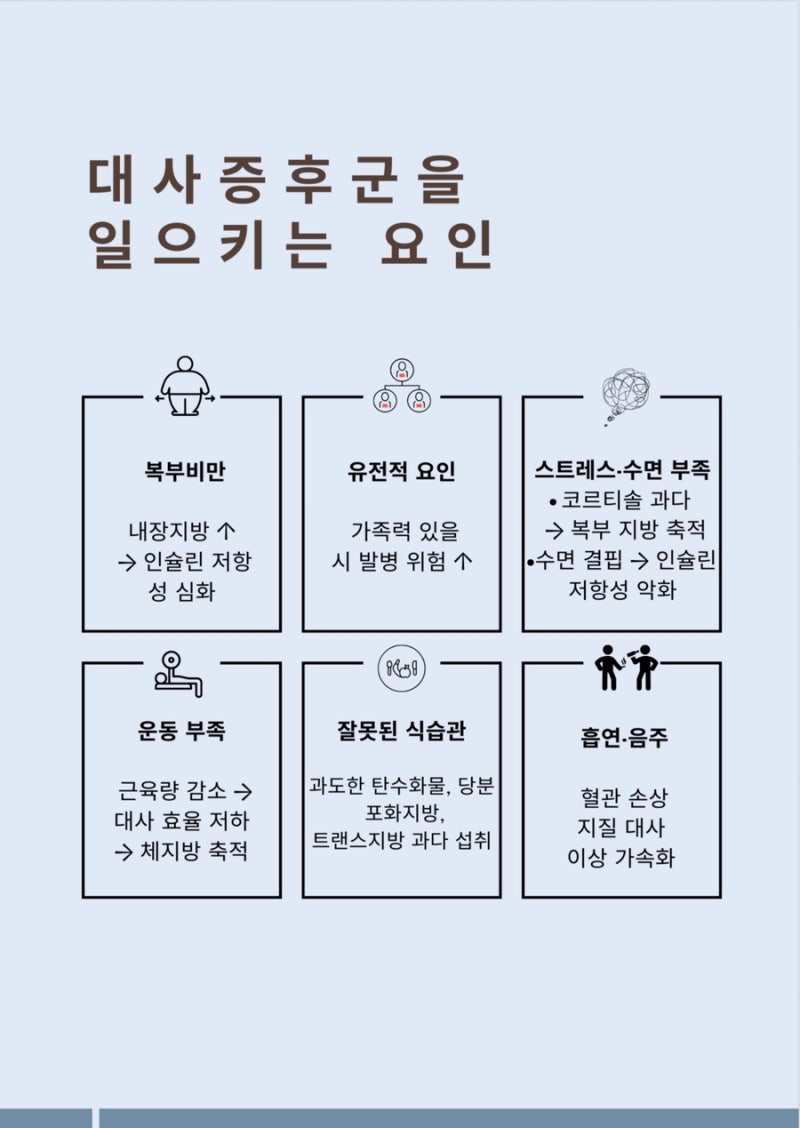
Today, we will summarize the various factors that cause metabolic syndrome and the particularly important characteristics for Koreans. Factors causing metabolic syndrome * Abdominal Obesity -Increased visceral fat → Worsened insulin resistance * Genetic Factors -Increased risk of development if there is a family history * Stress and Sleep Deprivation -Excess cortisol → Abdominal fat accumulation -Sleep deprivation → Worsened insulin resistance * Lack of Exercise -Decreased muscle mass → Reduced metabolic efficiency → Body fat accumulation
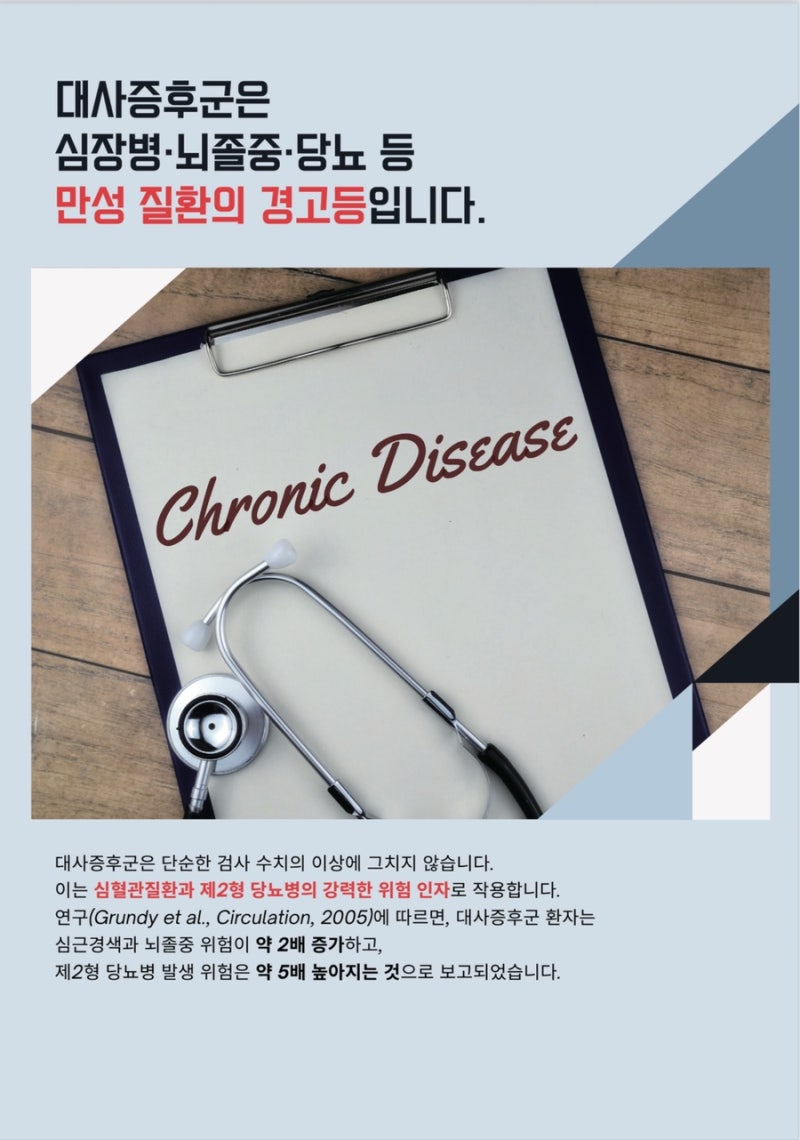
* Incorrect * Unhealthy Eating Habits -Excessive intake of carbohydrates, sugars, saturated fats, and trans fats * Smoking and Alcohol Consumption -Vascular damage, accelerated lipid metabolism abnormalities Metabolic syndrome is a warning sign for heart disease, stroke, and diabetes. At Sunyujae Korean Medicine Clinic, metabolic syndrome is not merely an abnormality in test results. It acts as a strong risk factor for cardiovascular diseases and type 2 diabetes.
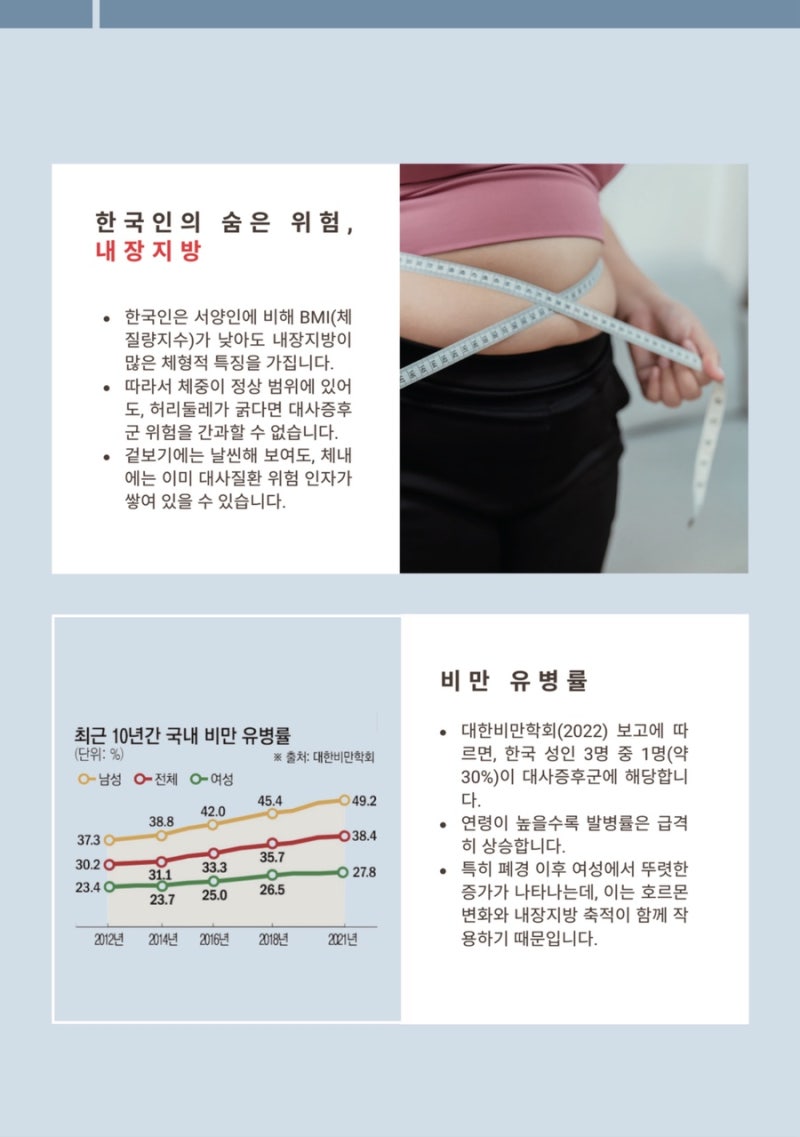
According to a study (Grundy et al., Circulation, 2005), patients with metabolic syndrome have approximately a 2-fold increased risk of myocardial infarction and stroke, and about a 5-fold higher risk of developing type 2 diabetes. The Hidden Risk for Koreans: Visceral Fat Dongcheon-dong Sunyujae Korean Medicine Clinic Koreans have a body type characteristic of having more visceral fat even with a lower BMI (Body Mass Index) compared to Westerners.
Therefore, even if your weight is within the normal range, if your waist circumference is large, the risk of metabolic syndrome cannot be overlooked. Even if you appear slender, risk factors for metabolic diseases may already be accumulating in your body. According to a report by the Korean Society for the Study of Obesity (2022), one in three Korean adults (approximately 30%) has metabolic syndrome.
The incidence rate rises sharply with age. A significant increase is particularly observed in postmenopausal women, as hormonal changes and visceral fat accumulation act together. Metabolic syndrome is not a distant illness; it begins with small daily habits.
The food I eat today, the time I spend moving, and my sleeping habits create tomorrow’s health. In the next post, we will discuss diet management, the most crucial part of metabolic syndrome management, in more detail. https://m.blog.naver.com/sunyujae21/224003653605 👉 The images below are from Monthly Sunyujae, so please refer to them.

We hope you will join Sunyujae Korean Medicine Clinic, which shares valuable information for a healthy life. Sunyujae Korean Medicine Clinic in Suji-gu pursues evidence-based medicine and integrative medicine.

This post was written directly by the medical staff of Sunyujae Korean Medicine Clinic to provide medical information, in compliance with Article 56(2) and Article 57(3) of the Medical Service Act. The duration and outcome of treatment may vary from person to person, so please consult a qualified practitioner before beginning treatment.
Consultation & Booking
Have questions? Reach us anytime via KakaoTalk or phone.