
Heel pain is not simply plantar fasciitis. When patients visit our clinic with heel pain, the most common phrase we hear is, “I was told it’s plantar fasciitis…” However, upon examination, it’s often not just simple plantar fasciitis. Heel pain should begin with accurately distinguishing the cause rather than lumping it all together.

Hello. I am Dr. Hyocheong Chae, director of Sunyujae Korean Medicine Clinic in Suji-gu.
The plantar fascia is a more important structure than you might think. Accurate causes and treatment directions for plantar fasciitis.
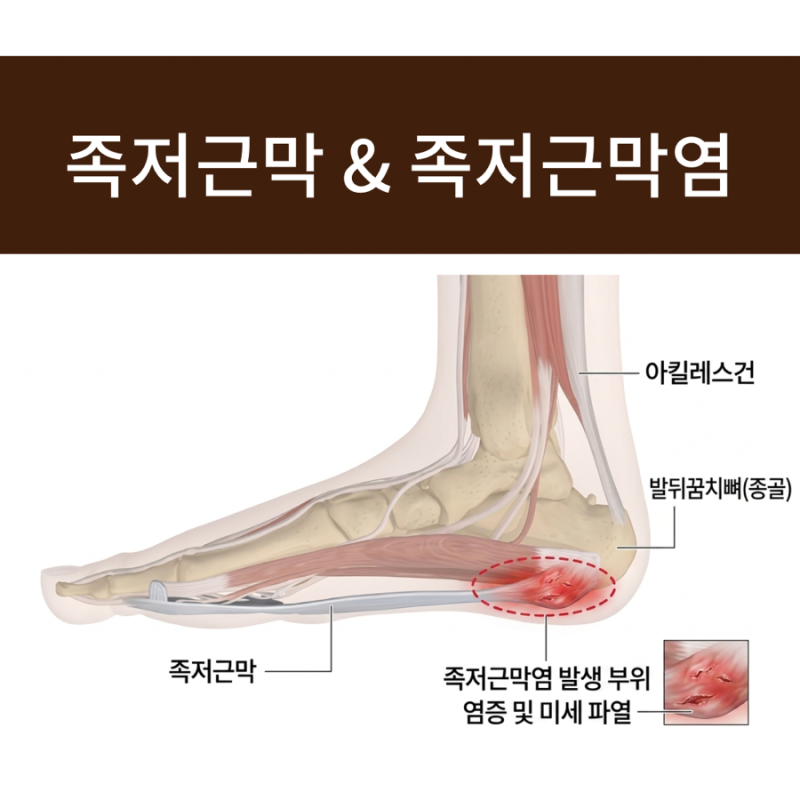
The plantar fascia is a thick, strong fibrous band of tissue that extends from the heel bone (calcaneus) to the toes. This structure is not just a simple membrane; it maintains the arch of the foot, absorbs shock when walking or running, and stores and releases energy during gait. In other words, it is a core structure, like a spring for the foot.
Plantar Fasciitis: Not Just Simple Inflammation Traditionally, plantar fasciitis was considered ‘inflammation (Fasciitis)’. However, recent research highlights the following changes as more significant: – Collagen degeneration – Increased fibroblasts – Microvascular neogenesis. This means it’s closer to a concept of degenerative change (Fasciosis) rather than simple inflammation.
The core of the pain is ‘adhesion’.
Recent pathophysiology identifies adhesion in the gliding layer between the plantar fascia and the intrinsic foot muscles (flexor digitorum brevis) as a key cause. It is believed that problems arise in this structure. Normally, the fascia and muscles should move smoothly, but if this area adheres, it causes pulling during movement, and repeated micro-injuries lead to persistent pain. Therefore, simply reducing inflammation makes it difficult to prevent recurrence. Treatment that restores movement is necessary.
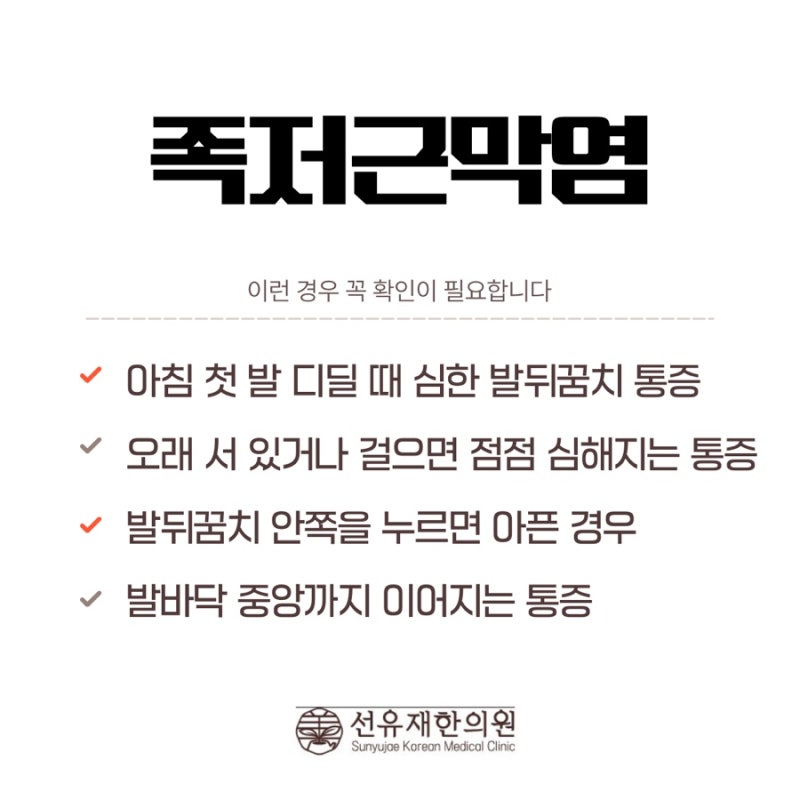
You should suspect plantar fasciitis if you experience these symptoms: • Severe heel pain when taking the first step in the morning • Pain that worsens with prolonged standing or walking • Pain when pressing on the inner side of the heel • Pain extending to the center of the sole. Especially, the pain felt when taking the first step in the morning is a typical characteristic of plantar fasciitis.
Heel pain is not all the same condition.
In clinical practice, even if the pain is in the same location, the causes are often different.
Typically, they can be divided as follows: 1. Classic Plantar Fasciitis “The first step in the morning feels like hell.” This is the most common type.
Strong tenderness when pressing on the inner bone area of the heel. tenderness appears. 2. Fat Pad Syndrome “Walking barefoot on a hard floor is too painful.” The heel has a fat cushion that absorbs shock, but if it thins or gets damaged, the impact is directly transmitted.
3. Baxter’s Neuropathy “It tingles and burns.” The nerve going to the sole of the foot is compressed, accompanied by numbness and burning. Improvement is often slow with general physical therapy alone.
4. Stress Fracture “It feels like my bone is splitting with every step.” This is a condition where there are tiny cracks in the bone. It is characterized by persistent pain even with rest.
As such, if the cause is not distinguished, treatment may not be appropriate, often leading to prolonged symptoms.
The direction of treatment must also change.
Steroid injections (CSI) can be helpful for acute pain due to their rapid pain-relieving effect. However, caution is needed with repeated use due to the risk of fat pad atrophy and fascial damage.
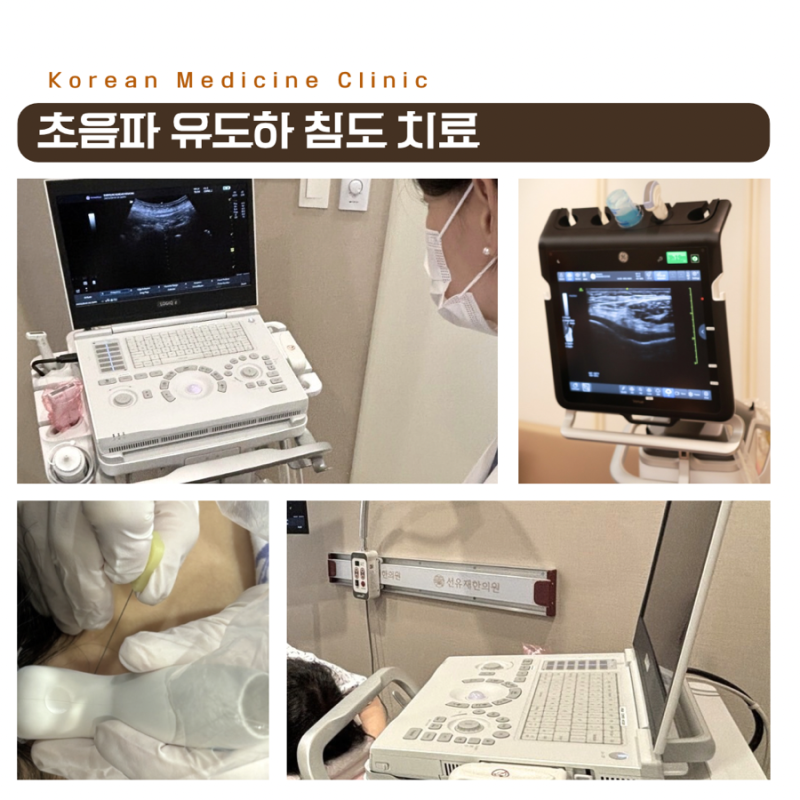
Ultrasound-Guided Treatment (acupotomy·pharmacopuncture)
Recently, the approach focuses on precise localized treatment + tissue regeneration rather than simple pain suppression. Using ultrasound, we – directly confirm the lesion’s location – identify thickened tissue and adhesion sites – and perform treatment at the exact depth. Initial pain reduction may be slow, but in tissues with degenerative changes, it shows meaningful results in terms of long-term functional improvement and regeneration.
When acupotomy treatment is needed
• Chronic plantar fasciitis • Cases unresponsive to conventional treatment • Severe fascial adhesion. Acupotomy treatment helps loosen stiffened tissue and induces recovery by dissecting adhesions.
“Neglecting plantar fasciitis can lead to secondary problems, so early and appropriate management and treatment are crucial.”
Gait changes due to avoiding pain (Load Shift). When pain occurs, your gait naturally changes. You tend to shift your weight to the middle part of your foot, avoiding putting weight on the painful heel.
While this might temporarily make the pain feel less severe, over time, it can lead to accumulated strain on other parts of the foot, eventually resulting in further pain or problems. Dr. Chae’s final word: If plantar fasciitis is left untreated, a walking pattern that uses the inner part of the foot (midfoot) instead of the heel can become fixed, leading to flatfoot, where the arch of the foot collapses.
Furthermore, a gait that places weight on the outer side of the foot if repeated, can sometimes lead to ankle sprains or outer knee pain. Therefore, the most important thing is early and accurate diagnosis and management. At Sunyujae Korean Medicine Clinic in Suji-gu, we directly identify the cause of pain using ultrasound and proceed with treatment after thoroughly explaining the treatment plan tailored to the patient’s condition.
If heel pain recurs, we recommend accurately identifying the cause rather than simply enduring it.
We hope you will join Sunyujae Korean Medicine Clinic in sharing valuable information for a healthy life. Sunyujae Korean Medicine Clinic in Suji-gu pursues evidence-based medicine and integrative medicine.

This post was written directly by the medical staff of Sunyujae Korean Medicine Clinic to provide medical information, in compliance with Article 56(2) and Article 57(3) of the Medical Service Act. The duration and outcome of treatment may vary from person to person, so please consult a qualified practitioner before beginning treatment.
Consultation & Booking
Have questions? Reach us anytime via KakaoTalk or phone.