When providing diet consultations at Sunyujae Korean Medicine Clinic in Dongcheon-dong, Suji-gu, we often hear questions like these these days: “Dr., what’s the difference between weight management injections and herbal medicine diets?” “I’m not losing weight easily after childbirth; can I lose weight without overdoing it?” “Since menopause, my weight doesn’t go down even if I control my diet like before.” As weight management injections have become widely known recently, more people are curious about the differences between them and herbal medicine diets.
Some people come after hearing about others using injections, while others visit for consultations after struggling with appetite control. Conversely, some people want to lose weight but are concerned about their bodies becoming weak, so they look into herbal medicine diets. Hello, this is Sunyujae Korean Medicine Clinic, a place where good intentions reside in Dongcheon-dong, Suji-gu.

Weight Management Injections: What to Check First. Weight management injections are not general supplements that anyone can casually choose. They are specialty pharmaceuticals that require a medical professional to confirm an individual’s health status, pre-existing conditions, current medications, and potential side effects before deciding on their use. Depending on the individual, symptoms such as nausea, vomiting, diarrhea, constipation, and abdominal discomfort may occur, and some may experience fatigue or dizziness.
Individuals with weak gastrointestinal function, pre-existing conditions, or those taking multiple medications may require an even more careful verification process. Therefore, what’s important is not “Many people are doing it these days, so should I try it too?” Instead, you must first consider whether this method is appropriate for your body’s condition, whether it will cause strain during the weight loss process, and whether you can maintain your health after losing weight.
Why do people regain weight after stopping injections? When consulting about weight management injections, we receive many questions about regaining weight after stopping, as much as about the initial weight loss effect, such as, “Won’t I regain weight if I stop?”
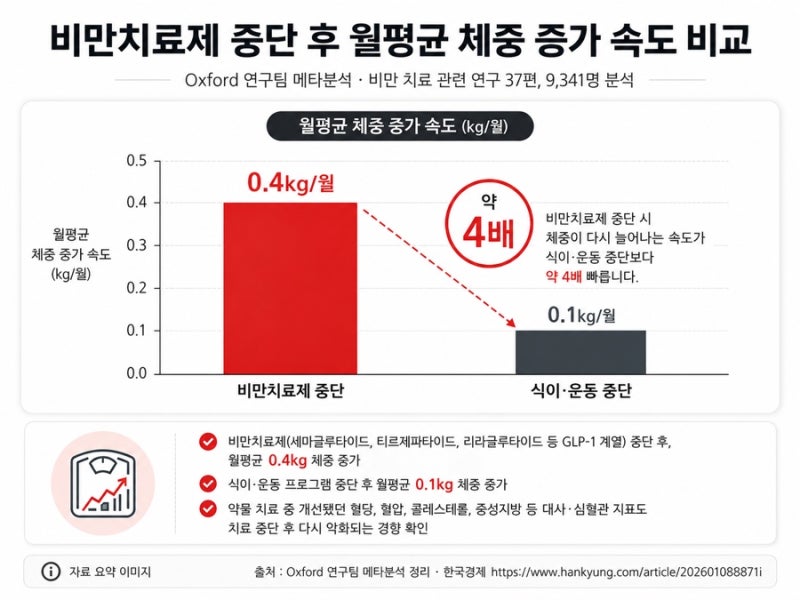
Recent research from Oxford University in the UK provides insight into this. The research team analyzed 37 studies involving a total of 9,341 people related to obesity treatment, including GLP-1 class anti-obesity drugs like semaglutide, tirzepatide, and liraglutide. Simply put, if lifestyle habits are not established after discontinuing the medication, the rate at which weight returns can be faster than expected.
The data analyzed showed that weight increased by an average of approximately 0.4 kg per month after discontinuing anti-obesity drugs, which was a faster trend than the average increase of approximately 0.1 kg per month after discontinuing diet and exercise programs. Furthermore, there was a difference in the time it took for weight to return to pre-treatment levels: an average of 1.7 years for the drug discontinuation group and an average of 3.9 years for the diet and exercise discontinuation group.
Metabolic indicators such as blood sugar, blood pressure, cholesterol, and triglycerides, which had improved during drug use, also tended to worsen again after discontinuation. This study shows that what’s important in dieting is not just “how quickly you lose weight.” After weight loss, it’s crucial to continue with dietary habits, sleep, activity levels, and stress management to prevent the body from deteriorating again.
This is also why Sunyujae Korean Medicine Clinic doesn’t just look at the scale number when addressing postpartum or menopausal diets. Considering the recovery status after childbirth, edema, sleep deprivation, decreased vitality, and metabolic changes after menopause together makes it easier for the body to feel less exhausted and maintain weight after loss.
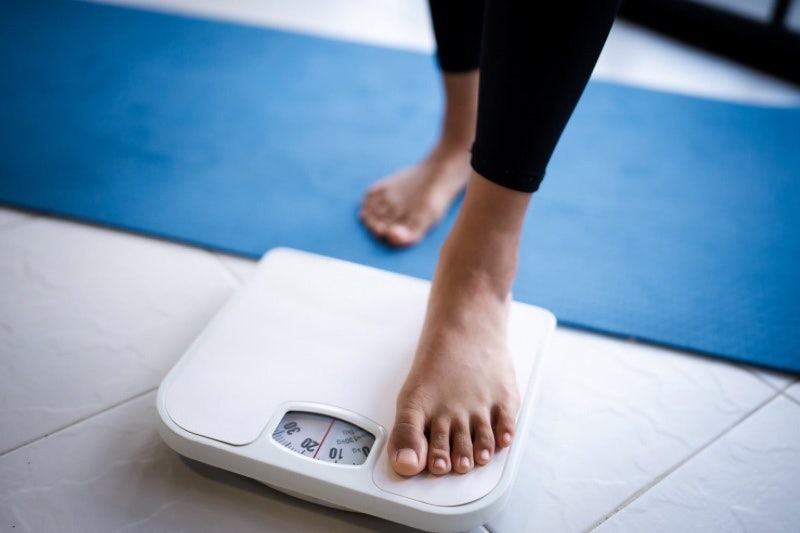
If your weight has decreased but your body feels more exhausted. It is certainly important for the number on the scale to decrease during a diet. However, looking only at that number is insufficient. If food intake is excessively reduced, weight may temporarily decrease.
However, this process can also lead to nutritional imbalance, muscle loss, and decreased vitality. If your weight has gone down but your body feels more tired, sensitive, easily exhausted, and leads back to binge eating or late-night snacks, it’s difficult to consider it healthy weight loss. Especially for those who haven’t fully recovered after childbirth, those experiencing ongoing sleep deprivation, or those with significant fluctuations in condition due to menstrual cycles or menopausal changes, excessive weight loss can actually burden the body.
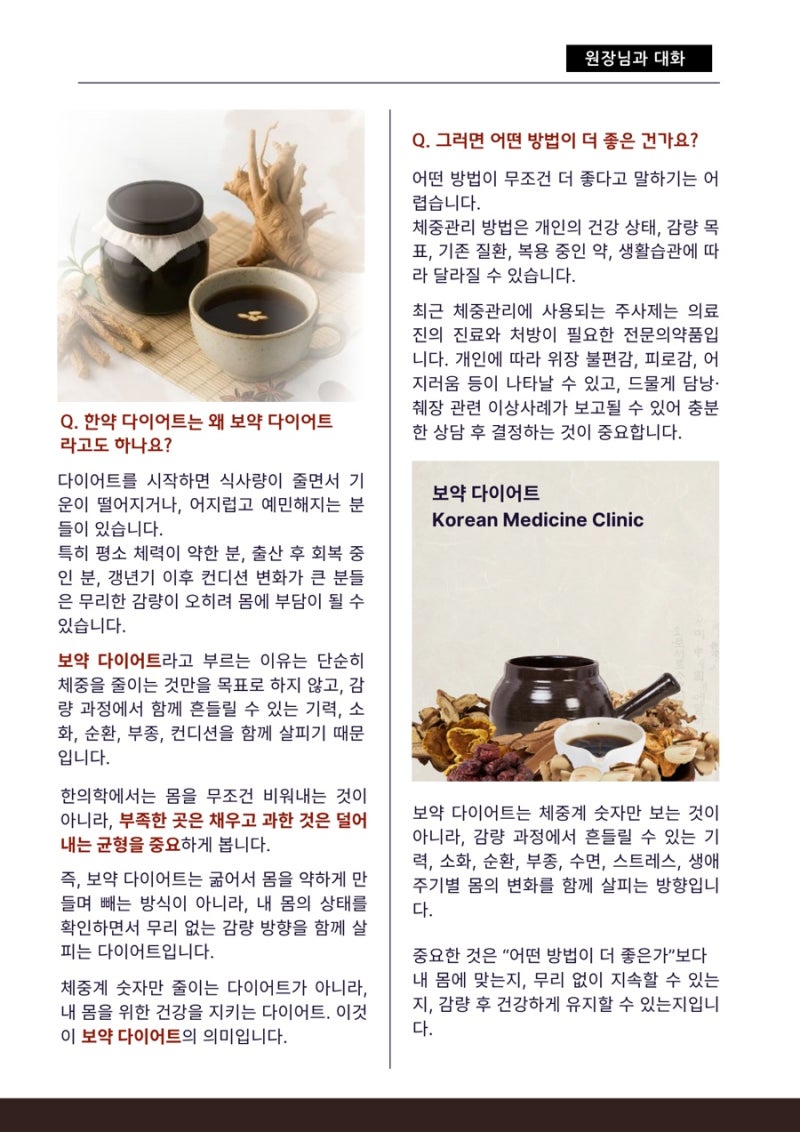
The ‘bo-yak’ (restorative herbal medicine) diet we advocate at Sunyujae Korean Medicine Clinic is not simply a method to reduce weight. Herbal medicine diets approach weight management by considering appetite, edema, digestive status, sleep, stress, vitality, circulation, and the body’s changes throughout different life stages. There’s a reason why even the same diet herbal medicine isn’t applied in the same way to everyone.
This is because the causes of weight gain differ from person to person. Postpartum diets must be considered alongside recovery. After childbirth, it may not just be a matter of weight. After childbirth, many women experience sleep deprivation, irregular meal times, swelling, or decreased vitality.
If you drastically reduce only your food intake in this state, your weight may temporarily decrease, but your body could become more exhausted and recovery might be delayed. Many people considering postpartum diets say, “Before, I would lose weight with just a little adjustment, but now it’s not working.” In such cases, it’s important to consider both the body’s recovery process and the direction of weight loss, rather than just reducing weight.
If your body is still tired and sleep-deprived, reducing only your food intake can actually destabilize your condition first. The same applies to menopausal diets. After menopause, the body undergoes different changes. Many people feel that even with the same diet as before, weight changes are slow, and weight tends to accumulate around the abdomen.
Some may experience shallow sleep, sudden hot flashes, or prolonged fatigue. When these changes occur, it’s important to consider the body’s rhythm and metabolic changes together, rather than simply adopting a “eat less” approach. Among those looking into diet herbal medicine in Dongcheon-dong, Suji-gu, some say, “I don’t eat much, but I keep swelling and gaining weight.”
In such cases, it’s crucial to look beyond just weight and also consider how the body feels heavy, when appetite fluctuates, at what times fatigue is severe, and what the sleep patterns are like. Reasons to Consider Edema, Appetite, and Sleep Together. For some, it’s necessary to first assess the pattern of edema. There are individuals whose faces swell every morning, whose legs feel heavy by evening, and who feel their body is generally bloated more than they notice weight changes.
In such cases, it may not just be a fat issue, but also require considering circulation, water metabolism, and lifestyle patterns. For others, appetite control becomes a crucial management point. This is the case where weight increases due to repeated patterns of late-night snacks, regular snacks, sweet foods, and binge eating, even if the meal portions themselves are not very large.
Especially for those who crave sweet foods when stressed or fatigued, and who feel an emptiness even after dinner, it’s important to examine the times when appetite increases and their overall lifestyle rhythm. For others, sleep and stress levels act as significant variables in weight management. Poor sleep can lead to accumulated fatigue the next day, reduced activity, and more easily fluctuating appetite.
If a state of tension persists for a long time, the body remains fatigued, and a tired body tends to seek out stimulating or sweet foods more. Sunyujae Korean Medicine Clinic’s ‘Bo-yak’ Diet. “At Sunyujae Korean Medicine Clinic, we prioritize a ‘bo-yak’ diet that considers both body condition and constitution, rather than simply suppressing appetite.” A ‘bo-yak’ diet doesn’t simply mean a weight-loss medicine.
It means a diet that also considers vitality, digestion, circulation, edema, and overall condition, which can easily fluctuate during the weight loss process. In Korean medicine, the emphasis is on balance – replenishing what is lacking and reducing what is excessive, rather than simply emptying the body. In other words, a ‘bo-yak’ diet is not about losing weight by weakening the body through starvation, but rather a diet that assesses your body’s condition and explores sustainable weight loss methods.
It’s not a diet that merely reduces the number on the scale, but one that protects your health for your body. This is the meaning of a ‘bo-yak’ diet. The key is to find a direction that suits your individual condition, so that your body doesn’t become overly exhausted while losing weight.
At Sunyujae Korean Medicine Clinic, we aim for sustainable weight management without straining the body, through 1:1 customized prescriptions and Korean medicine treatment. Weight management tailored to your body is important. It’s difficult to definitively say whether weight management injections or herbal medicine diets are better. The best weight management method can vary depending on an individual’s health status, weight loss goals, pre-existing conditions, medications being taken, and lifestyle habits.
What’s important is not which method is better, but whether it suits your body, whether you can sustain it without strain, and whether you can maintain your health after losing weight. Sunyujae Korean Medicine Clinic in Dongcheon-dong, Suji-gu, emphasizes a healthy diet that considers individual constitution and characteristics, and body balance, rather than just focusing on weight.
Maintaining weight loss is harder than starting it. Rather than just looking at the speed of weight loss, please first consider whether the method allows your body to follow along healthily. ※ Weight management methods and herbal medicine prescriptions may vary depending on an individual’s health status, constitution, pre-existing conditions, and medications being taken, and will be guided after consultation. https://m.blog.naver.com/sunyujae21/224282090700

We hope you will join Sunyujae Korean Medicine Clinic in sharing valuable information for a healthy life. Sunyujae, a Korean medicine clinic in Suji-gu, pursues evidence-based medicine and integrative medicine.
This post was written directly by the medical staff of Sunyujae Korean Medicine Clinic to provide medical information, in compliance with Article 56(2) and Article 57(3) of the Medical Service Act. The duration and outcome of treatment may vary from person to person, so please consult a qualified practitioner before beginning treatment.
Consultation & Booking
Have questions? Reach us anytime via KakaoTalk or phone.