Hello, this is Sunyujae Korean Medicine Clinic, where kind hearts reside.
![[Suji-gu Dongcheon-dong Sunyujae Korean Medicine Clinic] Lumbar Spinal Stenosis Causes | Ligamentum Flavum Hypertrophy and Neurogenic Claudication Part 2](https://syjkmc.kr/wp-content/uploads/2026/06/224315461126_img_1.png)
To those diagnosed with lumbar spinal stenosis, I often say this in the consultation room: “Even if it’s the same stenosis, not all conditions are identical.” Although imaging tests may show the same result of ‘stenosis,’ the pattern of pain and the treatment approach vary depending on where and by what structure the nerve is being compressed.
In particular, it’s important to view ligamentum flavum hypertrophy, spinal canal stenosis, and neurogenic claudication not as separate issues, but as a single process of structural change that progresses in connection with each other. In this post, rather than simply explaining lumbar spinal stenosis as a result of ‘narrowing,’ I will describe this progression from a structural perspective, explaining where the narrowing occurs, what structural changes initiated it, and why the pain leads to walking difficulties.
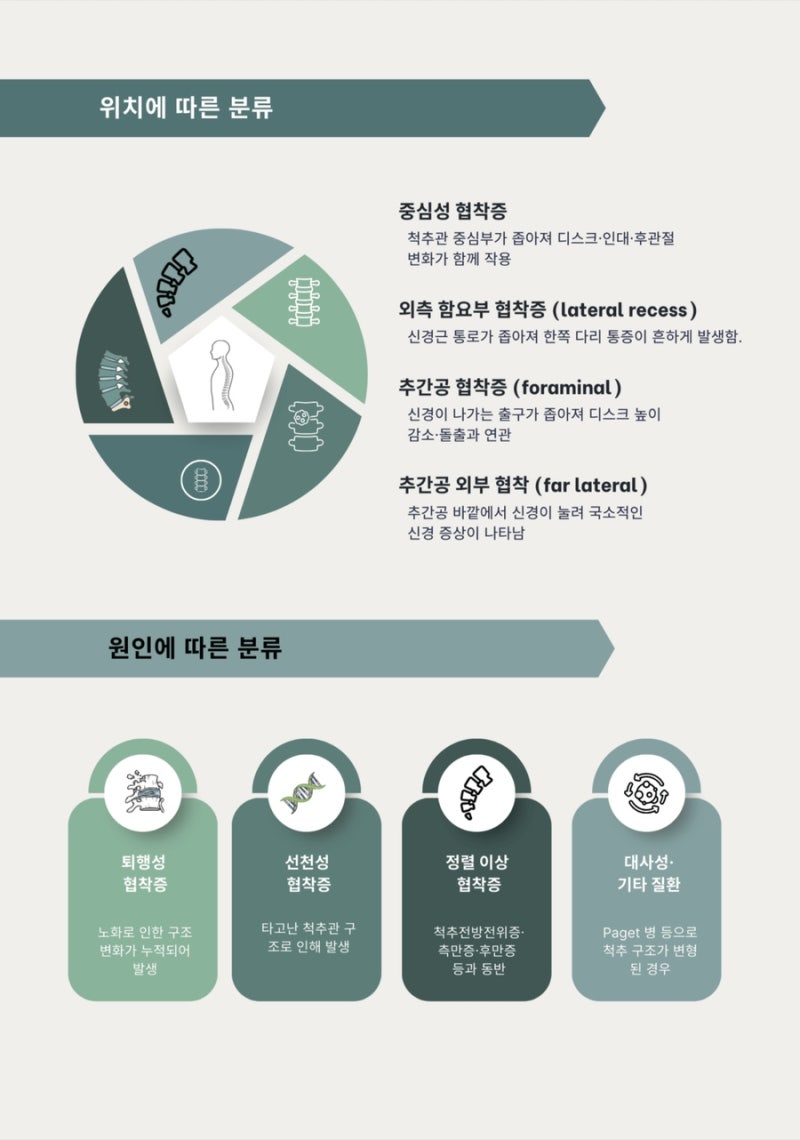
Lumbar Spinal Stenosis, though sharing the same name, is a condition where symptoms and treatment approaches vary depending on the location and cause of the narrowing. Classification by location at Suji-gu Dongcheon-dong back pain Korean medicine clinic
Central Stenosis — Narrowing of the central spinal canal, with disc, ligament, and facet joint changes acting together
* Lateral Recess Stenosis (lateral recess) — Narrowing of the nerve root pathway, commonly causing pain in one leg
Foraminal Stenosis (foraminal) — Narrowing of the nerve exit, associated with disc height reduction and protrusion
* Extraforaminal Stenosis (far lateral) — Nerve compression outside the foramen, leading to localized neurological symptoms. Classification by cause
Degenerative Stenosis — Occurs due to accumulated structural changes from aging
Congenital Stenosis — Occurs due to an inherent spinal canal structure
Alignment Anomaly Stenosis — Accompanied by conditions such as spondylolisthesis, scoliosis, or kyphosis
Metabolic and Other Metabolic and Other Diseases — Cases where spinal structure is deformed due to conditions like Paget’s disease
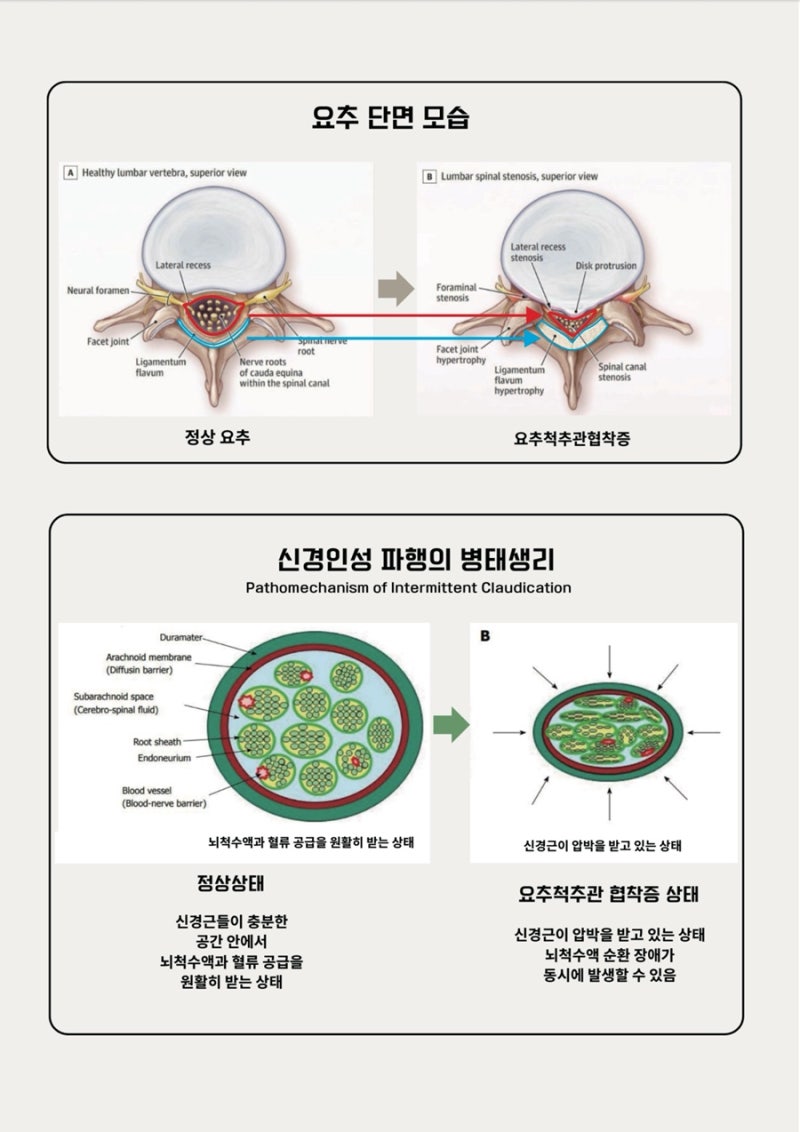
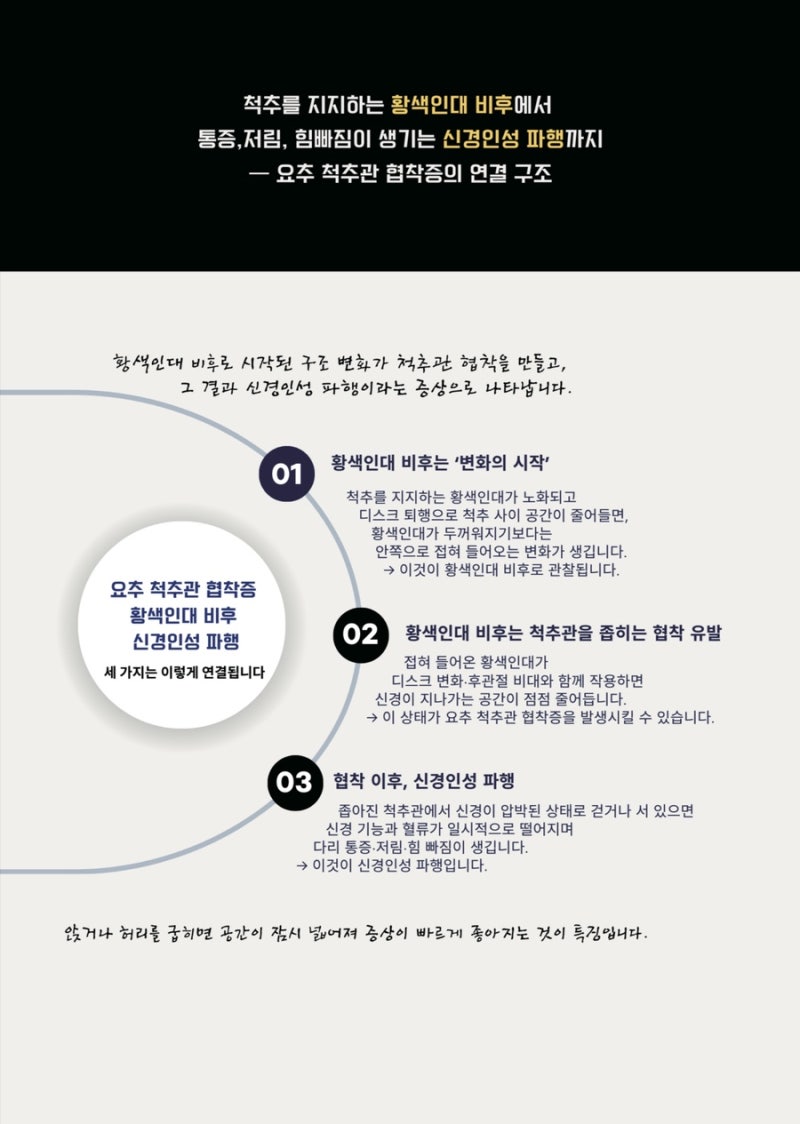
From ligamentum flavum hypertrophy, where the ligament supporting the spine folds inward, to neurogenic claudication, which causes pain, numbness, and weakness — the interconnected structure of lumbar spinal stenosis. Structural changes beginning with ligamentum flavum hypertrophy lead to spinal canal stenosis, which in turn manifests as symptoms of neurogenic claudication. Lumbar spinal stenosis, ligamentum flavum hypertrophy, and neurogenic claudication are connected in these three ways: ① Ligamentum flavum hypertrophy is the ‘start of the change.’ As the ligamentum flavum supporting the spine ages,
and the space between vertebrae decreases due to disc degeneration, the ligamentum flavum tends to fold inward rather than simply thicken. → This is observed as ligamentum flavum hypertrophy. ② Ligamentum flavum hypertrophy causes stenosis that narrows the spinal canal. When the folded ligamentum flavum acts in conjunction with disc changes and facet joint hypertrophy, the space through which nerves pass gradually diminishes.
→ This condition can lead to lumbar spinal stenosis. ③ After stenosis, neurogenic claudication occurs. When walking or standing with nerves compressed in the narrowed spinal canal, nerve function and blood flow temporarily decrease, causing leg pain, numbness, and weakness. → This is neurogenic claudication. A characteristic feature is that symptoms rapidly improve when sitting or bending the back, as the space temporarily widens.
Lumbar Spinal Stenosis Lumbar Spinal Stenosis is a rather complex condition to be simply explained as “a disease where nerves are compressed.” It begins with structural changes like ligamentum flavum hypertrophy, leading to a gradual narrowing of the spinal canal, which results in neurogenic claudication—symptoms that worsen when walking or standing. Therefore, when examining stenosis, it’s crucial to first determine where and for what reason the narrowing has occurred, rather than just how much it has narrowed.
This is precisely why, even with the same diagnosis of ‘stenosis,’ the location of pain, degree of walking discomfort, and patterns of daily life limitations can differ. https://m.blog.naver.com/sunyujae21/224138012035 In the upcoming Part 3, building on this structural understanding, I will discuss how to decide between surgical and non-surgical treatments and what the criteria for treatment are.
We hope you will join Sunyujae Korean Medicine Clinic, which shares valuable information for a healthy life. Sunyujae Korean Medicine Clinic in Suji-gu pursues evidence-based medicine and integrative medicine.
#LumbarSpinalStenosis #SpinalStenosis #LigamentumFlavumHypertrophy #NeurogenicClaudication #BackPain
This post was written directly by the medical staff of Sunyujae Korean Medicine Clinic to provide medical information, in compliance with Article 56(2) and Article 57(3) of the Medical Service Act. The duration and outcome of treatment may vary from person to person, so please consult a qualified practitioner before beginning treatment.
Consultation & Booking
Have questions? Reach us anytime via KakaoTalk or phone.