
Hello, this is Sunyujae Korean Medicine Clinic, a place where kindness dwells.

“Doctor, they say there’s nothing particularly wrong… but why do I have such indigestion?” This is a phrase I hear very often in the consultation room. Even after tests, there are no major abnormalities, and after taking medicine, it seems fine for a while, but often after a few days, the bloating returns, and the stomach feels uncomfortable. Even without overeating or any specific illness in the body, if you repeatedly experience indigestion, discomfort, frequent nausea, or a gassy feeling after meals,
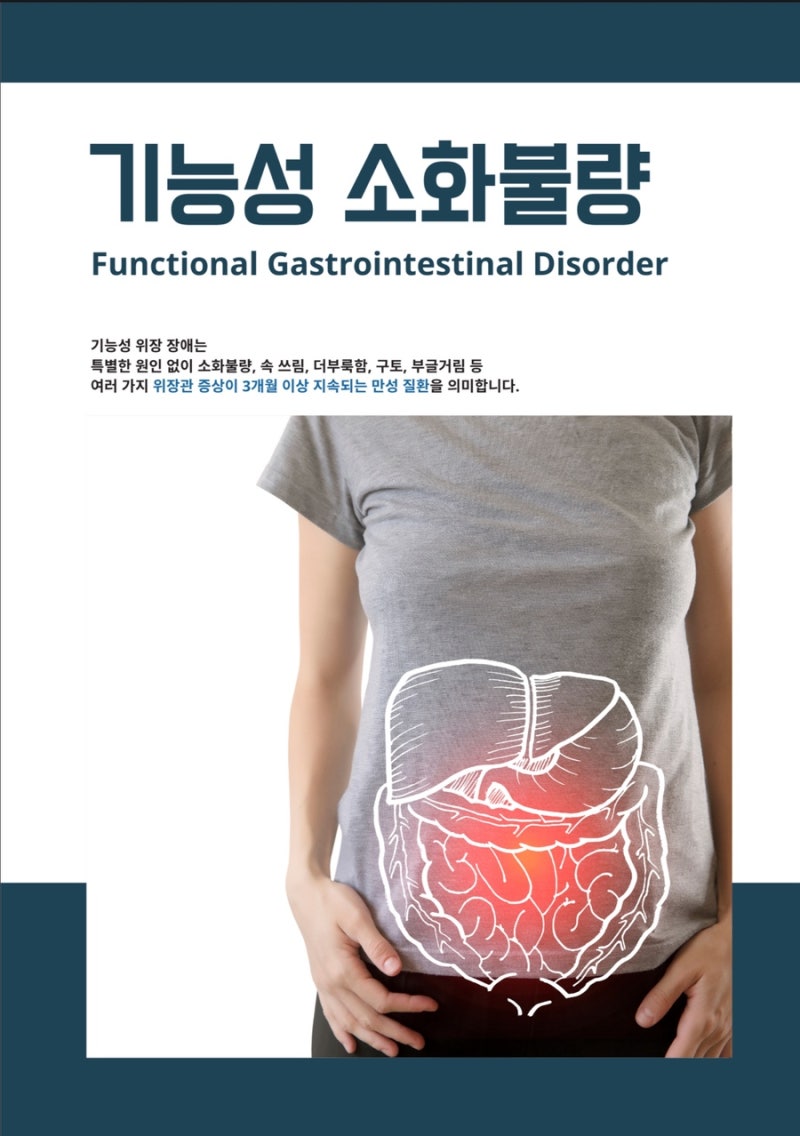
it is highly likely to be functional dyspepsia. Today, I would like to explain step by step how Korean medicine views and approaches functional dyspepsia, which we frequently encounter in the consultation room. What is functional dyspepsia? Recurrent digestive disorders without a specific cause.
Functional Dyspepsia Functional Gastrointestinal Disorder Recurrent digestive disorders without a specific cause. Functional gastrointestinal disorder refers to a chronic condition where various gastrointestinal symptoms such as indigestion, heartburn, bloating, vomiting, and gurgling persist for more than 3 months without a specific cause.
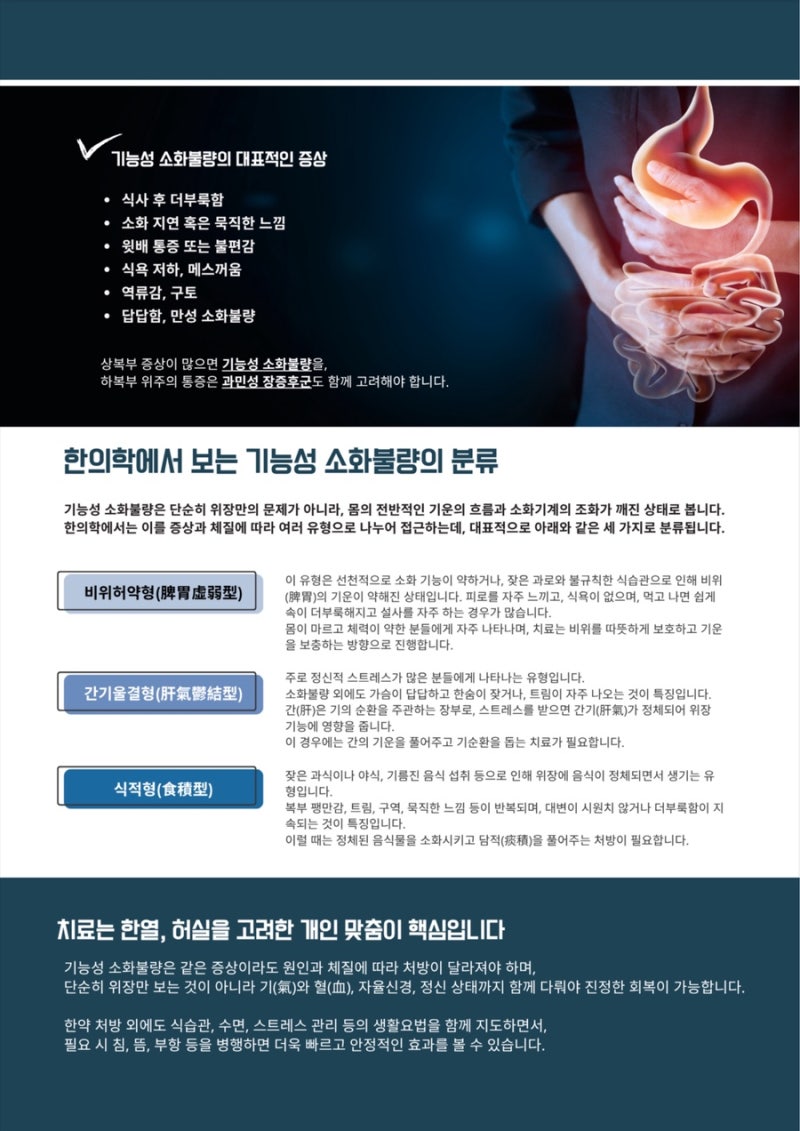
Representative Symptoms of Functional Dyspepsia What is functional dyspepsia? Recurrent digestive disorders without a specific cause. 📍 Bloating after meals 📍 Delayed digestion or a heavy feeling 📍 Upper abdominal pain or discomfort 📍 Loss of appetite, nausea 📍 Reflux sensation, vomiting 📍 Discomfort, chronic indigestion If there are many upper abdominal symptoms, functional dyspepsia should be considered, while pain primarily in the lower abdomen should also consider irritable bowel syndrome.
Classification of Functional Dyspepsia in Korean Medicine Sunyujae Korean Medicine Clinic, Suji-gu Functional dyspepsia is not merely a problem of the stomach and intestines, but rather a state where the overall flow of the body’s energy (qi) and the harmony of the digestive system are disrupted. In Korean medicine, it is approached by dividing it into several types according to symptoms and constitution, and is typically classified into the following three categories.
Spleen and Stomach Deficiency Type (脾胃虛弱型) Sunyujae Korean Medicine Clinic, Suji-gu This type is characterized by naturally weak digestive function or a weakened spleen and stomach (脾胃) energy due to frequent overwork and irregular eating habits. People often feel tired, have no appetite, easily feel bloated after eating, and frequently experience diarrhea. It often appears in individuals who are thin and have low physical stamina, and treatment focuses on warming and protecting the spleen and stomach and replenishing energy.
Liver Qi Stagnation Type (肝氣鬱結型) Sunyujae Korean Medicine Clinic, Suji-gu This type primarily appears in individuals experiencing significant mental stress. In addition to indigestion, it is characterized by chest tightness, frequent sighing, or frequent belching. The liver (肝) is the organ responsible for the circulation of qi, and when stressed, liver qi (肝氣) stagnates, affecting gastrointestinal function.
In this case, treatment is needed to relieve liver qi and promote qi circulation. Food Stagnation Type (食積型) Sunyujae Korean Medicine Clinic, Suji-gu This type arises when food stagnates in the stomach and intestines due to frequent overeating, late-night meals, or consumption of greasy foods. It is characterized by recurring abdominal distension, belching, nausea, a heavy feeling, and persistent incomplete bowel movements or bloating.
In such cases, prescriptions are needed to digest stagnant food and resolve ‘damjeok’ (痰積, phlegm-accumulation). Personalized treatment considering cold/heat and deficiency/excess is key. Suji-gu Korean Medicine Clinic For functional dyspepsia, even with similar symptoms, the prescription must vary according to the cause and constitution. True recovery is only possible by addressing not just the stomach and intestines, but also qi (氣), blood (血), the autonomic nervous system, and mental state.
In addition to herbal medicine prescriptions, by providing guidance on lifestyle therapies such as diet, sleep, and stress management, and if necessary, combining acupuncture, moxibustion, and cupping, faster and more stable effects can be achieved.
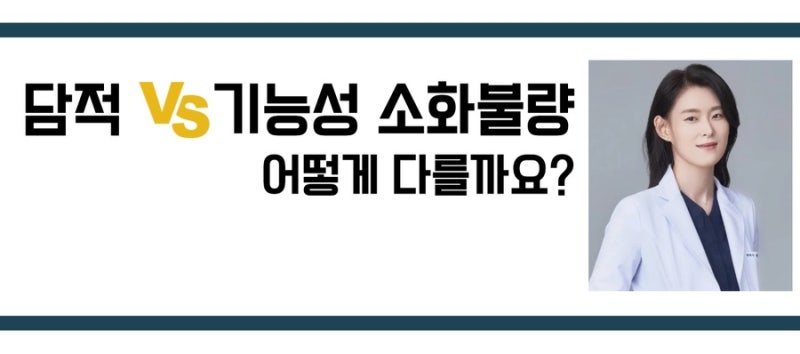
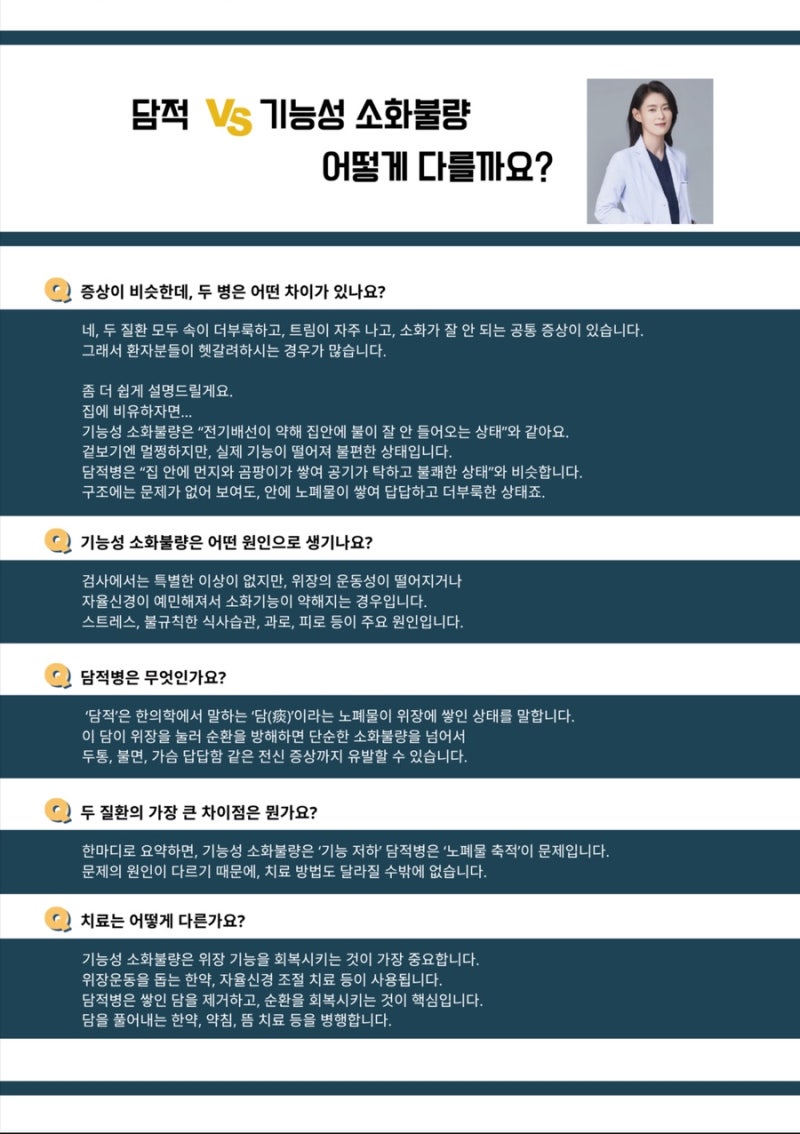
Q1. The symptoms are similar, but what is the difference between the two conditions? A. Yes, both conditions involve bloating,
frequent belching, and indigestion as common symptoms. This often causes confusion for patients. Let me explain it more simply.
To use a house analogy… Functional dyspepsia is like “a house where the lights don’t come on properly due to weak electrical wiring.” It looks fine on the outside, but its actual function is diminished, causing discomfort. Damjeok-byeong (phlegm-accumulation disease) is similar to “a house where dust and mold have accumulated, making the air stuffy and unpleasant.”
Even if the structure seems fine, waste products accumulate inside, leading to a stuffy and bloated feeling. Q2. What causes functional dyspepsia?
A. Although there are no specific abnormalities in tests, it is a case where digestive function weakens due to reduced gastric motility or a sensitive autonomic nervous system. Stress, irregular eating habits, overwork, and fatigue are major causes.
Q3. What is Damjeok-byeong? A. ‘Damjeok’ refers to a state where ‘dam’ (痰), a waste product in Korean medicine, accumulates in the stomach and intestines.
If this dam presses on the stomach and intestines, hindering circulation, it can lead to systemic symptoms beyond simple indigestion, such as headaches, insomnia, and chest tightness. Q4. What is the biggest difference between the two conditions?
A. In summary, functional dyspepsia is a problem of ‘functional decline,’ while Damjeok-byeong is a problem of ‘waste product accumulation.’ Because the causes of the problems are different, the treatment methods must also differ.
Q5. How do the treatments differ? A. For functional dyspepsia, restoring gastrointestinal function is paramount.
Herbal medicine that aids gastrointestinal motility, autonomic nervous system regulation treatment, and other therapies are used. For Damjeok-byeong, the key is to remove accumulated dam and restore circulation. Herbal medicine to resolve dam, pharmacopuncture, moxibustion, and other treatments are combined.
Q6. Can both conditions appear together? A. Yes, in actual clinical practice, both conditions often appear together.
Dam can accumulate when function is diminished, or conversely, prolonged accumulation of dam can weaken gastrointestinal function. Therefore, accurate diagnosis is paramount. Precise understanding allows for faster and more effective treatment.
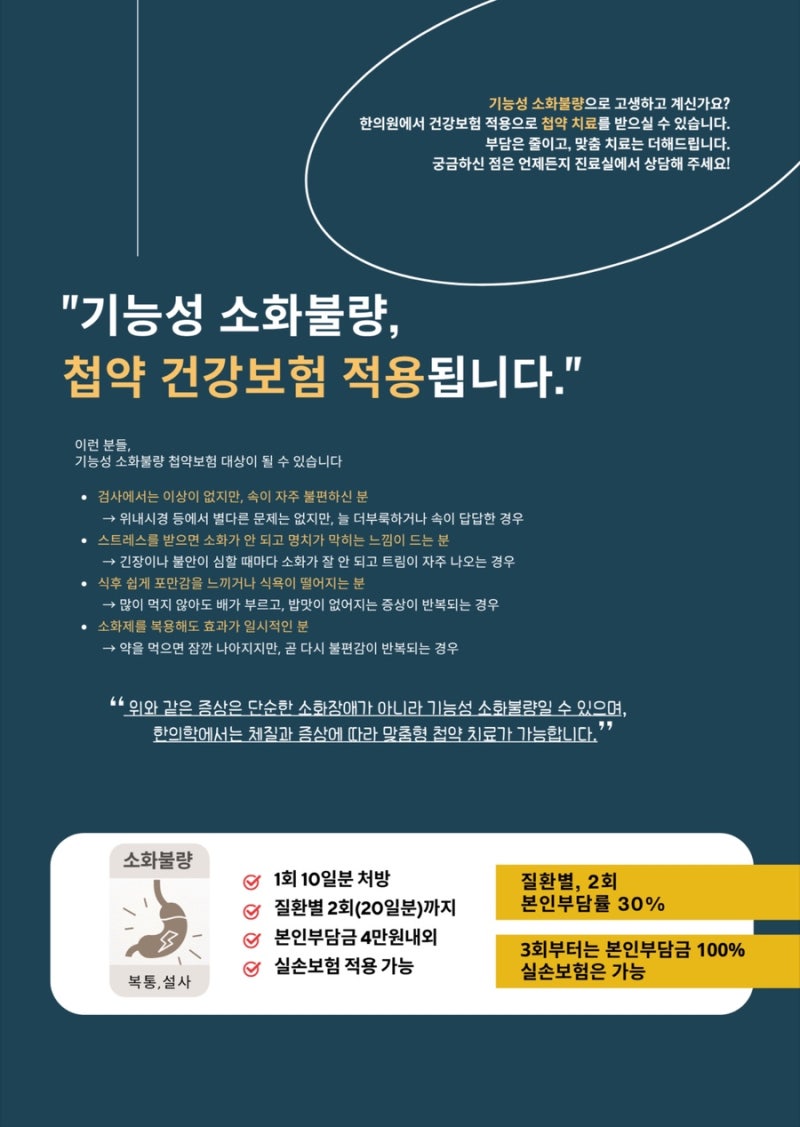
Are you experiencing discomfort due to functional dyspepsia? Sunyujae Korean Medicine Clinic Now, you can receive personalized herbal decoction treatment at our Korean medicine clinic with health insurance coverage. Reduce your treatment burden and effectively manage your condition with herbal medicine tailored to your body.
Please feel free to inquire anytime if you have any questions. https://m.blog.naver.com/sunyujae21/223928792774 https://m.blog.naver.com/sunyujae21/223927774294 👉 The image below contains content from Monthly Sunyujae, which you may find helpful.

We hope you will join Sunyujae Korean Medicine Clinic, which shares valuable information for a healthy life. Sunyujae Korean Medicine Clinic in Suji-gu pursues evidence-based medicine and integrative medicine.
This post was written directly by the medical staff of Sunyujae Korean Medicine Clinic to provide medical information, in compliance with Article 56(2) and Article 57(3) of the Medical Service Act. The duration and outcome of treatment may vary from person to person, so please consult a qualified practitioner before beginning treatment.
Consultation & Booking
Have questions? Reach us anytime via KakaoTalk or phone.