
![[선유재한의원] 골절 치료에 효과적인 한약](https://syjkmc.kr/wp-content/uploads/2026/06/223686338038_img_0.png)
Hello, I am Dr. Hyocheong Chae, director of Sunyujae Korean Medicine Clinic in Dongcheon-dong, a place where kindness resides.

In winter, bone fractures frequently occur due to the cold weather. During this period, the number of fracture patients visiting Korean medicine clinics also significantly increases. This is because roads freeze after snow or rain, or floors become slippery due to indoor-outdoor temperature differences, leading to frequent fall accidents.
In particular, age groups vulnerable to fractures, such as the elderly and children, require even more careful attention.
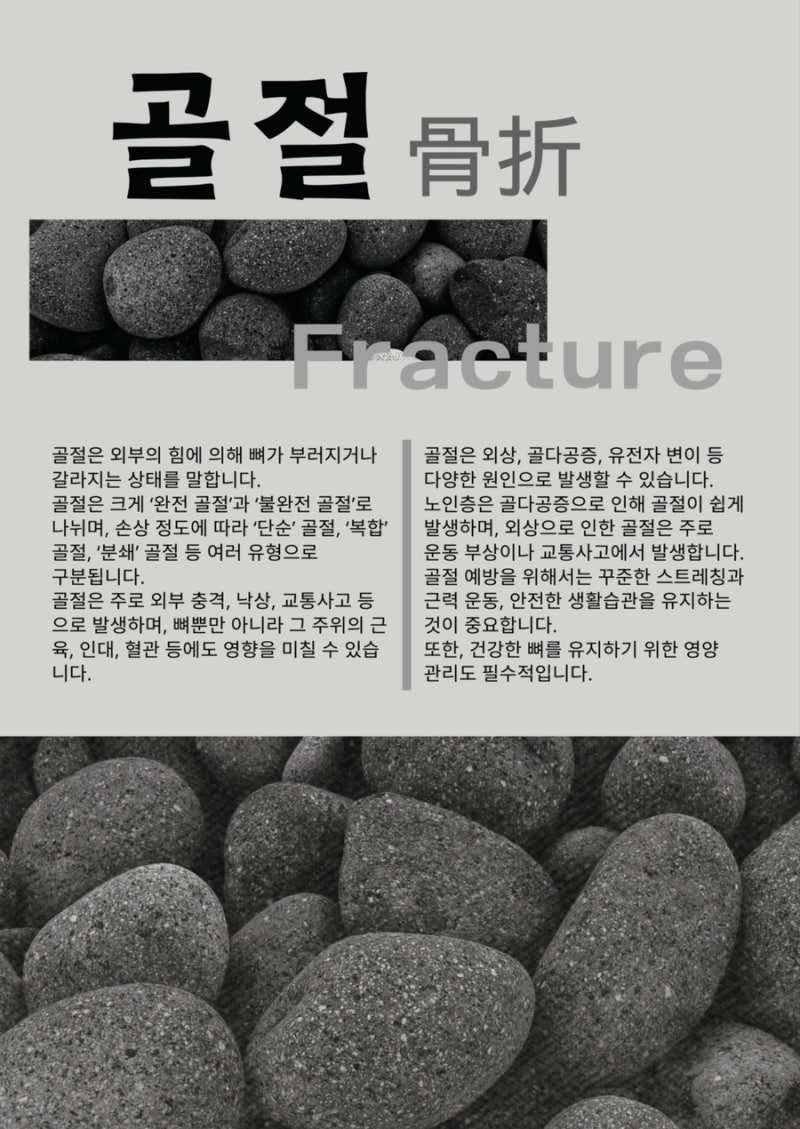
A fracture refers to a state where a bone breaks or cracks due to external force. Fractures are broadly divided into ‘complete fractures’ and ‘incomplete fractures,’ and are classified into various types depending on the extent of damage, such as ‘simple’ fractures, ‘compound’ fractures, and ‘comminuted’ fractures. Fractures primarily occur due to external impact, falls, or traffic accidents, and can affect not only the bone but also the surrounding muscles, ligaments, and blood vessels.
Fractures can occur due to various causes, including trauma, osteoporosis, and genetic mutations. The elderly are prone to fractures due to osteoporosis, while traumatic fractures primarily result from sports injuries or traffic accidents. To prevent fractures, it is important to maintain regular stretching and strength training, as well as safe lifestyle habits.
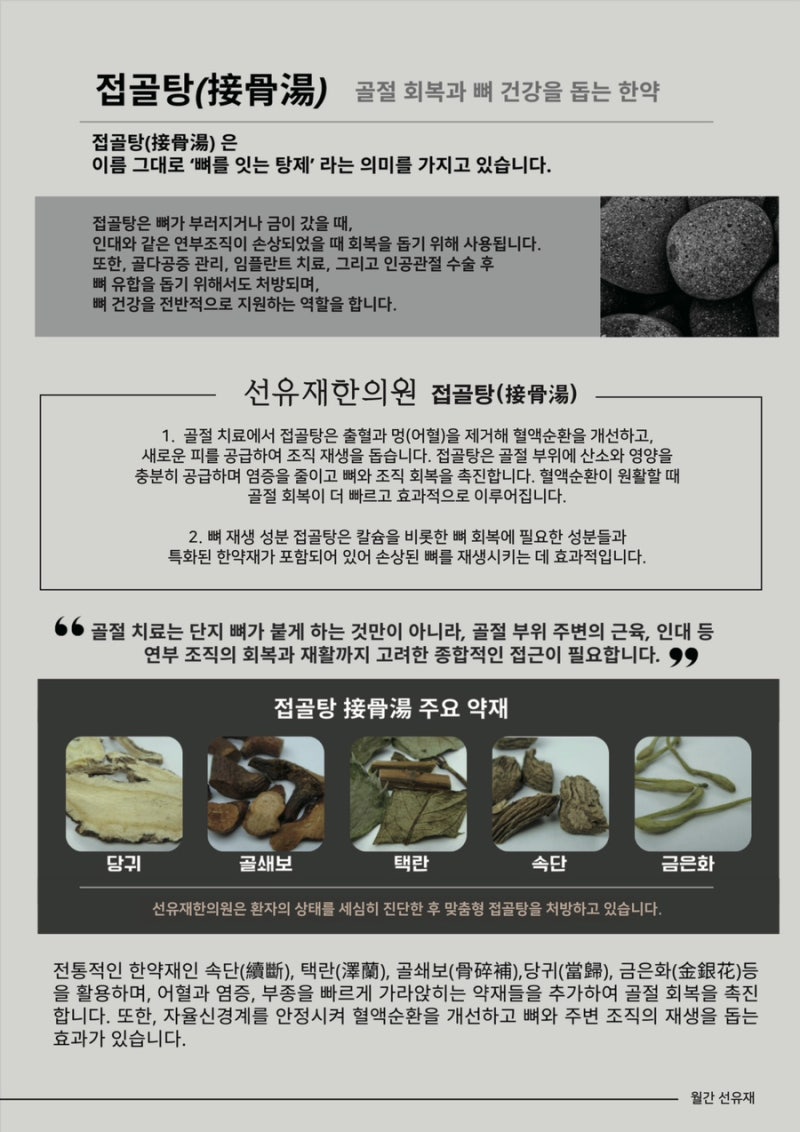
Furthermore, nutritional management is essential for maintaining healthy bones. Jeopgol-tang (接骨湯), a herbal medicine that aids fracture recovery and bone health, literally means ‘bone-connecting decoction.’ At Sunyujae Korean Medicine Clinic, we enhance the treatment effect of Jeopgol-tang by adding herbs that stabilize the autonomic nervous system. 1. In fracture treatment, Jeopgol-tang removes bleeding and bruises (stagnated blood) to improve blood circulation,
supplies new blood to aid tissue regeneration. Jeopgol-tang adequately supplies oxygen and nutrients to the fractured area, reduces inflammation, and promotes bone and tissue recovery. When blood circulation is smooth, fracture recovery occurs more quickly and effectively.
2. Bone Regeneration Ingredients 2. Jeopgol-tang, with its bone regeneration ingredients, contains calcium and other components necessary for bone recovery, along with specialized herbal medicines, making it effective in regenerating damaged bones. Fracture treatment requires a comprehensive approach that considers not only bone union but also the recovery and rehabilitation of soft tissues such as muscles and ligaments around the fractured area.
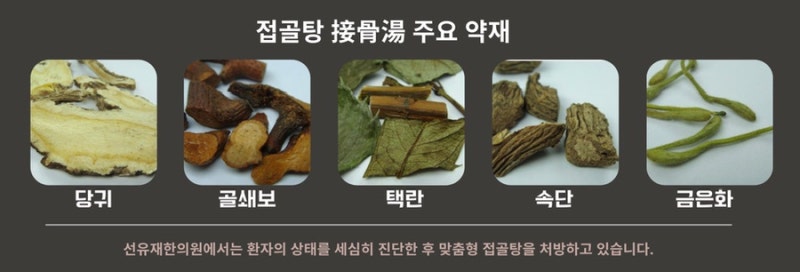
It utilizes traditional herbal medicines such as Sokdan (Dipsacus asper), Taekran (Lycopus lucidus), Golsaebo (Dryopteris crassirhizoma), Dangui (Angelica gigas), and Geumeunhwa (Lonicera japonica), and adds herbs that quickly reduce stagnated blood, inflammation, and swelling to promote fracture recovery. Furthermore, it has the effect of stabilizing the autonomic nervous system, improving blood circulation, and aiding the regeneration of bones and surrounding tissues.
Herbal medicine is very effective in promoting bone union for fracture treatment. Our ancestors also used herbal medicine for fracture treatment. Herbal medicine not only helps bones unite but also exhibits excellent efficacy in alleviating swelling and pain caused by fractures, and assisting the bone recovery process.
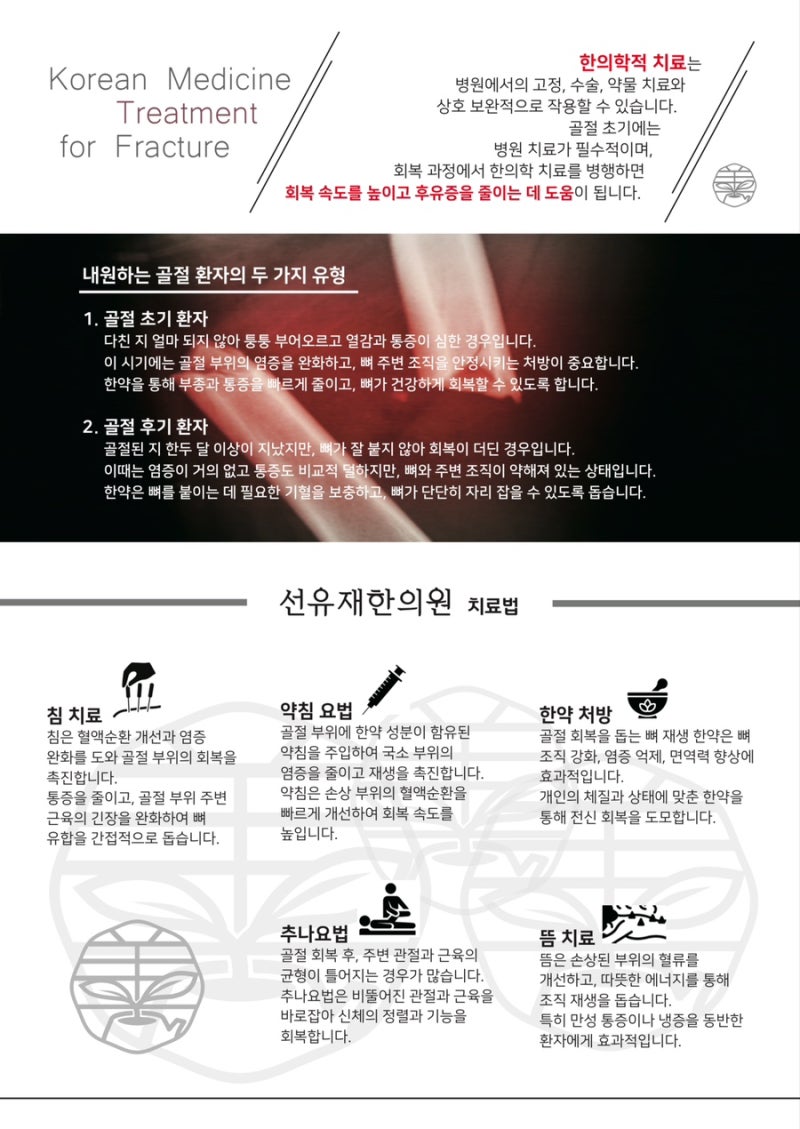
Fracture treatment prescriptions may vary depending on the patient’s condition. Specifically, the treatment direction is set differently depending on whether it is an early stage fracture that occurred recently, or a later stage where recovery has slowed over time.
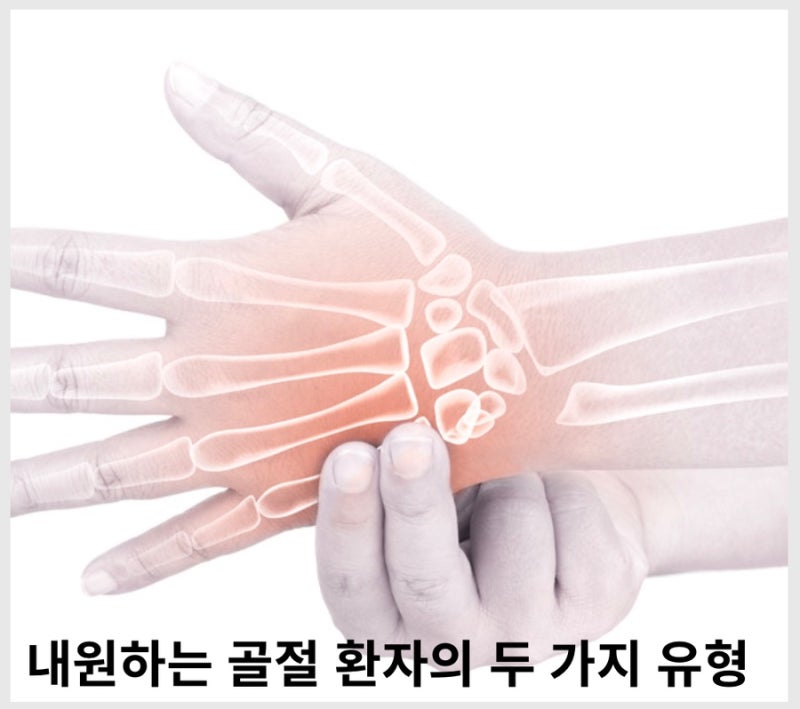
1️⃣ Early Stage Fracture 1️⃣ Early stage fracture patients • This refers to cases where the injury occurred recently, resulting in severe swelling, heat, and pain. • During this period, prescriptions that alleviate inflammation in the fractured area and stabilize the surrounding bone tissues are important. • Herbal medicine helps quickly reduce swelling and pain, allowing the bone to recover healthily.
2️⃣ Late stage fracture patients • This refers to cases where one or two months or more have passed since the fracture, but the bone is not uniting well, and recovery is slow. • At this stage, there is usually little inflammation and relatively less pain, but the bone and surrounding tissues are weakened. • Herbal medicine replenishes the Qi and blood necessary for bone union and helps the bone to firmly set.
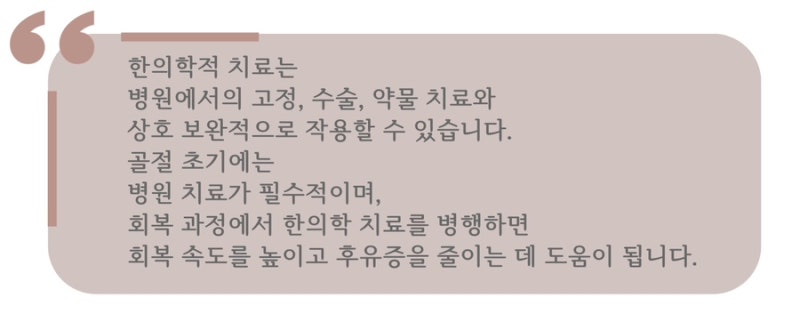
Sunyujae Korean Medicine Clinic Treatment Methods 1. Acupuncture treatment • Acupuncture improves blood circulation and reduces inflammation, promoting recovery of the fractured area. • It reduces pain and relaxes muscle tension around the fractured area, indirectly aiding bone union. 2. Pharmacopuncture therapy
• Pharmacopuncture containing herbal medicine ingredients is injected into the fractured area to reduce local inflammation and promote regeneration. • Pharmacopuncture rapidly improves blood circulation in the injured area, accelerating the recovery process. 3. Herbal medicine prescription • Bone-regenerating herbal medicine, which aids fracture recovery, is effective in strengthening bone tissue, suppressing inflammation, and boosting immunity.
• We promote overall recovery through herbal medicine tailored to each individual’s constitution and condition. 4. Chuna manual therapy • After fracture recovery, the balance of surrounding joints and muscles is often misaligned.
• Chuna manual therapy corrects misaligned joints and muscles, restoring the body’s alignment and function. 5. Moxibustion treatment • Moxibustion improves blood flow to the injured area and aids tissue regeneration through warm energy.
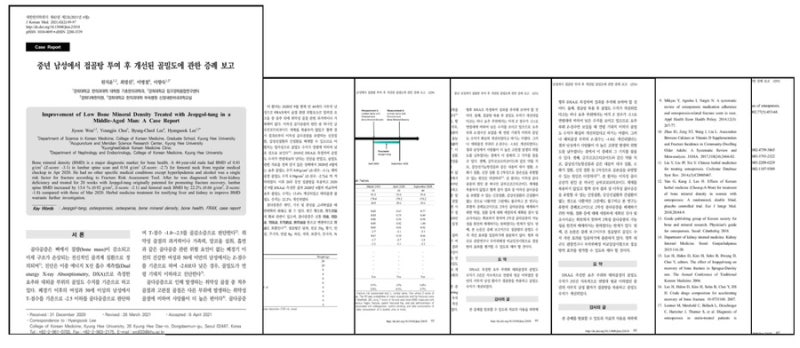
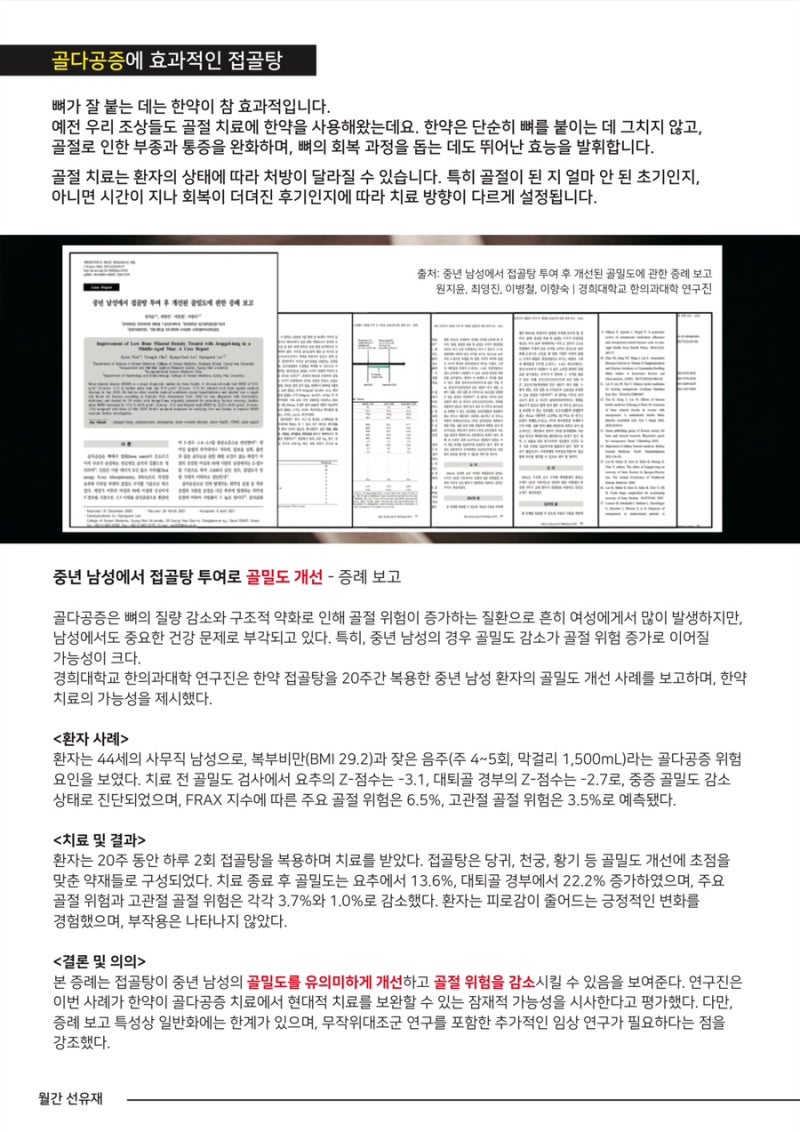
• It is particularly effective for patients with chronic pain or coldness. Jeopgol-tang is also effective for osteoporosis Bone Density Improvement with Jeopgol-tang Administration in Middle-Aged Men – A Case Report Osteoporosis is a disease characterized by reduced bone mass and structural weakening, leading to an increased risk of fractures. While commonly observed in women, it is also emerging as a significant health concern in men. In particular, in middle-aged men, decreased bone density is highly likely to lead to an increased risk of fractures.
Researchers at Kyung Hee University College of Korean Medicine reported a case of bone density improvement in a middle-aged male patient who took herbal medicine Jeopgol-tang for 20 weeks, suggesting the potential of herbal medicine treatment. Patient Case The patient was a 44-year-old office worker who exhibited risk factors for osteoporosis, including abdominal obesity (BMI 29.2) and frequent alcohol consumption (4-5 times a week, 1,500mL of makgeolli). Pre-treatment bone density tests showed a lumbar spine Z-score of -3.1 and a femoral neck Z-score of -2.7, diagnosing severe bone density loss. The predicted major fracture risk according to the FRAX index was 6.5%, and hip fracture risk was 3.5%.
Treatment and Results The patient received treatment by taking Jeopgol-tang twice a day for 20 weeks. Jeopgol-tang was composed of herbal medicines focused on improving bone density, including Dangui (Angelica gigas), Cheongung (Cnidium officinale), and Hwanggi (Astragalus membranaceus). After the completion of treatment, bone density increased by 13.6% in the lumbar spine and 22.2% in the femoral neck, while the risk of major fractures and hip fractures decreased to 3.7% and 1.0%, respectively.
The patient experienced positive changes, including reduced fatigue, and no side effects were observed. Conclusion and Significance This case demonstrates that Jeopgol-tang can significantly improve bone density and reduce fracture risk in middle-aged men. The researchers evaluated this case as suggesting the potential for herbal medicine to complement modern treatments for osteoporosis.
However, they emphasized that due to the nature of a case report, there are limitations to generalization, and further clinical studies, including randomized controlled trials, are needed. Source: A Case Report on Improved Bone Mineral Density After Jeopgol-tang Administration in a Middle-Aged Man Won Ji-yoon, Choi Young-jin, Lee Byung-chul, Lee Hyang-sook | Researchers at Kyung Hee University College of Korean Medicine
If you need more detailed information about fracture treatment, please feel free to contact Sunyujae Korean Medicine Clinic at any time.
Sunyujae Korean Medicine Clinic in Dongcheon-dong pursues evidence-based and integrative medicine.
This post was written directly by the medical staff of Sunyujae Korean Medicine Clinic to provide medical information, in compliance with Article 56(2) and Article 57(3) of the Medical Service Act. The duration and outcome of treatment may vary from person to person, so please consult a qualified practitioner before beginning treatment.
Consultation & Booking
Have questions? Reach us anytime via KakaoTalk or phone.