
![[Sunyujae Korean Medicine Clinic] Metabolic Syndrome Diet Management: The Core of Treatment and Prevention](https://syjkmc.kr/wp-content/uploads/2026/06/224283478255_img_0.jpeg)
Hello, this is Sunyujae Korean Medicine Clinic, a place where good intentions reside.


One of the common health problems among modern people is Metabolic Syndrome. It refers to a phenomenon where blood pressure, blood sugar, weight, and blood lipid levels become imbalanced together. In the early stages, there are no specific symptoms, making it easy to overlook. However, in the long term, it can be linked to various health risks, requiring consistent management.
One of the most important lifestyle factors in managing Metabolic Syndrome is diet. Beyond simple weight control, diet directly influences blood sugar, blood pressure, lipid balance, and inflammation control. Let’s find out together why diet is important in Metabolic Syndrome.
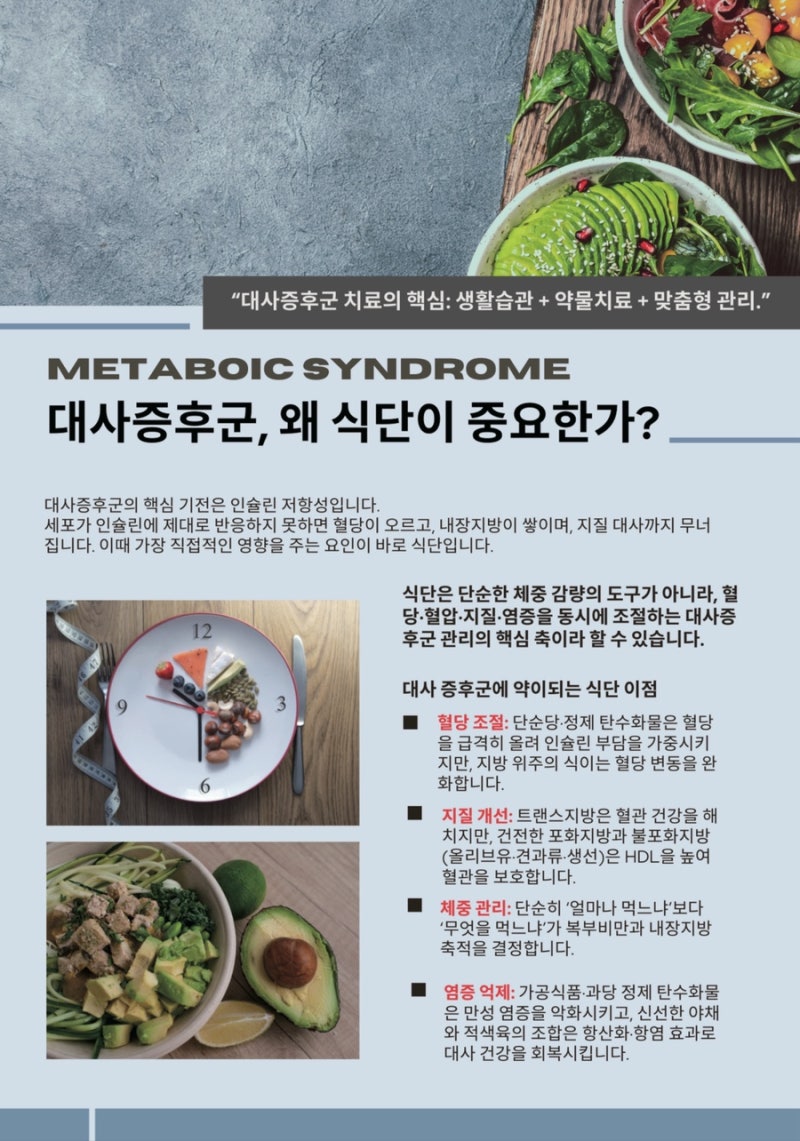
Metabolic Syndrome, Why Diet? Is it important? Metabolic Syndrome Suji-gu Sunyujae Korean Medicine Clinic “The Core of Metabolic Syndrome Treatment: Lifestyle + Medication + Personalized Management.” Suji-gu Dongcheon-dong Sunyujae Korean Medicine Clinic The core mechanism of Metabolic Syndrome is insulin resistance. If cells do not respond properly to insulin, blood sugar rises, visceral fat accumulates, and lipid metabolism breaks down.
At this time, the most direct influencing factor is diet. Diet is not merely a tool for weight loss, but can be considered a core pillar of Metabolic Syndrome management, simultaneously controlling blood sugar, blood pressure, lipids, and inflammation. Dietary Benefits for Metabolic Syndrome Suji-gu Dongcheon-dong Sunyujae Korean Medicine Clinic
Blood Sugar Control — Simple sugars and refined carbohydrates rapidly raise blood sugar, increasing insulin burden, while a fat-centric diet mitigates blood sugar fluctuations.
Lipid Improvement — Trans fats harm vascular health, but healthy unsaturated fats (olive oil, nuts, fish) raise HDL and protect blood vessels.
Weight Weight Management — What you eat, rather than simply ‘how much’ you eat, determines abdominal obesity and visceral fat accumulation.
Inflammation Suppression — Processed foods and fructose-refined carbohydrates worsen chronic inflammation, while a combination of fresh vegetables and red meat restores metabolic health with antioxidant and anti-inflammatory effects.
Metabolic Syndrome is not resolved by one specific method; rather, management is aided when a balance of diet, exercise, and lifestyle habits is achieved together. In particular, diet is the most common yet effective management tool, so it is important to check the types and balance of foods you normally consume. Even small changes, if consistently maintained, can lead our bodies toward a healthier and more stable state.
Going forward, we will continue to provide health management information for daily life on the Sunyujae Korean Medicine Clinic blog. https://m.blog.naver.com/sunyujae21/224003655623 👉 Please refer to the image below, which contains content from Monthly Sunyujae.

Valuable information for a healthy life We hope you will join Sunyujae Korean Medicine Clinic in sharing. Suji-gu Korean Medicine Clinic Sunyujae pursues evidence-based medicine and integrative medicine.

This post was written directly by the medical staff of Sunyujae Korean Medicine Clinic to provide medical information, in compliance with Article 56(2) and Article 57(3) of the Medical Service Act. The duration and outcome of treatment may vary from person to person, so please consult a qualified practitioner before beginning treatment.
Consultation & Booking
Have questions? Reach us anytime via KakaoTalk or phone.