
When I meet patients in the clinic, it’s not uncommon for them to say, “My finger feels like it’s catching, but it will probably get better with time, right?” Initially, many people dismiss it as simple fatigue from overusing their hands. However, if you repeatedly experience a ‘clicking’ or catching sensation when bending and straightening your finger, you should consider the possibility of trigger finger syndrome, rather than just simple fatigue.
Finger conditions are more common than you might think. Especially with increased smartphone use, computer work, and repetitive hand tasks, continuous strain accumulates on the finger tendons. This repetitive use can create microscopic inflammation in the tendons and surrounding tissues, which over time can lead to stenosing tenosynovitis, where the tendon’s pathway narrows.
In today’s post, I will explain why fingers catch and the mechanism behind trigger finger syndrome.


Hello, this is Sunyujae Korean Medicine Clinic, where kind hearts reside. Trigger Finger is medically classified as Stenosing Tenosynovitis. Sunyujae Korean Medicine Clinic
Reasons for Fingers Catching: Trigger Finger Syndrome – Trigger Finger. Some people experience a ‘clicking’ or catching sensation when they straighten their fingers in the morning. Initially, it’s easy to dismiss it as simply due to overusing the hands, but if this symptom recurs, it could be trigger finger syndrome.
Trigger finger is a condition characterized by a distinctive symptom where the finger catches and then springs open when bending and straightening it, much like pulling the trigger of a gun. It is a more common condition than expected, and its incidence is particularly increasing among modern people who frequently use their hands. Due to computer keyboard use, increased smartphone use, and repetitive hand tasks, continuous strain is placed on the finger tendons, leading to an increased incidence even among younger age groups recently.
It is also known that the risk of developing it increases in individuals with diabetes, rheumatic diseases, or thyroid conditions. Small Signals from Your Fingers. When I meet patients in the clinic, many say, “My finger feels a bit uncomfortable, but it will probably get better with time, right?” Especially since trigger finger syndrome often begins with simple finger stiffness, many people dismiss it as minor and overlook it.
However, fingers are one of the most frequently used body parts throughout our day. In every small action, such as holding a cup, writing, or using a smartphone, the tendons and joints of the fingers work together. Within these repetitive movements, increased friction between the tendon and its sheath can lead to microscopic inflammation and swelling, and over time, the pathway through which the tendon passes narrows.
Initially, it may start as simple stiffness, but it can gradually progress to a catching sensation, pain, and limited movement. If these early signals are overlooked, the thickening of the tendon and narrowing of the tendon sheath can gradually advance, making the symptoms more pronounced.
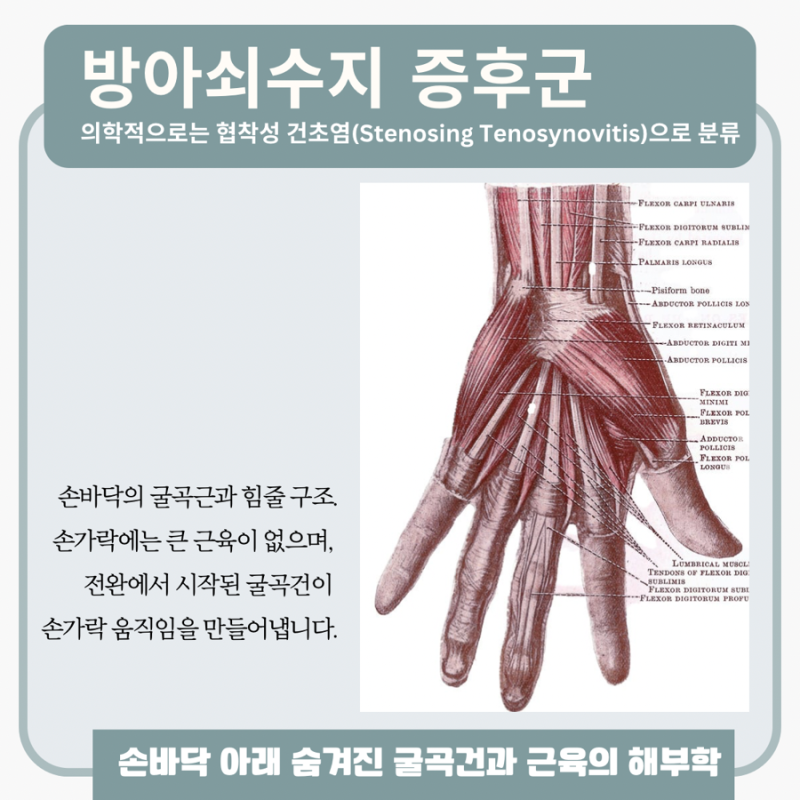
Mechanism of Trigger Finger Development. Fingers do not have large muscles as we might imagine. The force that moves the fingers originates from the flexor muscles in the forearm. The flexor tendons, which extend from these muscles, pass through the palm and reach the fingertips, creating the movements of bending and straightening the fingers.
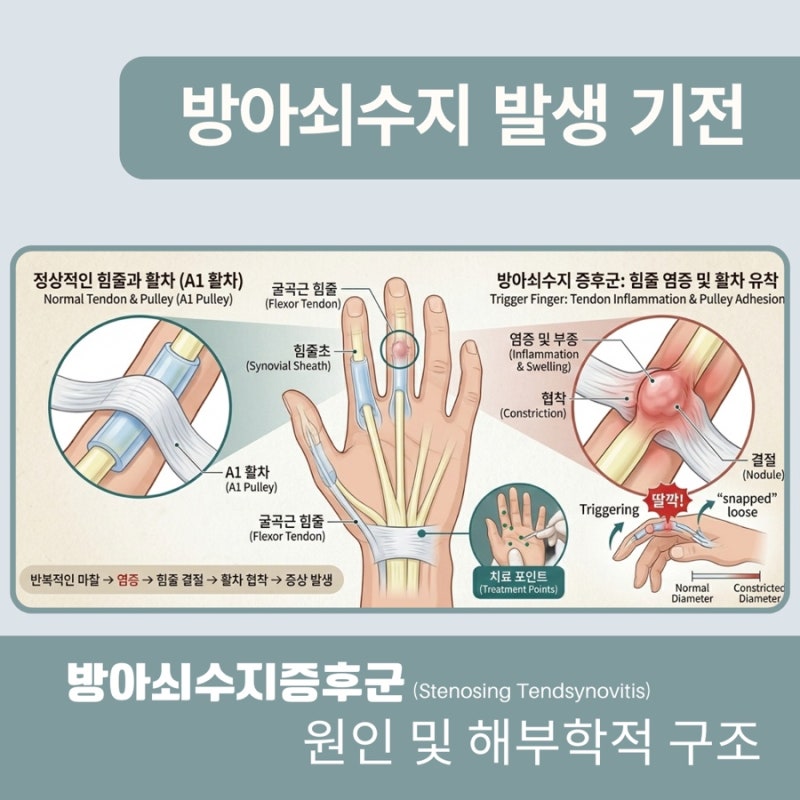
Tendons pass through a lubricating membrane called the tendon sheath, which protects them to move without friction. Additionally, a structure called a pulley holds the tendon in place, preventing it from detaching from the bone. Specifically, the A1 pulley is located where the palm meets the finger.
This is an important pathway for the tendon, and if this area narrows or thickens, the tendon will catch when passing through. At this point, a ‘clicking’ or catching phenomenon occurs when bending or straightening the finger, which is the main mechanism by which trigger finger develops.
Initially, it often starts with a slight catching sensation in the finger. Many people dismiss it as minor, but if the symptoms recur, it can progress to a state where the finger cannot be fully straightened, or in severe cases, requires the other hand to straighten it. It is also common for trigger finger symptoms to feel worse in the morning.
Because the fingers are barely moved during the night, the tissues around the tendons temporarily stiffen, which can make the catching sensation more pronounced when the finger is first moved. Even a small discomfort in your finger can be a signal from your body. If symptoms recur, identifying the cause and receiving appropriate Korean medicine treatment can help preserve hand function.
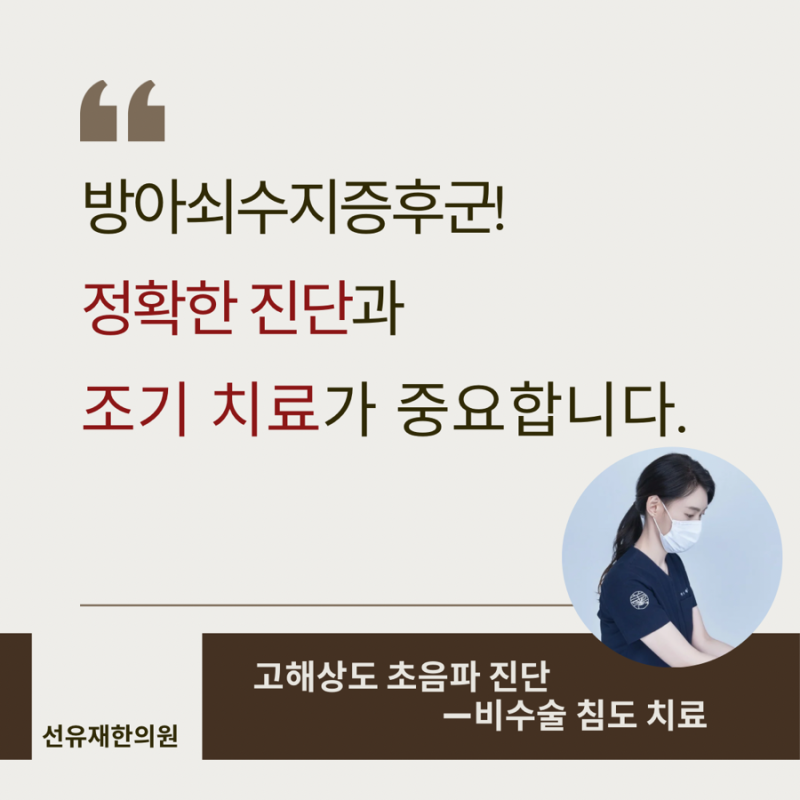
At Sunyujae Korean Medicine Clinic in Suji-gu, we use high-resolution ultrasound to accurately assess the condition of tendons and surrounding tissues for hand and finger disorders, and we work with patients to determine the most suitable treatment plan for their condition. If you experience uncomfortable finger movement or a persistent catching sensation, please consult us to have your current condition checked.
https://m.blog.naver.com/sunyujae21/224214684820
We hope you will join Sunyujae Korean Medicine Clinic in sharing valuable information for a healthy life. Sunyujae Korean Medicine Clinic in Suji-gu pursues evidence-based medicine and integrative medicine.
This post was written directly by the medical staff of Sunyujae Korean Medicine Clinic to provide medical information, in compliance with Article 56(2) and Article 57(3) of the Medical Service Act. The duration and outcome of treatment may vary from person to person, so please consult a qualified practitioner before beginning treatment.
Consultation & Booking
Have questions? Reach us anytime via KakaoTalk or phone.