![[수지 동천동 선유재 한의원] 수족냉증에 효과적인 한의치료](https://syjkmc.kr/wp-content/uploads/2026/06/223686334161_img_0.png)
Hello, I am Dr. Hyocheong Chae, director of Sunyujae Korean Medicine Clinic in Dongcheon-dong, a place where good hearts reside.
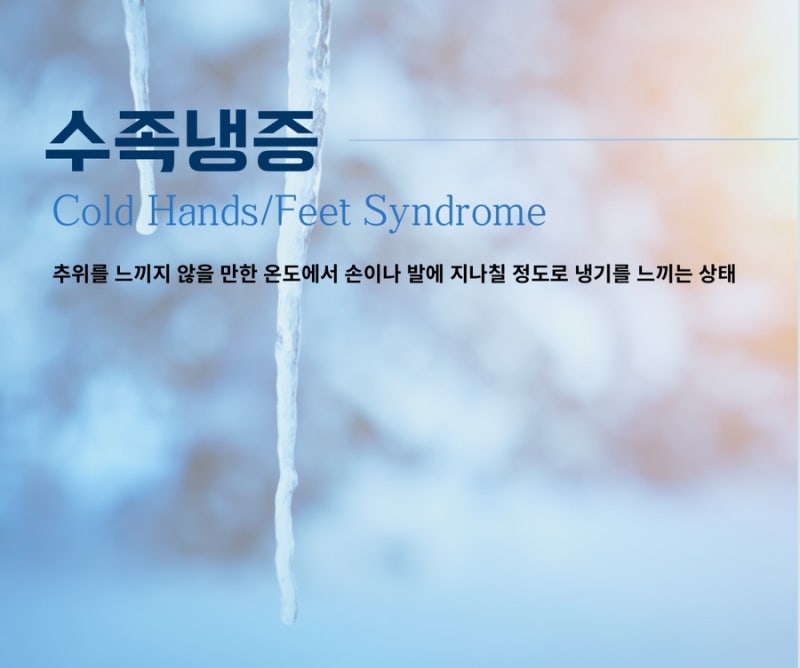
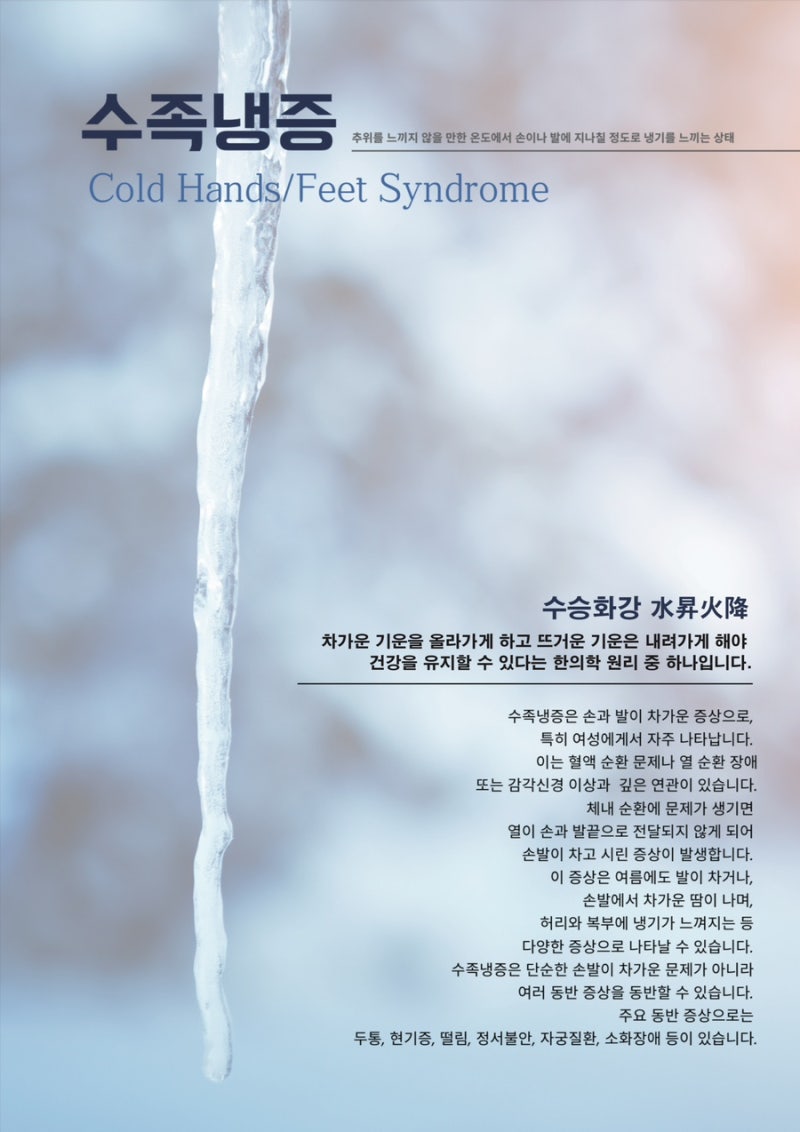
Cold hands and feet, particularly common in women, are symptoms where the hands and feet feel cold. This is deeply related to blood circulation problems, heat circulation disorders, or sensory nerve thalamus. When there is a problem with internal circulation, heat is not delivered to the fingertips, leading to cold and numb hands and feet.
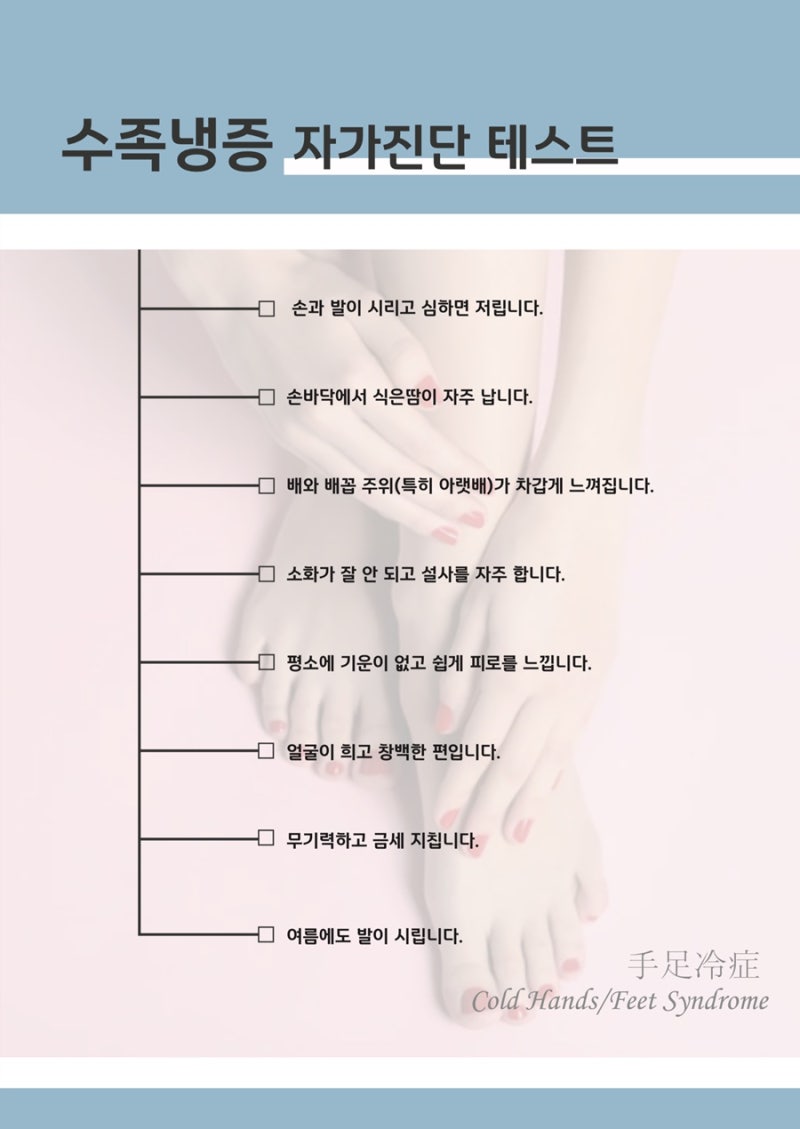
These symptoms can manifest in various ways, such as cold feet even in summer, cold sweat on hands and feet, and a sensation of coldness in the lower back and abdomen. Cold hands and feet are not merely a problem of cold extremities but can be accompanied by various other symptoms. Major accompanying symptoms include headaches, dizziness, tremors, emotional instability, uterine diseases, and digestive disorders.
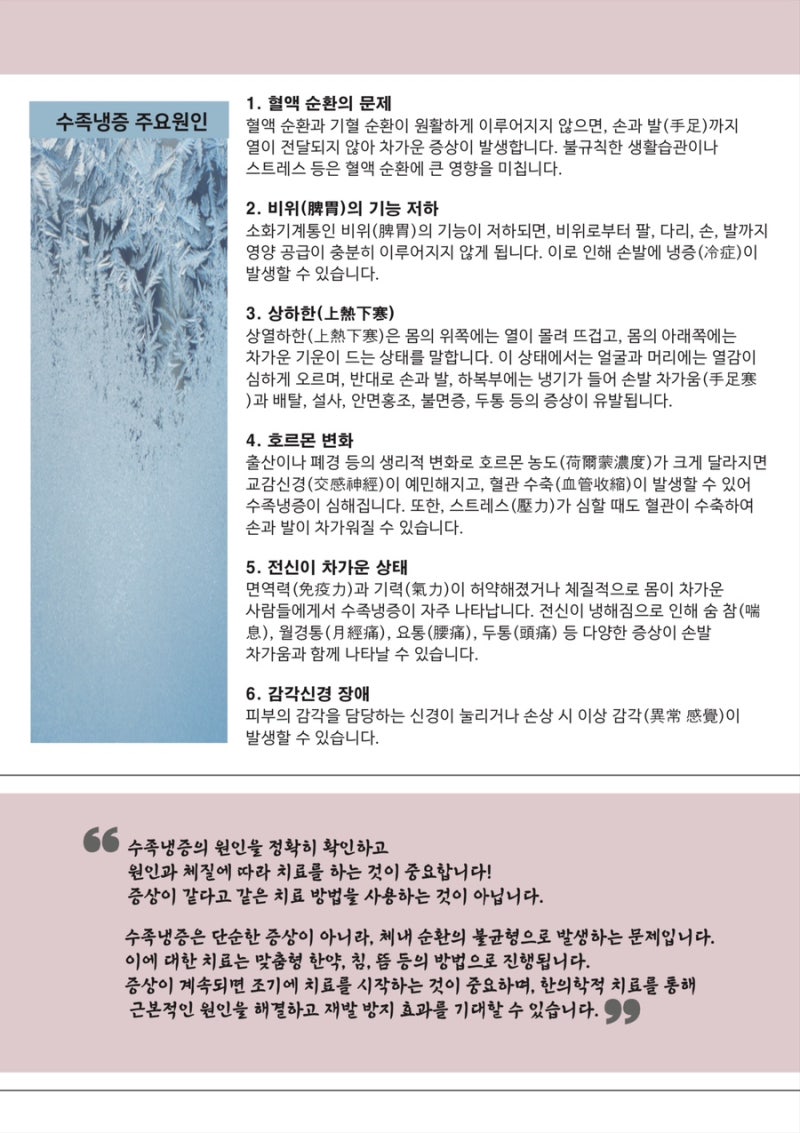
Main Causes of Cold Hands and Feet 1. Blood Circulation Problems When blood and qi-blood circulation are not smooth, heat is not delivered to the hands and feet, causing cold symptoms. Irregular lifestyle habits and stress significantly affect blood circulation.
2. Weakened Spleen and Stomach Function When the function of the spleen and stomach, which are part of the digestive system, is weakened, insufficient nutrition is supplied from the spleen and stomach to the arms, legs, hands, and feet. This can lead to coldness in the hands and feet.
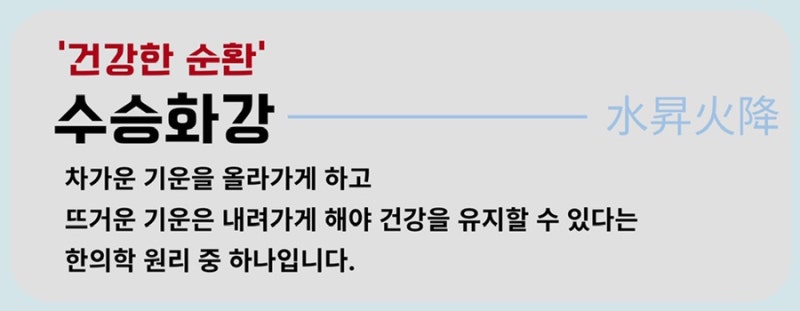
3. Upper Heat, Lower Cold (上熱下寒) Upper heat, lower cold (상열하한) refers to a state where heat is concentrated in the upper part of the body, making it hot, while the lower part of the body feels cold. In this state, the face and head experience severe heat, while conversely, the hands, feet, and lower abdomen feel cold, leading to cold hands and feet, stomachaches, diarrhea, facial flushing, insomnia, and headaches.
4. Hormonal Changes When hormone levels significantly change due to physiological changes such as childbirth or menopause, the sympathetic nervous system can become sensitive, and blood vessel constriction may occur, worsening cold hands and feet. Additionally, severe stress can also constrict blood vessels, making hands and feet cold.
5. Overall Cold State 5. Overall Cold State Cold hands and feet frequently appear in people with weak immunity and vitality or those who are constitutionally cold. As the entire body becomes cold, various symptoms such as shortness of breath, menstrual pain, lower back pain, and headaches can occur along with cold hands and feet.
6. Sensory Nerve Disorder When the nerves responsible for skin sensation are compressed or damaged, abnormal sensations can occur. The Importance of Personalized Korean medicine treatment for Cold Hands and Feet based on Constitution Cold hands and feet are widely known as a symptom where the hands and feet feel cold.
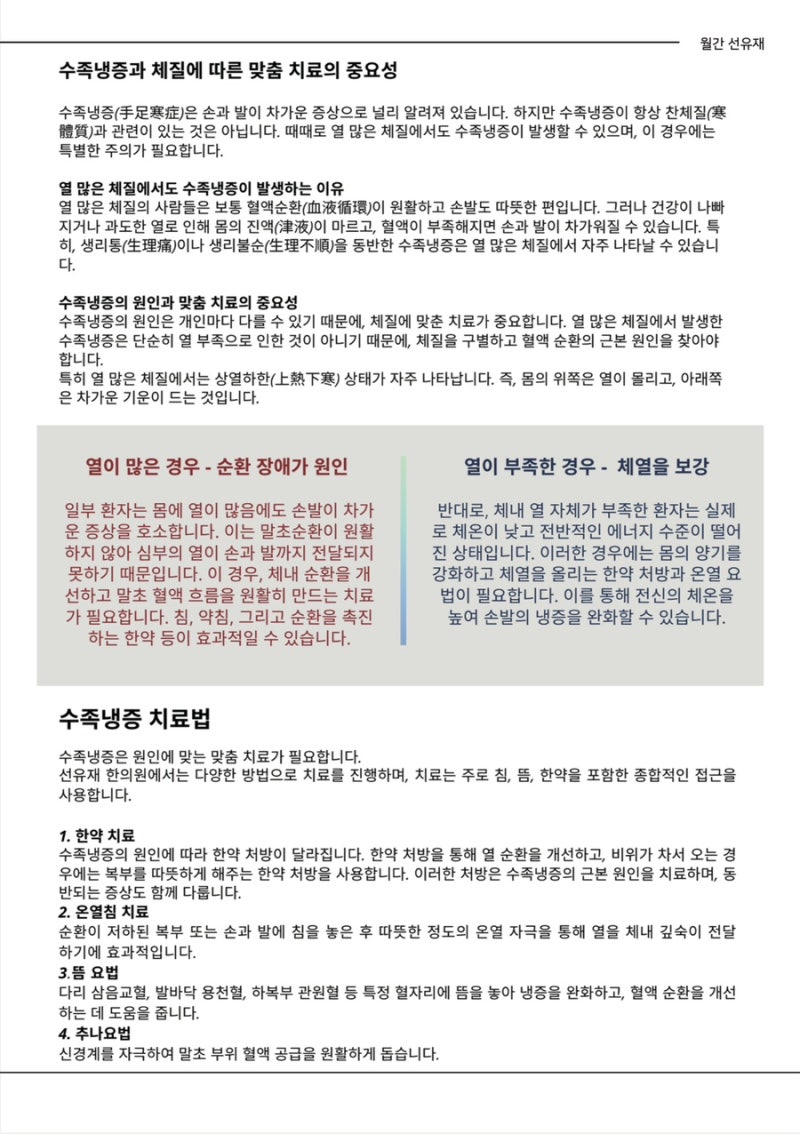
However, cold hands and feet are not always related to a cold constitution. Sometimes, cold hands and feet can occur even in people with a hot constitution, in which case special attention is needed. Reasons why cold hands and feet occur even in a hot constitution People with a hot constitution usually have smooth blood circulation and warm hands and feet.
However, if their health deteriorates or excessive heat dries up the body’s fluids and causes blood deficiency, their hands and feet can become cold. In particular, cold hands and feet accompanied by menstrual cramps or irregular menstruation can frequently appear in people with a hot constitution. The Importance of Causes and Personalized Korean medicine treatment for Cold Hands and Feet Since the causes of cold hands and feet can vary from person to person, personalized Korean medicine treatment based on one’s constitution is important.
Cold hands and feet that occur in a hot constitution are not simply due to a lack of heat, so it is necessary to differentiate the constitution and find the root cause of the blood circulation problem. Especially in a hot constitution, an upper heat, lower cold state often appears. That is, heat is concentrated in the upper part of the body, and cold energy is present in the lower part.
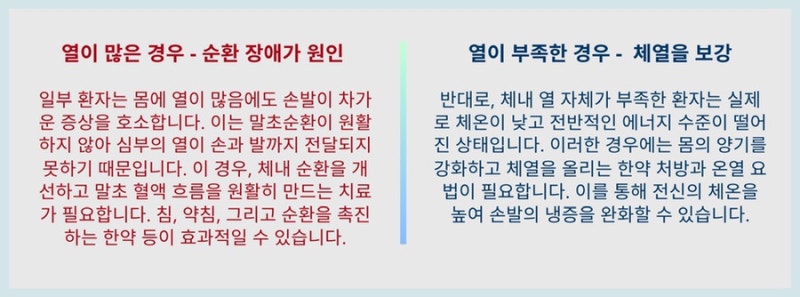
Cold hands and feet require personalized Korean medicine treatment tailored to their cause. Sunyujae Korean Medicine Clinic provides Korean medicine treatment using various methods, primarily a comprehensive approach including acupuncture, moxibustion, and herbal medicine. 1. Herbal Medicine Treatment
Herbal medicine prescriptions vary depending on the cause of cold hands and feet. Herbal medicine prescriptions are used to improve heat circulation, and in cases where the spleen and stomach are cold, herbal medicine prescriptions that warm the abdomen are used. These prescriptions treat the root cause of cold hands and feet and also address accompanying symptoms.
2. Warm Acupuncture Treatment After applying acupuncture to the abdomen or hands and feet where circulation is poor, warm thermal stimulation is effective in delivering heat deep into the body. 3. Moxibustion Therapy
Moxibustion is applied to specific acupuncture points such as Sanyinjiao on the leg, Yongquan on the sole of the foot, and Guanyuan on the lower abdomen to alleviate coldness and help improve blood circulation. 4. Chuna Manual Therapy It stimulates the nervous system to help smooth blood supply to peripheral areas.
It is important to accurately identify the cause of cold hands and feet and treat it according to the cause and constitution! The same symptoms do not mean the same treatment method should be used. Cold hands and feet are not just a symptom, but a problem caused by an imbalance in internal circulation.
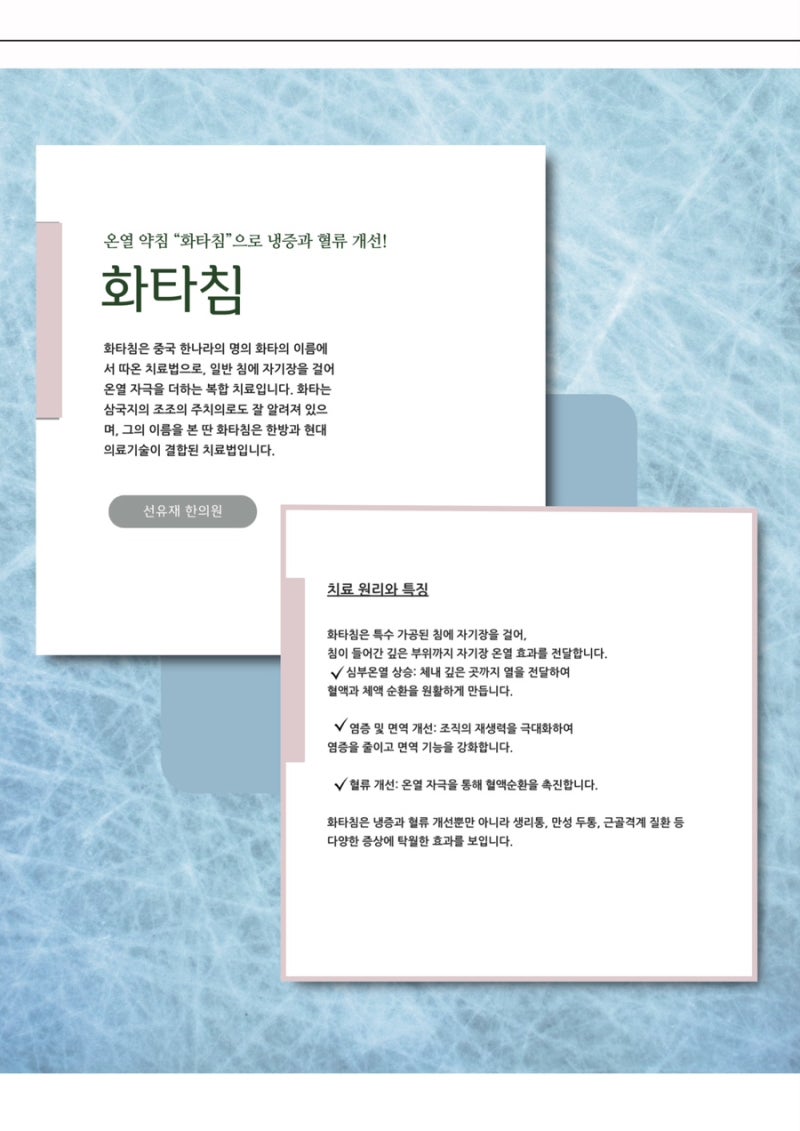
Korean medicine treatment for this is carried out using methods such as personalized herbal medicine, acupuncture, and moxibustion. Warm pharmacopuncture “Hwata Acupuncture” for coldness and blood flow improvement! Hwata Acupuncture is a treatment method named after Hwata, a famous physician of the Han Dynasty in China, and is a complex treatment that applies a magnetic field to regular acupuncture needles to add thermal stimulation.
Hwata is also well-known as Cao Cao’s personal physician in the Three Kingdoms period, and Hwata Acupuncture, named after him, is a treatment method that combines Korean medicine and modern medical technology. Principles and Characteristics of Hwata Acupuncture Hwata Acupuncture applies a magnetic field to specially processed needles, delivering the magnetic thermal effect deep into the inserted area. • Deep Heat Increase: Delivers heat deep into the body to facilitate smooth blood and fluid circulation.
• Inflammation and Immunity • Inflammation and Immunity Improvement: Maximizes tissue regeneration to reduce inflammation and strengthen immune function. • Blood Flow Improvement: Promotes blood circulation through thermal stimulation. Hwata Acupuncture shows excellent effects not only in improving coldness and blood flow but also in various symptoms such as menstrual pain, chronic headaches, and musculoskeletal disorders.
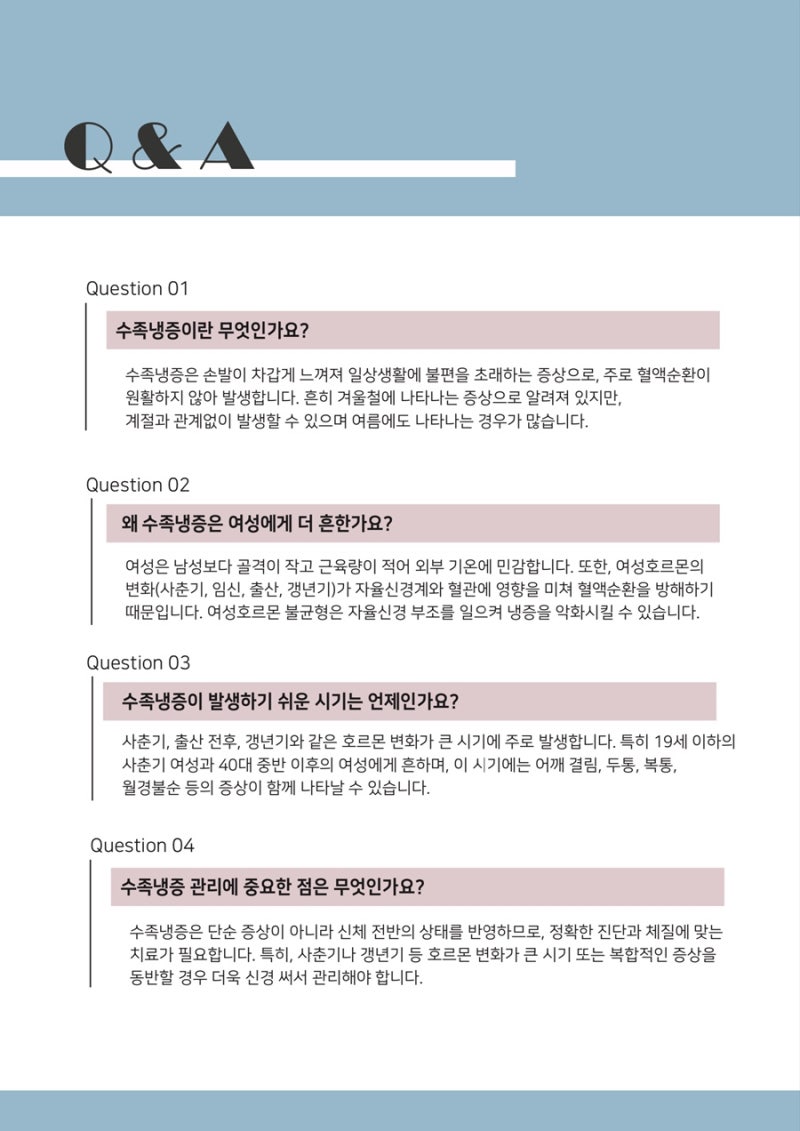
Cold Hands and Feet Q&A Q. What are cold hands and feet? A. Cold hands and feet are symptoms where the hands and feet feel cold, causing discomfort in daily life, mainly due to poor blood circulation.
Although commonly known as a symptom that appears in winter, it can occur regardless of the season and often appears in summer. Q. Why are cold hands and feet more common in women?
A. Women have smaller skeletons and less muscle mass than men, making them more sensitive to external temperatures. Additionally, changes in female hormones (puberty, pregnancy, childbirth, menopause) affect the autonomic nervous system and blood vessels, hindering blood circulation.
Hormonal imbalance in women can cause autonomic nervous system dysfunction, worsening coldness. Q. When is the period when cold hands and feet are likely to occur?
A. It mainly occurs during periods of significant hormonal changes such as puberty, before and after childbirth, and menopause. It is particularly common in adolescent women under 19 and women over mid-40s, and during this period, symptoms such as shoulder stiffness, headaches, abdominal pain, and irregular menstruation may appear together.
Q. What is important in managing cold hands and feet? A. Cold hands and feet are not just a symptom but reflect the overall state of the body, so accurate diagnosis and personalized Korean medicine treatment based on one’s constitution are necessary.
In particular, it requires more careful management during periods of significant hormonal changes such as puberty or menopause, or when accompanied by complex symptoms.
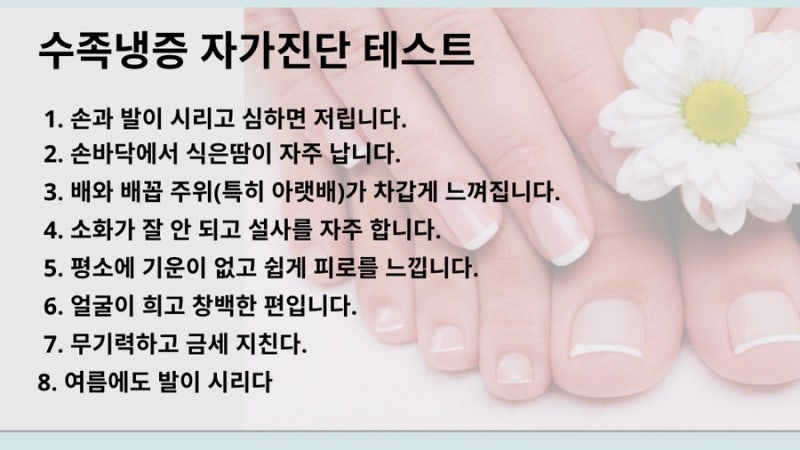
If you need more detailed information about Korean medicine treatment for cold hands and feet, please contact Sunyujae Korean Medicine Clinic at any time.
Sunyujae Korean Medicine Clinic in Dongcheon-dong pursues evidence-based integrated medicine.
This post was written directly by the medical staff of Sunyujae Korean Medicine Clinic to provide medical information, in compliance with Article 56(2) and Article 57(3) of the Medical Service Act. The duration and outcome of treatment may vary from person to person, so please consult a qualified practitioner before beginning treatment.
Consultation & Booking
Have questions? Reach us anytime via KakaoTalk or phone.