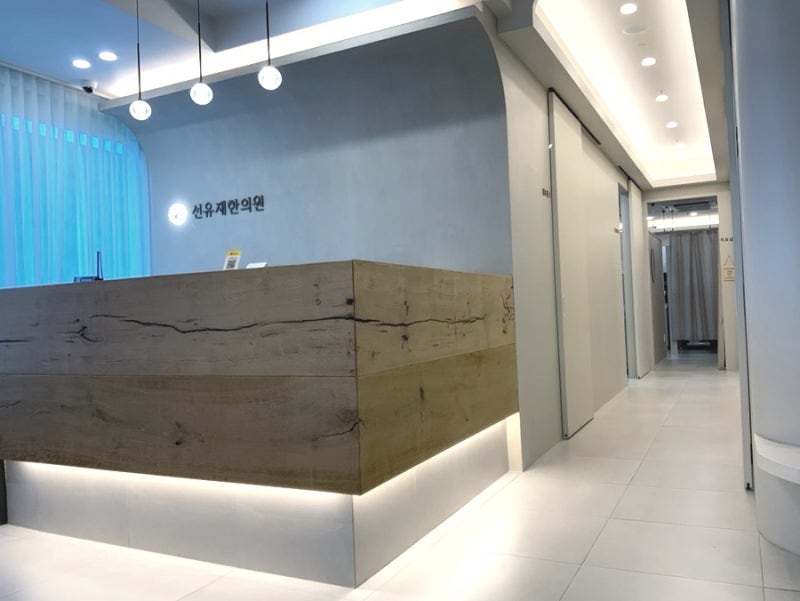
Hello, this is Sunyujae Korean Medicine Clinic, where good hearts reside.
Hello. I am Dr. Hyocheong Chae, director of Sunyujae Korean Medicine Clinic in Suji-gu. You’ve probably experienced symptoms like these at some point: “My neck is so stiff I can’t turn my head” or “My shoulders are stiff, and the back of my head feels heavy,” especially when you wake up in the morning or after sitting in front of a computer all day.
Many people simply consider this ‘stiffness’ or ‘a crick in the neck,’ but it’s often ‘Myofascial Pain Syndrome (MPS),’ caused by tension, adhesion, and inflammation in the muscles and fascia. Today, I’d like to focus on the relationship between the ‘suboccipital muscles,’ a common site for stiffness, and Myofascial Pain Syndrome.
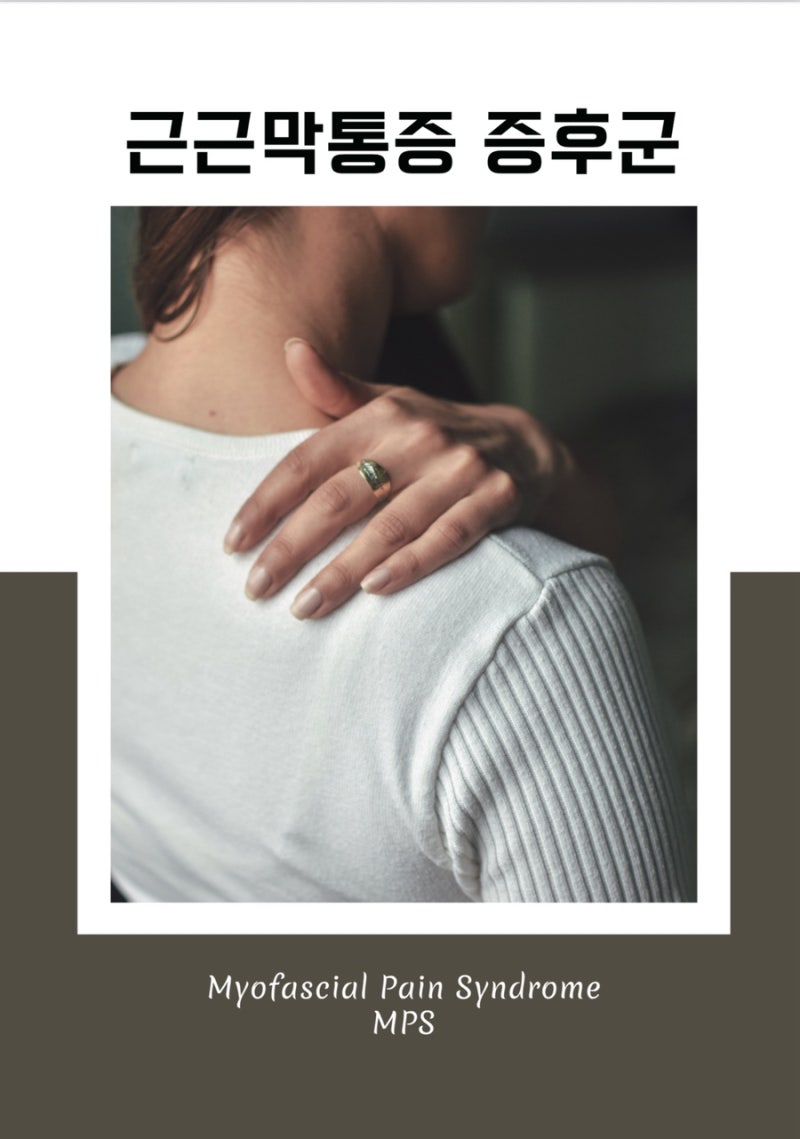
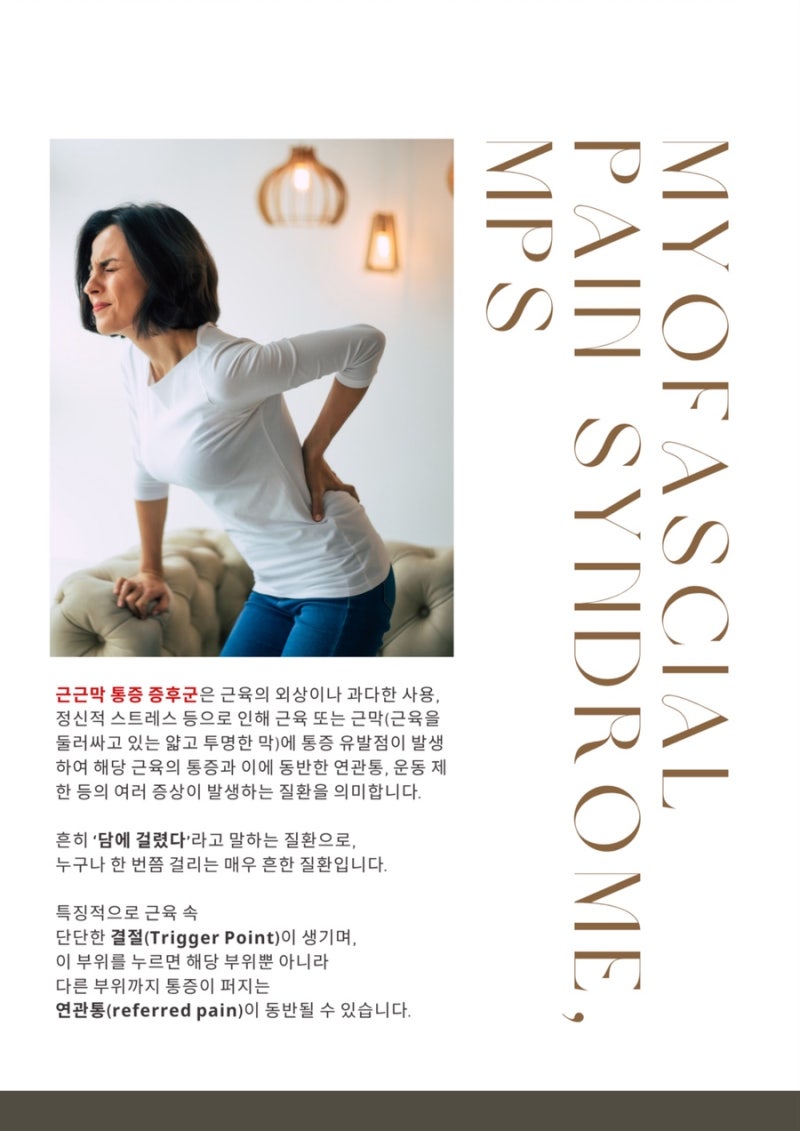
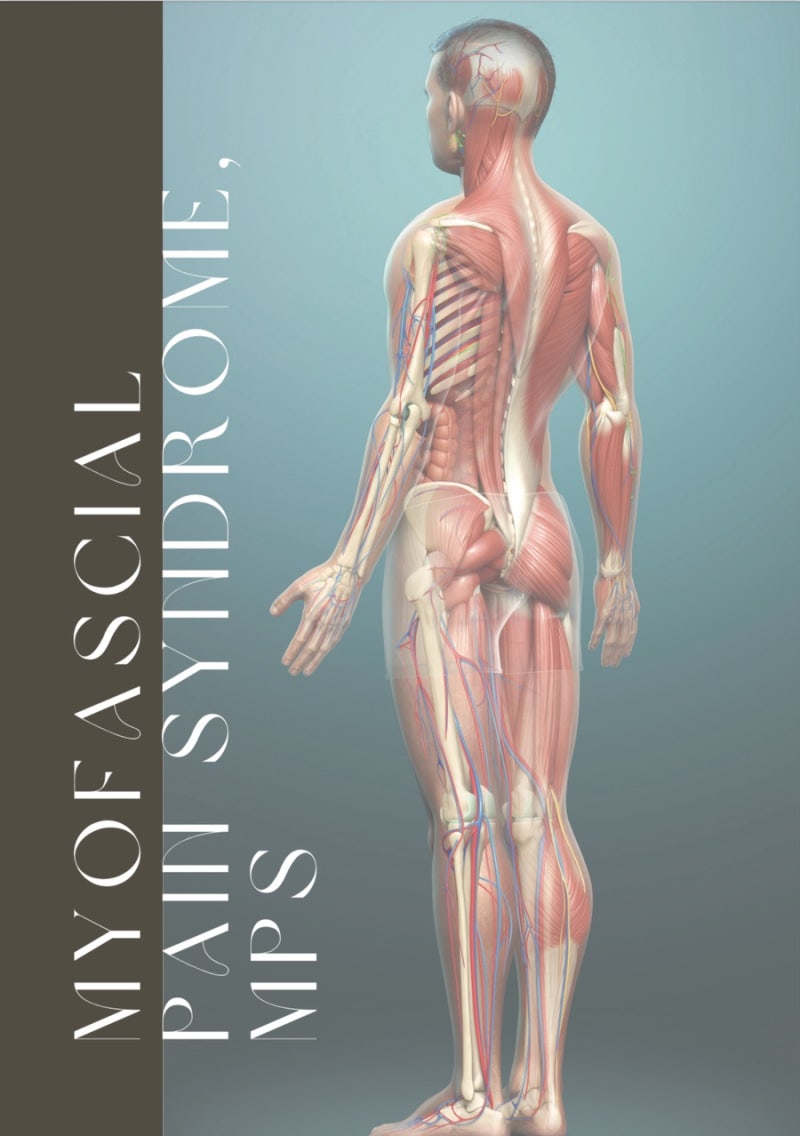
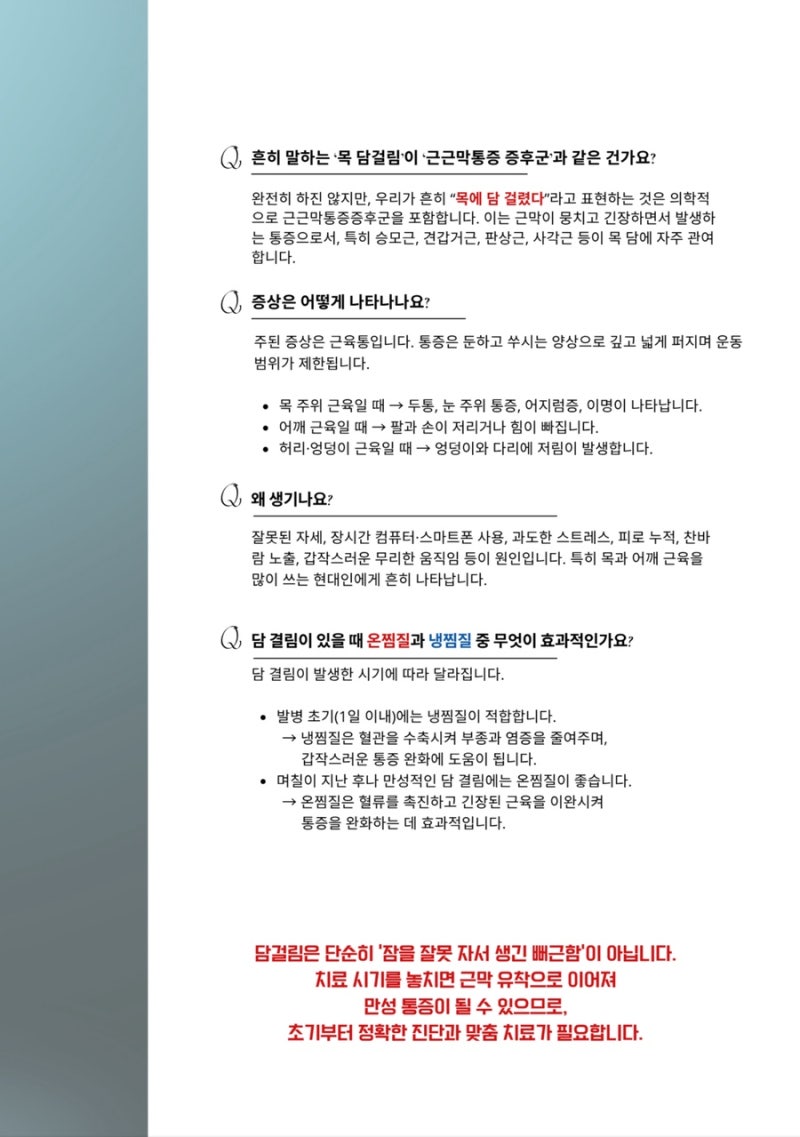
Myofascial Pain Syndrome Myofascial Pain Syndrome (MPS) refers to a condition where pain trigger points develop in muscles or fascia (the thin, transparent membrane surrounding muscles) due to muscle trauma, overuse, or mental stress, leading to pain in the affected muscle and accompanying symptoms such as referred pain and restricted movement.
It’s a very common condition, often referred to as ‘having a crick’ or ‘muscle stiffness,’ which almost everyone experiences at some point. Characteristically, hard nodules (Trigger Points) form within the muscle, and pressing on these points can cause referred pain that spreads not only to the affected area but also to other parts of the body.
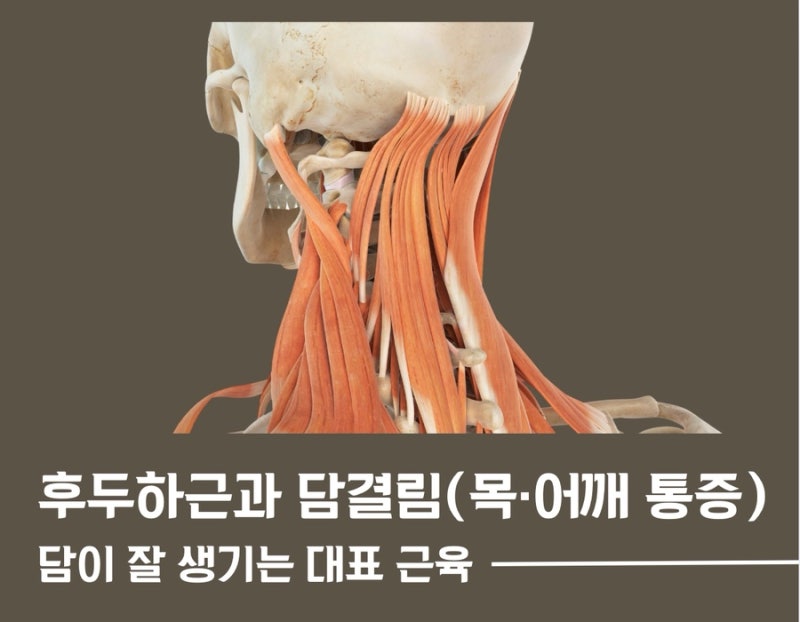
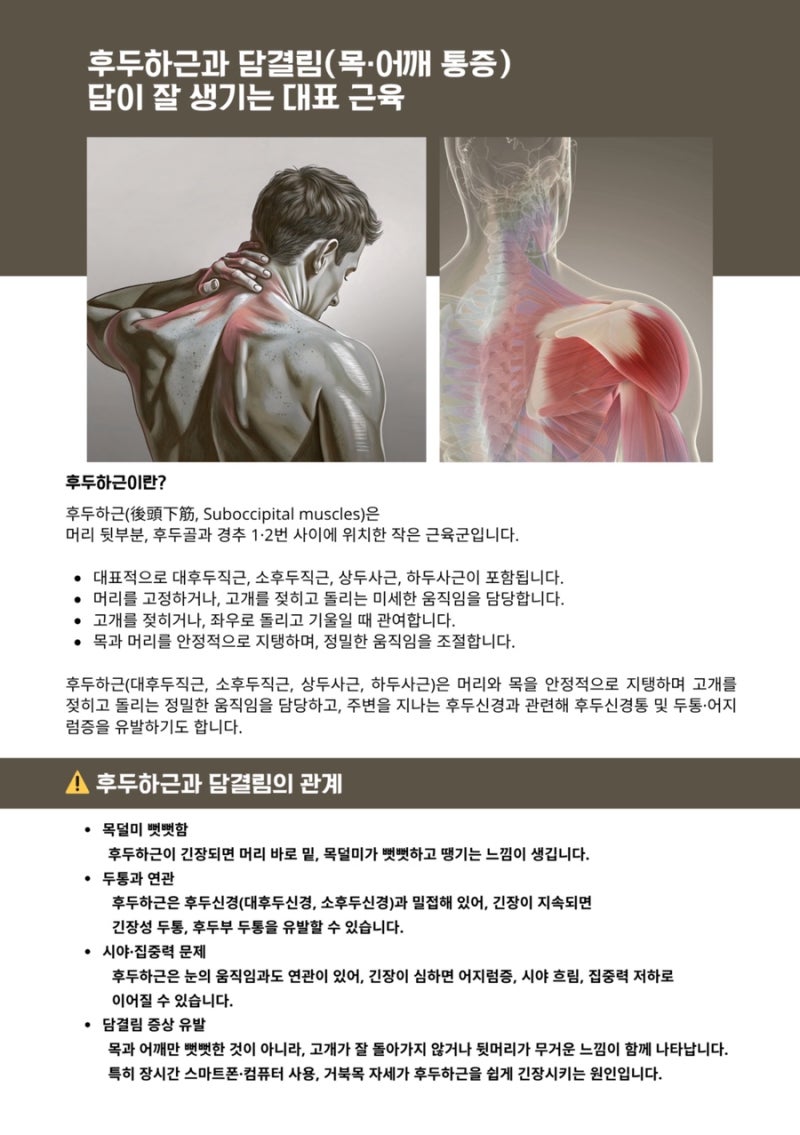
The suboccipital muscles (後頭下筋) are a group of small muscles located at the back of the head, between the occipital bone and the 1st and 2nd cervical vertebrae. * They primarily include the rectus capitis posterior major, rectus capitis posterior minor, obliquus capitis superior, and obliquus capitis inferior. * They are responsible for stabilizing the head and for subtle movements like extending and rotating the head.
* They are involved in extending, rotating, and tilting the head. * They stably support the neck and head and control precise movements. The suboccipital muscles (rectus capitis posterior major, rectus capitis posterior minor, obliquus capitis superior, obliquus capitis inferior) stably support the head and neck, control precise movements like extending and rotating the head, and can also cause occipital neuralgia, headaches, and dizziness in relation to the occipital nerves passing nearby.
Relationship between Suboccipital Muscles and Stiffness – Neck Stiffness Stiffness: When the suboccipital muscles are tense, you feel stiffness and a pulling sensation right at the base of your head, in the nape of your neck. – Related to Headaches: The suboccipital muscles are closely associated with the occipital nerves (greater occipital nerve, lesser occipital nerve), so sustained tension can lead to tension headaches and occipital headaches. – Vision and Concentration Problems: The suboccipital muscles are also linked to eye movements, and severe tension can result in dizziness, blurred vision, and reduced concentration.
– Causes Stiffness Symptoms: Not only do the neck and shoulders feel stiff, but you may also experience difficulty turning your head or a heavy sensation at the back of your head. Prolonged smartphone/computer use and ‘turtle neck’ posture (forward head posture) are particularly common causes of suboccipital muscle tension.
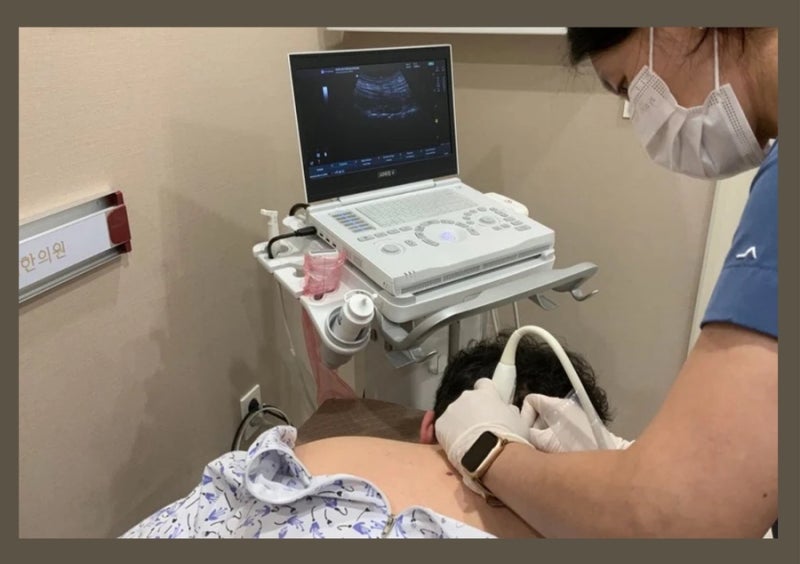
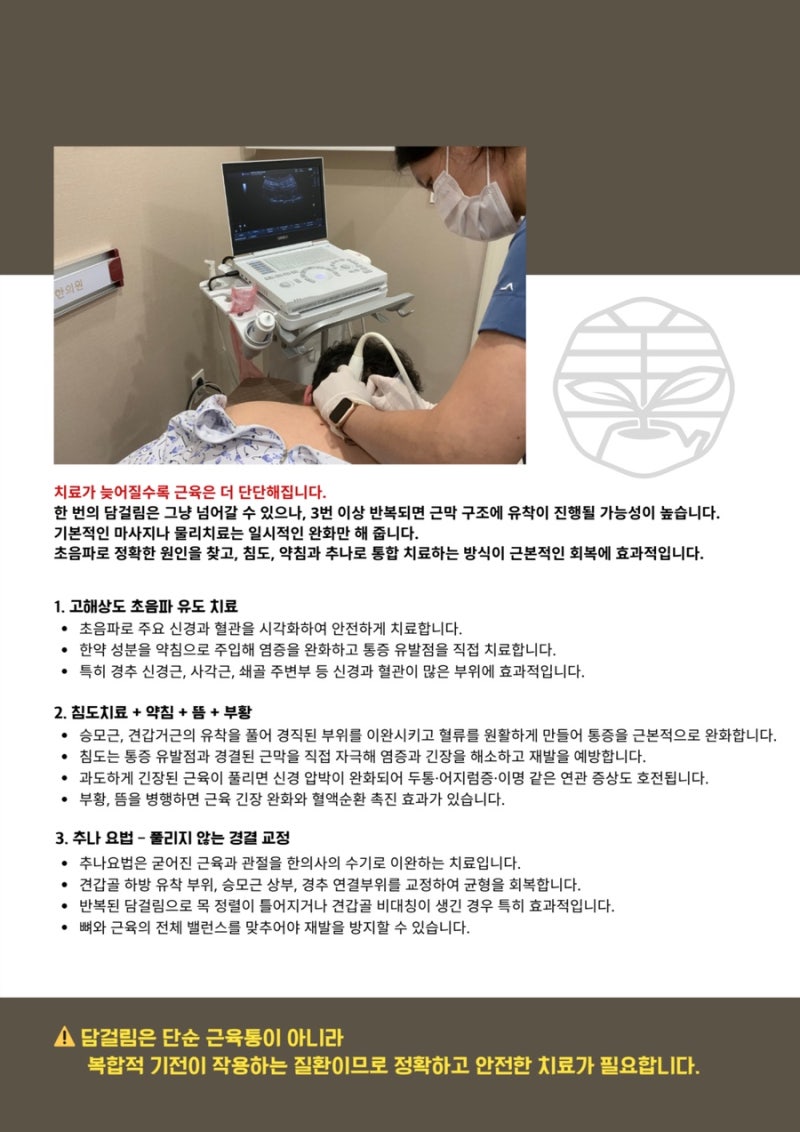
The longer treatment is delayed, the stiffer the muscles become. Sunyujae Korean Medicine Clinic in Suji-gu: A single instance of stiffness might be overlooked, but if it recurs three or more times, there’s a high probability of fascial adhesions developing. Basic massage or physical therapy only provides temporary relief.
An integrated treatment approach that identifies the exact cause with ultrasound and combines acupotomy, pharmacopuncture, and Chuna manual therapy is effective for fundamental recovery. 1. High-Resolution Ultrasound-Guided Treatment * Ultrasound visualizes major nerves and blood vessels for safe treatment. * Herbal medicine components are injected via pharmacopuncture to reduce inflammation and directly treat pain trigger points.
* Particularly effective for areas with many nerves and blood vessels, such as the cervical nerve roots, scalene muscles, and clavicle surrounding areas. 2. Acupotomy + Pharmacopuncture + Moxibustion + Cupping * This treatment releases adhesions in the trapezius and levator scapulae muscles, relaxing stiff areas and improving blood flow to fundamentally alleviate pain. * Acupotomy directly stimulates pain trigger points and hardened fascia to resolve inflammation and tension, and prevent recurrence.
* When excessively tense muscles are relaxed, nerve compression is alleviated, improving associated symptoms like headaches, dizziness, and tinnitus. * Cupping and moxibustion, when combined, help relax muscle tension and promote blood circulation. 3. Chuna Manual Therapy – Correcting Persistent Hardness * Chuna manual therapy is a treatment where a Korean medicine doctor manually relaxes stiff muscles and joints.
* It restores balance by correcting adhesions below the scapula, the upper trapezius, and the cervical spine connections. * It is particularly effective for cases where repeated stiffness has led to neck misalignment or scapular asymmetry. * Achieving overall balance between bones and muscles is essential to prevent recurrence. Stiffness is not merely muscle pain but a condition involving complex mechanisms, thus requiring accurate and safe treatment.
Sunyujae Korean Medicine Clinic in Dongcheon-dong, Suji-gu: ‘Neck stiffness is not just temporary pain from sleeping in a bad position. It’s a complex condition where muscle and fascial adhesions, nerve tension, and postural imbalance all play a role. The more it recurs, the harder the fascia becomes, increasing the likelihood of chronic pain. At Sunyujae Korean Medicine Clinic, we identify the exact cause with ultrasound diagnosis and implement integrated treatment combining acupotomy, pharmacopuncture, and Chuna manual therapy to resolve fascial adhesions and improve nerve compression and blood flow disorders.
Especially for small, deep muscles like the suboccipital muscles, which are difficult to access with general physical therapy or massage, accurate anatomical understanding and skilled techniques are crucial. In the next post, we will specifically address questions many people wonder about: “Is hot compress or cold compress better?” and “How should I respond when I experience stiffness?”
This article continues in the next post (Part 2), “Stiffness Q&A.” https://blog.naver.com/sunyujae21/224035723320
We hope you will join Sunyujae Korean Medicine Clinic in sharing valuable information for a healthy life. Sunyujae Korean Medicine Clinic in Suji-gu pursues evidence-based medicine and integrative medicine.
This post was written directly by the medical staff of Sunyujae Korean Medicine Clinic to provide medical information, in compliance with Article 56(2) and Article 57(3) of the Medical Service Act. The duration and outcome of treatment may vary from person to person, so please consult a qualified practitioner before beginning treatment.
Consultation & Booking
Have questions? Reach us anytime via KakaoTalk or phone.