Do you experience recurring nasal congestion and sneezing every change of season? If you have a runny nose and sneezing every morning, you might suspect rhinitis. Sunyujae Korean Medicine Clinic in Suji-gu explains the causes and treatment methods for rhinitis. Hello, this is Sunyujae Korean Medicine Clinic, a place where kind hearts reside.
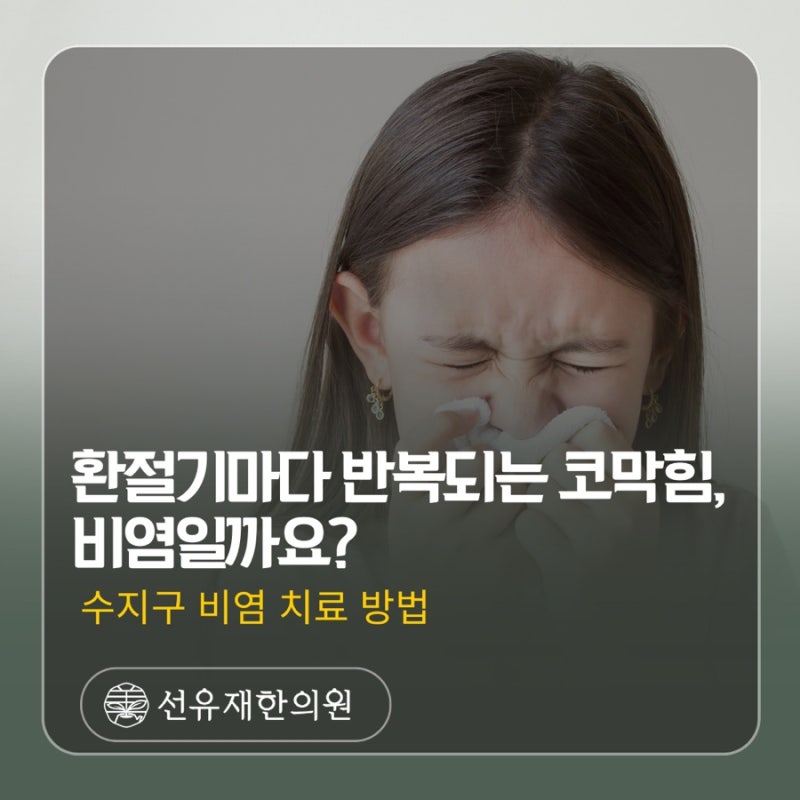
Rhinitis: Your Nose’s Recurring Signal Every Change of Season | During seasonal changes, your nose reacts first.
Clear runny nose and recurring sneezing – it’s time to suspect rhinitis.
At Sunyujae Korean Medicine Clinic in Suji-gu, rhinitis refers to a condition where the mucous membrane inside the nose becomes inflamed. Symptoms such as sneezing, runny nose, and nasal congestion commonly appear, and it can be caused by various factors like allergies or environmental irritants.
Rhinitis is a hidden cause that diminishes quality of life. Common symptoms of rhinitis include runny nose, nasal congestion, sneezing, and throat phlegm. If not treated promptly, it can lead to decreased memory and concentration, headaches, and dizziness. If it progresses to chronic rhinitis, the nasal mucous membrane inflammation can worsen, damaging the nasal airway and potentially causing problems with lung function.
This can lead to serious conditions such as sinusitis, post-nasal drip, snoring, and sleep apnea, making early treatment crucial. If rhinitis persists for a long time, it can affect not only the nasal mucous membrane but also the function of the nasal cavity and paranasal sinuses. As inflammation recurs, if the passages connecting to the paranasal sinuses narrow or become blocked, air circulation becomes poor, leading to severe nasal congestion and potentially resulting in snoring or difficulty breathing during sleep.
Rhinitis can be categorized into chronic rhinitis and allergic rhinitis.
At Sunyujae Korean Medicine Clinic in Dongcheon-dong, Suji-gu, chronic rhinitis refers to a condition where inflammation of the nasal mucous membrane persists for a long time due to continuous irritation from factors such as polluted air or dry environments. Allergic rhinitis is characterized by an immune response to specific allergens such as pollen, dust mites, or animal dander.
Causes of Rhinitis from a Korean Medicine Perspective
In Korean medicine, rhinitis is not viewed as a simple nasal disorder. It is understood as a state where the defensive function of the respiratory mucous membrane and the body’s immune balance are weakened. Especially when the functions of the Lung (肺) and Spleen (脾) weaken, the body’s defense against external stimuli decreases, leading to recurrent symptoms such as sneezing, runny nose, and nasal congestion.
Direction of Korean Medicine Treatment
In Korean medicine, rather than focusing solely on reducing nasal symptoms, treatment proceeds by – considering the individual’s constitution and body condition – restoring immune balance – and improving respiratory function.
Differences between Western Medicine Treatment and Korean Medicine Treatment
In Western medicine, treatment primarily involves rapidly alleviating allergic reactions and inflammation of the nasal mucous membrane using antihistamines or steroid sprays.
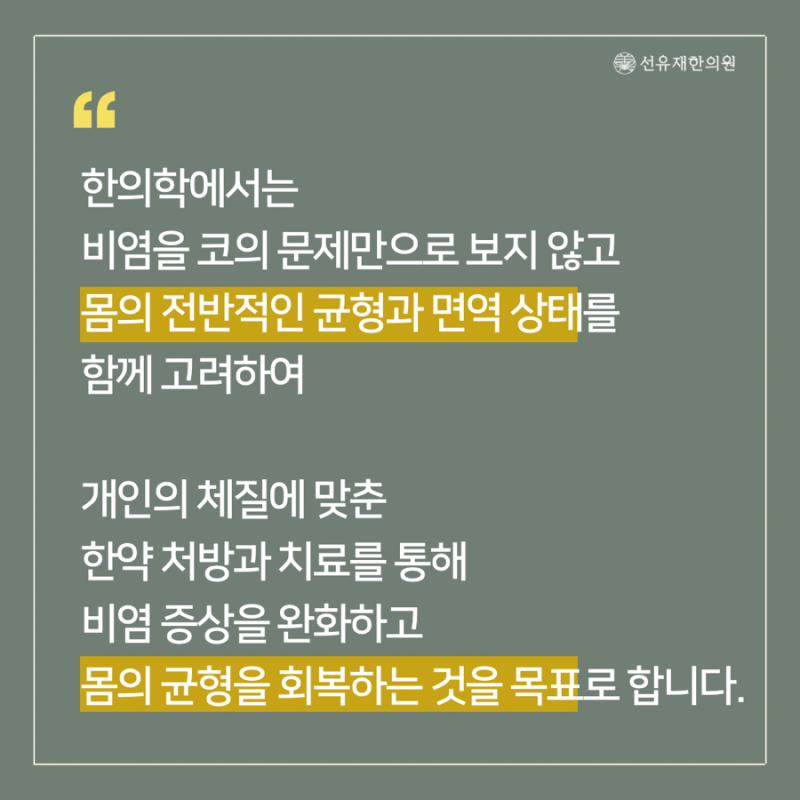
However, caution is needed as long-term use can dry out the respiratory mucous membranes. “In Korean medicine, rhinitis is not viewed solely as a nasal problem. Instead, it aims to alleviate rhinitis symptoms and restore the body’s balance through customized herbal medicine prescriptions and Korean medicine treatment that consider the body’s overall balance and immune status, tailored to the individual’s constitution.”
Rhinitis: Frequently Asked Questions
Q. How are a cold and rhinitis different?
Colds are viral infections often accompanied by sore throat, cough, body aches, or fever. Rhinitis is characterized by recurrent sneezing, clear runny nose, and nasal congestion, with few systemic symptoms. Q. Should antibiotics be taken for rhinitis?
Rhinitis is mostly related to allergic reactions or hypersensitivity of the nasal mucous membrane rather than bacterial infection, so antibiotics are rarely needed. However, if other conditions such as bacterial sinusitis are present, antibiotics may be used, making accurate diagnosis important. Q. What are the differences between Western medicine treatment and Korean medicine treatment?
In Western medicine, treatment primarily involves rapidly alleviating inflammatory reactions and allergic symptoms of the nasal mucous membrane using antihistamines or steroid sprays. In Korean medicine, the approach involves considering not only the nasal mucous membrane but also the body’s overall balance and constitution. Treatment is directed towards managing both the function of the respiratory mucous membrane and the body’s balance through customized herbal medicine prescriptions or acupuncture treatment tailored to the individual’s condition.
Q. Can rhinitis be completely cured? Rhinitis is often influenced by an individual’s constitution and environmental factors, so symptoms can recur.
However, accurately understanding the current condition and managing both lifestyle and body condition can help reduce symptoms and maintain a more comfortable state. Q. Can persistent sneezing in the morning also be rhinitis? If you experience recurrent sneezing or a clear runny nose immediately upon waking in the morning, it could be a symptom of rhinitis.
Especially with allergic rhinitis, symptoms commonly worsen in the morning, and if they recur during seasonal changes or in specific environments, rhinitis is a possibility. Rhinitis Treatment at Sunyujae Korean Medicine Clinic Treatment aims simultaneously at restoring the nasal mucous membrane and improving respiratory function. Rhinitis should be approached not merely as a nasal problem, but as a combination of impaired mucous membrane function and immune imbalance.
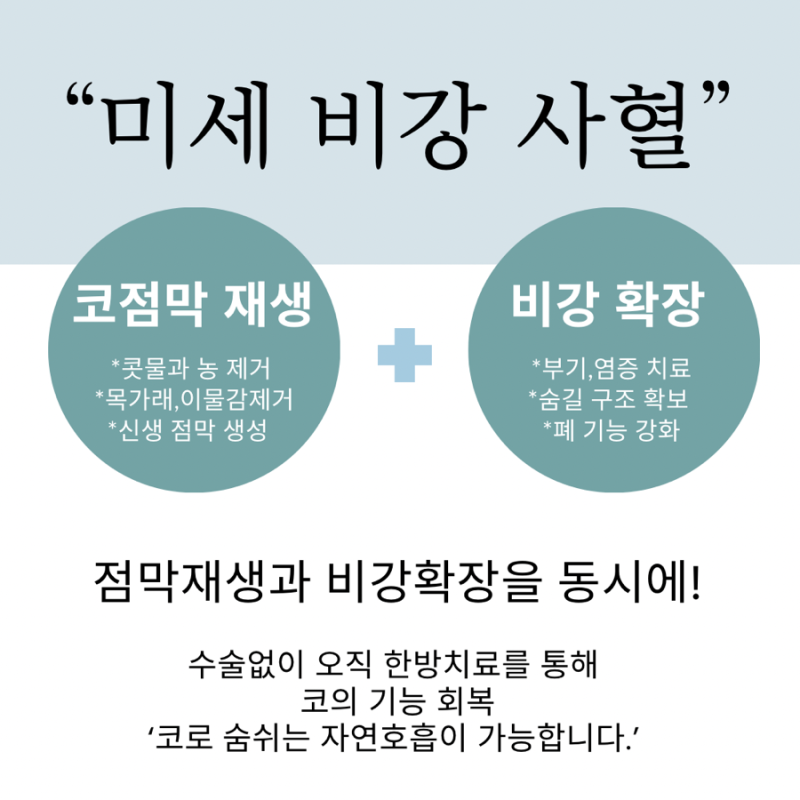
The core principle of rhinitis treatment is that the nasal mucous membrane plays a crucial role in purifying air and maintaining humidity. However, when inflammation occurs, mucous membrane function declines, and symptoms like nasal congestion, runny nose, and sneezing recur. Therefore, the core of treatment is to calm mucous membrane inflammation, regenerate damaged mucous membranes, and restore respiratory function.
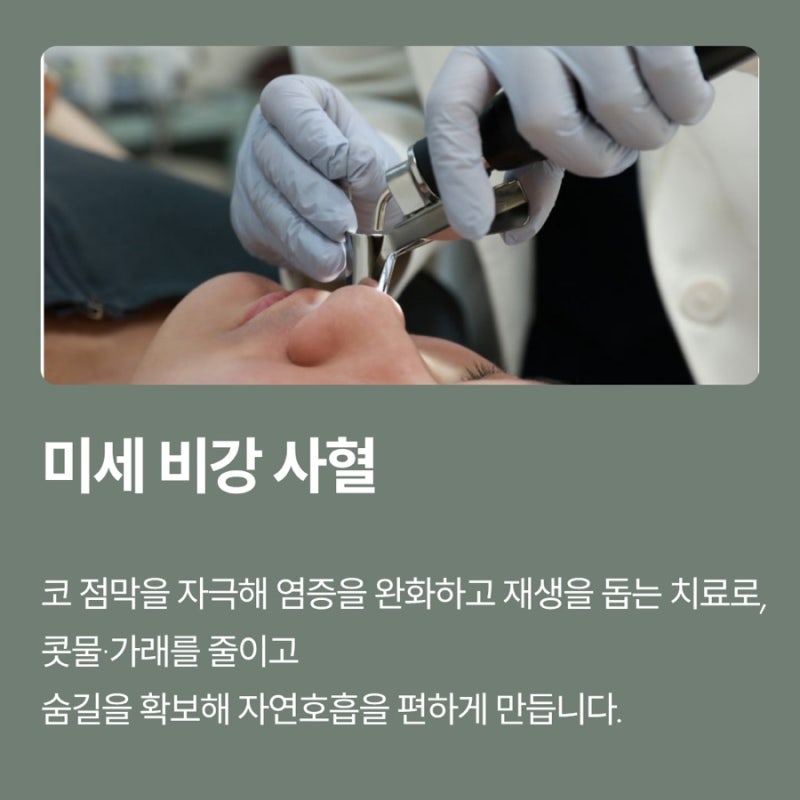
Micro-nasal Bloodletting Treatment A treatment that directly stimulates the deep mucous membranes extending to the nasal cavity, pharynx, and larynx.
– Stabilizes mucous membranes swollen by inflammation – Improves nasal congestion, sneezing, and runny nose – Alleviates post-nasal drip and throat foreign body sensation Micro-nasal bloodletting is a treatment that stimulates the nasal mucous membrane to alleviate inflammation and aid regeneration, reducing runny nose and phlegm, and securing the airway for comfortable natural breathing.
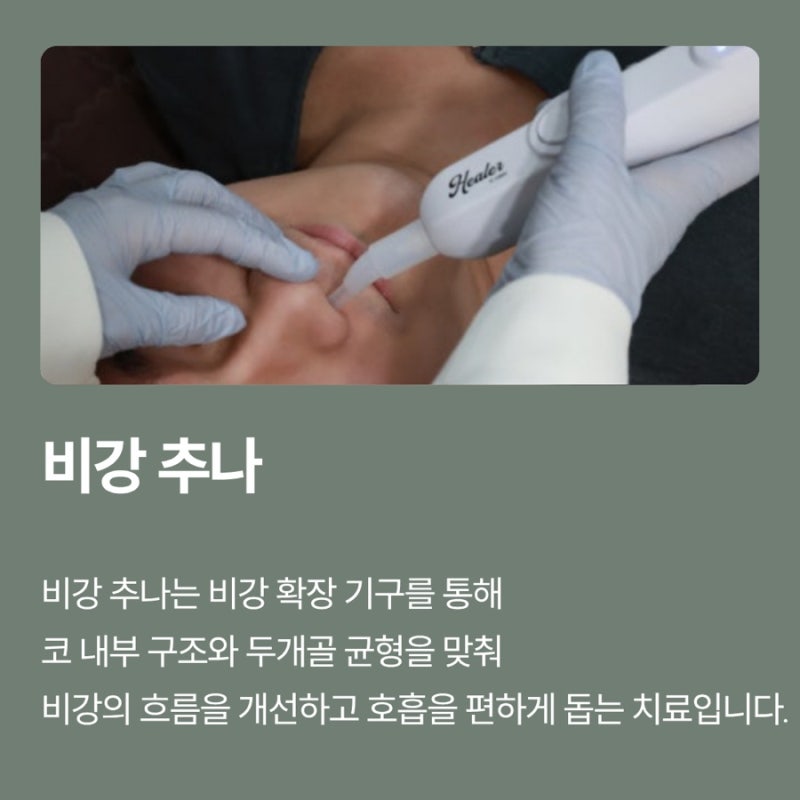
Nasal Chuna Manual Therapy A treatment that balances the internal nasal structure and skull.
– Expands nasal cavity space – Improves internal nasal airflow – Secures airway and improves breathing Nasal Chuna manual therapy is a treatment that uses a nasal expansion device to balance the internal nasal structure and skull, improving nasal airflow and facilitating comfortable breathing.
Mucous Membrane Regeneration Pharmacopuncture A treatment that aids the recovery of damaged mucous membranes.
– Promotes mucous membrane tissue regeneration – Alleviates inflammation – Improves nasal cavity environment It helps with a more fundamental recovery by inducing new mucous membrane formation.
Herbal Medicine Treatment Customized prescriptions tailored to the individual’s constitution and condition.
– Alleviates runny nose, nasal congestion, and inflammation – Restores immune balance – Manages recurrence prevention Herbal medicine prescriptions such as Hyunggaeyeongyo-tang and Sochungryong-tang are used to alleviate common rhinitis symptoms like runny nose and nasal congestion.
In cases requiring long-term management, such as sinusitis or chronic rhinitis, Biyum-hwan (rhinitis pills) may also be prescribed. Herbal medicine is prescribed in various forms such as decoctions, pills, and powders, making it relatively convenient to take. Biyum-go (Rhinitis Ointment) An external application that helps protect dry nasal mucous membranes and keep them moist. – Rhinitis, nasal congestion, anti-inflammatory effects – Alleviates discomfort due to nasal dryness Made with herbal ingredients, it can be used relatively freely by people of all ages.
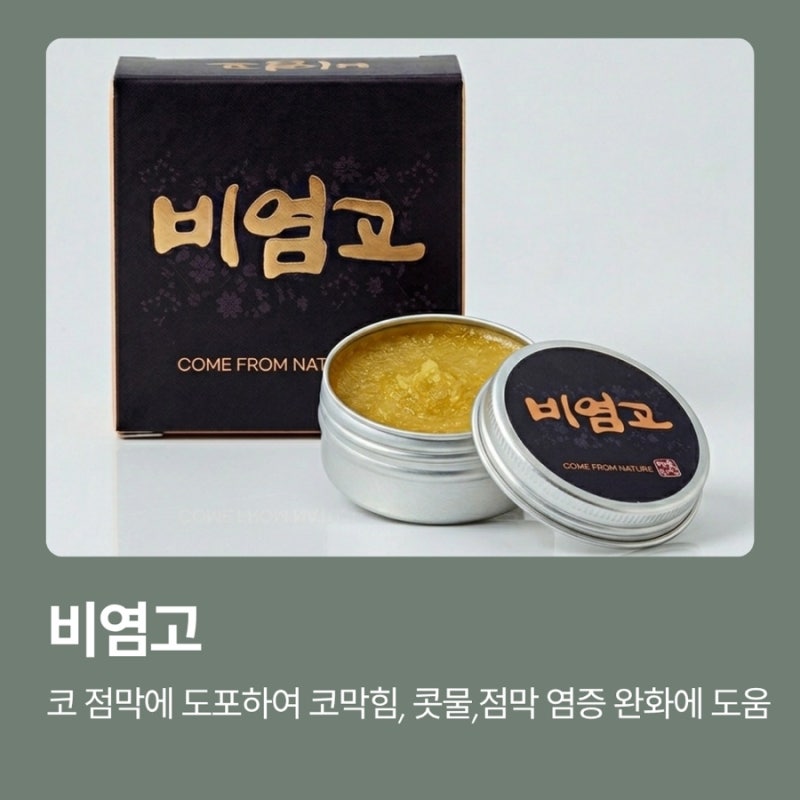
Rhinitis treatment is not merely about eliminating symptoms, but about changing the breathing environment. Restoring the nasal mucous membrane and simultaneously addressing respiratory function and immune balance are necessary to reduce recurrence and maintain comfortable breathing. Rhinitis is not a problem to be endured, but a signal from your body.
“When your nose is comfortable, your breathing is comfortable, and when your breathing is comfortable, your daily life is comfortable.” If you experience recurring nasal congestion, runny nose, and sneezing, we recommend checking your current condition. Sunyujae Korean Medicine Clinic in Suji-gu offers rhinitis consultations. We hope you will join Sunyujae Korean Medicine Clinic in sharing valuable information for a healthy life. Sunyujae Korean Medicine Clinic in Suji-gu pursues evidence-based medicine and integrative medicine.
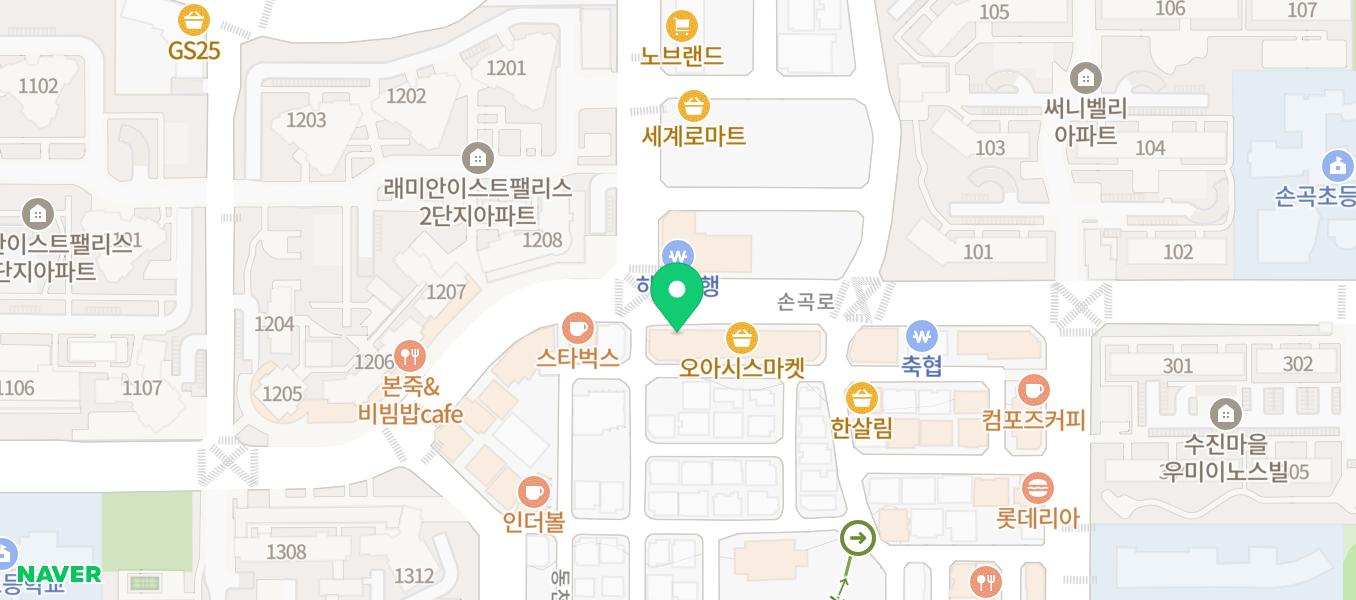
This post was written directly by the medical staff of Sunyujae Korean Medicine Clinic to provide medical information, in compliance with Article 56(2) and Article 57(3) of the Medical Service Act. The duration and outcome of treatment may vary from person to person, so please consult a qualified practitioner before beginning treatment.
Consultation & Booking
Have questions? Reach us anytime via KakaoTalk or phone.