
Pharmacopuncture is a Korean medicine treatment that involves applying a small amount of refined pharmacopuncture solution, derived from herbal medicines and other sources, to the necessary area. “How is pharmacopuncture different from regular acupuncture?” “Am I getting acupuncture or an injection?” These are common questions asked in the clinic by those new to pharmacopuncture treatment. While some may simply think of pharmacopuncture as ‘administering herbal medicine like an injection,’ in actual practice, it’s as important to know where and why a specific pharmacopuncture is applied as it is to know which one is used. Even with the same shoulder pain, some individuals may experience prominent heat and swelling, while others may have long-standing adhesions or restricted movement.
At Sunyujae Korean Medicine Clinic, we don’t simply look at the painful area and immediately decide on pharmacopuncture. We first examine when the pain started, which movements cause more discomfort, and where the pain is reproduced when pressed. If necessary, we utilize musculoskeletal ultrasound to identify the tissues to be treated and surrounding structures before determining the type and application site of the pharmacopuncture. So, what exactly is pharmacopuncture (藥針), and which type is used depending on the patient’s pain condition? Let’s explore the pharmacopuncture types used for pain treatment at Sunyujae Korean Medicine Clinic.
Q. What is Pharmacopuncture (藥針)?
Pharmacopuncture is a Korean medicine treatment combining ‘yak’ (藥, medicine) and ‘chim’ (針, needle). It is a therapeutic method that stimulates acupoints and painful areas of the body with a needle, while injecting effective herbal medicine components to simultaneously induce pain relief and tissue recovery. It involves applying a small amount of refined pharmacopuncture solution, derived from herbal medicines and other sources, to the necessary area, differing from general acupuncture in its treatment method. While general acupuncture utilizes the physical stimulation of the needle itself, pharmacopuncture utilizes both needle stimulation and the properties of the pharmacopuncture solution.
However, the same pharmacopuncture is not used for all painful areas. Even if the shoulder hurts, the areas to examine differ depending on whether the problem is around tendons or muscles, if there is heat and swelling, or if pain only occurs during specific movements.
Q. What types of pharmacopuncture does Sunyujae Korean Medicine Clinic use?
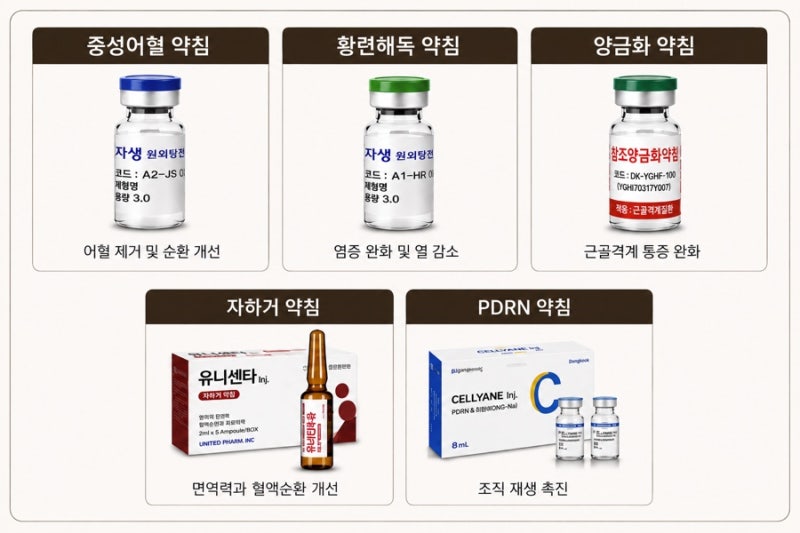
Pharmacopuncture is not a single type of treatment. At Sunyujae Korean Medicine Clinic, we consider and utilize the following types of pharmacopuncture based on the patient’s symptoms, tissue condition, and treatment stage: Neutralizing Stasis Pharmacopuncture – a pharmacopuncture that removes blood stasis and promotes blood circulation. Coptis Detoxification Pharmacopuncture – a pharmacopuncture that calms inflammation, reduces heat, and alleviates pain. Yanggeumhwa Pharmacopuncture – a pharmacopuncture that relieves musculoskeletal pain and reduces inflammation. Hominis Placenta Pharmacopuncture – a pharmacopuncture that improves immunity and blood circulation to promote tissue recovery.
PDRN Pharmacopuncture – a pharmacopuncture that promotes tissue regeneration and aids in the recovery of damaged areas. The same pharmacopuncture is not used for all types of pain. The type of pharmacopuncture and its application site are determined based on the patient’s condition.
Q. How do pharmacopuncture and acupotomy treatments differ?
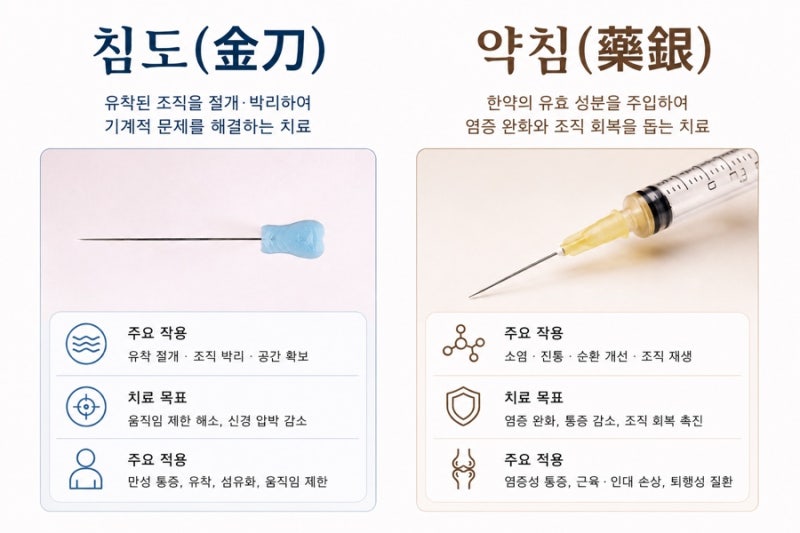
“What is the difference between pharmacopuncture and acupotomy?” This is one of the most frequently asked questions in the clinic. Both treatments can be used for musculoskeletal pain in areas such as the neck, shoulders, back, and knees, but there are differences in the tissue changes they address and their approach.
Pharmacopuncture Treatment
If heat and swelling, acute tenderness, and increased nerve sensitivity are prominent in the painful area, pharmacopuncture treatment may be considered first.
Acupotomy Treatment
If inflammatory reactions are not significant but there is persistent long-standing tightness and restricted movement, or if numbness repeatedly occurs in certain postures, acupotomy treatment may be considered to address adhesions and mechanical restrictions.
It is difficult to simply state that one is better than the other. In some cases, both treatments may be applied together, while in others, only general acupuncture treatment may be performed. It is crucial not to decide which treatment to do first, but rather to identify which tissues are currently involved in the symptoms before determining the treatment method.
Q. Why do we use palpation and ultrasound together?
In pain diagnosis, we first examine the painful area by hand.
Palpation is an examination process where the Korean medicine doctor identifies tenderness, muscle tension, restricted movement, and points where symptoms are reproduced. However, deep structures beneath the skin, such as tendons, ligaments, peripheral nerves, and blood vessels, can sometimes be difficult to accurately distinguish through palpation alone. Furthermore, the location where pain is most acutely felt is not always the same as the tissue actually involved in the symptoms. In such cases, if necessary, musculoskeletal ultrasound is used in conjunction.
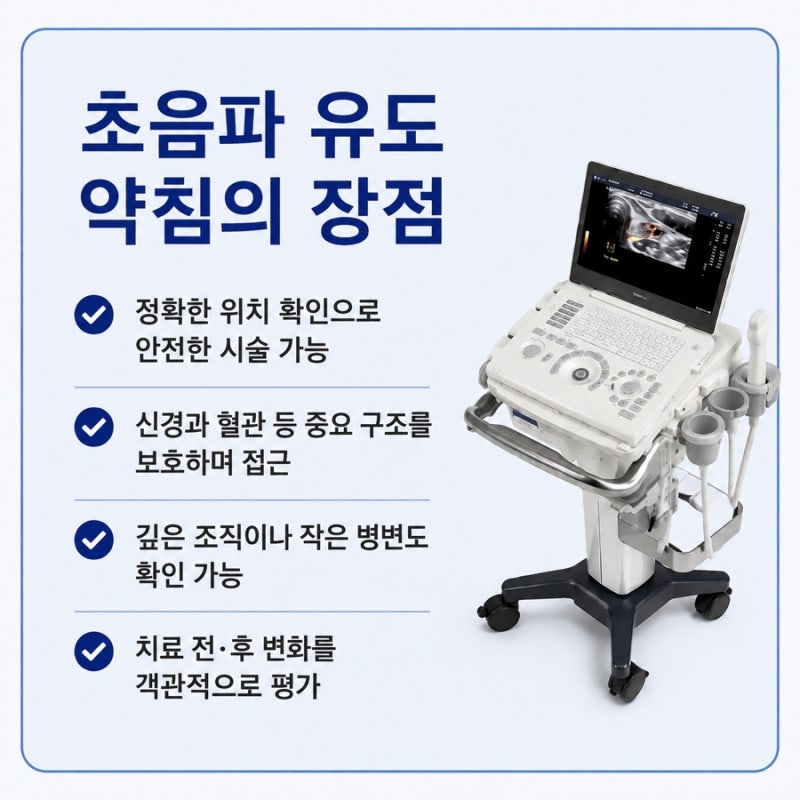
Musculoskeletal ultrasound is an imaging examination that allows real-time visualization of muscles, tendons, ligaments, periarticular soft tissues, and peripheral nerves. Utilizing ultrasound helps confirm the location and depth of the tissue to be treated, the position of surrounding nerves and blood vessels, the safest direction for access, and the condition of nearby soft tissues. Especially when nerves or blood vessels are close to the target tissue, pre-confirming the surrounding structures can be crucial. However, ultrasound examination is not necessary for all patients; it is used only when beneficial, after first reviewing symptoms and examination findings.
Palpation identifies pain responses, while ultrasound visualizes deep, unseen structures.
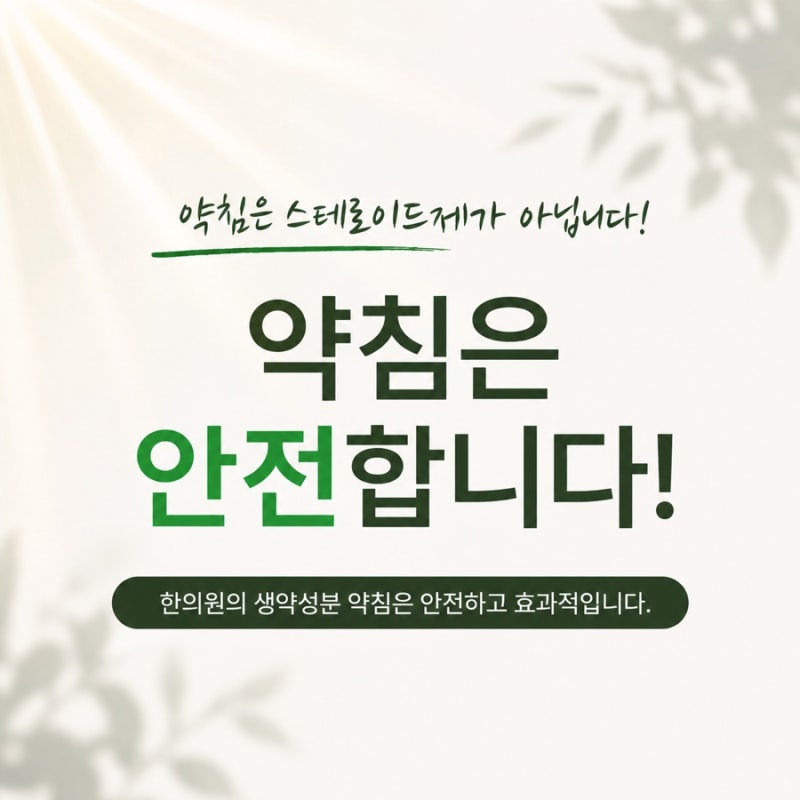
Q. Is pharmacopuncture a steroid?
“Pharmacopuncture is administered like an injection, so is it a steroid?” This is a frequently asked question in the clinic. Pharmacopuncture and steroid injections are not the same treatment. Pharmacopuncture is a Korean medicine treatment that applies refined pharmacopuncture solution, derived from herbal medicines and other sources, according to the treatment objective, while steroid injections are treatments that regulate inflammatory responses with steroid components. There are differences in the ingredients used and the treatment objectives. However, the fact that it is not a steroid does not mean it can be used without concern by everyone.
Before pharmacopuncture treatment, we confirm whether there is a history of allergies, any medications currently being taken, existing medical conditions, and the skin condition of the treatment area, before deciding on the type of pharmacopuncture and whether to apply it.
Even for the same neck, shoulder, or back pain, the reasons for the pain can vary from person to person. At Sunyujae Korean Medicine Clinic, rather than pre-determining pharmacopuncture or acupotomy treatment, we first examine where the discomfort is and which movements exacerbate the pain. We also check if the usual pain appears when pressed, and if necessary, we use musculoskeletal ultrasound to view the surrounding structures. Then, we determine the type of pharmacopuncture and its application site to match the patient’s symptoms and tissue condition. The same pharmacopuncture is not used for all types of pain.
If your pain is recurring, consult Sunyujae Korean Medicine Clinic to assess your current condition and discuss a treatment plan tailored to you.
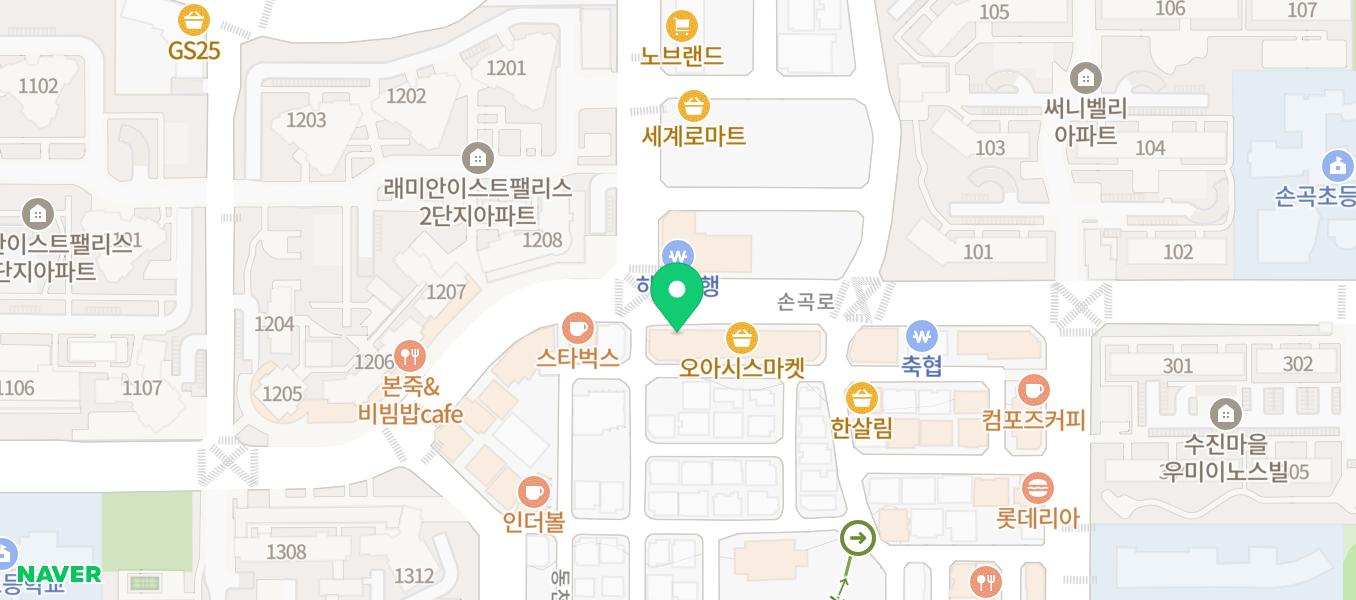
Sunyujae Korean Medicine Clinic in Suji-gu pursues evidence-based medicine and integrative medicine.
This post was written directly by the medical staff of Sunyujae Korean Medicine Clinic to provide medical information, in compliance with Article 56(2) and Article 57(3) of the Medical Service Act. The duration and outcome of treatment may vary from person to person, so please consult a qualified practitioner before beginning treatment.
Consultation & Booking
Have questions? Reach us anytime via KakaoTalk or phone.