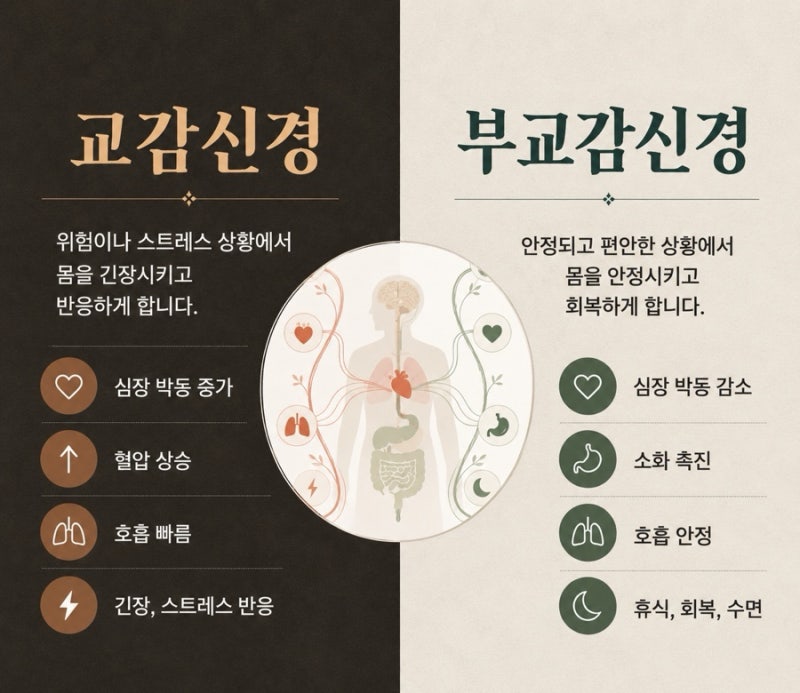
Some people experience frequent heart palpitations, unexplained body tension, or dizziness. Many also find it difficult to fall asleep at night and feel unrefreshed even after sufficient rest, often dismissing it as mere fatigue. However, if various symptoms like indigestion, sudden sweating, or hot flashes in the face recur, it’s necessary to look at the underlying cause rather than just one symptom in isolation. In the clinic, we often hear from more patients than expected who report different discomforts, such as palpitations, insomnia, and indigestion, appearing around the same time.
If various symptoms that are difficult to explain by a single condition recur, we can investigate whether changes in autonomic nervous system function, including autonomic dysfunction, are involved.
Autonomic dysfunction is a commonly used term when various discomforts related to the autonomic nervous system, such as palpitations, insomnia, indigestion, dizziness, and sweating, appear together. However, these symptoms alone do not confirm a single disease.
The autonomic nervous system: the body’s ‘automatic control system’
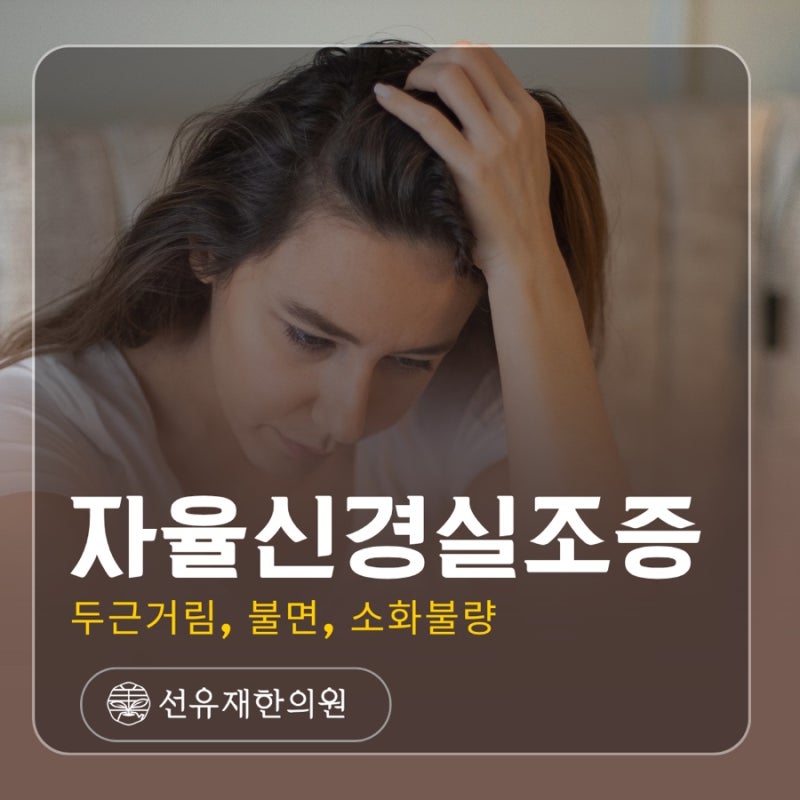
The autonomic nervous system is involved in adjusting various bodily functions such as heart rate, blood pressure, respiration, digestion, body temperature, and sweating to suit the situation, even without our conscious awareness. Simply put, it’s easy to understand it as our body’s ‘automatic control system’ that helps the body respond appropriately when it needs to be active and return to a relaxed state when rest is required.
The autonomic nervous system can be broadly divided into the sympathetic nervous system and the parasympathetic nervous system. The sympathetic nervous system enables the body to respond to situations when it needs to be active or tense. A rapidly beating heart and heightened alertness before an important exam or presentation are part of this response. Conversely, the parasympathetic nervous system acts in situations requiring rest and digestion. It’s not about one side being unconditionally high or low. It’s important for the system to switch appropriately according to the situation, allowing for tension when needed and relaxation during rest.
Why does my body feel tired, yet I feel constantly awake?
Changes in autonomic nervous system function are not due to a single cause. Various factors can influence it, including chronic stress, overwork, lack of sleep, irregular lifestyle habits, as well as pain, illness, and hormonal changes. If this state persists for a long time, the body may feel tired but unable to fully relax when it needs to rest.
During periods of significant hormonal changes, such as menopause, hot flashes, sweating, palpitations, and insomnia may appear in combination.
Students preparing for exams, who need to concentrate for long periods, report similar experiences.
“My body is so tired, but my mind feels constantly awake.” Some may find it difficult to fall asleep due to racing thoughts even when lying in bed, or experience co-occurring heart palpitations and indigestion. In such cases, rather than simply explaining it as ‘high sympathetic nervous system activity,’ it is more helpful to understand the actual body condition by observing when tension intensifies, what differences exist between nights with good sleep and those without, and how digestion and fatigue change together.
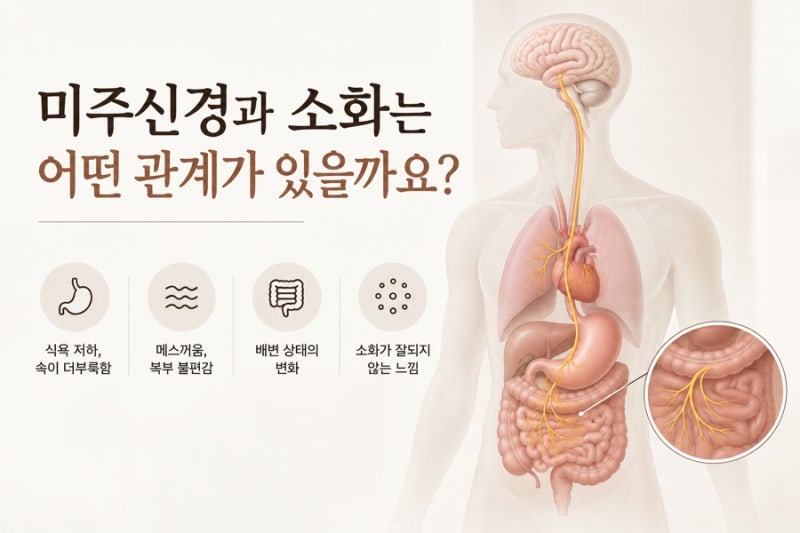
What is the relationship between the vagus nerve and digestion?
The vagus nerve is a major parasympathetic nerve that originates in the brain and extends to various organs, including the heart, lungs, and digestive system. The autonomic nervous system also plays a role in regulating digestive functions, including the motility and secretions of the stomach and intestines. Therefore, when stress is severe or tension persists for a long time, one may experience digestive symptoms different from usual, such as loss of appetite, bloating, nausea, abdominal discomfort, or changes in bowel habits. At Sunyujae Korean Medicine Clinic, we do not view digestive symptoms in isolation in such cases. We examine sleep and tension levels, eating habits, fatigue, and overall condition, and if necessary, also check posture and muscle tension around the neck and back.
However, it cannot be definitively concluded that changes in posture or thoracic spine alignment directly cause digestive problems. If digestive symptoms persist or are severe, the possibility of other gastrointestinal diseases should also be checked.
What do we consider when assessing current symptoms?
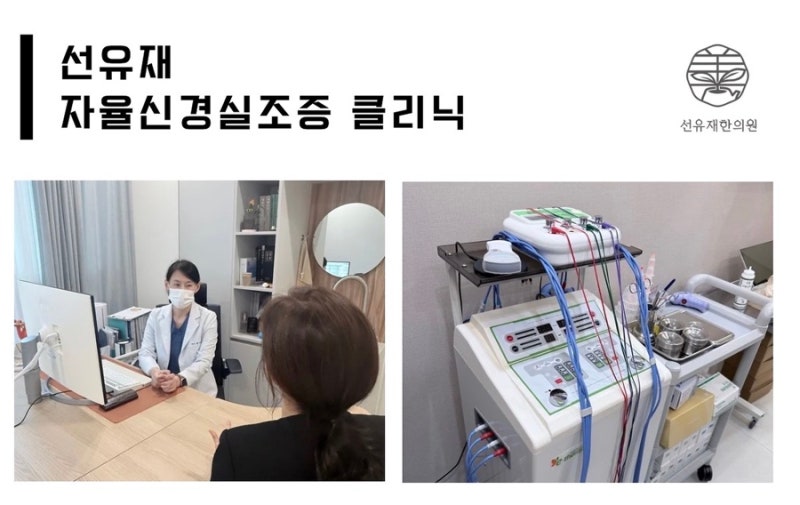
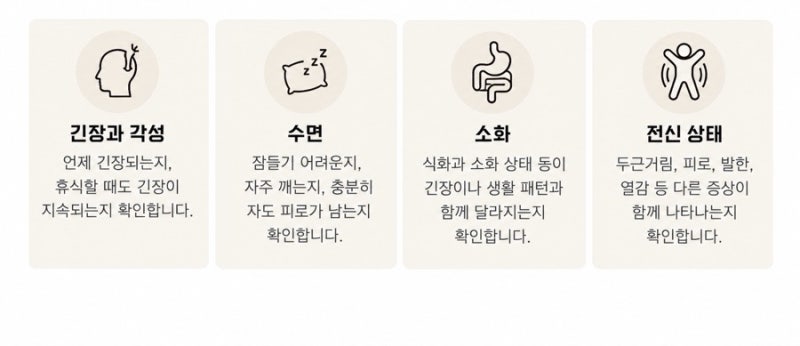
Even with similar autonomic nervous system-related discomforts, the most challenging symptoms vary from person to person. Some find heart palpitations and insomnia most difficult, while others primarily report indigestion and persistent fatigue. In some cases, hot flashes, sweating, anxiety, and sleep disturbances appear with menopause, and in others, like students preparing for exams, a state of tension and alertness persists for a long time. At Sunyujae Korean Medicine Clinic, we do not determine treatment methods based on a single symptom or one test result. We examine whether it is difficult to fall asleep, if one wakes up frequently, or if fatigue remains even after sufficient sleep. We listen to when palpitations worsen and if a feeling of tension continues even during rest.
We also observe whether appetite and digestive status change according to lifestyle patterns, and if other discomforts such as sweating, hot flashes, or dizziness appear concurrently.
We check tension/alertness, sleep, digestion, fatigue, lifestyle habits, and overall condition. Even when using the term ‘autonomic dysfunction,’ the most challenging symptoms and the situations in which they appear can differ for each person.
What do we check?
How is autonomic dysfunction treated?
After identifying the most bothersome symptoms and lifestyle patterns through examination, we determine the treatment method. At Sunyujae Korean Medicine Clinic, we utilize herbal medicine, electroacupuncture, auricular acupuncture, and aromatherapy, considering the patient’s sleep and digestive status, tension level, physical strength, and lifestyle habits. Rather than deciding on a specific treatment from the outset, we determine the treatment direction by observing which symptoms are most bothersome and in what situations different symptoms appear together.
Herbal Medicine — We do not use the same herbal medicine for everyone.
We do not give everyone the same single ‘herbal medicine for the autonomic nervous system.’
We assess physical strength, symptoms, sleep and digestive status, lifestyle habits, and currently taken medications, along with Korean medicine examinations such as pulse diagnosis and tongue diagnosis. For example, even if a patient reports insomnia, the prescription is individualized based on whether palpitations and hot flashes are also present, or if indigestion and fatigue are more prominent.
Electroacupuncture — We adjust stimulation according to the condition.
Electroacupuncture is a treatment that delivers a constant, subtle electrical stimulation to needles after they are inserted. The intensity and frequency of stimulation can be adjusted, and it is applied considering the treatment area and the degree of stimulation felt by the patient. Research on the relationship between acupuncture and the autonomic nervous system is also being conducted using heart rate variability (HRV).
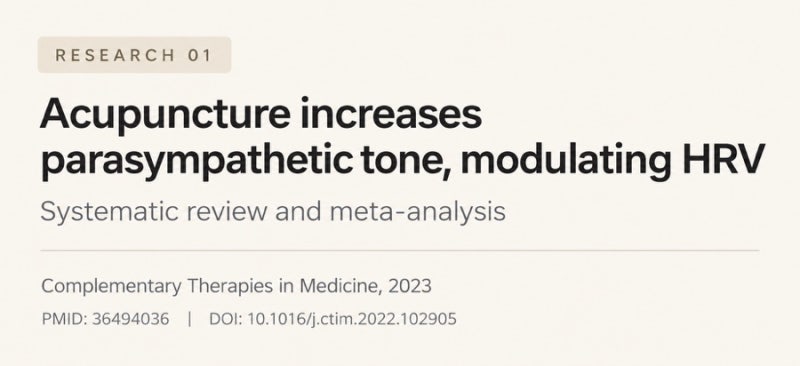
In a systematic review and meta-analysis published in 2023, changes related to parasympathetic nervous system activation were observed in some HRV indicators after acupuncture treatment. However, changes in HRV indicators do not immediately signify an improvement in all autonomic nervous system-related symptoms, such as insomnia or palpitations.
RESEARCH 01
Acupuncture increases parasympathetic tone, modulating HRV – Systematic review and meta-analysis
Complementary Therapies in Medicine, 2023
PMID: 36494036 · DOI: 10.1016/j.ctim.2022.102905
Auricular Acupuncture — We utilize small stimulation points on the ear.
Auricular acupuncture is a method that stimulates specific points on the ear. Various nerves are distributed in the ear, and auricular acupuncture may be applied along with other treatments when needed for tension or sleep problems. There are also studies that have examined the relationship between auricular acupuncture and sleep.
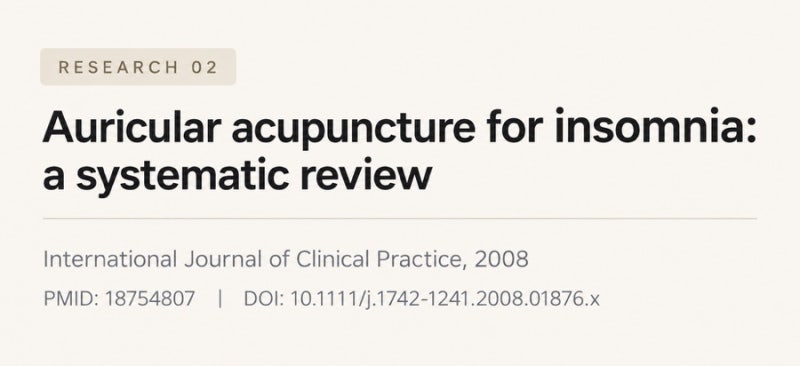
In a systematic review published in 2008, positive results related to sleep were reported in some studies. However, due to limitations in the quality and methodology of the included studies, the results need to be interpreted cautiously. Therefore, rather than concluding that auricular acupuncture alone can treat insomnia or autonomic nervous system problems, we view it as one of the available treatment methods.
RESEARCH 02
Auricular acupuncture for insomnia: a systematic review
International Journal of Clinical Practice, 2008
PMID: 18754807 · DOI: 10.1111/j.1742-1241.2008.01876.x
Aromatherapy — how are scents transmitted to the brain?
At Sunyujae Korean Medicine Clinic, we utilize aromatherapy as an auxiliary method, considering the patient’s tension level and condition.
Smell is a sense related to the olfactory nerve, which is the first cranial nerve. Odor information detected in the nose is transmitted via the olfactory nerve to the olfactory bulb and then follows the olfactory pathway to various areas of the brain. The olfactory system is closely connected to brain regions involved in emotion and memory, which is why smelling a particular scent can sometimes trigger past memories or alter one’s mood. However, this does not mean that aromatherapy itself treats autonomic dysfunction. It is used as an auxiliary method alongside treatments such as herbal medicine, electroacupuncture, and auricular acupuncture to aid relaxation and create a comfortable treatment environment.
Sunyujae Autonomic Nervous System Clinic

Discomforts related to the autonomic nervous system can manifest in various ways, such as insomnia, palpitations, indigestion, dizziness, sweating, and fatigue. Sometimes they are hard to explain by looking at palpitations alone, or by treating sleeplessness only as a sleep problem. If various discomforts recur, consider when and which symptoms appeared together, what differences exist between nights with good sleep and those without, and how digestive status changes with stress or meals. At Sunyujae Korean Medicine Clinic, we listen carefully to the patient’s story, assess their physical condition based on necessary examinations and diagnoses, and then determine the treatment direction, considering herbal medicine, electroacupuncture, auricular acupuncture, and aromatherapy.
A place where kind hearts reside — Sunyujae Korean Medicine Clinic

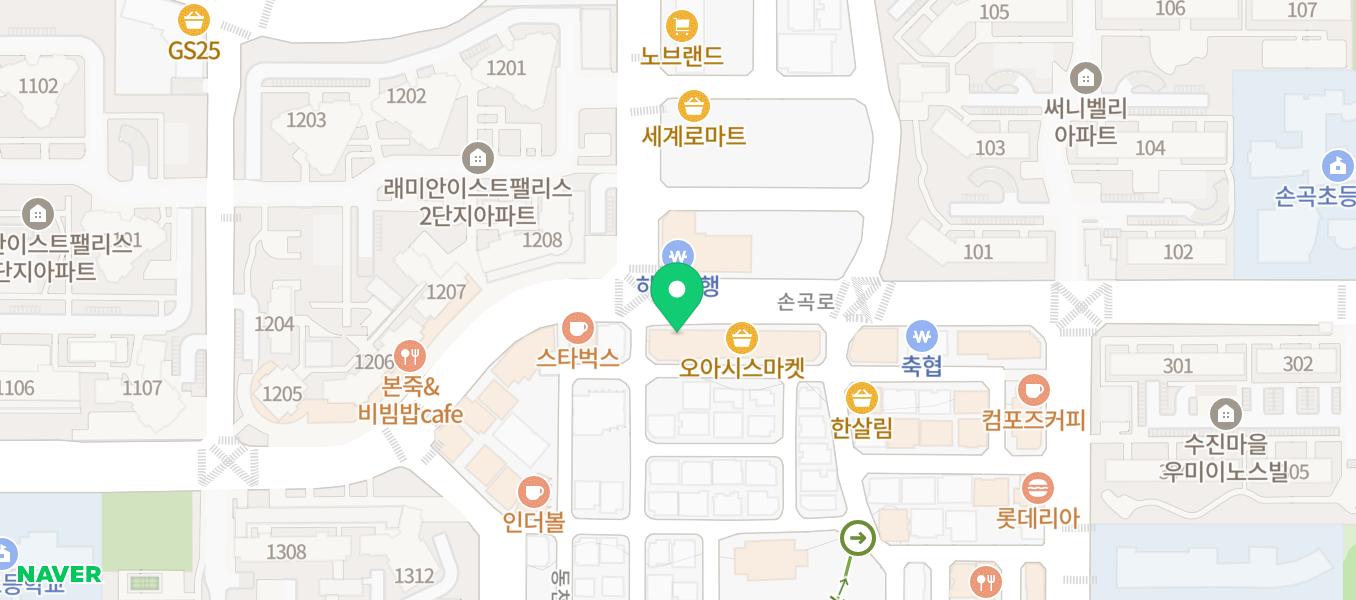
Sunyujae Korean Medicine Clinic in Suji-gu pursues evidence-based medicine and integrative medicine.
This post was written directly by the medical staff of Sunyujae Korean Medicine Clinic to provide medical information, in compliance with Article 56(2) and Article 57(3) of the Medical Service Act. The duration and outcome of treatment may vary from person to person, so please consult a qualified practitioner before beginning treatment.
Consultation & Booking
Have questions? Reach us anytime via KakaoTalk or phone.