
Hello, this is Sunyujae Korean Medicine Clinic, where kind hearts reside.

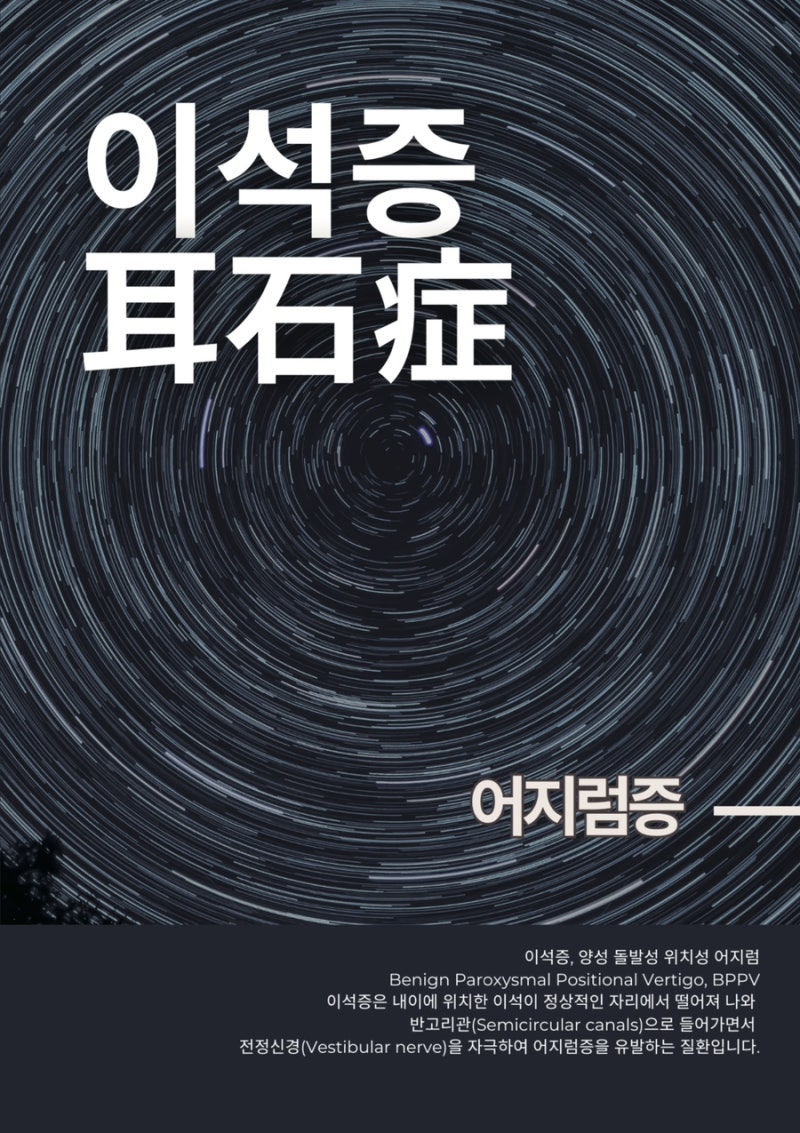
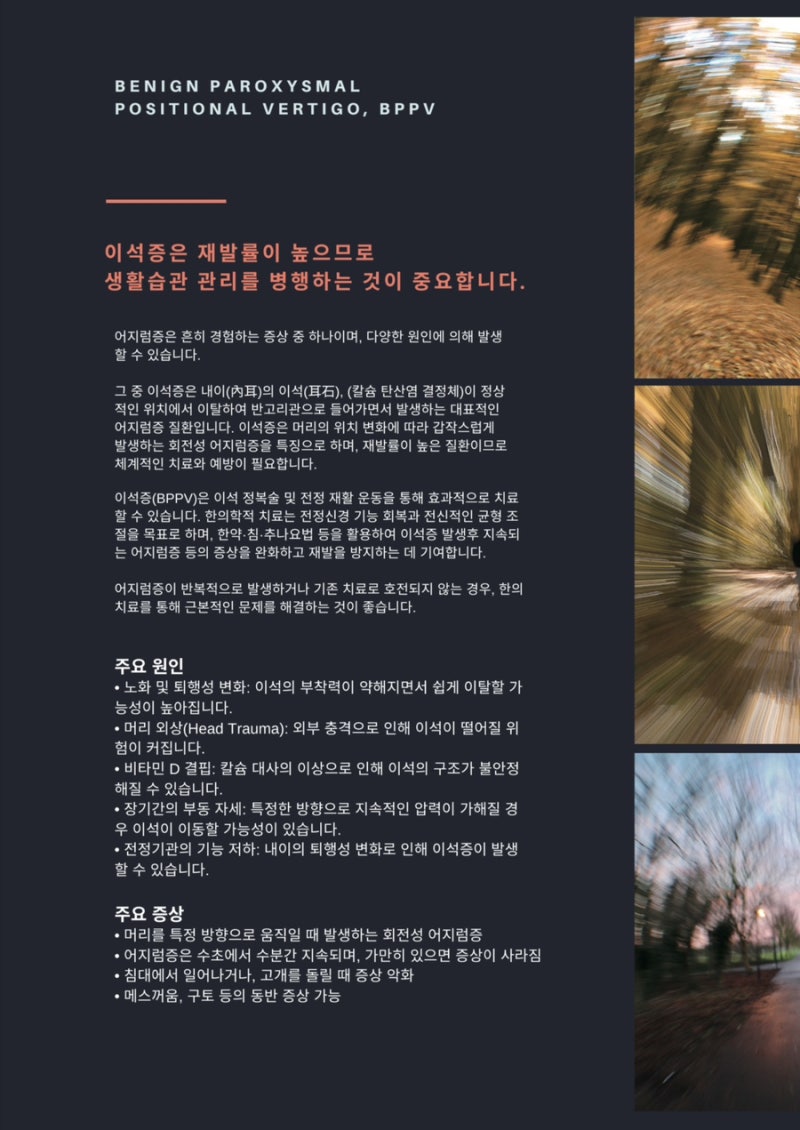
Hello, I am Dr. Hyocheong Chae, director of Sunyujae Korean Medicine Clinic. Dizziness is one of the most commonly experienced symptoms and can be caused by various factors. Among them, BPPV (Benign Paroxysmal Positional Vertigo) is a representative dizziness disorder that occurs when otoconia (calcium carbonate crystals) in the inner ear (內耳) detach from their normal position and enter the semicircular canals.
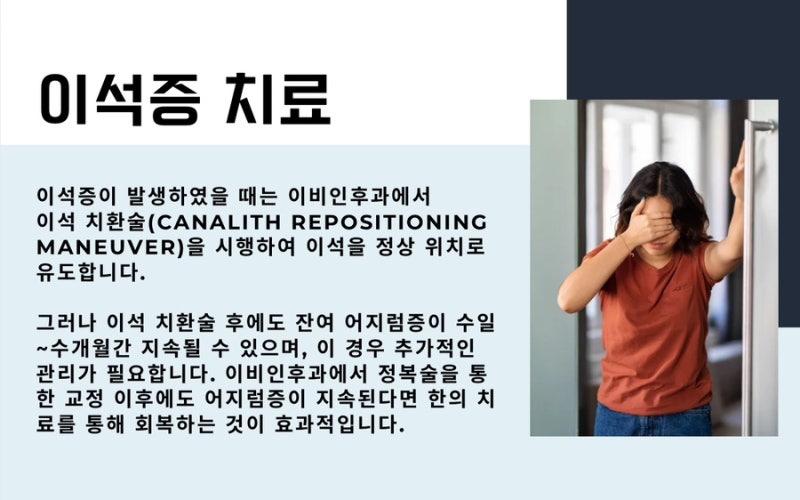
BPPV is characterized by sudden rotational dizziness that occurs with changes in head position, and since it is a condition with a high recurrence rate, systematic treatment and prevention are necessary. BPPV can be effectively treated through canalith repositioning maneuvers and vestibular rehabilitation exercises. Korean medicine treatment aims to restore vestibular nerve function and regulate overall body balance, utilizing herbal medicine, acupuncture, Chuna manual therapy, etc., to alleviate symptoms such as persistent dizziness after the onset of BPPV and to prevent recurrence.
alleviate symptoms such as dizziness and prevent recurrence. If dizziness occurs repeatedly or does not improve with existing treatments, it is recommended to address the root cause through Korean medicine treatment.
Main Causes • Aging and degenerative changes: The attachment strength of the otoconia weakens, increasing the likelihood of easy detachment. • Head Trauma: External impact increases the risk of otoconia detaching. • Vitamin D deficiency: Abnormal calcium metabolism can destabilize the structure of the otoconia.
• Prolonged immobility: Sustained pressure in a specific direction can cause otoconia to shift. • Vestibular dysfunction: Degenerative changes in the inner ear can lead to BPPV. Main Symptoms • Rotational dizziness that occurs when moving the head in a specific direction • Dizziness lasts from a few seconds to several minutes, and symptoms disappear when still • Symptoms worsen when getting out of bed or turning the head • Possible accompanying symptoms such as nausea and vomiting
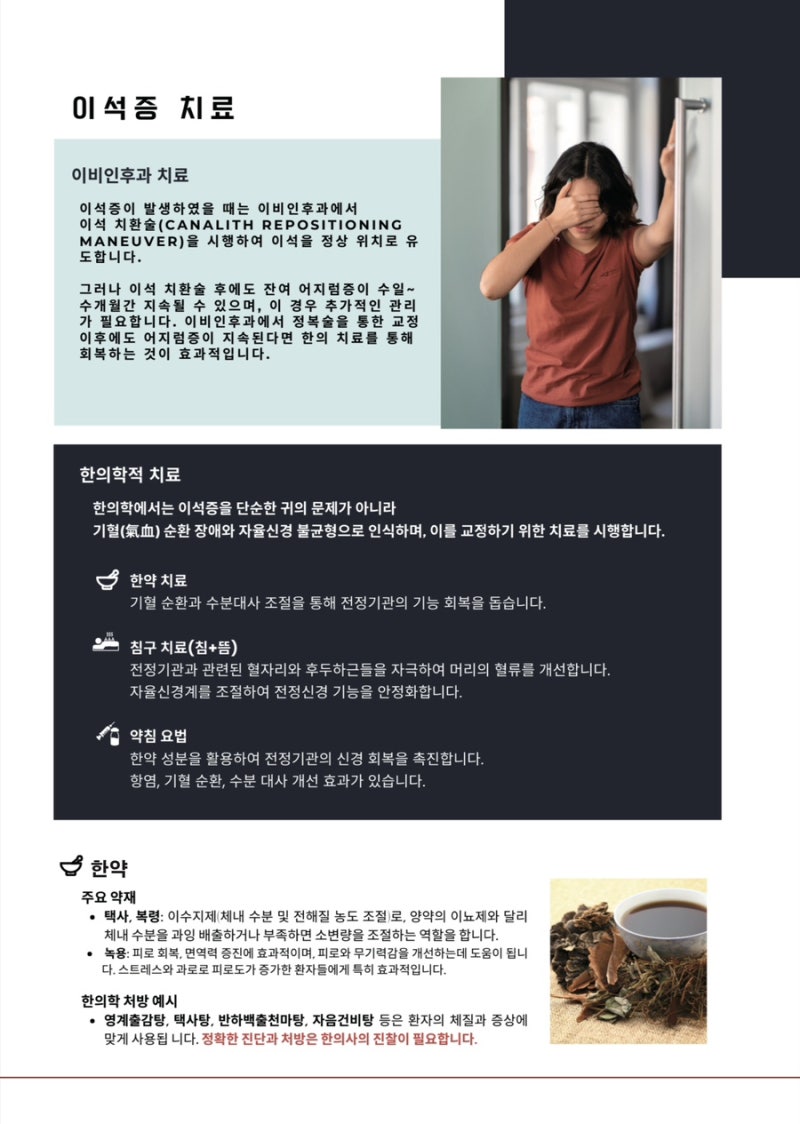
Korean Medicine Treatment In Korean medicine, BPPV is not simply viewed as an ear problem but as a disorder of Qi and blood (氣血) circulation and autonomic nervous system imbalance, and treatments are implemented to correct these issues. Herbal Medicine Treatment • Helps restore vestibular function by regulating Qi and blood circulation and water metabolism. Acupuncture and Moxibustion Treatment (Acupuncture + Moxibustion) • Improves blood flow to the head by stimulating acupoints related to the vestibular system and the suboccipital muscles.
• Regulates the autonomic nervous system to stabilize vestibular nerve function. Pharmacopuncture Therapy • Promotes nerve recovery of the vestibular system using herbal medicine ingredients. • Has anti-inflammatory, Qi and blood circulation, and water metabolism improvement effects. Key Herbal Medicine Ingredients Alisma (택사), Poria (복령): These are diuretics (regulating body water and electrolyte concentration) that, unlike Western diuretics, adjust urine volume to prevent excessive excretion or deficiency of body fluids.
Deer antler velvet (녹용): Effective for fatigue recovery and immune system enhancement, helping to improve fatigue and lethargy. It is particularly effective for patients whose fatigue has increased due to stress and overwork. Examples of Korean medicine prescriptions such as Yeonggyechulgam-tang, Taeksa-tang, Banhabackchulchunma-tang, and Jaeumgeonbi-tang are used according to the patient’s constitution and symptoms. An accurate diagnosis and prescription require examination by a Korean medicine doctor.
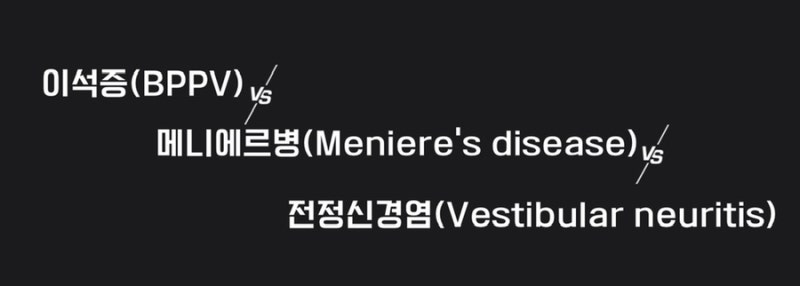
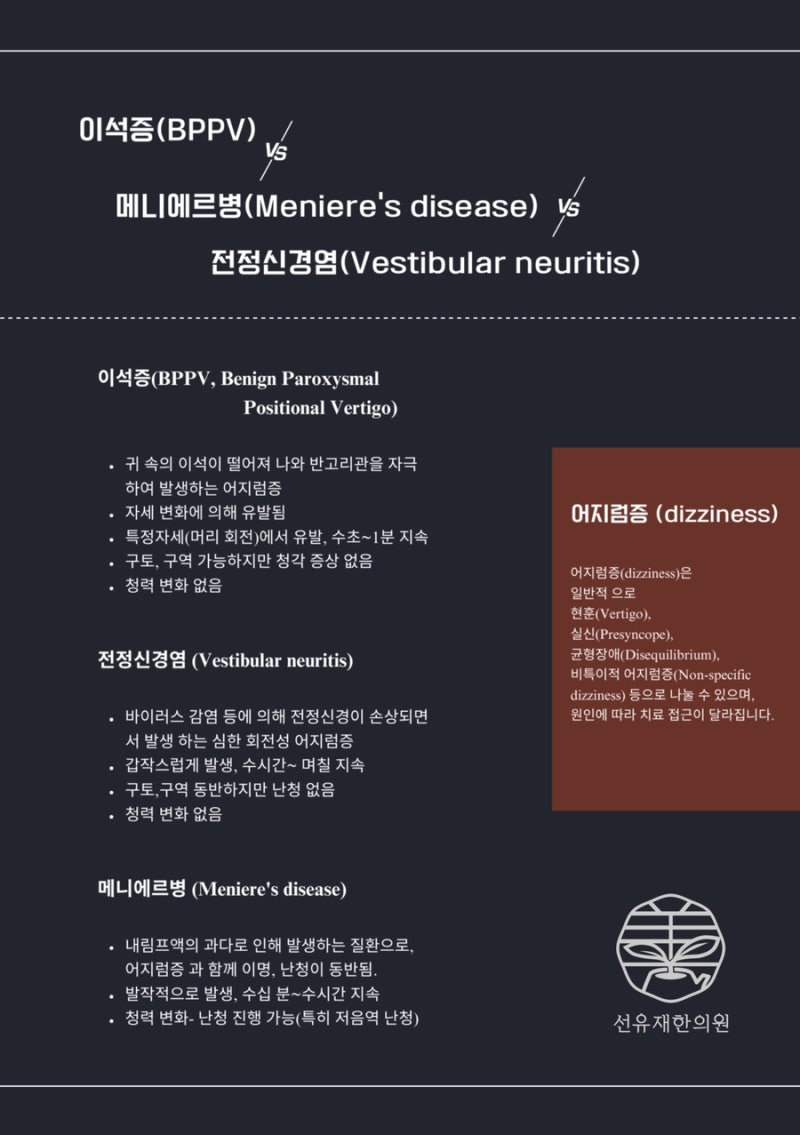
BPPV (Benign Paroxysmal Positional Vertigo) *Dizziness caused when otoconia in the inner ear detach and stimulate the semicircular canals *Triggered by changes in posture *Triggered by specific postures (head rotation), lasting a few seconds to 1 minute *Accompanied by vomiting, nausea; no auditory symptoms
No change in hearing — Vestibular neuritis
*Severe rotational dizziness caused by damage to the vestibular nerve due to viral infection, etc. *Occurs suddenly, lasting several hours to several days *Accompanied by vomiting, nausea, but no hearing loss
No change in hearing — Meniere’s disease
*A disease caused by excessive endolymph, accompanied by dizziness, tinnitus, and hearing loss *Occurs paroxysmally, lasting tens of minutes to several hours *Changes in hearing – possible progression of hearing loss (especially low-frequency hearing loss) Dizziness can generally be categorized into Vertigo, Presyncope, Disequilibrium, and Non-specific dizziness, and the treatment approach varies depending on the cause.
We hope you will join Sunyujae Korean Medicine Clinic, which shares valuable information for a healthy life. Sunyujae Korean Medicine Clinic in Suji-gu pursues evidence-based medicine and integrative medicine.
This post was written directly by the medical staff of Sunyujae Korean Medicine Clinic to provide medical information, in compliance with Article 56(2) and Article 57(3) of the Medical Service Act. The duration and outcome of treatment may vary from person to person, so please consult a qualified practitioner before beginning treatment.
Consultation & Booking
Have questions? Reach us anytime via KakaoTalk or phone.