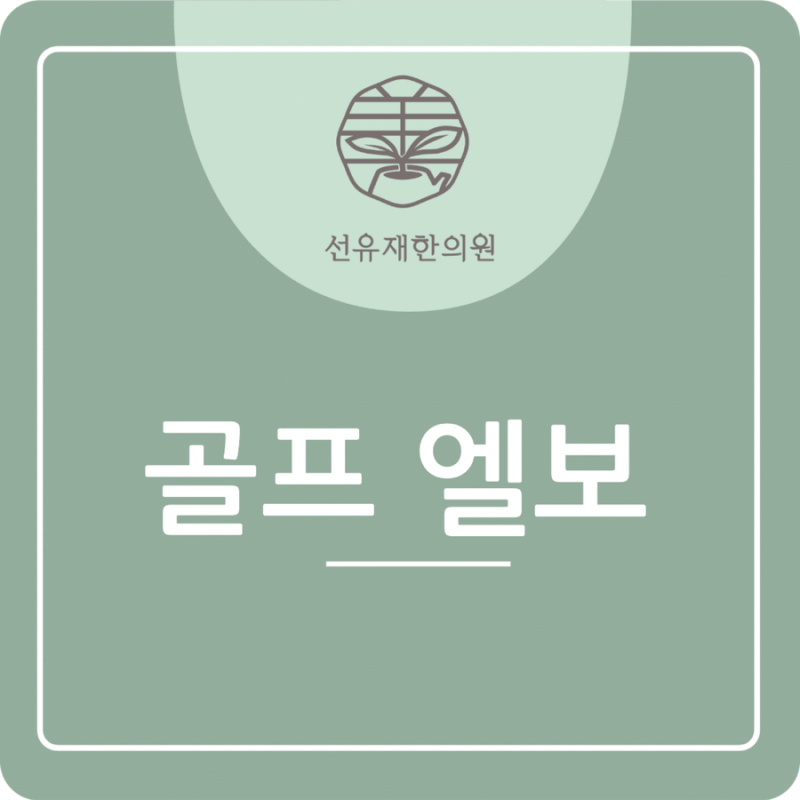
Suji-gu Golf Elbow Treatment: If inner elbow pain recurs, you might experience a sharp pain inside your elbow after playing golf, or the pain might subside with rest only to return when you swing again. In such cases, it might not be simple muscle pain but rather golf elbow, or medial epicondylitis. Although the name “golf elbow” suggests it only affects golfers, it can actually occur in anyone who repeatedly uses their wrists and fingers.
Patients who visit our clinic with inner elbow pain often say things like this: “My inner elbow feels sharp after playing golf.” “I can’t grip the club properly.” “It’s fine when I rest, but it hurts again when I swing.” “It’s elbow pain, but my wrist also feels stiff.” Golf elbow might not just be an elbow problem.
While it often arises from accumulated strain on the inner elbow tendons, factors like wrist usage habits, forearm muscle tension, shoulder and scapular movement, and even swing posture can all contribute. Therefore, in golf elbow treatment, it’s important not just to look at the painful elbow, but also to understand why repetitive strain accumulates on the inner elbow tendons. Hello, I am Dr. Hyocheong Chae, director of Sunyujae Korean Medicine Clinic in Suji-gu.
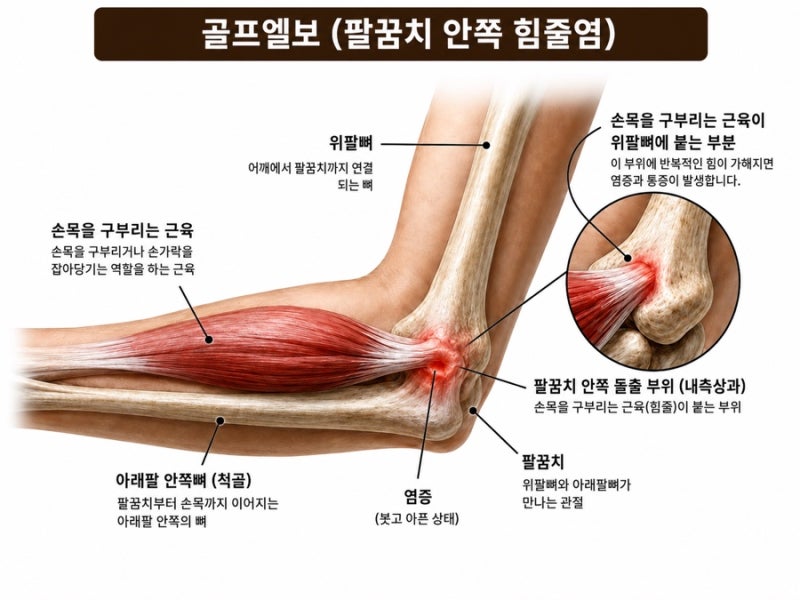
What is Golf Elbow? Medically, golf elbow is called medial epicondylitis. It is a condition where repetitive strain accumulates on the inner elbow tendons. The forearm muscles used for bending the wrist, gripping fingers, and holding objects are attached to the inside of the elbow.
When these muscles are repeatedly pulled, microscopic damage can occur to the tendons attached to the inner elbow bone. Initially, it might start as a dull ache, but with repetition, it can lead to sharp pain when gripping a club, lifting objects, or rotating the wrist. Simply put, it’s similar to how an elastic band is fine when pulled once or twice, but continuously pulling it in the same direction will gradually weaken it.
Golf elbow often results from the cumulative effect of repetitive gripping, wrist usage, and tension in the inner elbow tendons, rather than from a single swing.
Reasons for Golf Elbow: Focusing only on the elbow is insufficient. A golf swing is not just about hitting the ball with your hands. The pelvis rotates, the waist supports, the back follows, and the shoulders and arms move, with the wrists and hands delivering power at the end. If this connection isn’t smooth, the elbow bears more of the burden.
For example, if your shoulders are stiff, your arms cannot follow naturally, forcing your wrists and elbows to generate power. Gripping too tightly or habitually over-bending the wrist can also increase strain on the inner elbow tendons. Therefore, it’s best to view golf elbow not as simple elbow pain, but as the result of strain generated throughout the entire swing motion.
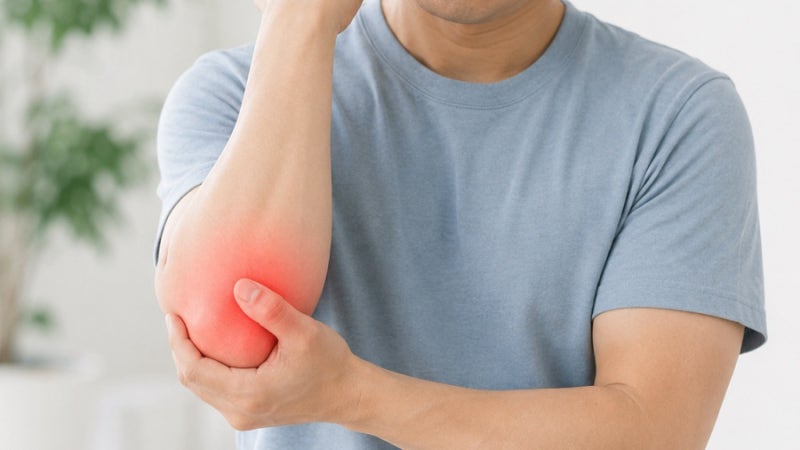
If you have these symptoms, you might suspect golf elbow. The most common symptom of golf elbow is inner elbow pain. The pain is often distinct when pressing around the inner elbow bone. You might experience pain when gripping a club, bending your wrist downwards, or a sharp pain inside your elbow when lifting objects.
Discomfort can also appear when twisting a bottle cap, turning a doorknob, or wringing a towel. Initially, the pain might only occur when playing golf, but over time, it can be felt in daily life as well. At this stage, rather than viewing it as simple muscle pain, it’s important to check for repetitive damage to the tendon attachment site and tension in surrounding tissues.
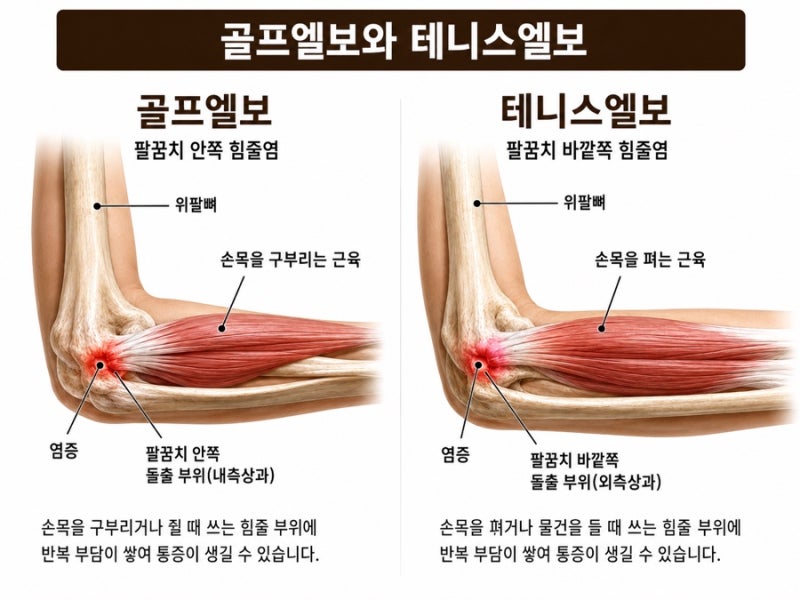
Golf elbow and tennis elbow may seem like similar elbow pains, but they are different. Not all elbow pain is the same elbow condition. Golf elbow is characterized by inner elbow pain. Since the flexor muscles used for bending the wrist or gripping objects are attached to the inside of the elbow, repetitive tension in this area can cause pain.
Tennis elbow is characterized by outer elbow pain. The extensor muscles, which are responsible for extending the wrist, are attached to the outside of the elbow, so repetitive strain can lead to pain in this area. In summary, golf elbow often presents with inner elbow pain, while tennis elbow typically involves outer elbow pain.
Both conditions are closely related to repetitive wrist use, strain on surrounding elbow tendons, and muscle tension, so it’s important to differentiate between the location of the pain and the muscles involved. Among those who visit for golf elbow treatment in Suji-gu, some initially think it’s simple elbow pain, but ultrasound examination often reveals suspected tension or tissue changes around the tendon attachment site.
Golf Elbow: Why does it get better with rest only to hurt again? Patients with golf elbow often say: “It feels fine after a few days of rest, but it hurts again when I play.” Pain can decrease with rest. However, if the movements that strain the tendons remain unchanged, the same area will be repeatedly irritated when you swing again.
In other words, reduced pain does not necessarily mean the tissue has fully recovered. Tendons have less blood flow than muscles and are slower to heal. Especially when golf elbow recurs over a long period, the tissues around the tendon attachment site often become sensitive, accompanied by forearm muscle overtension and weakness.
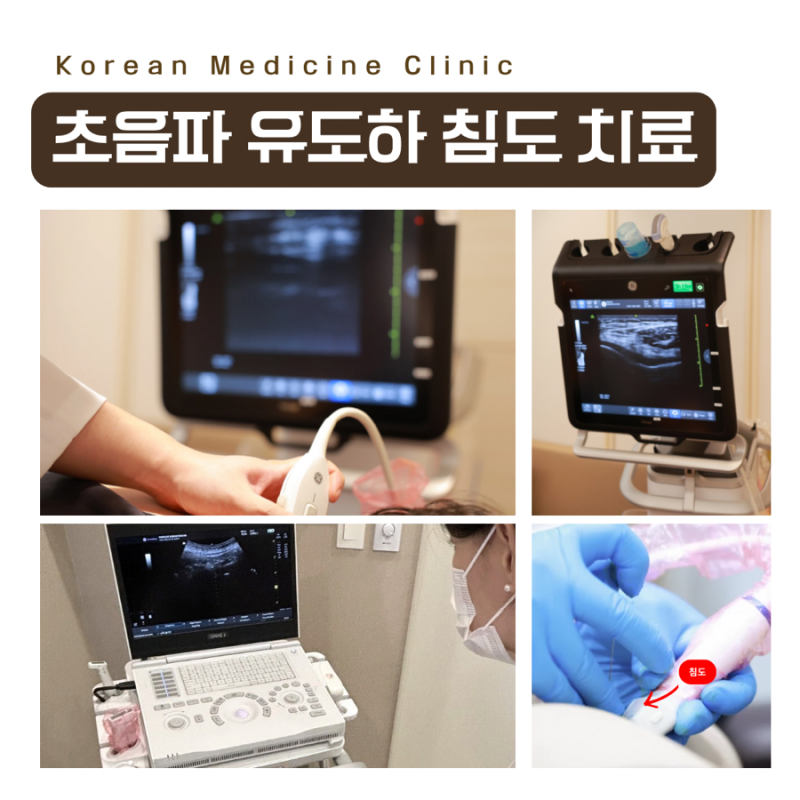
This can lead not only to inner elbow pain but also to inner wrist pulling, decreased grip strength, and stiffness throughout the entire arm. Therefore, if inner elbow pain recurs, it’s important to examine the wrist, forearm, shoulder, and scapular movement as well. Sunyujae Korean Medicine Clinic’s chronic golf elbow treatment involves ultrasound confirmation, along with acupotomy and muscle-strengthening thread embedding.
At Sunyujae Korean Medicine Clinic, we utilize high-resolution ultrasound equipment to meticulously examine deep tissues that are difficult to see with the naked eye, and then formulate a treatment plan. Ultrasound can help precisely identify the condition of the inner elbow tendon attachment site, changes in surrounding soft tissues, and the points where pain recurs.
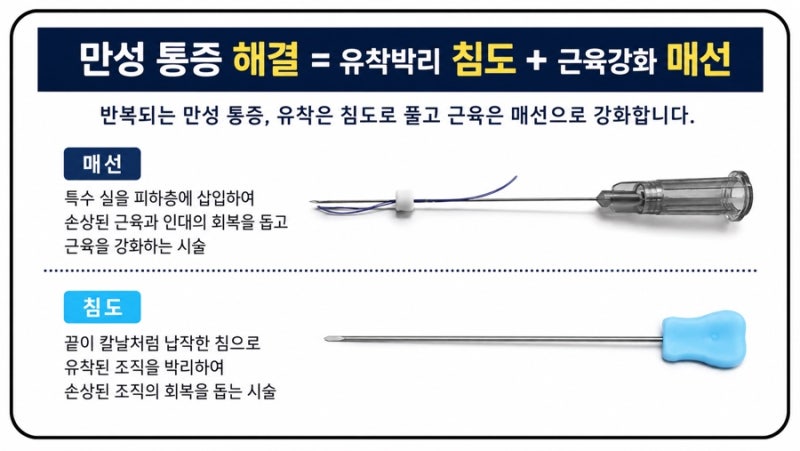
In cases where pain persists for a long time, such as chronic golf elbow, it may be necessary to approach the tendon area and surrounding muscles separately. At Sunyujae Korean Medicine Clinic, we approach treatment by releasing adhesions with acupotomy and strengthening surrounding muscles with muscle-strengthening thread embedding, thereby managing the structural burden that causes recurring pain.
Acupotomy is a Korean medicine treatment that uses a needle with a flat, blade-like tip to meticulously dissect hardened and adhered soft tissues, thereby promoting a favorable environment for tissue recovery. Muscle-strengthening thread embedding aims to reinforce weakened or repeatedly tensed surrounding muscles, thereby reducing the structural accumulation of strain on the inner elbow tendons.
In other words, Sunyujae Korean Medicine Clinic’s chronic pain treatment doesn’t just treat the painful area; it releases adhesions with acupotomy and strengthens surrounding muscles with muscle-strengthening thread embedding.
Acupuncture treatment is performed to relax overly tense forearm muscles and tissues around the elbow, and to promote circulation around the painful area. Pharmacopuncture treatment can be applied depending on the condition of the tendon attachment site, around ligaments, and areas suspected of inflammatory reactions. Acupotomy approaches by meticulously identifying hardened and adhered tissues, repetitive tension around the tendon attachment site, and areas with restricted movement.
Muscle-strengthening thread embedding is considered for muscles that are weakened or tensed from repetitive use, aiming to reduce the structural accumulation of repetitive strain on the elbow. Chuna manual therapy approaches treatment by examining not only the elbow but also the movement of the neck, shoulders, thoracic spine, and scapulae, aiming to reduce repetitive strain on the arm. Herbal medicine treatment can be beneficial for those with long-lasting pain and slow recovery, or those who easily accumulate fatigue after a round, by also addressing the body’s overall recovery environment.
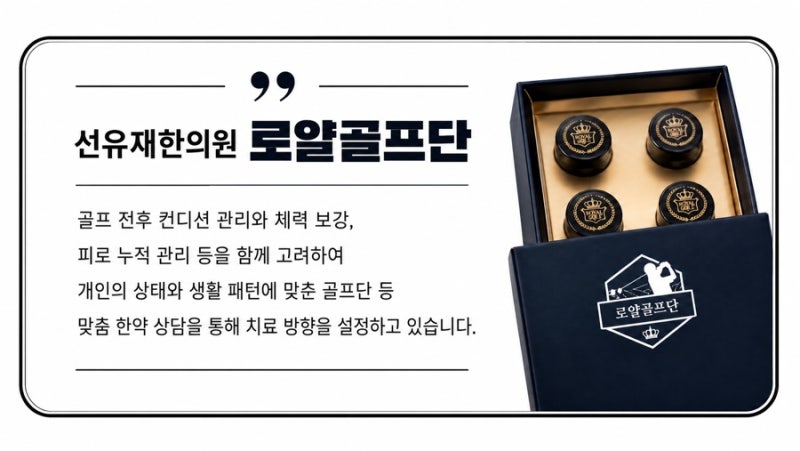
In Royal Golf Team golf elbow treatment, it’s not just about addressing elbow pain. We must also consider physical stamina, sleep, fatigue recovery, and muscle recovery status before and after a round. If you repeatedly swing excessively when your condition is poor, your body’s rotation may not be smooth, and excessive force can be applied to your arms and wrists.
In such cases, strain can accumulate more easily on the inner elbow tendons. At Sunyujae Korean Medicine Clinic, we offer personalized herbal medicine consultations, such as for the Royal Golf Team, considering pre- and post-golf conditioning, decreased stamina, and accumulated fatigue, tailored to each individual’s condition and lifestyle. The Royal Golf Team herbal medicine is a pill-form herbal medicine recommended after consultation, considering pre- and post-golf conditioning and stamina enhancement.
However, it is not equally necessary for everyone; it’s important to determine the appropriate course after checking an individual’s constitution, health status, medications being taken, and fatigue patterns.
Golf elbow is not pain that only occurs when playing golf. Although it’s called ‘golf elbow,’ persistent pain in that area can easily arise from daily life habits. The important thing is not “my elbow hurts, so I just need to treat my elbow.” We need to identify why repetitive strain is placed on the inner elbow tendons.
If golf elbow recurs, rest may be necessary, but it’s also advisable to examine the underlying structure causing the pain. At Sunyujae Korean Medicine Clinic in Suji-gu, we don’t view golf elbow as mere elbow pain; we also examine the tendon attachment site, wrist usage, shoulder and scapular movement, and the individual’s recovery status.
If inner elbow pain recurs, we recommend accurately assessing your current condition rather than enduring it. This has been Dr. Hyocheong Chae, director of Sunyujae Korean Medicine Clinic in Suji-gu. https://m.blog.naver.com/sunyujae21/224280231395
We hope you will join Sunyujae Korean Medicine Clinic in sharing valuable information for a healthy life. Sunyujae Korean Medicine Clinic in Suji-gu pursues evidence-based medicine and integrative medicine.
This post was written directly by the medical staff of Sunyujae Korean Medicine Clinic to provide medical information, in compliance with Article 56(2) and Article 57(3) of the Medical Service Act. The duration and outcome of treatment may vary from person to person, so please consult a qualified practitioner before beginning treatment.
Consultation & Booking
Have questions? Reach us anytime via KakaoTalk or phone.