
![[Sunyujae Korean Medicine Clinic] Menopausal Diet, Causes of Weight Gain, and Healthy Weight Loss](https://syjkmc.kr/wp-content/uploads/2026/06/224283478255_img_0.jpeg)
Hello, this is Sunyujae Korean Medicine Clinic, where good hearts reside.


Many people experience various physical changes during menopause, and one of the most common and concerning changes is abdominal obesity and weight gain. Menopause is not merely the end of menstruation; it marks the beginning of systemic constitutional changes due to hormonal shifts. In particular, decreased estrogen makes it easier for fat to accumulate in the abdomen. Combined with reduced metabolism, edema, and increased stress, many find weight management challenging during this period.
Furthermore, menopausal symptoms manifest in diverse ways, so it’s common for individuals not to realize they are experiencing menopause, instead perceiving their issues only as fatigue, depression, sleep disorders, or weight gain. In this article, we will explain in detail, from a Korean medicine perspective, the causes of menopausal weight gain, the relationship between abdominal fat accumulation and edema, and how to approach dieting during this period for healthy weight loss.
For those considering a menopausal diet, we hope this information will be helpful.

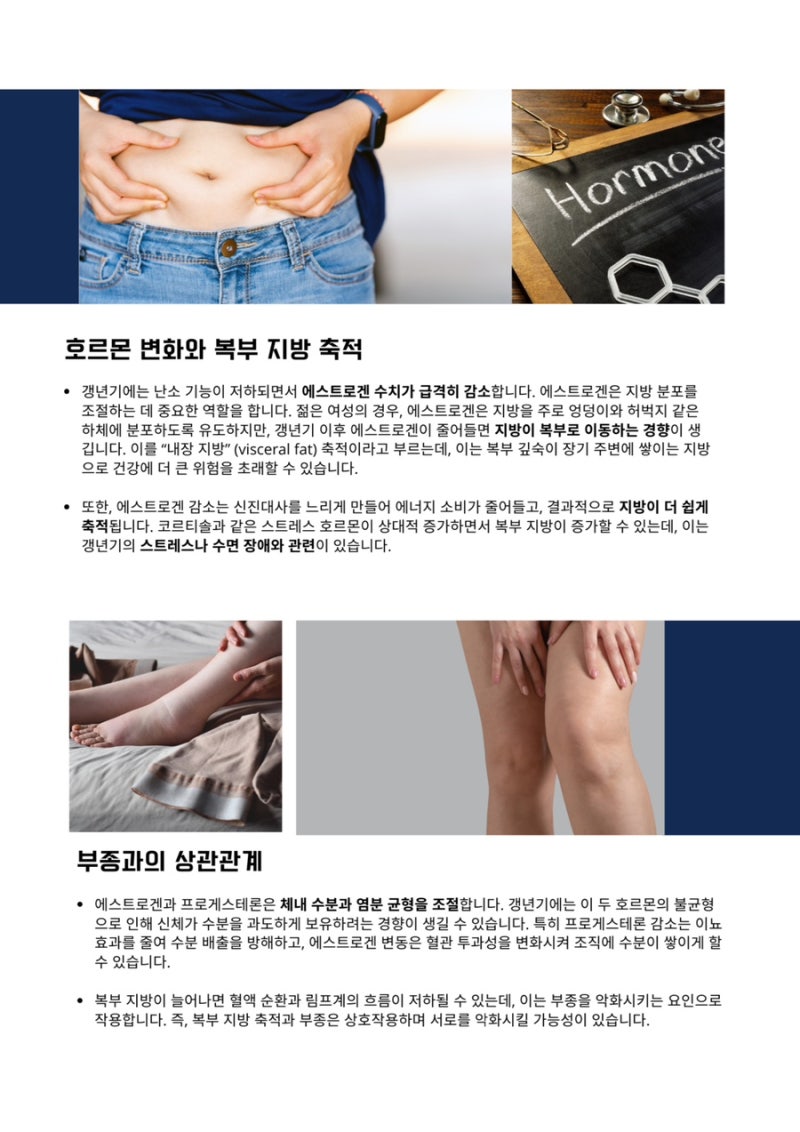
Menopausal symptoms typically begin to appear 2-3 years before the final menstrual period. These symptoms are highly diverse, and in clinical practice, we often see patients who are unaware that their symptoms are related to menopause. 1) Hormonal Changes and Abdominal Fat Accumulation During menopause, ovarian function declines, leading to a sharp decrease in estrogen levels.
Estrogen plays a crucial role in regulating fat distribution. In younger women, estrogen primarily directs fat to the lower body, such as the hips and thighs. However, after menopause, as estrogen decreases, fat tends to shift to the abdomen. This is referred to as “visceral fat” accumulation, which is fat that builds up deep around the organs in the abdomen and can pose a greater health risk.
Furthermore, decreased estrogen slows down metabolism, reducing energy expenditure and consequently making fat accumulation easier. Stress hormones like cortisol can also relatively increase, leading to increased abdominal fat, which is associated with menopausal stress or sleep disorders. 2) Correlation with Edema Estrogen and progesterone regulate the body’s water and salt balance.
During menopause, due to the imbalance of these two hormones, the body may tend to retain excessive water. Specifically, decreased progesterone reduces diuretic effects, hindering water excretion, and estrogen fluctuations can alter vascular permeability, causing fluid to accumulate in tissues. Increased abdominal fat can impair blood circulation and lymphatic flow, which acts as a factor in worsening edema.
In other words, abdominal fat accumulation and edema can interact and potentially exacerbate each other.

https://m.blog.naver.com/sunyujae21/223407059174 Sunyujae Korean Medicine Clinic in Suji-gu pursues evidence-based medicine and integrative medicine.

This post was written directly by the medical staff of Sunyujae Korean Medicine Clinic to provide medical information, in compliance with Article 56(2) and Article 57(3) of the Medical Service Act. The duration and outcome of treatment may vary from person to person, so please consult a qualified practitioner before beginning treatment.
Consultation & Booking
Have questions? Reach us anytime via KakaoTalk or phone.