Some people don’t feel refreshed even after waking up in the morning, and their energy drops by the afternoon. In the past, a day’s rest would suffice, but these days, fatigue can last for several days, or people might look into tonic herbal medicine because their parents’ stamina seems to have significantly declined. In such cases, Gyeongokgo is one of the herbal medicines that often comes to mind. However, if you look for Gyeongokgo, you’ll find a variety of types, from regular Gyeongokgo to deer antler velvet Gyeongokgo, which has added deer antler velvet. “How is deer antler velvet Gyeongokgo different from regular Gyeongokgo?” “What kind of deer antler velvet is used?” These are questions we often hear in the consultation room. Based on the ES Deer Antler Velvet Gyeongokgo prepared by Sunyujae Korean Medicine Clinic, we will explain the differences in ingredients, deer antler velvet, and the manufacturing process one by one.
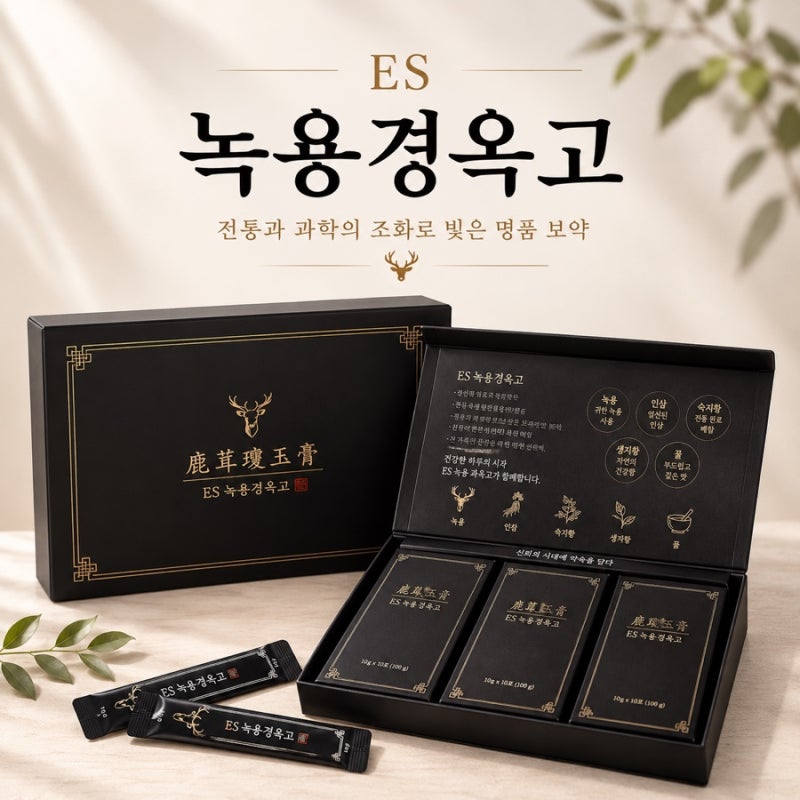
What medicinal ingredients are used to make Gyeongokgo?
Gyeongokgo is a prescription that has been passed down for a long time, fundamentally using ginseng, Rehmannia root, Poria cocos, and honey. While it may seem simple just looking at the number of ingredients, even for the same Gyeongokgo, the manufacturing process can differ depending on which ingredients are used and how they are extracted and prepared.
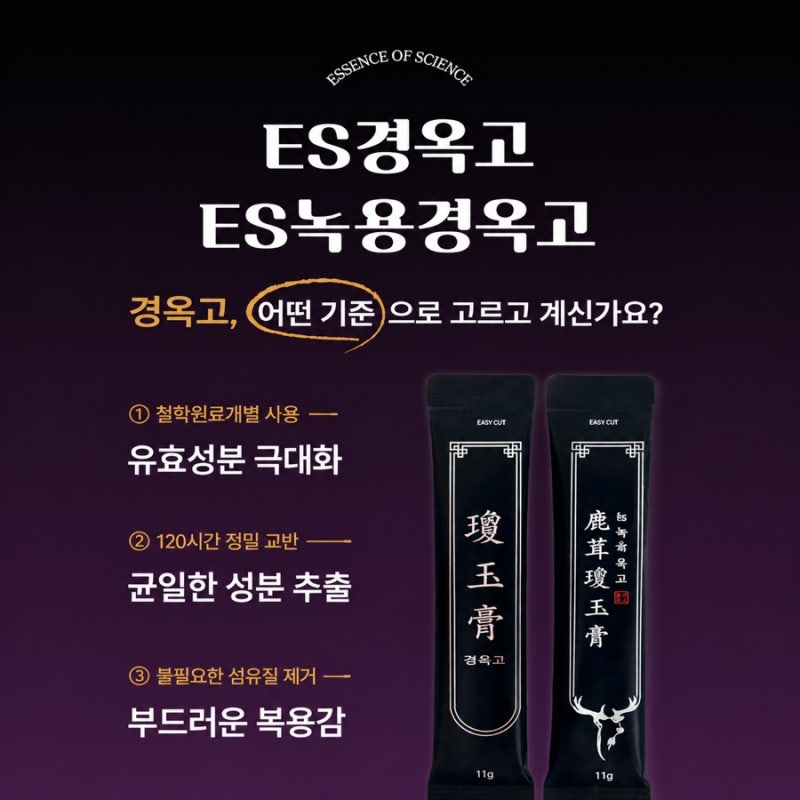
Looking at the ingredients of ES Gyeongokgo, ginseng, domestic honey, Rehmannia root, and Poria cocos are used, and for ES Deer Antler Velvet Gyeongokgo, Russian deer antler velvet is added to these.
ES Gyeongokgo has a different manufacturing process
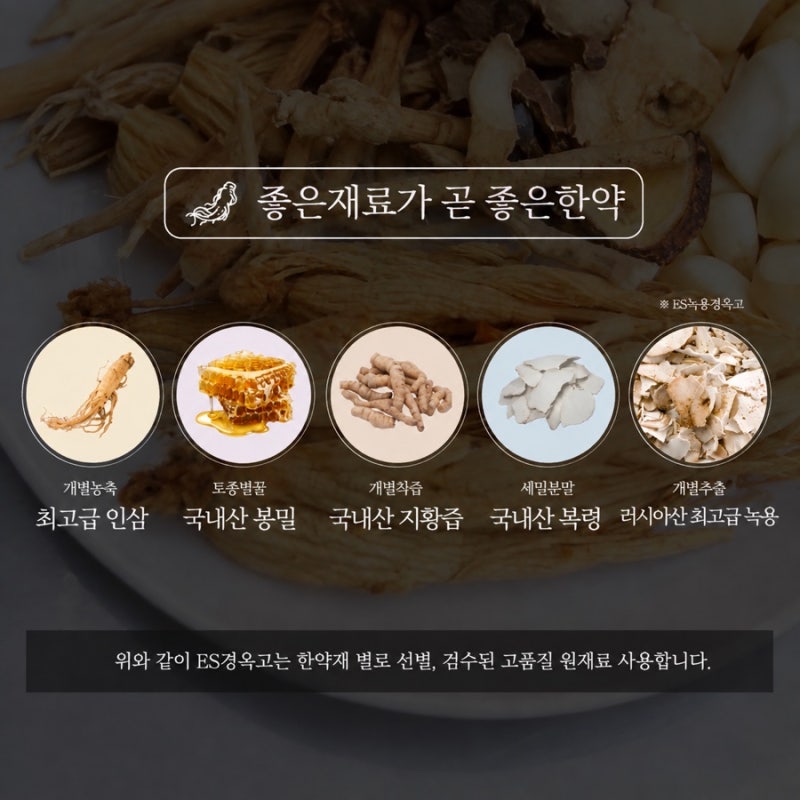
One of the characteristics of ES Gyeongokgo is its ingredient-specific extraction and preparation process. Because each herbal medicine has different tissue hardness and constituent compounds, extracting them at the same temperature for the same duration does not mean all components will be equally extracted. Considering these differences, ES Gyeongokgo uses a method of extracting each ingredient—ginseng, Rehmannia root, Poria cocos, and honey—separately. This process involves sufficiently extracting the components according to the characteristics of each herbal medicine, then combining them for manufacturing. Afterward, the extracted ingredients undergo a precise 120-hour stirring process to ensure even mixing. This can be seen as a process that goes beyond simple mixing, ensuring a uniform blend over a long period to achieve the desired texture and completeness of Gyeongokgo.
Another characteristic of ES Gyeongokgo is that it reduces unnecessary fibrous material during the manufacturing process, maintaining the traditional thick consistency of Gyeongokgo while making it smoother and easier to consume.
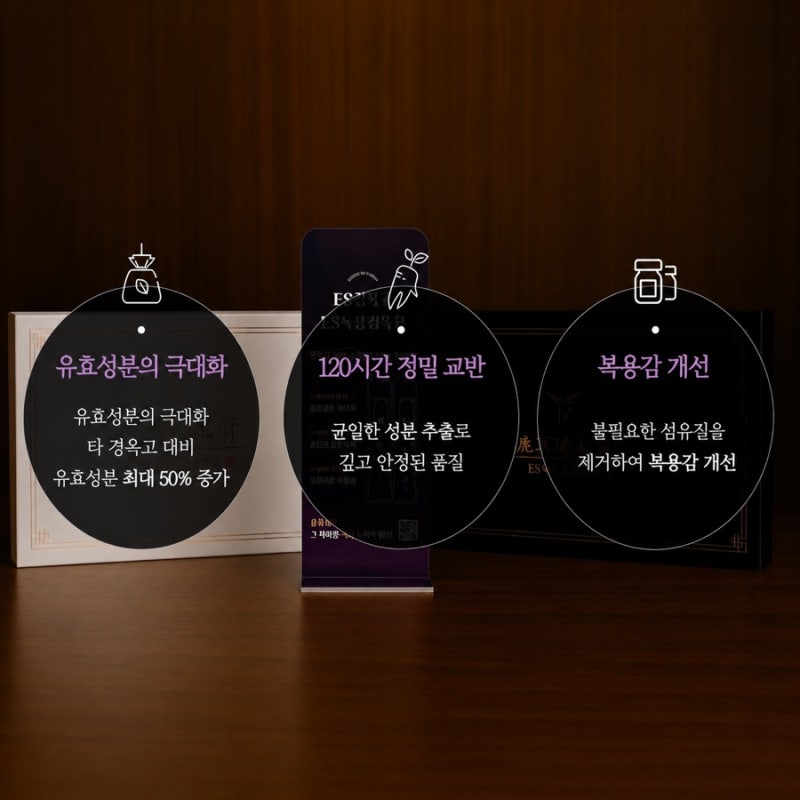
Differences in the detection patterns of some components appear between ES Gyeongokgo, which undergoes this manufacturing process, and other Gyeongokgo samples. One thing to consider separately here is that a higher detection of a specific component does not necessarily mean it will have a better effect on people. Component analysis should be viewed as data to understand how ES Gyeongokgo is made and what characteristics it exhibits.
We also looked at the component analysis data
Although it may look a bit unfamiliar, the ES Gyeongokgo data includes chromatograms that analyze the actual components.
The graph shows component peaks such as Rg1, Rb1, Rh1, Rg3, Rg5, and Rh2, and you can compare the patterns observed in ES Gyeongokgo and various Gyeongokgo samples.
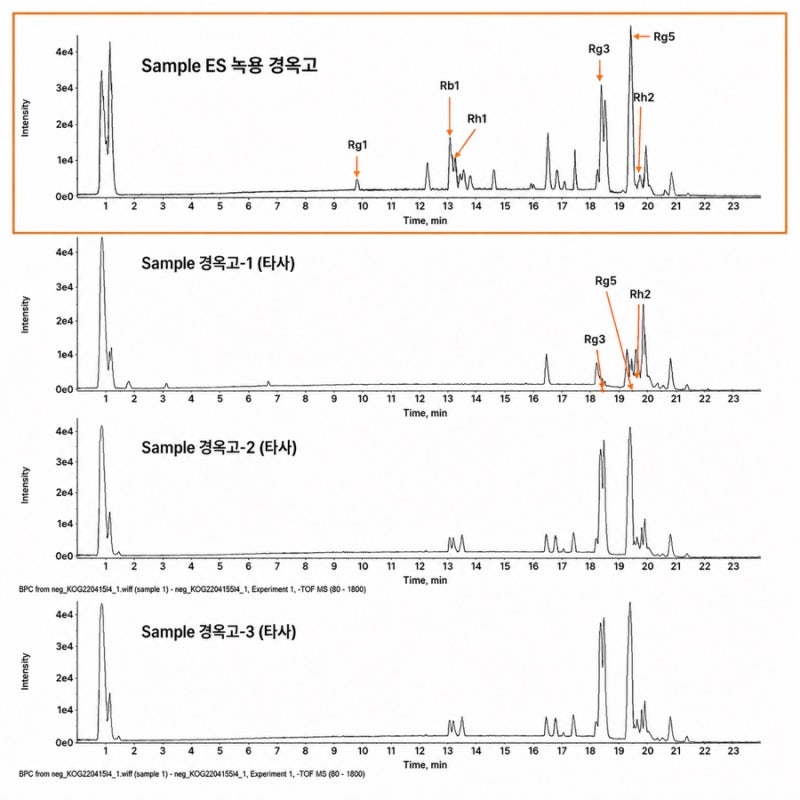
You can see differences in the position and size of the peaks for each product. However, this graph is not the result of a clinical trial comparing the therapeutic effects of products, but rather data analyzing their components. Therefore, rather than judging which Gyeongokgo is more effective for people based solely on the graph, it should be understood as reference material illustrating component characteristics according to the manufacturing method.
What kind of deer antler velvet is used in ES Deer Antler Velvet Gyeongokgo?
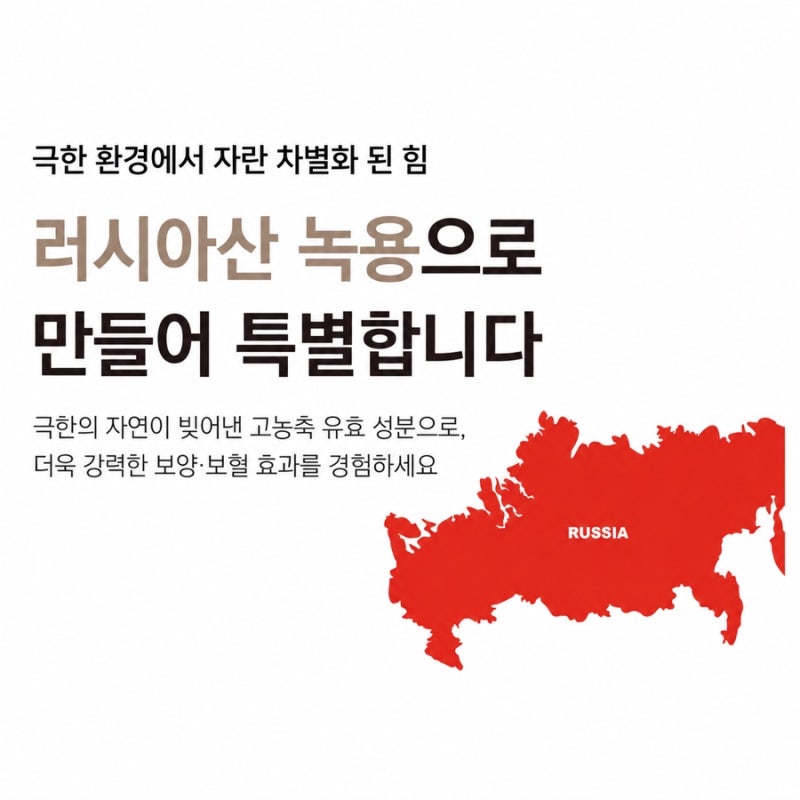
When it comes to deer antler velvet Gyeongokgo, the topic of deer antler velvet cannot be omitted. ES Deer Antler Velvet Gyeongokgo uses Russian-origin deer antler velvet. ES Deer Antler Velvet Gyeongokgo uses antlers from deer raised in the harsh environment of high-altitude regions at 2,000m above sea level. It uses high-quality deer antler velvet ingredients that are harvested at the appropriate cutting time and undergo hygienic slicing and drying processes.
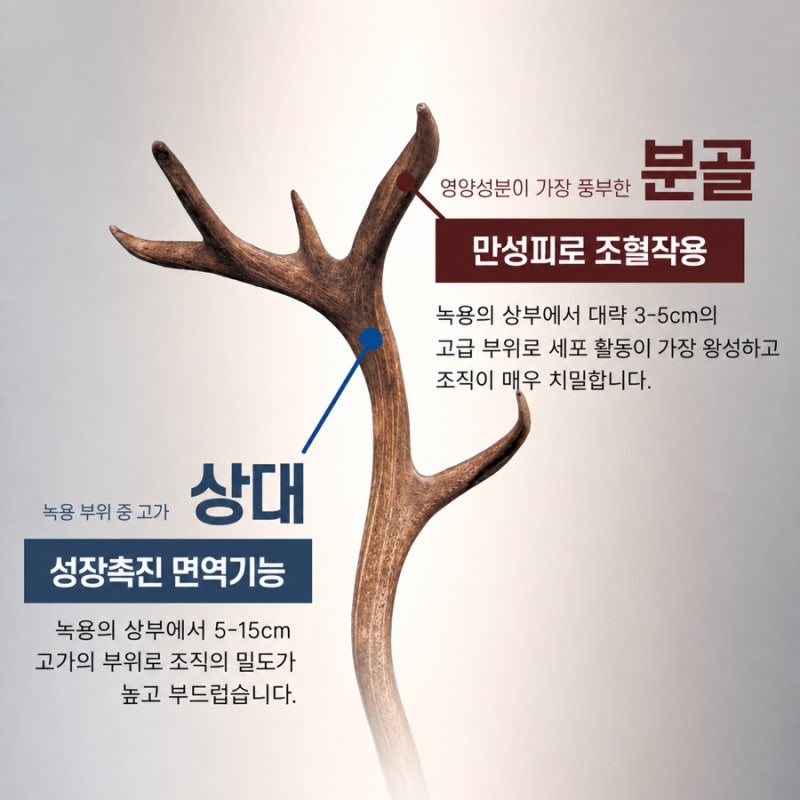
Even a single deer antler velvet does not have the same tissue from top to bottom. It is divided into ‘bungol’ (tip), ‘sangdae’ (middle), and ‘hadae’ (base) depending on its position. ES Deer Antler Velvet Gyeongokgo does not use the ‘hadae’ (base) part; instead, it uses a mixture of the ‘bungol’ (tip) and ‘sangdae’ (middle) parts of Russian Maral deer antler velvet. A notable feature in the ingredient composition of ES Deer Antler Velvet Gyeongokgo is that it includes the ‘bungol’ (tip), which is the uppermost part of the deer antler velvet, blended with the ‘sangdae’ (middle).
When choosing deer antler velvet Gyeongokgo, it is advisable to not just look for “contains deer antler velvet,” but also to check which region the deer antler velvet comes from and which parts (bungol, sangdae, or hadae) are used.
Even for the same deer antler velvet Gyeongokgo, the origin and parts of the deer antler velvet used can differ, so examining these details can provide a more specific understanding of its ingredients.
Who often seeks ES Deer Antler Velvet Gyeongokgo?
“I’ve been exceptionally low on energy lately; should I take tonic herbal medicine?” These are common stories we hear in the consultation room. Some people accumulate fatigue due to overlapping work and childcare, while others feel their stamina hasn’t returned to normal after a major event. Some look for tonic herbal medicine during periods requiring sustained physical and mental exertion, such as preparing for exams, and others seek Gyeongokgo for their parents’ general health management.
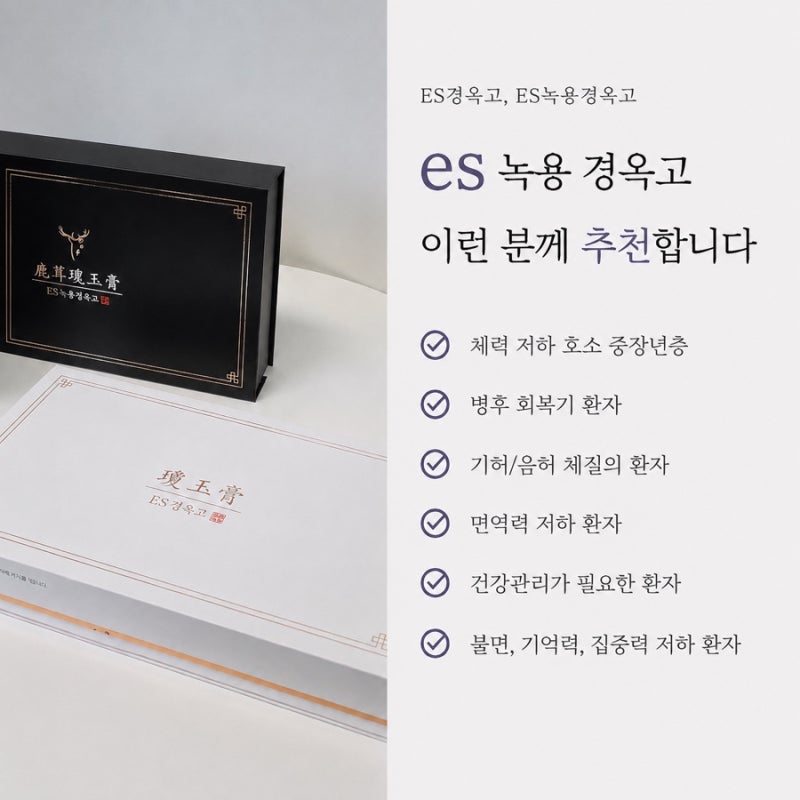
ES Deer Antler Velvet Gyeongokgo is often sought by people who:
- Are middle-aged or older, experiencing decreased stamina and easy fatigue
- Need stamina management during post-illness recovery
- Have a Qi-deficiency or Yin-deficiency constitution and feel low on energy
- Need regular immune system management
- Require consistent health management
- Need condition management due to insomnia or decreased memory and concentration
Gyeongokgo is a prescription that has been passed down for a long time, but today it is made in various forms depending on the selection of ingredients and the extraction and preparation methods. Sunyujae Korean Medicine Clinic’s ES Deer Antler Velvet Gyeongokgo is based on ginseng, Rehmannia root, Poria cocos, and honey, with the addition of the ‘bungol’ (tip) and ‘sangdae’ (middle) parts of Russian Maral deer antler velvet, and is manufactured through ingredient-specific individual extraction and a 120-hour precise stirring process. While checking the ingredients and manufacturing process is important, tonic herbal medicine must ultimately suit the current condition of the person taking it. If you’ve been feeling unusually tired lately or are considering tonic herbal medicine for your parents, please first check your usual stamina, diet, digestion, sleep, and lifestyle. Sunyujae Korean Medicine Clinic will assist you in the process of choosing the right tonic herbal medicine for you.
Sunyujae Korean Medicine Clinic in Suji-gu pursues evidence-based medicine and integrative medicine.
This post was written directly by the medical staff of Sunyujae Korean Medicine Clinic to provide medical information, in compliance with Article 56(2) and Article 57(3) of the Medical Service Act. The duration and outcome of treatment may vary from person to person, so please consult a qualified practitioner before beginning treatment.
Consultation & Booking
Have questions? Reach us anytime via KakaoTalk or phone.